Andrea Robilant - A Venetian Affair - A true story of impossible love in the eighteenth century
Здесь есть возможность читать онлайн «Andrea Robilant - A Venetian Affair - A true story of impossible love in the eighteenth century» — ознакомительный отрывок электронной книги совершенно бесплатно, а после прочтения отрывка купить полную версию. В некоторых случаях можно слушать аудио, скачать через торрент в формате fb2 и присутствует краткое содержание. Жанр: unrecognised, на английском языке. Описание произведения, (предисловие) а так же отзывы посетителей доступны на портале библиотеки ЛибКат.
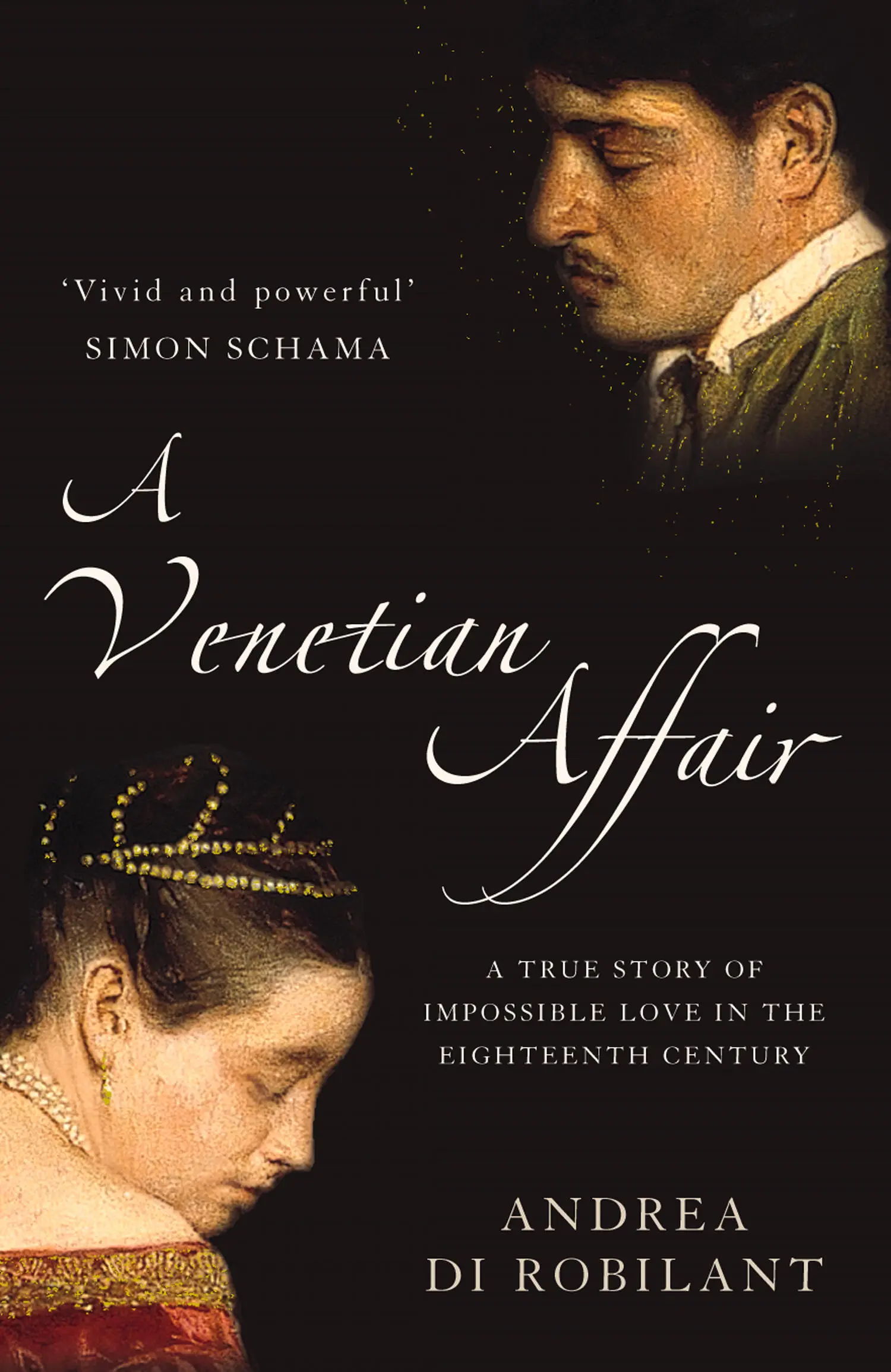
- Название:A Venetian Affair: A true story of impossible love in the eighteenth century
- Автор:
- Жанр:
- Год:неизвестен
- ISBN:нет данных
- Рейтинг книги:3 / 5. Голосов: 1
-
Избранное:Добавить в избранное
- Отзывы:
-
Ваша оценка:
A Venetian Affair: A true story of impossible love in the eighteenth century: краткое содержание, описание и аннотация
Предлагаем к чтению аннотацию, описание, краткое содержание или предисловие (зависит от того, что написал сам автор книги «A Venetian Affair: A true story of impossible love in the eighteenth century»). Если вы не нашли необходимую информацию о книге — напишите в комментариях, мы постараемся отыскать её.
A Venetian Affair: A true story of impossible love in the eighteenth century — читать онлайн ознакомительный отрывок
Ниже представлен текст книги, разбитый по страницам. Система сохранения места последней прочитанной страницы, позволяет с удобством читать онлайн бесплатно книгу «A Venetian Affair: A true story of impossible love in the eighteenth century», без необходимости каждый раз заново искать на чём Вы остановились. Поставьте закладку, и сможете в любой момент перейти на страницу, на которой закончили чтение.
Интервал:
Закладка:
PIERO: Are you jealous of me? Oh … but I have no designs on her. True, when women call me it is hard for me to resist…. But I am your friend, I would not betray you. I stay away from my friends’ women. And if you have the slightest suspicion, I will never see her again .
ANDREA: Who do you think you are, the Terror of the World? Do you really think I’m afraid of losing Giustiniana to you? If she were crazy, like all your previous lovers were, if she wanted your money, … if she had all the weaknesses, all the silliness, all the prejudices of the average woman, if she could not tell the true value of better men, if she were a coquette or worse, then, yes, I probably wouldn’t trust her. But my dear Piero, who do you think you’re dealing with?
Andrea concluded, “I told him these things with my usual straightforwardness, so that after affecting surprise he turned the whole thing into a joke.”
Things did not end there. Days later Andrea saw Piero and Giustiniana talking to each other again. He gave her a stern warning: “Now I speak to you as a husband: I absolutely do not want you to show in public that you know Piero Marcello. I was very sorry that Mariettina, noticing that I was trying to see with whom you were laughing, came over and whispered into my ear: ‘She’s laughing with Piero down there.’”
Even after such a reprimand Andrea would not admit to being the slightest bit jealous:
I’ve told you a hundred times: I don’t forbid you to see Piero out of jealousy…. But I absolutely do not want you to look at him in public or even say hello, all the more so because he affects an equivocal manner that I simply don’t like and that I find insolent in the extreme…. Piero and Momolo are not for you…. Piero frets while Momolo affects his usual mannerisms, both with the same end: to make people believe that there has been at least a little bit of intimacy with all the women they are barely acquainted with. And for this reason the two of them are a real nuisance to young lovers .
Despite the misunderstandings and squabbles that ensued, Andrea and Giustiniana’s relationship deepened through the spring and summer of 1755 to the point that very little else seemed to matter to them anymore. All their energies were devoted to making time for themselves and finding places to meet. They had become experts at escaping the restrictions imposed on them and moved stealthily from alcove to alcove. Their love affair consumed their life, and it gradually transformed them.
Giustiniana had been known as a lively and gregarious young woman. The affectionate nickname inglesina di Sant’Aponal conjured up a refreshing image of youth and grace. Soon after returning to Venice, Giustiniana, being the eldest, had begun to share with her mother the duties of a good hostess while Bettina, Tonnina, Richard, and William were still under the care of Toinon. This role had come naturally to her. She had felt at ease in their drawing room or over at the consul’s, delighting everyone with her charm. But by 1755 she was tired of all that, tired of performing onstage. She hardly recognized herself. “Coquetry was all I really cared for once,” she told Andrea in a moment of introspection. “Now I can barely manage to be polite. Everything bores me. Everything annoys me. People say I have become stupid, silly; that I am hopeless at entertaining guests. I realize they’re right, but I don’t much care.” She spent her days writing letters to Andrea, worrying about whom he was seeing, planning their next meeting—where, at what time, and, always, what to do with the keys. When she did go out with her mother—to lunch at the consul’s, or to church, the theater, the Ridotto—the people she chose to talk to, what she said, how she said it: everything she did, in one way or another, related to Andrea.
The affair had become all-consuming for Andrea as well. “My love, you govern my every action,” he confessed to her. “I do not think, I do not feel, I do not see anything but my Giustiniana. Everything else is meaningless to me…. I simply cannot hide my love for you from others anymore.” He still made the usual rounds—a family errand, a trip to the printer Pasquali on behalf of the consul, a lunch at Ca’ Tiepolo, and in the evening a visit to the theater. But his life outside the secret world he shared with Giustiniana no longer seemed very stimulating or even much fun. After the death of his uncle Andrea the year before, Ca’ Memmo had received fewer visitors and had ceased to be the scintillating intellectual haven of years past. At this time, too, Andrea’s mother, obsessed about Casanova’s influence on her three boys, finally had her way and convinced the inquisitors to have him arrested. * The heated, late-night conversations at the crowded malvasìe on the latest book from Paris or the new play by Goldoni had lost their most entertaining participant.
Andrea’s personal project for establishing a French theater in Venice was going nowhere, and Giustiniana worried that she might be the main cause of his lack of progress: “Are you not working on it because of me? Dear Memmo, please don’t give up. If only you knew how much I care about your affairs when your honor is at stake. Especially this project, which, given its scale, the detailed manner in which you planned it, and the excellence with which you carried out every phase, was meant to establish your reputation. And to think that my feelings for you—true as they are—might have caused you so much damage. I am mortified.” Andrea admitted that he had made little progress and “all the people involved” in the project were furious with him. “They say I have been taking them for a ride all along. The talk of the town is that the theater project has fallen through because of my excessive passion for you. By God, I couldn’t care less. I only wish to tell you that I love you, my heart.” Sweetly, he added that he would now start working on it again “because it will feel I will be doing something for you. [After I received your letter] I dashed off to the lawyers to get them started again. They weren’t in the office, but I shall find them soon enough.” In the end, despite fitful efforts, the project never got off the ground.
Andrea kept up with his mentor Carlo Lodoli, the Franciscan monk who continued to hold sway among the more open-minded members of the Venetian nobility. Now that he was no longer Lodoli’s student, Andrea saw him less often, but he was anxious that Giustiniana should also benefit from the mind that had influenced him so profoundly. He encouraged his old teacher to visit her as much as possible and draw her into his circle of followers. Giustiniana always welcomed these visits, starved as she was of new books and new ideas in the restricted intellectual environment her mother fostered at home. Most of all she delighted in the chance to spend time with a person who knew the man she loved so well. When Lodoli came to visit, it was as if he brought Andrea with him—at least in spirit. “He just left,” Giustiniana reported to her lover. “He kept me company for a long time, and we spoke very freely. I appreciated our conversation today immensely—more than usual. He is the most useful man to society…. But beyond that, he talked a lot about you and he praised you for the virtues men should want to be praised for—the goodness of your soul and the truthfulness of your spirit.”
For several years Consul Smith’s library had been a second home for Andrea. He continued to visit the consul regularly during his secret affair with Giustiniana, helping him catalogue his art and book collections. Nearly two years had gone by since the two lovers first met in that house. As Andrea worked, he luxuriated in tender memories of those earlier days, when they had been falling in love among the beautiful pictures and the rare books. “Everything there [reminds] me of you…. Oh God, Giustiniana, my idol, do you remember our happiness there?”
Читать дальшеИнтервал:
Закладка:
Похожие книги на «A Venetian Affair: A true story of impossible love in the eighteenth century»
Представляем Вашему вниманию похожие книги на «A Venetian Affair: A true story of impossible love in the eighteenth century» списком для выбора. Мы отобрали схожую по названию и смыслу литературу в надежде предоставить читателям больше вариантов отыскать новые, интересные, ещё непрочитанные произведения.











Обсуждение, отзывы о книге «A Venetian Affair: A true story of impossible love in the eighteenth century» и просто собственные мнения читателей. Оставьте ваши комментарии, напишите, что Вы думаете о произведении, его смысле или главных героях. Укажите что конкретно понравилось, а что нет, и почему Вы так считаете.