John Baxter - Steven Spielberg
Здесь есть возможность читать онлайн «John Baxter - Steven Spielberg» — ознакомительный отрывок электронной книги совершенно бесплатно, а после прочтения отрывка купить полную версию. В некоторых случаях можно слушать аудио, скачать через торрент в формате fb2 и присутствует краткое содержание. Жанр: unrecognised, на английском языке. Описание произведения, (предисловие) а так же отзывы посетителей доступны на портале библиотеки ЛибКат.
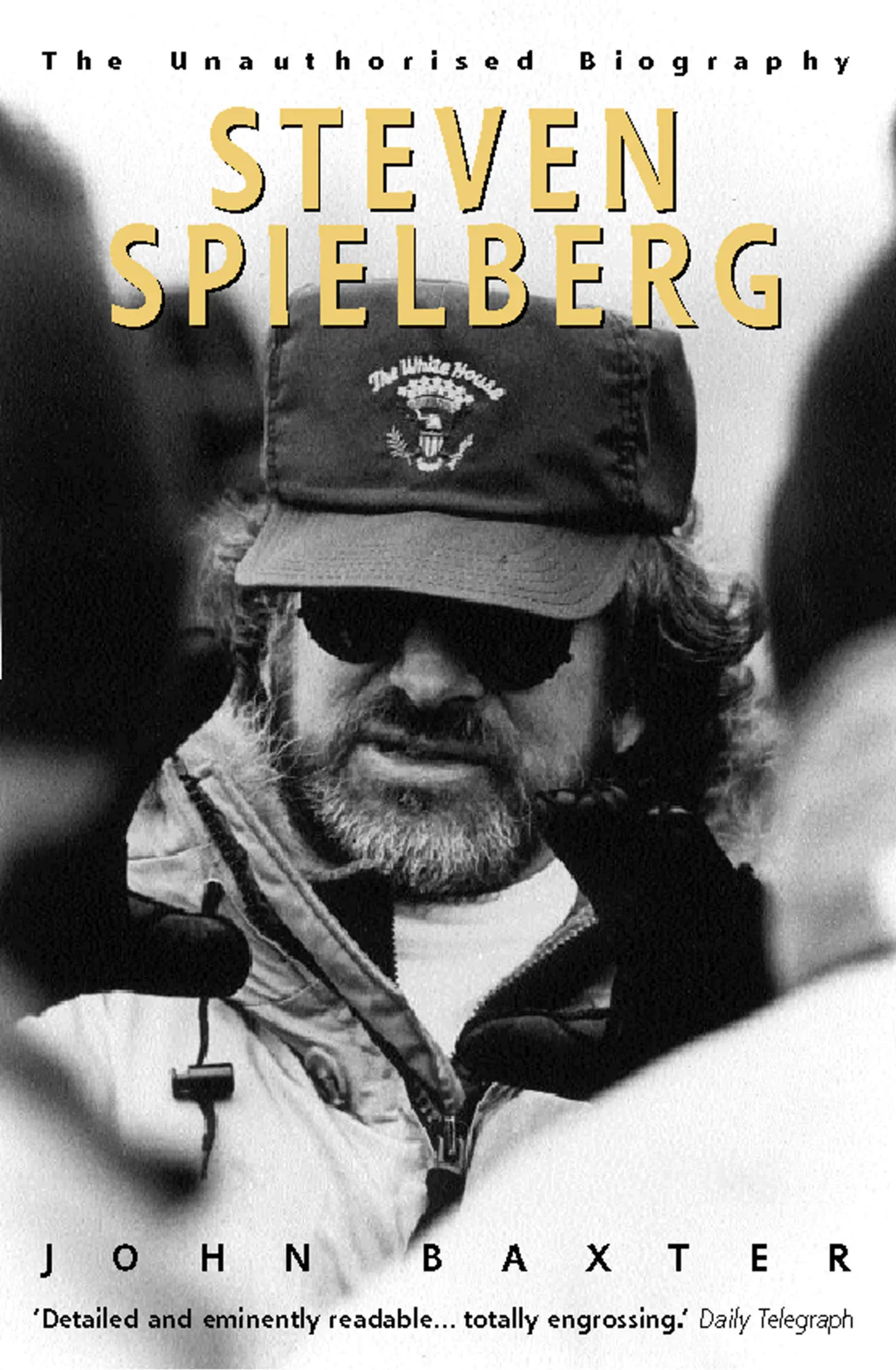
- Название:Steven Spielberg
- Автор:
- Жанр:
- Год:неизвестен
- ISBN:нет данных
- Рейтинг книги:4 / 5. Голосов: 1
-
Избранное:Добавить в избранное
- Отзывы:
-
Ваша оценка:
Steven Spielberg: краткое содержание, описание и аннотация
Предлагаем к чтению аннотацию, описание, краткое содержание или предисловие (зависит от того, что написал сам автор книги «Steven Spielberg»). Если вы не нашли необходимую информацию о книге — напишите в комментариях, мы постараемся отыскать её.
Steven Spielberg — читать онлайн ознакомительный отрывок
Ниже представлен текст книги, разбитый по страницам. Система сохранения места последней прочитанной страницы, позволяет с удобством читать онлайн бесплатно книгу «Steven Spielberg», без необходимости каждый раз заново искать на чём Вы остановились. Поставьте закладку, и сможете в любой момент перейти на страницу, на которой закончили чтение.
Интервал:
Закладка:
everything was clearly defined. Here there were absolutely sharp beginnings, and ends that were neat and irreversible. Outside, beyond the stages, I did not much trust life with its dreadful surprises and ramshackle plots. Here, walking among the alleys just at dawn or twilight, I could imagine I opened the studio and shut it down. It belonged to me because I said it was so.
The studio looked busy. The electric trolleys of the public tours with their pink-and-white candy-striped awnings and rubber wheels seemed to be everywhere. Occasionally a limo cruised by. With the new influx of visitors, security had been tightened. Scotty now rigorously checked everyone at the gate, and people with legitimate business on the backlot had to wait in the shadow of the black tower until a Teamster-driven limo arrived to take them to their meeting – another example of the union excess which was driving producers to Europe.
As the summer approached, Spielberg waited to be given a job, but nothing eventuated. It was ironic. He had an office again at Universal, yet still the phone never rang. They were paying him now, but not much. After taxes, his weekly $130 pay cheque dwindled to less than $100. With leisure to read the fine print of his contract, he found he was less employee than slave. ‘I couldn’t work outside Universal, couldn’t look for independent financing, couldn’t go underground like all my friends were doing. I was trapped in the establishment, but nobody would give me a job in the establishment.’ With his birthday looming, he pressed Sheinberg to find him a directing project. ‘And he twisted someone’s arm – or broke it off – and got someone to give me a shot at one third of the pilot for Night Gallery .’
Night Gallery was a new series being prepared for NBC, and scheduled to begin in November 1969. To write and present it, Universal had hired Rod Serling, in the hope of repeating the success of The Twilight Zone , which he had sold outright to CBS, only to kick himself as it earned a fortune in regional reruns. Serling had grudgingly ceded all creative control to Universal. He was to write and introduce the three segments of Night Gallery , each hingeing on a painting with supernatural powers. In this way he hoped to fill the one-hour slot preferred by networks while conserving the sting-in-the-tail short-story format of Twilight Zone .
Boris Sagal and Barry Shear, both practised directors, were to share the pilot under William Sackheim, a B-movie scriptwriter who became a TV producer in his fifties. Sackheim assigned Spielberg the middle story, Eyes , a characteristic piece of Serling tables-turning about a ruthless blind businesswoman who yearns for a corneal transplant despite warnings by her doctor, Barry Sullivan, that she’ll win at most twelve hours of sight. She plunders the eyes of a desperate Tom Bosley anyway, to find that her half-day coincides with New York’s city-wide 1965 blackout.
Spielberg read the script, and immediately tried to get out of the assignment.
‘Jesus, can’t I do something about young people?’ he begged Sheinberg.
‘I’d take this if I were you,’ Sheinberg said.
It was sound advice. To add class to the pilot, Universal had hired Joan Crawford. The widow of Pepsi-Cola owner Al Steele, and Oscar-winning star of wartime Hollywood’s archetypal melodrama of upward mobility and guilty passion, Mildred Pierce , Crawford had been reduced to playing straight woman to a monster in the British horror film Trog . Even at sixty-three, however, she had never, despite having appeared in game shows, variety and live dramas, made a film specifically for TV. For that particular indignity she demanded, despite her millions, a fee of $50,000, 10 per cent of the pilot’s total budget.
By assigning the waning but still potent Crawford to Spielberg, Sheinberg was showing his confidence in him. Nervously aware that his star had locked horns with great directors like Howard Hawks, Michael Curtiz and George Cukor, Spielberg ran some of her movies and pored over books on her career. Though only five feet four inches tall, she immediately drew the eye, even next to his hero Spencer Tracy. He set up a preliminary meeting at her Hollywood apartment.
Crawford was his introduction to the contradictory power of stars, nondescript in real life, magnetic on screen. Her magnetism, however, wasn’t immediately apparent when, acutely conscious of his gawky appearance, Spielberg was ushered in, since she was standing in the middle of the room with a mask over her eyes.
‘This is how a blind person walks through a room,’ she explained as she groped towards him. ‘I need to practise with the furniture two days before we shoot.’
Then she took off the mask and saw him for the first time.
‘Actually I heard later that she had been promised a director like George Cukor,’ Spielberg said, ‘and had no idea that they were going to assign an acne-ridden, sniffling-nosed, first-time-out director. I only knew years later that she had a temper tantrum when she found out that she had to work with me.’
There was no immediate sign of irritation. Crawford grilled him. What had he made? No features, just a short? Was he perhaps related, she asked drily, to someone in the Black Tower?
‘No, ma’am,’ he quavered. ‘I’m just working my way through Universal.’
Spielberg never described the meal that followed the same way twice. Sometimes he remembers Crawford saying, ‘Steven, you and I both made it on our own. We’re going to get along just fine. C’mon, let’s go out to dinner.’ In other versions, she tells him tersely, ‘I don’t want you sitting with me in a restaurant. People will think you’re my son, not my director.’ Given the course of their relationship, the second version seems more probable.
On the first day of the eight-day shoot, Crawford arrived at 8.45 a.m. precisely, swathed in mink and trailed by her personal hairdresser, make-up man, costume lady, and three men carrying iceboxes of Pepsi, which she handed around among the sixty-man crew. Nobody needed cooling. Crawford’s contract stipulated that the studio was chilled, as it had been in her great days at Warner Brothers, to 55 degrees.
The week before, Spielberg had been given an audience with Serling, daunting for someone who knew him only as the suave black-suited mc of The Twilight Zone . Serling told him that, by contract, not a word of any script could be changed without his approval. (This wasn’t true. Universal had full story approval on all its series, and didn’t hesitate to use it when ratings began to slide.) Feeling himself straitjacketed again, Spielberg fought back, diagramming a series of jump cuts, looming low-angle close-ups and sinuous crane shots reminiscent of those horror/suspense series like Thriller and The Outer Limits , which were lonely islands of German Expressionism in the ocean of Hollywood pap. Some of these devices, like his quick cuts to a series of progressively larger close-ups to build emotional pressure, he would use again and again until they became fixtures of his visual style. But as he tried to explain them during Day One, traditionally spent blocking out camera movements, he found the technicians scornful. Stuff like that was regarded as an unhealthy hangover from live TV drama. The house style called for sets lit with the intensity of an electronic flash, and characters framed in umbilicus-and-up medium shot.
Undeterred, Spielberg lined up his opening, a medium close-up of the back of a large chair that swivelled at the touch of a diamond-ringed finger to reveal Joan. He had plenty more of the same: an unbandaging that owed something to Eisenstein in its swift cutting, and a climax, as Crawford stumbled to her death through a window, that recalled the overt symbolism of 1930s montage expert Slavko Vorkapich. ‘I remember shooting through the baubles on chandeliers,’ says Spielberg, embarrassed – though the shot of Sullivan’s image inverted in distorting glass as he arrives in Crawford’s office is one of the most memorable in Eyes.
Читать дальшеИнтервал:
Закладка:
Похожие книги на «Steven Spielberg»
Представляем Вашему вниманию похожие книги на «Steven Spielberg» списком для выбора. Мы отобрали схожую по названию и смыслу литературу в надежде предоставить читателям больше вариантов отыскать новые, интересные, ещё непрочитанные произведения.





Обсуждение, отзывы о книге «Steven Spielberg» и просто собственные мнения читателей. Оставьте ваши комментарии, напишите, что Вы думаете о произведении, его смысле или главных героях. Укажите что конкретно понравилось, а что нет, и почему Вы так считаете.