Elizabeth Gaskell - Mary Barton
Здесь есть возможность читать онлайн «Elizabeth Gaskell - Mary Barton» — ознакомительный отрывок электронной книги совершенно бесплатно, а после прочтения отрывка купить полную версию. В некоторых случаях можно слушать аудио, скачать через торрент в формате fb2 и присутствует краткое содержание. Жанр: unrecognised, на английском языке. Описание произведения, (предисловие) а так же отзывы посетителей доступны на портале библиотеки ЛибКат.
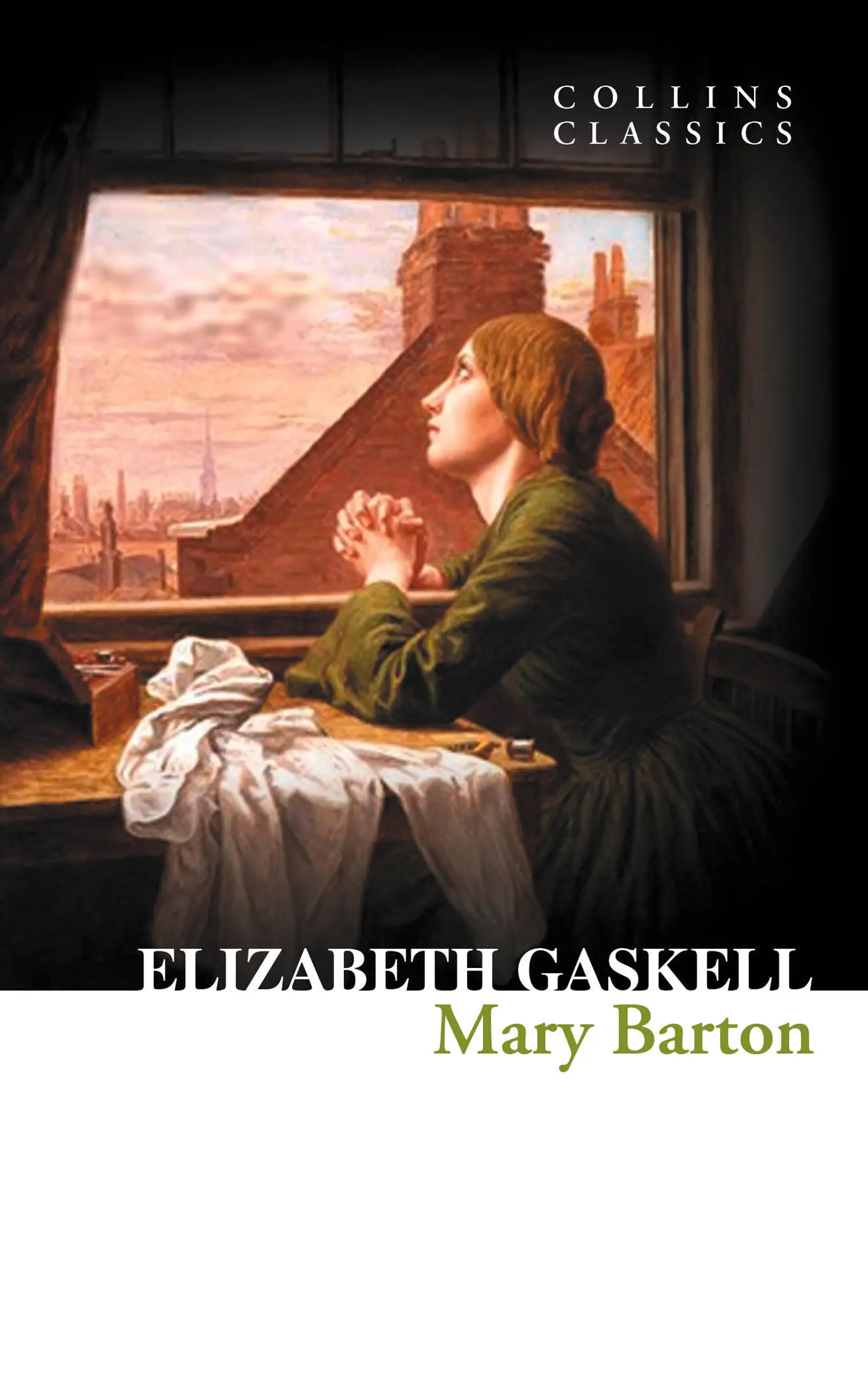
- Название:Mary Barton
- Автор:
- Жанр:
- Год:неизвестен
- ISBN:нет данных
- Рейтинг книги:4 / 5. Голосов: 1
-
Избранное:Добавить в избранное
- Отзывы:
-
Ваша оценка:
Mary Barton: краткое содержание, описание и аннотация
Предлагаем к чтению аннотацию, описание, краткое содержание или предисловие (зависит от того, что написал сам автор книги «Mary Barton»). Если вы не нашли необходимую информацию о книге — напишите в комментариях, мы постараемся отыскать её.
Mary Barton — читать онлайн ознакомительный отрывок
Ниже представлен текст книги, разбитый по страницам. Система сохранения места последней прочитанной страницы, позволяет с удобством читать онлайн бесплатно книгу «Mary Barton», без необходимости каждый раз заново искать на чём Вы остановились. Поставьте закладку, и сможете в любой момент перейти на страницу, на которой закончили чтение.
Интервал:
Закладка:
He gave way for the impatient girls to pass. Guided by the ruddy light more than by any exact knowledge of the streets that led to the mill, they scampered along with bent heads, facing the terrible east wind as best they might.
Carsons’ mill ran lengthways from east to west. Along it went one of the oldest thoroughfares in Manchester. Indeed, all that part of the town was comparatively old; it was there that the first cotton mills were built, and the crowded alleys and back streets of the neighbourhood made a fire there particularly to be dreaded. The staircase of the mill ascended from the entrance at the western end, which faced into a wide, dingy-looking street, consisting principally of public-houses, pawnbrokers’ shops, rag and bone warehouses, and dirty provision shops. The other, the east end of the factory, fronted into a very narrow back street, not twenty feet wide, and miserably lighted and paved. Right against this end of the factory were the gable ends of the last house in the principal street – a house which from its size, its handsome stone facings, and the attempt at ornament in the front, had probably been once a gentleman’s house; but now the light which streamed from its enlarged front windows made clear the interior of the splendidly fitted up room, with its painted walls, its pillared recesses, its gilded and gorgeous fittings-up, its miserable squalid inmates. It was a gin palace.
Mary almost wished herself away, so fearful (as Margaret had said) was the sight when they had joined the crowd assembled to witness the fire. There was a murmur of many voices whenever the roaring of the flames ceased for an instant. It was easy to perceive the mass were deeply interested.
‘What do they say?’ asked Margaret of a neighbour in the crowd, as she caught a few words, clear and distinct from the general murmur.
‘There never is any one in the mill, surely!’ exclaimed Mary, as the sea of upward-turned faces moved with one accord to the eastern end, looking into Dunham Street, the narrow back lane already mentioned.
The western end of the mill, whither the raging flames were driven by the wind, was crowned and turreted with triumphant fire. It sent forth its infernal tongues from every window hole, licking the black walls with amorous fierceness; it was swayed or fell before the mighty gale, only to rise higher and yet higher, to ravage and roar yet more wildly. This part of the roof fell in with an astounding crash, while the crowd struggled more and more to press into Dunham Street, for what were magnificent terrible flames – what were falling timbers or tottering walls, in comparison with human life?
There, where the devouring flames had been repelled by the yet more powerful wind, but where yet black smoke gushed out from every aperture – there, at one of the windows on the fourth storey, or rather a doorway where a crane was fixed to hoist up goods, might occasionally be seen, when the thick gusts of smoke cleared partially away for an instant, the imploring figures of two men. They had remained after the rest of the workmen for some reason or other, and, owing to the wind having driven the fire in the opposite direction, had perceived no sight or sound of alarm, till long after (if anything could be called long in that throng of terrors which passed by in less than half-an-hour) the fire had consumed the old wooden staircase at the other end of the building. I am not sure whether it was not the first sound of the rushing crowd below that made them fully aware of their awful position.
‘Where are the engines?’ asked Margaret of her neighbour.
‘They’re coming, no doubt; but bless you, I think it’s bare ten minutes since we first found out th’ fire; it rages so wi’ this wind, and all so dry-like.’
‘Is no one gone for a ladder?’ gasped Mary, as the men were perceptibly, though not audibly, praying the great multitude below for help.
‘Ay, Wilson’s son and another man were off like a shot, wellnigh five minutes ago. But th’ masons, and slaters, and such like, have left their work, and locked up the yards.’
Wilson, then, was that man whose figure loomed out against the ever-increasing dull hot light behind, whenever the smoke was clear – was that George Wilson? Mary sickened with terror. She knew he worked for Carsons; but at first she had had no idea that any lives were in danger; and since she had become aware of this, the heated air, the roaring flames, the dizzy light, and the agitated and murmuring crowd, had bewildered her thoughts.
‘Oh! let us go home, Margaret; I cannot stay.’
‘We cannot go! See how we are wedged in by folks. Poor Mary! ye won’t hanker after a fire again. Hark! listen!’
For through the hushed crowd pressing round the angle of the mill, and filling up Dunham Street, might be heard the rattle of the engine, the heavy, quick tread of loaded horses.
‘Thank God!’ said Margaret’s neighbour, ‘the engine’s come.’
Then there was a pressure through the crowd, the front rows bearing back on those behind, till the girls were sick with the close ramming confinement. Then a relaxation, and a breathing freely once more.
‘’Twas young Wilson and a fireman wi’ a ladder,’ said Margaret’s neighbour, a tall man who could overlook the crowd.
‘Oh, tell us what you see?’ begged Mary.
‘They’ve getten it fixed against the gin-shop wall. One o’ the men i’ the factory has fell back; dazed wi’ the smoke, I’ll warrant. The floor’s not given way there. God!’ said he, bringing his eye lower down, ‘the ladder’s too short! It’s a’ over wi’ them, poor chaps. Th’ fire’s coming slow and sure to that end, and afore they’ve either getten water, or another ladder, they’ll be dead out and out. Lord have mercy on them!’
A sob, as if of excited women, was heard in the hush of the crowd. Another pressure like the former! Mary clung to Margaret’s arm with a pinching grasp, and longed to faint, and be insensible, to escape from the oppressing misery of her sensations. A minute or two.
‘They’ve taken th’ ladder into th’ Temple of Apollor. Can’t press back with it to the yard it came from.’
A mighty shout arose; a sound to wake the dead. Up on high, quivering in the air, was seen the end of the ladder, protruding out of a garret window, in the gable end of the gin palace, nearly opposite to the doorway where the men had been seen. Those in the crowd nearest to the factory, and consequently best able to see up to the garret window, said that several men were holding one end, and guiding by their weight its passage to the doorway. The garret window-frame had been taken out before the crowd below were aware of the attempt.
At length – for it seemed long, measured by beating hearts, though scarce two minutes had elapsed – the ladder was fixed, an aerial bridge at a dizzy height, across the narrow street.
Every eye was fixed in unwinking anxiety, and people’s very breathing seemed stilled in suspense. The men were nowhere to be seen, but the wind appeared, for the moment, higher than ever, and drove back the invading flames to the other end.
Mary and Margaret could see now: right above them danced the ladder in the wind. The crowd pressed back from under; firemen’s helmets appeared at the window, holding the ladder firm, when a man, with quick, steady tread, and unmoving head, passed from one side to the other. The multitude did not even whisper while he crossed the perilous bridge, which quivered under him; but when he was across, safe comparatively in the factory, a cheer arose for an instant, checked, however, almost immediately, by the uncertainty of the result, and the desire not in any way to shake the nerves of the brave fellow who had cast his life on such a die.
‘There he is again!’ sprung to the lips of many, as they saw him at the doorway, standing as if for an instant to breathe a mouthful of the fresher air, before he trusted himself to cross. On his shoulders he bore an insensible body.
Читать дальшеИнтервал:
Закладка:
Похожие книги на «Mary Barton»
Представляем Вашему вниманию похожие книги на «Mary Barton» списком для выбора. Мы отобрали схожую по названию и смыслу литературу в надежде предоставить читателям больше вариантов отыскать новые, интересные, ещё непрочитанные произведения.







Обсуждение, отзывы о книге «Mary Barton» и просто собственные мнения читателей. Оставьте ваши комментарии, напишите, что Вы думаете о произведении, его смысле или главных героях. Укажите что конкретно понравилось, а что нет, и почему Вы так считаете.