Dr. Pass - Economics
Здесь есть возможность читать онлайн «Dr. Pass - Economics» — ознакомительный отрывок электронной книги совершенно бесплатно, а после прочтения отрывка купить полную версию. В некоторых случаях можно слушать аудио, скачать через торрент в формате fb2 и присутствует краткое содержание. Жанр: unrecognised, на английском языке. Описание произведения, (предисловие) а так же отзывы посетителей доступны на портале библиотеки ЛибКат.
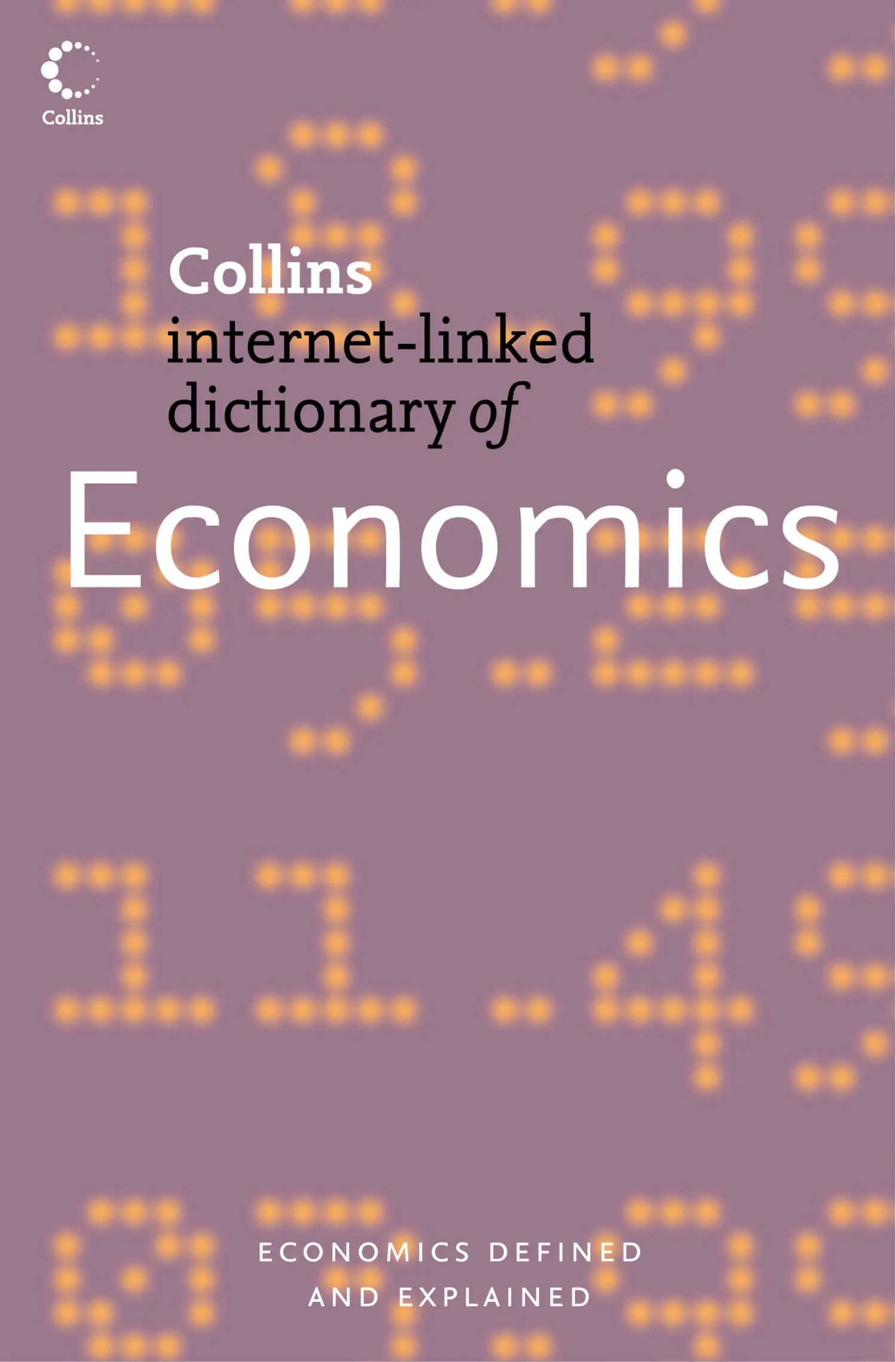
- Название:Economics
- Автор:
- Жанр:
- Год:неизвестен
- ISBN:нет данных
- Рейтинг книги:4 / 5. Голосов: 1
-
Избранное:Добавить в избранное
- Отзывы:
-
Ваша оценка:
Economics: краткое содержание, описание и аннотация
Предлагаем к чтению аннотацию, описание, краткое содержание или предисловие (зависит от того, что написал сам автор книги «Economics»). Если вы не нашли необходимую информацию о книге — напишите в комментариях, мы постараемся отыскать её.
Economics — читать онлайн ознакомительный отрывок
Ниже представлен текст книги, разбитый по страницам. Система сохранения места последней прочитанной страницы, позволяет с удобством читать онлайн бесплатно книгу «Economics», без необходимости каждый раз заново искать на чём Вы остановились. Поставьте закладку, и сможете в любой момент перейти на страницу, на которой закончили чтение.
Интервал:
Закладка:
A similar ‘clearing’ function is performed in the commodities and financial securities market by, for example, the International Commodities Clearing House and the London Financial Futures Exchange. See STOCK EXCHANGE, FUTURES MARKET, COMMODITY MARKET.
closed economyan economy that is not influenced by any form of INTERNATIONAL TRADE, that is, there are no EXPORTS or IMPORTS of any kind. By concentrating on a closed economy, it is possible to simplify the CIRCULAR FLOW OF NATIONAL INCOME MODEL and focus upon income and expenditure within an economy.
In terms of the circular flow, AGGREGATE DEMAND in a closed economy is represented by:
| Y = C + I + G | ||
| where | Y | = national income |
| C | = consumption expenditure | |
| I | = investment expenditure | |
| G | = government expenditure |
By contrast, the OPEN ECONOMY allows for the influence of imports and exports and here aggregate demand is represented in the circular flow as:
| Y | = C + I + G + (X-M) | |
| where | X | = exports |
| M | = imports |
closed shopa requirement that all employees in a given workplace or ORGANIZATION be members of a specified TRADE UNION. Closed shops are often imposed by powerful trade unions as a means of restricting the supply of labour and maintaining high wage rates for members. See SUPPLY-SIDE ECONOMICS.
club principlea means of allocating the common overhead costs incurred in providing a good or service to each individual consumer. For example, residents may create a club to arrange for the resurfacing of a private road. See COLLECTIVE PRODUCTS, FREE-RIDER.
clustersgeographically proximate groups of interconnected companies, suppliers, service producers and associated institutions, linked by commodities and complementarities. Michael Porter identified clusters as being vital for competitiveness insofar as they improve productivity and flexibility, aid innovation and contribute to new business formation. Porter noted that national economics tend to specialise in certain industrial clusters and that if these clusters are internationally competitive then their export performance will be good. See COMPETITIVE ADVANTAGE OF COUNTRIES, EXTERNAL ECONOMIES OF SCALE.
Coase theoremsee TRANSACTION COSTS.
Cobb-Douglas production functiona particular physical relationship between OUTPUT of products and FACTOR INPUTS (LABOUR and CAPITAL) used to produce these outputs. This particular form of the PRODUCTION FUNCTION suggests that where there is effective competition in factor markets the ELASTICITY OF TECHNICAL SUBSTITUTION between labour and capital will be equal to one; that is, labour can be substituted for capital in any given proportions, and vice-versa, without affecting output.
The Cobb-Douglas production function suggests that the share of labour input and the share of capital input are relative constants in an economy, so that although labour and capital inputs may change in absolute terms, the relative share between the two inputs remains constant. See PRODUCTION POSSIBILITY BOUNDARY, CAPITAL-LABOUR RATIO, PRODUCTION FUNCTION, CAPITAL-INTENSIVE FIRM/INDUSTRY, ISOQUANT CURVE, ISOQUANT MAP.
cobweb theorema theory designed to explain the path followed in moving toward an equilibrium situation when there are lags in the adjustment of either SUPPLY or DEMAND to changes in prices, COMPARATIVE STATIC EQUILIBRIUM ANALYSIS predicts the effect of demand or supply changes by comparing the original equilibrium price and quantity with the new equilibrium that results. The cobweb theorem focuses upon the dynamic process of adjustment in markets by tracing the path of adjustment of prices and output in moving from one equilibrium situation toward another (see DYNAMIC ANALYSIS).
Fig. 23 Cobweb theorem.See entry.
The cobweb theorem is generally used to describe oscillations in prices in agricultural markets where the delay between, for example, planting and harvesting means that supply reacts to prices with a time lag. The simplest case where current quantity demanded responds to current price while current quantity supplied depends upon price in the previous period is depicted in Fig. 23. In the figure, D tdenotes quantity demanded in the current period, S t, denotes quantity supplied, while price is denoted by P t, and price in the previous period is denoted by P t–1. If demand were to fall rapidly, such that the demand curve shifted left from D tto D 1 t, then comparative static analysis suggests that the market will eventually move from equilibrium point E (with price OP 1and quantity OQ 1) to equilibrium point E 1(with price OP 4and quantity OQ 4). Dynamic analysis suggest that the path followed will be less direct than this.
Starting from the original equilibrium price OP 1, which has prevailed in years t– 1 and t , farmers will have planned to produce quantity OQ 1. However, after the contraction in demand in year t , supply will exceed demand by QQ 1, and in order to sell all the quantity OQ 1coming on to the market, price has to fall to OP 2. The lower price OP 2, which prevails in year t , will discourage farmers from producing and they will reduce acreage devoted to this crop so that in the next year t + 1 a much smaller quantity OQ 2is supplied.
In year t + 1, and at price OP 2, demand now exceeds supply by the amount Q 1Q 2, and in order to ration the limited supply OQ 2that is available, price will rise to OP 3. This higher price in year t + 1 will encourage farmers to increase their acreage planted so that in the following year t + 2, a larger quantity OQ 3will be supplied, which means that in year t + 2 supply exceeds demand and price will fall below OP 3, which will discourage planting for the following year, and so on. The eventual result of this process of adjustment is that a new equilibrium is achieved at E 1but only after a series of fluctuating prices in intermediate periods are experienced. See AGRICULTURAL POLICY.
cointhe metallic CURRENCY that forms part of a country’s MONEY SUPPLY. Various metals have been used for coinage purposes. Formerly, gold and silver were commonly used but these have now been replaced in most countries by copper, brass and nickel. Coins in the main constitute the ‘low value’ part of the money supply. See MINT, LEGAL TENDER.
collateral securitythe ASSETS pledged by a BORROWER as security for a LOAN, for example, the title deeds of a house. In the event of the borrower defaulting on the loan, the LENDER can claim these assets in lieu of the sum owed. See DEBT, DEBTOR.
collective bargainingthe negotiation of PAY, conditions of employment, etc., by representatives of the labour force (usually trade union officials) and management. Collective bargaining agreements are negotiated at a number of different levels, ranging from local union branches and a single factory to general unions and an entire industry.
Increasingly, plant- and company-level collective bargaining has dealt with PRODUCTIVITY as well as wages and conditions, with trade unions and the workforce offering to relax RESTRICTIVE LABOUR PRACTICES in return for improved wages and conditions. Such relaxations allow the firm to utilize labour more efficiently and flexibly, helping to improve the competitiveness of the firm.
Industry-wide bargaining can have inflationary consequences when trade unions use comparability arguments for wage increases with high percentage wage increases in industries that have experienced large productivity gains being extended on comparability grounds to other industries where the increases are not entirely justified on efficiency grounds. The selective use of comparability arguments for wage increases and pressures to maintain traditional WAGE DIFFERENTIALS can lead to COST-PUSH INFLATION. See TRADE UNION, INDUSTRIAL RELATIONS, INDUSTRIAL DISPUTE.
Читать дальшеИнтервал:
Закладка:
Похожие книги на «Economics»
Представляем Вашему вниманию похожие книги на «Economics» списком для выбора. Мы отобрали схожую по названию и смыслу литературу в надежде предоставить читателям больше вариантов отыскать новые, интересные, ещё непрочитанные произведения.








Обсуждение, отзывы о книге «Economics» и просто собственные мнения читателей. Оставьте ваши комментарии, напишите, что Вы думаете о произведении, его смысле или главных героях. Укажите что конкретно понравилось, а что нет, и почему Вы так считаете.