Katharine McGee - The Dazzling Heights
Здесь есть возможность читать онлайн «Katharine McGee - The Dazzling Heights» — ознакомительный отрывок электронной книги совершенно бесплатно, а после прочтения отрывка купить полную версию. В некоторых случаях можно слушать аудио, скачать через торрент в формате fb2 и присутствует краткое содержание. Жанр: unrecognised, на английском языке. Описание произведения, (предисловие) а так же отзывы посетителей доступны на портале библиотеки ЛибКат.
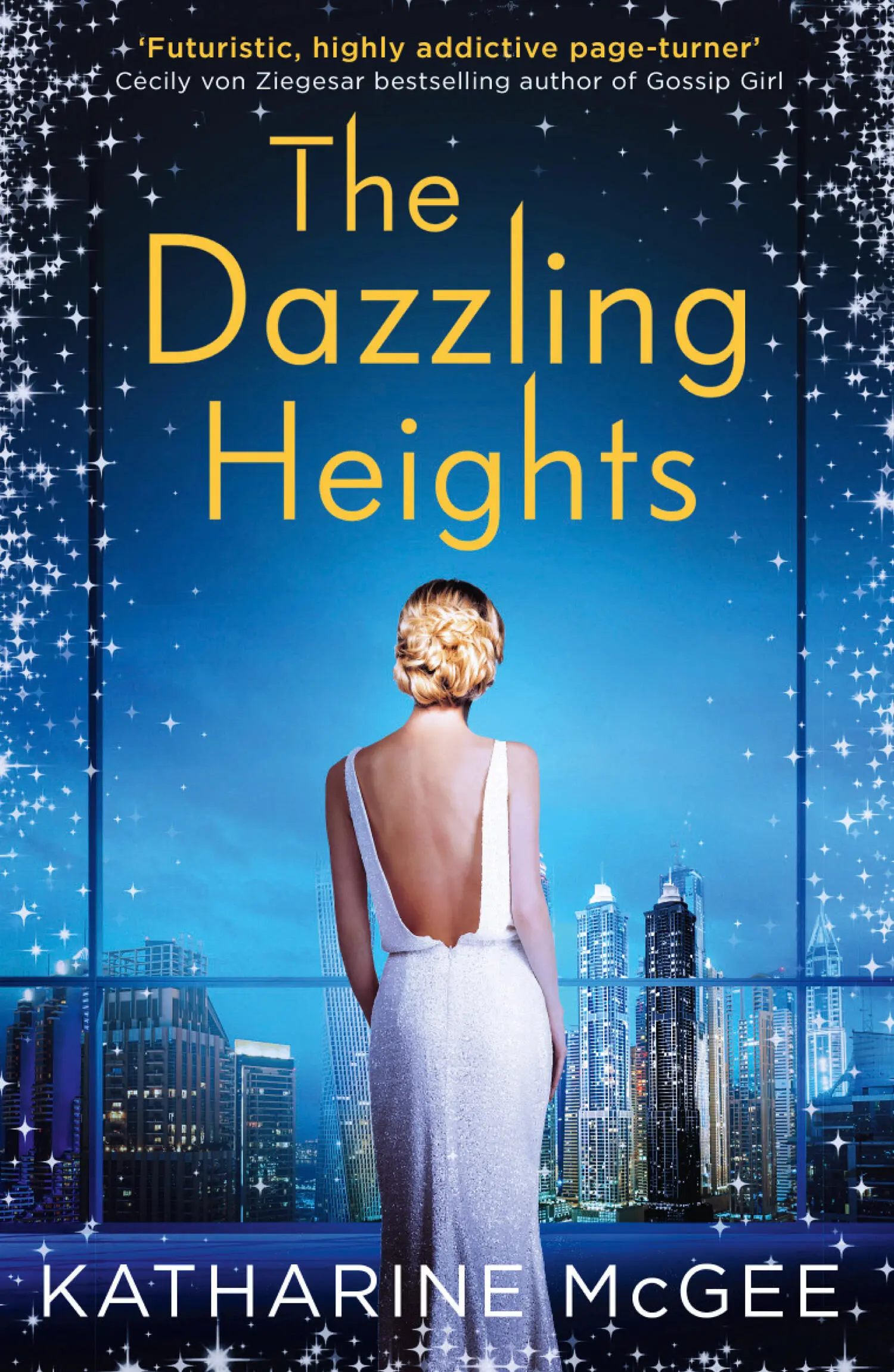
- Название:The Dazzling Heights
- Автор:
- Жанр:
- Год:неизвестен
- ISBN:нет данных
- Рейтинг книги:3 / 5. Голосов: 1
-
Избранное:Добавить в избранное
- Отзывы:
-
Ваша оценка:
The Dazzling Heights: краткое содержание, описание и аннотация
Предлагаем к чтению аннотацию, описание, краткое содержание или предисловие (зависит от того, что написал сам автор книги «The Dazzling Heights»). Если вы не нашли необходимую информацию о книге — напишите в комментариях, мы постараемся отыскать её.
The Dazzling Heights — читать онлайн ознакомительный отрывок
Ниже представлен текст книги, разбитый по страницам. Система сохранения места последней прочитанной страницы, позволяет с удобством читать онлайн бесплатно книгу «The Dazzling Heights», без необходимости каждый раз заново искать на чём Вы остановились. Поставьте закладку, и сможете в любой момент перейти на страницу, на которой закончили чтение.
Интервал:
Закладка:
Avery stiffened, though her face remained immobile as the laser traced across her poreless porcelain skin. Calliope wondered what they would even give her; she was so obviously already perfect.
“It’s a long story,” Avery answered, which was proof enough to Calliope that she was right. She felt a momentary stab of sympathy for Leda. That must suck, being the girl who had to compete with Avery.
A holographic menu popped up at Calliope’s eye level, with treatment recommendations. Next to her, she heard the other girls chatting in low voices as they debated which add-ons to select: a soothing cucumber mask, a hydrogen infusion, a crushed-ruby scrub. Calliope checked the boxes for everything.
A steaming cocoon dropped down from the ceiling before each of them, and the girls leaned forward and closed their eyes.
“Avery,” said the brunette girl—Jess, Calliope remembered. “Your parents’ holiday party is still happening this year, right?”
Calliope’s ears perked up a little at the mention of a party. She turned her head just slightly to the left, letting more of the steam hit the right side of her face, so that she could listen.
“Didn’t you get the invitation?” Avery asked.
Jess seemed to quickly back down. “Yes, but I just thought, after everything that happened … Never mind.”
Avery sighed, but she didn’t sound angry, only regretful. “There’s no way my dad would cancel. During the party, he’s going to announce the completion of The Mirrors—that’s what he named the Dubai Tower, since it has two sides that are mirror images.”
Dubai Tower? Suddenly Calliope remembered what the sales associate had called Avery when they walked in, and the puzzle pieces clicked into place.
Fuller Investments was the company that had patented all the structural innovations needed to build towers this tall: the ultra-compounded steel supports, the earthquake shock protectors stuffed between every floor, the oxygenated air that was pumped throughout the higher floors to prevent altitude sickness. They had built the New York Tower, the first global supertower, almost twenty years ago.
Which meant that Avery Fuller was very wealthy indeed.
“That sounds like fun,” Calliope chimed in. In her lap, she clenched one hand atop the other, then flipped them over again. She’d been to parties far more exclusive and incredible than this, she tried to remind herself: like the one at that club in Mumbai with the champagne bottle as big as a small car, or the mountainside lodge in Tibet where they’d grown hallucinogenic tea. But all those parties faded in her memory—as they always did—when confronted by the specter of some other future party that Calliope wasn’t invited to.
A puff of steam rose from the top of Avery’s cocoon as she gave the answer Calliope had been hoping for. “If you’re not busy, you should come.”
“I’d love to,” Calliope said, unable to keep the excitement from her voice. She heard Avery mutter under her breath, and an instant later the envelope icon in the top of her vision lit up as her contacts received the message. Calliope bit her lip to keep from smiling as she opened it.
Fuller Investments Annual Holiday Party , read the scrolling gold calligraphy, against a black starry background. 12/12/18. The Thousandth Floor.
It was kind of badass, Calliope admitted to herself, that the only address they needed to write was their floor. Clearly they owned the whole thing.
The girls’ chatter moved on, to something about a school assignment, then a boy that Jess was dating. Calliope let her eyes flutter shut. She did love rich things, she thought with unadulterated pleasure, now that she got them for real—and usually on someone else’s dime.
It hadn’t always been like this. When she was younger, Calliope had known about these sorts of things, but never actually experienced them. She could look, but never touch. It was a particularly excruciating sort of torture.
It felt like a long time ago, now.
She’d grown up in a tiny flat in one of the older, quieter neighborhoods of London, where none of the buildings stretched higher than thirty floors and people still grew real plants out on their balconies. Calliope never asked who her father was, because she honestly didn’t care. It had always been Calliope and her mom, and she was fine with that.
Elise—she’d had a different name back then, her real name—had been the personal assistant to Mrs. Houghton, a stuffy rich woman with a pinched nose and watery eyes. She insisted on being called “Lady Houghton,” claiming that she descended from an obscure branch of the now defunct royal family. Elise managed Mrs. Houghton’s calendar, her correspondence, her closet: all the myriad details of her useless, gilded life.
Elise and Calliope’s life felt so dull in contrast. Not that they could complain: their apartment should have been adequate, with its self-filling refrigerator and cleaning bots and a subscription to all the major holo channels. They even had windows in both bedrooms, and a decent closet. Yet Calliope quickly learned to see their life as something unforgivably drab, illuminated only by the occasional touches of glamour that her mom brought home from the Houghtons’.
“Look what I have,” Elise would proclaim, her voice taut with excitement, each time she walked in the door with something new.
Calliope always hurried over, holding her breath as her mom unwrapped the package, wondering what it contained this time. An embroidered silk ball gown with sequins missing, which Mrs. Houghton had asked Elise to take back for repairs. Or a handpainted china plate that was one of a kind, and could Elise please track down the artist and have her make another? Even jewelry, on occasion: a sapphire ring or a diamond choker that needed to be professionally cleaned.
Reverently, Calliope would reach out to touch the sumptuous fur shrug, or crystal wine decanter, or her absolute favorite, the supple Senreve shoulder bag in a shocking bright pink. She would look up into mother’s eyes and see her own childlike longing reflected there, like a candle.
Always too soon for Calliope’s taste, her mom would pack away the treasure with a sigh of regret, to take it to the repair shop or cleaners or back to the store for return. Calliope knew without being told that Elise wasn’t even supposed to bring these things home at all—that she did so for Calliope’s sake, so that Calliope could get a little glimpse at just how beautiful they were.
At least Calliope got the hand-me-downs. The Houghtons had a daughter named Justine, one year older than Calliope. For years, Elise had brought Justine’s discarded clothing home to their flat, rather than taking it to the donation center as Mrs. Houghton instructed. Together Calliope and her mom would sort through the bags, exclaiming over the gossamer dresses and patterned stockings and coats with embroidered bows, tossed aside like used tissue because they were a season old.
When her mom worked late, Calliope would go to her friend Daera’s apartment down the hall. They spent hours pretending they were princesses at afternoon high tea. They would put on Justine’s old dresses and sip cups of water at Daera’s kitchen table, curling up their pinkies in that funny, fancy way, speaking in a butchered approximation of the upper-crust accent.
“It’s my fault you have such a taste for expensive things,” Elise said once, but Calliope didn’t regret any of it. She would rather see a tiny sliver of that beautiful, charmed world than not know of its existence at all.
Everything came to a head one afternoon when Calliope was eleven. She’d had the day off from school, so Elise was forced to bring her to Mrs. Houghton’s house while she worked. Calliope had firm instructions to stay in the kitchen and read quietly on her tablet—which she did, for almost a full hour. Until she heard the little beep of the house comp that meant Lady Houghton had left.
Читать дальшеИнтервал:
Закладка:
Похожие книги на «The Dazzling Heights»
Представляем Вашему вниманию похожие книги на «The Dazzling Heights» списком для выбора. Мы отобрали схожую по названию и смыслу литературу в надежде предоставить читателям больше вариантов отыскать новые, интересные, ещё непрочитанные произведения.







Обсуждение, отзывы о книге «The Dazzling Heights» и просто собственные мнения читателей. Оставьте ваши комментарии, напишите, что Вы думаете о произведении, его смысле или главных героях. Укажите что конкретно понравилось, а что нет, и почему Вы так считаете.