Raymond Feist - Into a Dark Realm
Здесь есть возможность читать онлайн «Raymond Feist - Into a Dark Realm» — ознакомительный отрывок электронной книги совершенно бесплатно, а после прочтения отрывка купить полную версию. В некоторых случаях можно слушать аудио, скачать через торрент в формате fb2 и присутствует краткое содержание. Жанр: unrecognised, на английском языке. Описание произведения, (предисловие) а так же отзывы посетителей доступны на портале библиотеки ЛибКат.
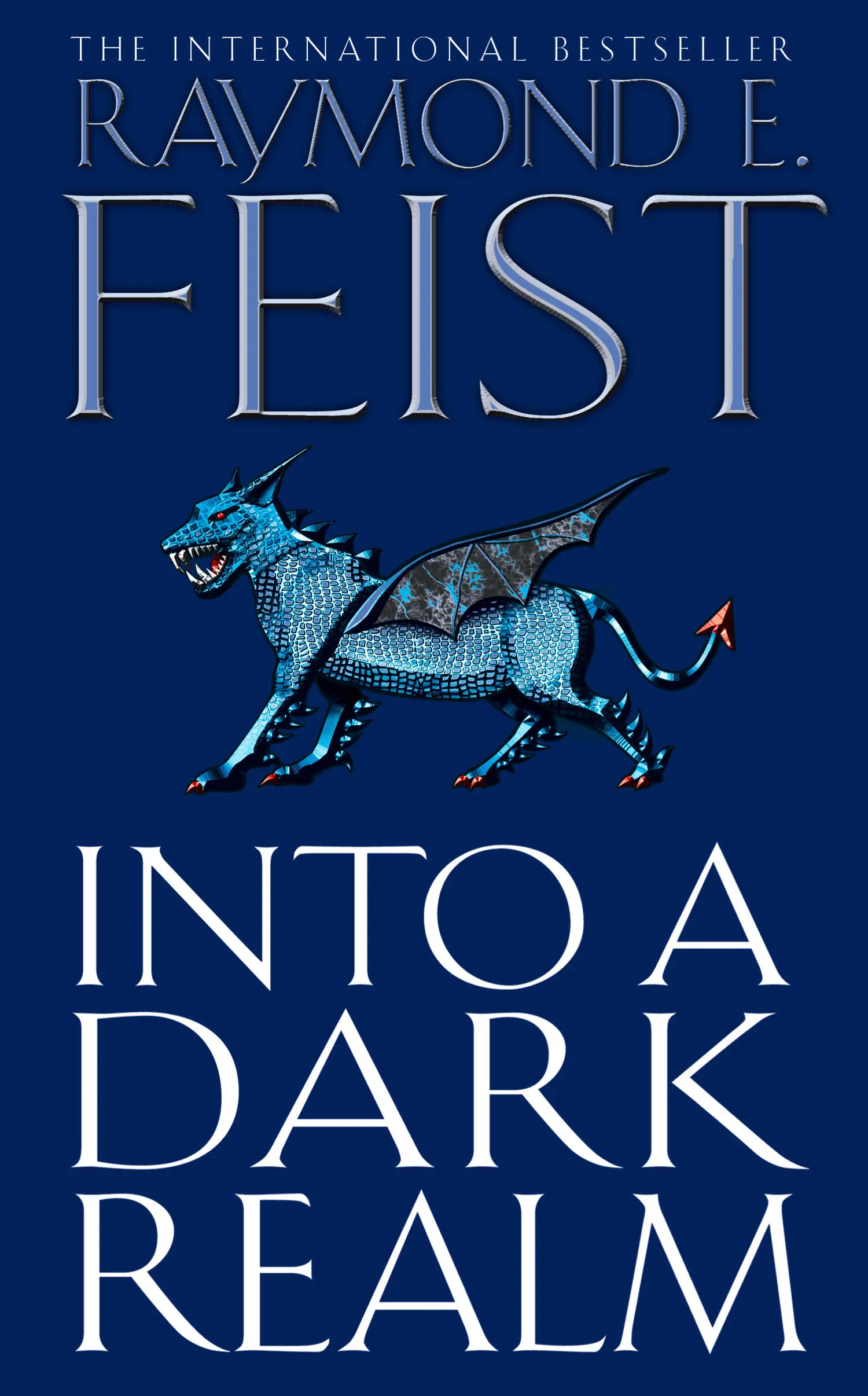
- Название:Into a Dark Realm
- Автор:
- Жанр:
- Год:неизвестен
- ISBN:нет данных
- Рейтинг книги:5 / 5. Голосов: 1
-
Избранное:Добавить в избранное
- Отзывы:
-
Ваша оценка:
Into a Dark Realm: краткое содержание, описание и аннотация
Предлагаем к чтению аннотацию, описание, краткое содержание или предисловие (зависит от того, что написал сам автор книги «Into a Dark Realm»). Если вы не нашли необходимую информацию о книге — напишите в комментариях, мы постараемся отыскать её.
Into a Dark Realm — читать онлайн ознакомительный отрывок
Ниже представлен текст книги, разбитый по страницам. Система сохранения места последней прочитанной страницы, позволяет с удобством читать онлайн бесплатно книгу «Into a Dark Realm», без необходимости каждый раз заново искать на чём Вы остановились. Поставьте закладку, и сможете в любой момент перейти на страницу, на которой закончили чтение.
Интервал:
Закладка:
The General said, ‘Really? I thought you said when last we met you were merchants. Now you have friends this far south?’
Kaspar understood the suspicious mind of a general who just lost a major battle. ‘They are from the north, actually. A man by the name of Bandamin was pressed into service quite far up north – I believe he was taken by slavers, actually, who were most likely illegally doing business outside of Muboya with your press gang.’
‘Wouldn’t be the first time,’ said the General. ‘During a war, it’s harder than usual to observe the niceties.’
‘He had a wife and son, and the son got word that his father was with your army and came south looking for him. The mother followed the boy.’
‘And you’ve followed the mother,’ said Alenburga.
‘I’d like to get her and the boy back home to safety.’
‘And the husband?’ asked the General.
Kaspar said, ‘Him, too, if possible. Is there a buy-price?’
The General laughed. ‘If we let men buy their way out of service, we’d have a very poor army, for the brightest among them would always find a means. No, his service is for five years, no matter how he was enlisted.’
Kaspar nodded. ‘I’m not particularly surprised.’
‘Feel free to look for the boy and his mother. The boys in the luggage-train are down the hill to the west of here, over by a stream. Most of the women, wives as well as camp-followers are nearby.’
Kaspar drank his ale, then stood. ‘I’ll take no more of your time, General. You’ve been generous.’
As he turned to leave, the General asked: ‘What do you think?’
Kaspar hesitated, then turned to face the man. ‘The war is over. It’s time to sue for peace.’
Alenburga sat back and ran forefinger and thumb along the side of his jaw, tugging slightly at his beard for a moment. ‘Why do you say that?’
‘You’re recruited every able-bodied man for three hundred miles in any direction, General. I’ve ridden through two cities, a half-dozen towns and a score of villages on my way here. There are only men over forty years of age and boys under fifteen left. Every potential fighting man is already in your service.
‘I can see you are digging in to the south; you expect a counterattack from there; but if Okanala has anything left to speak of, he’ll punch through on your left, roll you up, and put your back to the stream. Your best bet is to fall back to the town and dig in there.
‘General, this is your frontier for the next five years, at least, ten more likely. Time to end this war.’
The General nodded. ‘But our Maharajah has a vision, and he wishes to push south until we are close enough to the City of the Serpent River that we can claim all the Eastlands are pacified.’
‘I think your ambitious young lord even imagines some day he might take the city and add it to Muboya,’ Kaspar suggested.
‘Perhaps,’ said Alenburga. ‘But you’re right on all other counts. My scouts tell me Okanala is digging in, as well. We’re both played out.’
Kaspar said, ‘I know nothing of the politics here, but there are times when an armistice is a face-saving gesture and times when it is a necessity, the only alternative to utter ruin. Victory has fled, and defeat awaits on every hand. Have your Maharajah marry one of his relatives off to one of the King’s and call it a day.’
The General stood up and offered his hand. ‘If you find your friends and get them home, Kaspar of Olasko, you’re welcome in my tent any time. If you come back, I’ll make a general out of you and when the time comes we’ll push down to the sea together.’
‘Make me a general?’ said Kaspar with a grin.
‘Ah, yes, I was the commander of a brigade when last we met,’ said the General, returning Kaspar’s grin. ‘Now I command the army. My cousin appreciates success.’
‘Ah,’ said Kasper shaking his hand. ‘If ambition grips me, I know where to find you.’
‘Good fortune, Kaspar of Olasko.’
‘Good fortune, General.’
Kaspar left the pavilion and mounted his horse. He walked the gelding down the side of the hill towards a distant dell through which wandered a good-sized stream.
He felt a rising disquiet as he approached the luggage wagons, for he could see signs of battle all around. The traditions of war forbade attacking the luggage-boys or the women who followed the army, but there were times when such niceties were ignored or the ebb and flow of the conflict simply washed over the non-combatants.
Several of the boys he saw bore wounds, some minor, some serious, and many were bandaged. A few lay on pallets beneath the wagons and slept, their injuries rendering them unfit for any work. Kaspar rode to where a stout man in a blood-covered tunic sat on a wagon, weeping. A recently-removed metal cuirass lay on the seat next to him, as did a helm with a plume, and he stared off into the distance. ‘Are you the Master of the Luggage?’ asked Kaspar.
The man merely nodded, tears slowly coursing down his cheeks.
‘I’m looking for a boy, by the name of Jorgen.’
The man’s jaw tightened and he dismounted slowly. When he was standing before Kaspar he said, ‘Come with me.’
He led Kaspar over a small rise to where a company of soldiers were digging a massive trench, while boys were carrying wood and buckets of what Kaspar assume was oil. There would be no individual pyres for the dead; this would be a mass immolation.
The dead were lined up on the other side of the trench, ready to be carried and placed atop the wood before the oil was thrown over it and the torches tossed in. A third of the way down the line the man stopped. Kaspar looked down and saw three bodies lying close together.
‘He was such a good boy,’ the Master of Luggage said, his voice hoarse from shouting orders, from the battle dust, the day’s heat, and strangled emotions. Jorgen lay next to Jojanna, and next to her lay a man in soldier’s garb. It could only be Bandamin, for his features were similar to the boy’s.
‘He came looking for his father almost a year ago, and … his mother soon after. He worked hard, without complaint, and his mother looked after all the boys as if they were her own. When their father could, he would join them and they were a joy to know. In the midst of all this—’ he waved his hand in an encompassing gesture, ‘—they found happiness in just being together. When …’ He stopped and his eyes welled up with tears. ‘I asked for the … father to be detailed with the luggage. I thought I was doing them all a favour. I never thought the battle would spill over to the luggage-train. It’s against the compact of war! They killed the boys and the women! It’s against every rule of war!’
Kaspar took a moment to look down at the three of them, reunited by fate and fated to die together, a long way from home. Bandamin had been struck a crushing blow in the chest, from a mace perhaps, but his face was unmarked. He wore a tabard in the blue and yellow of Muboya. It was faded and dirty and slightly torn. Kaspar saw the man Jorgen would have become in his father’s face. He had an honest man’s face, a hard-working face. Kaspar thought Bandamin had been a man who had once laughed a lot. He lay with eyes closed, sleeping. Jojanna appeared unmarked, so Kaspar suspected that an arrow or spear point had taken her in the back, perhaps as she ran to protect the boys. Jorgen’s hair was matted with blood and his head rested at an odd angle. Kaspar felt a tiny sense of relief that it must have been a sudden death, perhaps with no pain. He felt an odd, unexpected ache; the boy was still so young.
He stared at the three of them, looking like nothing so much as a family sleeping side-by-side. He knew the world spun on, and no one but he, and perhaps one or two people in the distant north, would note the passing of Bandamin and his family. Jorgen, the last scion of some obscure family tree was dead, and with him that line had ended forever.
Читать дальшеИнтервал:
Закладка:
Похожие книги на «Into a Dark Realm»
Представляем Вашему вниманию похожие книги на «Into a Dark Realm» списком для выбора. Мы отобрали схожую по названию и смыслу литературу в надежде предоставить читателям больше вариантов отыскать новые, интересные, ещё непрочитанные произведения.










Обсуждение, отзывы о книге «Into a Dark Realm» и просто собственные мнения читателей. Оставьте ваши комментарии, напишите, что Вы думаете о произведении, его смысле или главных героях. Укажите что конкретно понравилось, а что нет, и почему Вы так считаете.