Rosemary Rogers - A Reckless Encounter
Здесь есть возможность читать онлайн «Rosemary Rogers - A Reckless Encounter» — ознакомительный отрывок электронной книги совершенно бесплатно, а после прочтения отрывка купить полную версию. В некоторых случаях можно слушать аудио, скачать через торрент в формате fb2 и присутствует краткое содержание. Жанр: unrecognised, на английском языке. Описание произведения, (предисловие) а так же отзывы посетителей доступны на портале библиотеки ЛибКат.
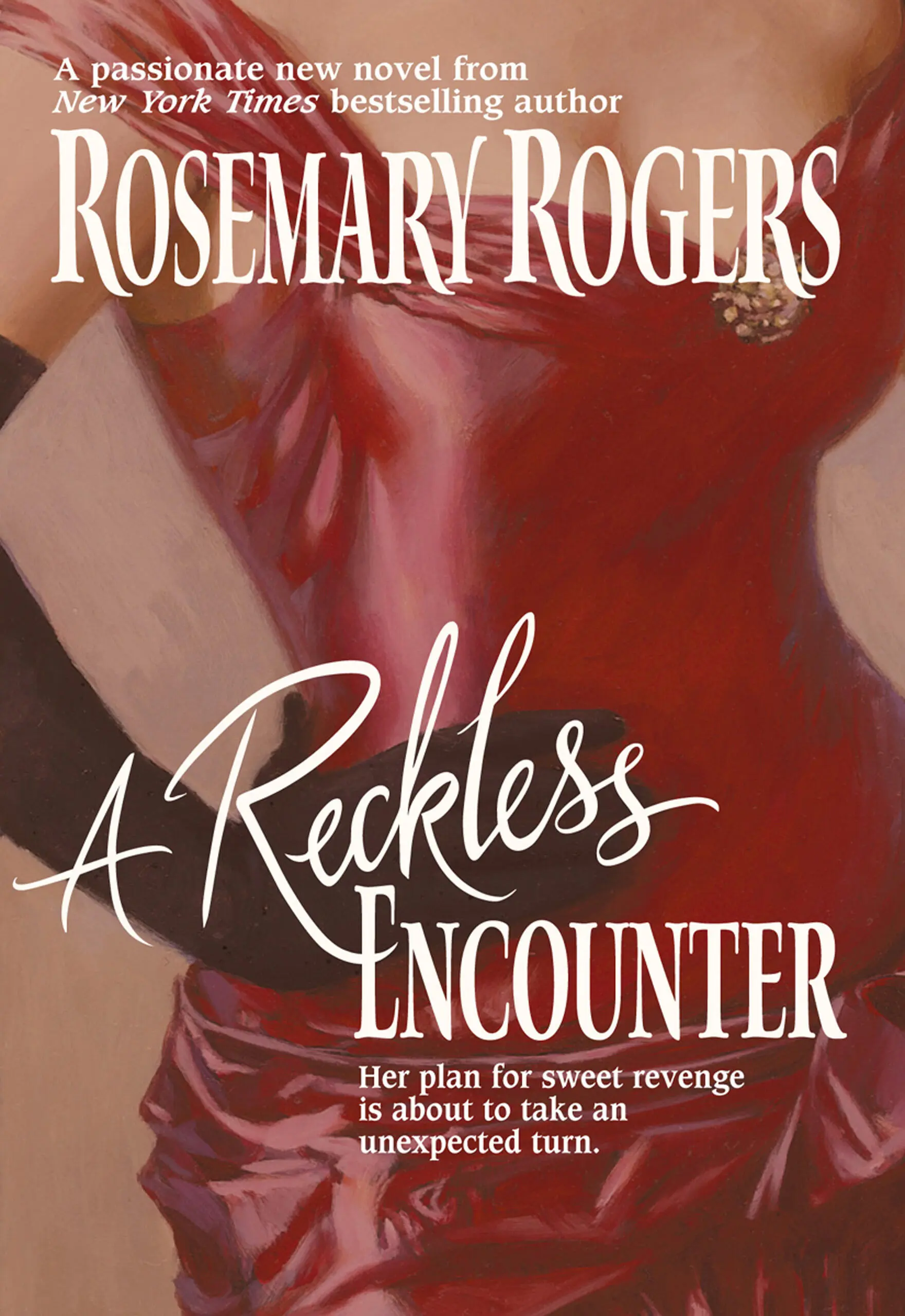
- Название:A Reckless Encounter
- Автор:
- Жанр:
- Год:неизвестен
- ISBN:нет данных
- Рейтинг книги:5 / 5. Голосов: 1
-
Избранное:Добавить в избранное
- Отзывы:
-
Ваша оценка:
A Reckless Encounter: краткое содержание, описание и аннотация
Предлагаем к чтению аннотацию, описание, краткое содержание или предисловие (зависит от того, что написал сам автор книги «A Reckless Encounter»). Если вы не нашли необходимую информацию о книге — напишите в комментариях, мы постараемся отыскать её.
A Reckless Encounter — читать онлайн ознакомительный отрывок
Ниже представлен текст книги, разбитый по страницам. Система сохранения места последней прочитанной страницы, позволяет с удобством читать онлайн бесплатно книгу «A Reckless Encounter», без необходимости каждый раз заново искать на чём Вы остановились. Поставьте закладку, и сможете в любой момент перейти на страницу, на которой закончили чтение.
Интервал:
Закладка:
“No doubt. The obvious explanation will certainly not suffice. I presume Leatherwood has the ship’s manifests and budget reports I’ll need.”
“Yes. Placate the board, Northington. We must have time to recover from this loss. We can’t risk losing investors. It would cause far too many complications.” The earl squinted up at his son, his mouth set in a bitter slash. “I’ve often wondered if my father somehow knew the trouble it would cause me to have you on the board. If he’d only left me those crucial shares…”
As the earl’s voice trailed into silence, Colter reflected that his grandfather had certainly known what he was doing. The former earl had done what he could to curtail his heir’s access to the family fortune. As no doubt the present earl would continue to do to his own heir.
“Do not,” the earl added tersely, “speak of this to my uncle. The less Philip knows at the moment, the better I like it.”
“I wasn’t aware Philip was involved.”
“He’s not. Or shouldn’t be. But curse him, he manages to find out about my business affairs far too often, and I don’t trust him.”
“Such familial devotion,” Colter observed dryly.
“No more so than he’s exhibited for me. He has always thought the title should belong to him upon the death of my grandfather. ‘The younger son should inherit his father’s estate, not the grandson,’ he said. Rubbish!”
“So you claim, yet I’ve never heard a word spoken about it from Philip. He seems quite content with his inheritance. He enjoys being an idle gentleman.”
Moreland snorted. “Don’t be fooled by his pretense of complacence. You consider me ruthless, but I assure you that my uncle has refined the art.”
Colter didn’t reply. There had always been rivalry between the two men, and though Philip Worth—Lord Easton—may indeed be the epitome of a wastrel, Colter had never known him to act with any malice.
Unlike his father, who had acted with malice too many times to count.
The earl flapped a hand at his son, an indication he was being dismissed. Brewster returned to tend him, a silent, efficient valet fussing over the blanket draped over the earl as if there was no one else in the room, as if Colter had already departed.
He left the house without seeing his mother again, his boots echoing in the wide, empty cavern of the entrance hall, the gleaming black-and-white marble floors spotless and sterile. The quiet peace of the house was deceptive. Beneath the facade of serenity lurked a cesspool of anger and corruption. The earl thrived on it. Until his illness, he had instigated scandal and schemes without a shred of restraint. Only his wealth and title had saved him from ruin.
It fell to his son and heir—the unwanted heir—to walk a fine line between his father’s tainted reputation and the necessity of maintaining the facade without being tarnished by the same brush. Publicly he would not denounce his father, but privately, he did all he could to show his contempt for the man the earl had become. It had become a game of sorts between them. A serious game in which winner took all.
Christ, it was just as bitter a regret for him as for his father that Anthony had died from that fever. There were times he felt trapped, imprisoned and raging against the invisible bars of his cell.
He welcomed strife, welcomed a challenge, welcomed anything that would distract him. Why not? It was better than the reality of his situation, the trap that closed in around him a little more every day.
It wasn’t the mechanics entailed in the myriad technicalities of a vast shipping business that he found stifling, for that could be energizing if he was left to his own devices and decisions. But it was intolerable to be in the position of having his every decision supervised and examined as if he was still a schoolboy at Eton.
If not for his mother, he would have damned the title and the money and left long ago, taken the Grand Tour that Napoleon had denied him until His Majesty’s invitation to lead an army against the Corsican. It was not as he had first envisioned touring the Continent, with the smell of gunpowder and stench of death in his nostrils, the screams of dying men drowning out everything but the instinct to survive. He had learned the art of killing, refined it, then been sent home to be civilized once the war ended.
It was difficult. Acquired savagery still surfaced at times, still seethed beneath the thin veneer of civility. So he’d left England for a while, traveled, seen places in the world that were exotic and dangerous. He’d gone to South America, Spanish California and New Orleans in the American South, and when he’d come home at last, it was to find his entire life irrevocably changed.
Had he remained in England, he would probably have died of the same fever that had killed his brother. It was an ironic twist of fate that he’d survived legions of French while Anthony—the heir, the golden son—had died at home in his bed.
There were times Colter almost envied him.
5
Light from thousands of candles and wall sconces illuminated the vast ballroom. Glittering jewels sparkled on bare bosoms and elegant coiffures. Music soared above the chatter and laughter of hundreds of guests, linen-draped tables lined walls and potted plants cast feathery shadows on polished floors. Celia scarcely recognized her cousin’s ballroom. It exceeded her childhood dreams.
It had seemed immense when vacant, but now the ballroom had shrunk to a suffocating constriction of space. For a brief moment, she was slightly panicked. How had she ever thought for a single instant that she could manage this? She was out of her depths here among these people far too accustomed to the trappings of wealth and polite society. Since arriving in London she had realized how far apart her world was from this glittering society. The chasm was wide. Almost too wide.
Nervously she ran a swift hand over the skirts of her new gown, the satin and tulle embroidered with tiny gold stars and ending in a graceful train. It was caught just beneath her breasts with a wide sash also embroidered with gold stars upon lush blue velvet. Matching slippers were adorned with stars sewn in glittering gold threads. The only concession to the cool night was a silk shawl of sheer white, spangled with more gold stars.
Lily had dressed her hair, piling it in luxuriant curls atop her crown and allowing artful tendrils to fall over her forehead, temples and neck. A wreath of gold stars was placed upon her brow, with a matching piece that was attached to the comb securing her curls.
“It is the a` l’enfant style,” Lily said, gazing at her with approval when Celia had stared at her reflection in the mirror. “Ravissante!”
Astonished at the transformation, Celia hadn’t even heard Jacqueline come into the room until she came up behind her, saying with delight, “How beautiful you are, petite. But you should hurry, for we must form the receiving line.”
“I…I’ll be down very soon, I promise,” she’d said, and saw that Jacqueline understood.
The light hand on her shoulder squeezed tightly. “You will be quite the thing tonight. No one will be able resist not only your beauty, but your sweet charm. Just be yourself, and all will be well.”
But would it? Celia thought distractedly that if Jacqueline knew the truth she would not be so certain of success. There were moments she considered leaving rather than disappointing her cousin, but still she stayed. She must face Northington again, must see for herself the man who had brought so much pain into her life. She could never be free until he paid for his injustice.
Now that the moment was here, she wavered between anticipation and stark fear. Yet the face in her mirror looked composed, showed nothing of her inner turmoil.
Читать дальшеИнтервал:
Закладка:
Похожие книги на «A Reckless Encounter»
Представляем Вашему вниманию похожие книги на «A Reckless Encounter» списком для выбора. Мы отобрали схожую по названию и смыслу литературу в надежде предоставить читателям больше вариантов отыскать новые, интересные, ещё непрочитанные произведения.






Обсуждение, отзывы о книге «A Reckless Encounter» и просто собственные мнения читателей. Оставьте ваши комментарии, напишите, что Вы думаете о произведении, его смысле или главных героях. Укажите что конкретно понравилось, а что нет, и почему Вы так считаете.