Tilly Bagshawe - Scandalous
Здесь есть возможность читать онлайн «Tilly Bagshawe - Scandalous» — ознакомительный отрывок электронной книги совершенно бесплатно, а после прочтения отрывка купить полную версию. В некоторых случаях можно слушать аудио, скачать через торрент в формате fb2 и присутствует краткое содержание. Жанр: unrecognised, на английском языке. Описание произведения, (предисловие) а так же отзывы посетителей доступны на портале библиотеки ЛибКат.
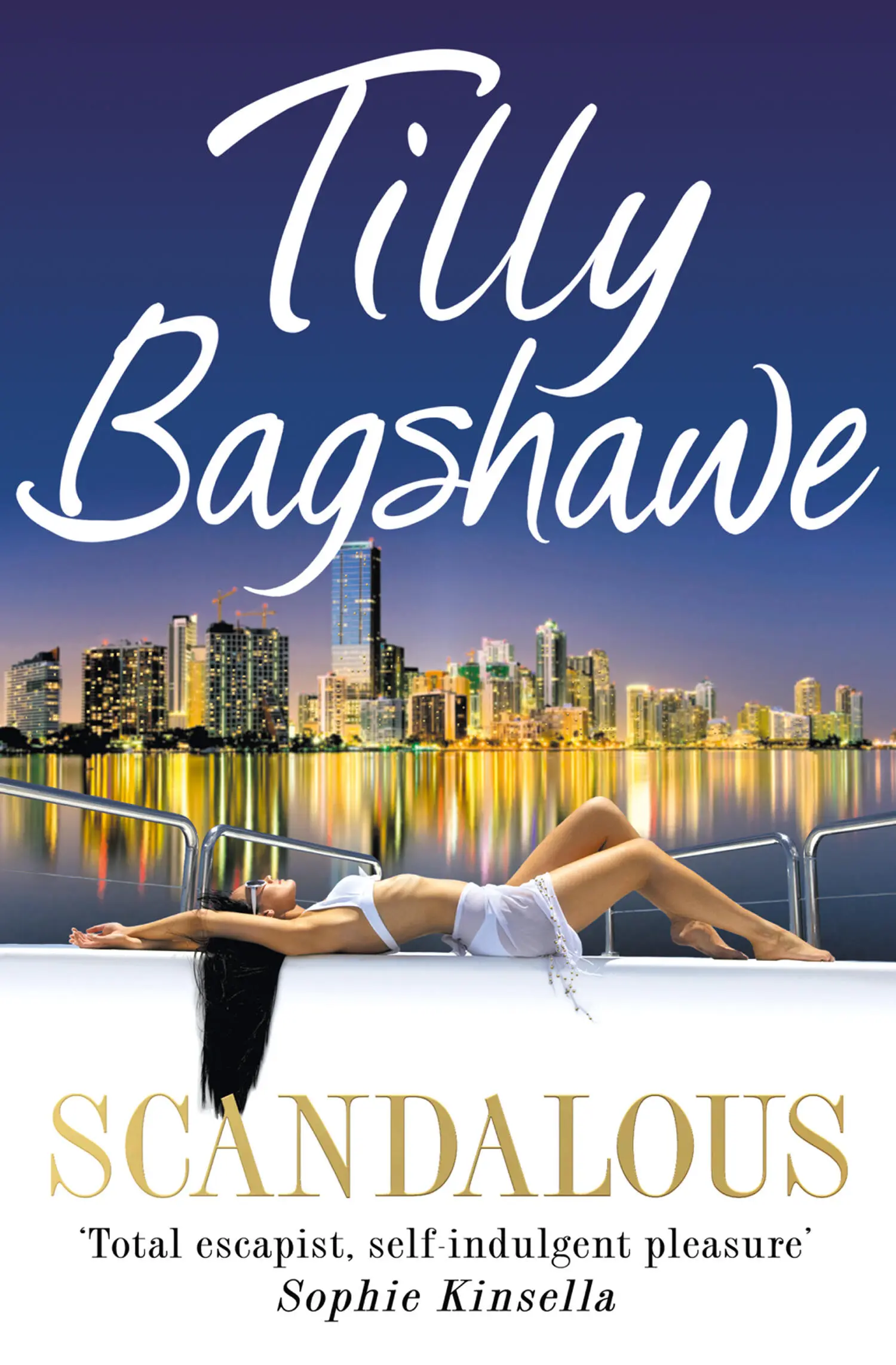
- Название:Scandalous
- Автор:
- Жанр:
- Год:неизвестен
- ISBN:нет данных
- Рейтинг книги:3 / 5. Голосов: 1
-
Избранное:Добавить в избранное
- Отзывы:
-
Ваша оценка:
Scandalous: краткое содержание, описание и аннотация
Предлагаем к чтению аннотацию, описание, краткое содержание или предисловие (зависит от того, что написал сам автор книги «Scandalous»). Если вы не нашли необходимую информацию о книге — напишите в комментариях, мы постараемся отыскать её.
Scandalous — читать онлайн ознакомительный отрывок
Ниже представлен текст книги, разбитый по страницам. Система сохранения места последней прочитанной страницы, позволяет с удобством читать онлайн бесплатно книгу «Scandalous», без необходимости каждый раз заново искать на чём Вы остановились. Поставьте закладку, и сможете в любой момент перейти на страницу, на которой закончили чтение.
Интервал:
Закладка:
I could claim it. I could say that it was my idea. Who would know?
A theory like this would make him as a physicist. It would silence all the envious mutterings about him being a phoney academic, a pretty face with a head for numbers but not a real scientist. It would change his life. But would he get away with it?
Why not? It’d be my word against hers, a professor against an infatuated undergraduate.
‘Theo!’ Sasha’s voice brought him reluctantly back to reality. She’d pulled on a t-shirt and knickers, but still had that flushed, tousled, post-coital look that never failed to give him a hard on. ‘Are you all right?’
‘I’m fine.’ He closed the file, making an effort to keep his tone casual. ‘There’s some interesting stuff here. Definitely.’
Sasha’s face lit up.
‘But it does need work. Particularly in the first section, some of your equations look shaky to me. Given how much you’re extrapolating from those foundations…Hey, don’t look so crestfallen.’ He kissed her. ‘This is good stuff, Sasha. You can’t expect to get it pitch perfect on a first draft.’
‘I suppose not.’
‘Look, I tell you what. Make me a copy of it. If you like I’ll look at the problems in more detail over the summer.’
‘Would you really have time?’
‘Well, not really. But I’ll make time,’ he said magnanimously, pulling on his jeans and buttoning up his shirt. Sasha looked so utterly ravishable, he was half tempted to screw her again. But until he had that document safely in his possession, he knew he wouldn’t be able to think about anything else.
‘I’ll email it to you when we get back to college,’ said Sasha.
‘No, no, don’t do that,’ said Theo hastily. I hate email. Just stick it on a disc and drop it in my pigeonhole before you go.
Sasha watched him stand up and brush the grass and dust off his clothes.
He’s so perfect. Handsome, brilliant, kind, the whole package. How on earth am I going to survive the summer without him?
Two weeks later Theresa Dexter sat at her desk at home, watching Theo scribbling feverishly at his desk, and said a silent prayer of thanks.
Thank you God for making him happy again. For bringing him back to me.
Eighteen months ago Theo had been as miserable as she’d ever known him. Theresa knew that the spiteful gibes of his fellow physicists were hurtful to him. She also suspected that her husband felt the absence of a child in their lives much more keenly than he admitted to her. But she felt sure that his depression was more than that. Something was wrong, and as hard as she tried to discover what it was and to reconnect with him, she couldn’t.
Then miraculously, around Christmas of that year, Theo’s spirits had lifted. He still came home tired. But he left home full of the joys of spring, bouncing out of the house like Tigger. It made Theresa’s heart sing to watch him. By the spring, their sex life had begun to revive, and in the last six months it had positively exploded. It was like dating a teenager, the energy, the enthusiasm… Theresa’s hands had been shaking when she screwed up her courage and asked Theo if they could try IVF. Ever since the meeting with Dr Thomas, he’d been implacable on that score: it was expensive, and it wouldn’t work. But to Theresa’s delighted amazement, he agreed right away, even taking her out to their favourite curry house to celebrate the decision with chicken jalfrezi and two large Cobras. Walking home hand in hand, happily bloated on naan bread and beer, Theresa realized what had been missing in her marriage for so long: fun. She didn’t know what had wrought the change in Theo and she didn’t care. We’re going to be happy again.
Theresa finished her own book in the spring. Shakespeare in Hollywood: The textual implications of filmed adaptation. Only a handful of specialist academics bought it, but that didn’t matter. It was critically well received, and cemented Theresa’s position as a leading expert in her field. Theo, meanwhile, was still struggling with his follow-up edition to Prospective Signatures. It was the one part of his life that clearly still troubled him. And the one area where Theresa, whose knowledge of physics would have fit comfortably on the back of a stamp, was completely unable to help him.
But God, apparently, had another miracle in store for the Dexters. Two weeks ago to the day, Theo came home in tearing spirits, bursting through the front door like Rhett Butler and scooping Theresa up into his arms.
‘What on earth is it?’ she giggled. ‘Have we won the lottery?’
‘Yes,’ he laughed. ‘In a way we have. Well, I have. But I’ll be happy to share my winnings with you, darling.’
Theo had come up with a theory – he tried to explain it to her but it was all way over Theresa’s head, something about planets and the birth of the universe and quantum something-or-other. Anyway, the point was it was clearly brilliant, Theo had thought of it, and he seemed to think it had potential not just to boost his career, but quite possibly to make them a lot of money into the bargain.
Theresa couldn’t have cared less about the money. She loved their little house in Cambridge, their battered old car, their charmed, ivory-tower life. But to have Theo’s genius recognized at last? Well, that would be amazing, wonderful and long overdue. Apart from being pregnant, she couldn’t think of a single thing she would have wanted more.
‘Are you hungry, darling?’ she asked him. ‘Shall I make us some lunch?’
‘Lunch’ meant a sandwich. Theresa loved to cook, but not when she was working. She spent ninety per cent of her time at home in this room, dubbed ‘the office’ because it had both their desks in it, but really the only proper reception room in the house. Beneath her feet, a tattered Persian rug was almost invisible beneath the mess of books, papers, mugs of cold, half-drunk tea and empty packets of custard creams (‘the thinking woman’s biscuit’ as Jenny so rightly called them). The Dexters’ home was a modest, solidly built Victorian semi, with high ceilings, bay windows, and lots of what estate agents called ‘original features’. Jenny and Jean Paul’s house next door was a carbon copy, except that theirs had had the benefit of Jenny’s design flair, so the grand old fireplaces and thick white cornicing looked impressive, whereas Theresa’s just looked – what was the word? – ah yes. Filthy. In the past Theo had moaned constantly about the un-Cath-Kidston-ness of their kitchen and what he impolitely referred to as Theresa’s ‘dyslaundria’ (he never seemed to notice his own). But these days Theresa could do no wrong.
‘I’d love to eat with you, T,’ he said, typing the last few words with a flourish and snapping shut his computer. ‘But sadly, I can’t. Big meeting today. Massive.’ Scooping up his laptop and papers, he came over and kissed her on the lips. Seconds later he was out the front door.
He’s like a cyclone, thought Theresa. A happiness cyclone.
She wondered what the big meeting was, and hoped it went well. But it would go well. Of course it would. Theo was on a roll.
I’ve done it, Ed. I’ve bloody done it.’ Theo Dexter triumphantly slammed a thick, bound manuscript down on the table. ‘Read it and weep, my friend. Tears of joy for all the money we’re going to make!’
Ed Gilliam was a literary agent, the biggest name in the huge ‘popular science’ market. A short, unprepossessing man in his mid fifties with thinning red hair and a high-pitched, nasal voice, it was Ed Gilliam who had helped make Stephen Hawking’s A Brief History of Time brief: hence accessible to laymen; hence one of the highest-grossing books of the twentieth century in any genre, never mind science. These days Gilliam wasn’t just about books. He had a finger in every pie, from TV to film to new media. Ed Gilliam had been interested in Theo Dexter since they first met at an MIT symposium in America six years ago. The kid was bright, charismatic, and with those blond, preppy good looks of his he’d be wildly telegenic – rare qualities indeed in a scientist. All Theo needed was some substance. An idea, a book, anything that Ed could use to launch him onto the unsuspecting public. A sort of Steve Irwin for nerds.
Читать дальшеИнтервал:
Закладка:
Похожие книги на «Scandalous»
Представляем Вашему вниманию похожие книги на «Scandalous» списком для выбора. Мы отобрали схожую по названию и смыслу литературу в надежде предоставить читателям больше вариантов отыскать новые, интересные, ещё непрочитанные произведения.






Обсуждение, отзывы о книге «Scandalous» и просто собственные мнения читателей. Оставьте ваши комментарии, напишите, что Вы думаете о произведении, его смысле или главных героях. Укажите что конкретно понравилось, а что нет, и почему Вы так считаете.