Taylor Smith - Guilt By Silence
Здесь есть возможность читать онлайн «Taylor Smith - Guilt By Silence» — ознакомительный отрывок электронной книги совершенно бесплатно, а после прочтения отрывка купить полную версию. В некоторых случаях можно слушать аудио, скачать через торрент в формате fb2 и присутствует краткое содержание. Жанр: unrecognised, на английском языке. Описание произведения, (предисловие) а так же отзывы посетителей доступны на портале библиотеки ЛибКат.
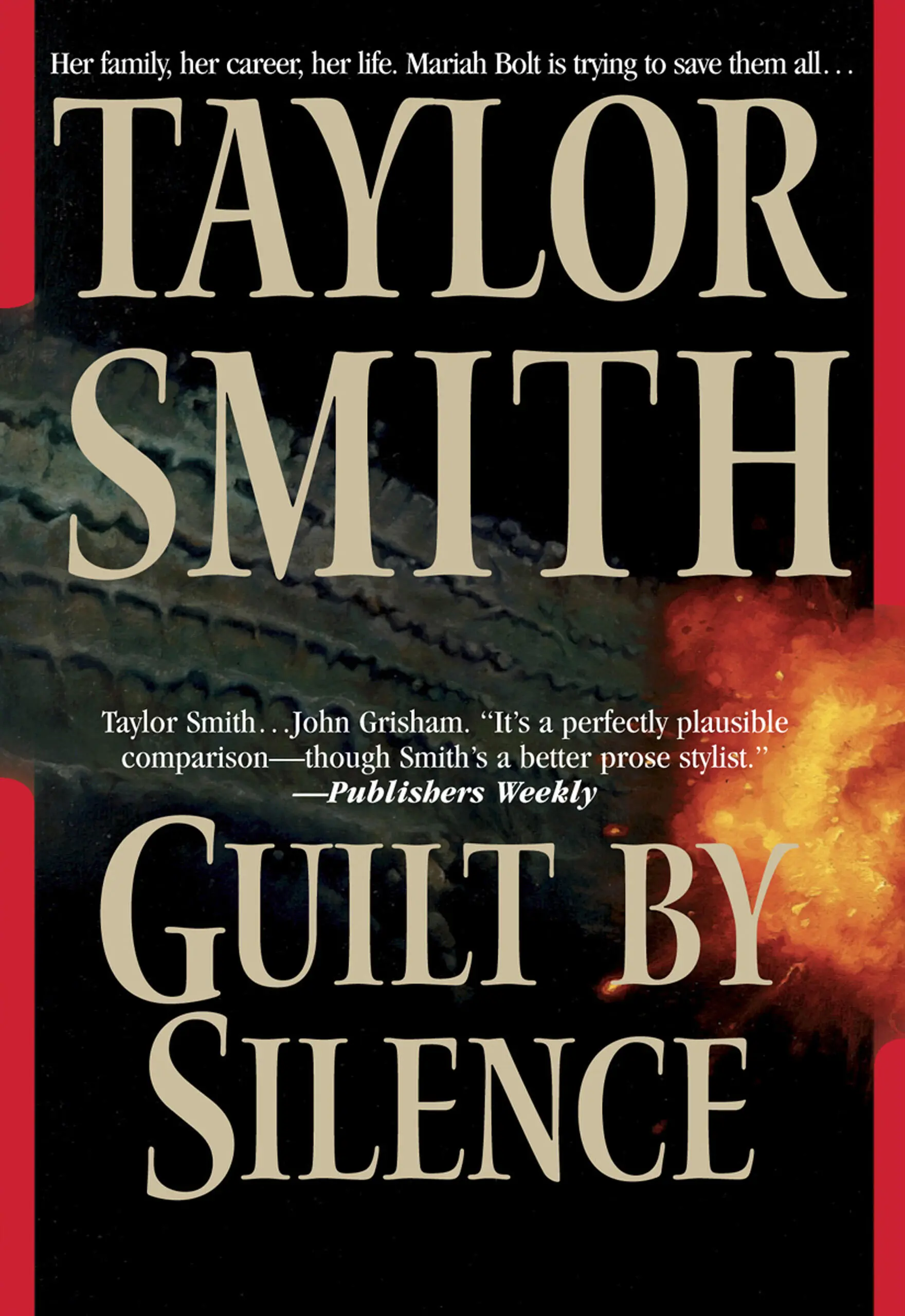
- Название:Guilt By Silence
- Автор:
- Жанр:
- Год:неизвестен
- ISBN:нет данных
- Рейтинг книги:4 / 5. Голосов: 1
-
Избранное:Добавить в избранное
- Отзывы:
-
Ваша оценка:
Guilt By Silence: краткое содержание, описание и аннотация
Предлагаем к чтению аннотацию, описание, краткое содержание или предисловие (зависит от того, что написал сам автор книги «Guilt By Silence»). Если вы не нашли необходимую информацию о книге — напишите в комментариях, мы постараемся отыскать её.
Guilt By Silence — читать онлайн ознакомительный отрывок
Ниже представлен текст книги, разбитый по страницам. Система сохранения места последней прочитанной страницы, позволяет с удобством читать онлайн бесплатно книгу «Guilt By Silence», без необходимости каждый раз заново искать на чём Вы остановились. Поставьте закладку, и сможете в любой момент перейти на страницу, на которой закончили чтение.
Интервал:
Закладка:
“The Cold War may be over, but there seems no end to troubles in the former Soviet Union. There was rioting again today in the streets of Moscow, as another cold Russian winter sets in and food shortages loom large. Correspondent Paul Chaney reports that some cash-strapped Russians may become desperate enough to try to sell the country’s nuclear arsenal.”
Mariah’s heart began to pound. She leaned forward in her seat as the tall, lean figure of Paul Chaney appeared on the screen, standing in front of the State Department building. He was wearing a sport coat and tie instead of the habitual bomber jacket—his concession to the camera. It looked as if the report had been videotaped earlier in the day.
“Since the end of the Cold War, the Russian and American governments have agreed to drastic cuts in nuclear arsenals. Thousands of weapons researchers have seen their funding disappear as the former superpowers cut weapons programs to cash in the promised ‘Peace Dividend,’ freeing up military funds for domestic purposes.
“But there are those who would be willing to pay a high price for these cast-off weapons—and for the experts to operate them. In Vienna, the International Atomic Energy Agency—the IAEA—has been fighting for more power to inspect nuclear weapons sites to ensure that these arsenals are destroyed as promised. The IAEA has also proposed a registry of nuclear scientists to make certain that these specialists don’t auction off their skills to the highest bidder.
“I asked an official here at the State Department why our government has not been more supportive of the IAEA’s efforts.”
The scene shifted to an office, where a white-haired man in a pin-striped suit sat, hands folded, behind a desk. A line on the screen identified him as William Hoskmeyer of the State Department’s Nuclear Affairs Division. Mariah knew him well—he was a pompous idiot.
Hoskmeyer: “I think you have to see it as a question of equity. If we insist that the Russians allow snap inspections by outsiders of their nuclear facilities, then they have every right to insist that we do the same. Frankly, we’re not prepared to do that—to give foreigners unrestricted access to American security installations.”
Chaney: “So how do we know that Russian weapons and expertise won’t end up in the pockets of madmen and terrorists in exchange for much-needed dollars?”
Hoskmeyer: “Because Moscow is as committed as we are to nuclear nonproliferation. We’re confident that the agreements on force reduction that we’ve struck with the Russians will be fully respected—both the letter and the spirit. And we’re monitoring closely, of course.”
The scene shifted back to Chaney in front of the State Department building. “Despite Washington’s apparent lack of concern, there is evidence that unstable governments and terrorist groups are scrambling to acquire nuclear weapons—and that whistle-blowers in the IAEA are being silenced. Some of these potential customers can pay top dollar for smuggled nuclear weapons and the specialists to handle them. If they succeed, we may find ourselves looking back fondly on the Cold War—when only Moscow and Washington appeared likely to blow up the planet.
“Paul Chaney—CBN—Washington.”
The news continued, but Mariah wasn’t listening to the television anymore. She snapped off the set, staring numbly at the disappearing glow.
David had been working in Vienna for the International Atomic Energy Agency and had been in the forefront of IAEA officials seeking greater powers to stop the spread of nuclear weapons—and Paul knew it.
But what Chaney couldn’t know was that it was Mariah herself—not David—who had blown the whistle on a suspected nuclear weapons ring. And that if David and Lindsay’s accident in Vienna had been an attempt to silence a whistle-blower, it should have been Mariah—not David—who was the target.
“But it wasn’t,” Mariah whispered. “Dammit, Chaney. I would have been the first to know.”
No one could have guessed that the five men at the corner table were doomed.
They were sitting in the Trinity Bar (“Live Country Music Every Nite!”) just on the outskirts of Taos, New Mexico. Around them, the usual Wednesday-night crowd of ranch hands and laborers, most in jeans and Stetsons, moved through the smoky haze to the rhythm of a steel guitar. At the front of the bar, a singer in a fringed shirt stood under a spotlight, his throaty twang straining to be heard as he begged Ruby not to take her love to town.
Admittedly, the three Russians were a little conspicuous. In the crowd of sweat-soaked Stetsons and dust-lined faces, their crisp Levi’s marked them as dudes. And the new white cowboy hats looked incongruous above round Slavic faces. The two Americans with them seemed drab by comparison: rumpled corduroy pants, casual shirts and down ski jackets. The younger one—thirtyish maybe—wore wire-rimmed glasses patched at the nosepiece with adhesive tape. The other man was in his fifties, white-haired, with a weary countenance.
Five matching black leather briefcases on the floor under the table provided the clue to the brotherhood that united the men. Each case bore a gold-lettered inscription stenciled in the corner: Los Alamos National Laboratory. Their obituaries would note how the five former enemies perished together just at the moment they had joined forces to put their scientific genius to work for the benefit of mankind.
A tired-looking waitress, eyes ringed with black mascara, bleached hair teased and sprayed to defy the law of gravity, balanced a tray on her hip as she deposited another round of drinks on the table and cleared the remains of the last round. Five pairs of eyes were fixed on the low neckline of her ruffled white blouse each time she bent over to put down or pick up a glass or bottle. “That’s five Coors and four vodkas straight up, right, boys?” she said, straining to be heard over the music.
“But Russian vodka, yes?” Blue almond eyes sparkled in a flushed round face, watching the topside of her breasts roll with her up-and-down movements.
The waitress raised her eyes heavenward and nodded without breaking the rhythm of her work. “Yeah, yeah—Smirnoff—good Russian vodka.” The two Americans at the table exchanged amused glances. “That’s twenty-four-fifty, fellas.”
Larry Kingman dropped a twenty and a ten on her tray. Once again, as he had on the last two rounds, he waved away the change she had begun to count out.
“Well, thanks! Thanks a lot,” the waitress said, taking a real good look at him now and smiling warmly. “You just holler if you need anything else, okay?”
Kingman smiled and nodded. The woman lingered a moment, then wandered reluctantly over to a table where some good ol’ boys were calling loudly for refills. Kingman raised one of the shot glasses of vodka and held it out over the center of the table, looking at each of the other four faces in turn. “To the future, gentlemen. To science.”
The Russians lifted the three remaining shot glasses. “Na zhdoroviye,” they said in unison, tossing back the clear liquor, then slapping the glasses down on the stained wooden tabletop and reaching for the beer chasers.
Kingman directed an inquiring eyebrow at the younger American seated next to him. Scott Bowker was frowning, but he grasped one of the beer glasses, touching it briefly to his lips. Kingman shook his white head as he watched the younger man. “What’s up?”
Bowker glanced at the Russians, then around the room. “We shouldn’t be drinking like this.”
Kingman leaned back in his chair and smiled indulgently. “Relax, Scotty. We’ll let you be designated driver, okay?” Bowker’s frown deepened even further. “Re-lax,” Kingman repeated. “Everything is under control. Now, enjoy.”
Читать дальшеИнтервал:
Закладка:
Похожие книги на «Guilt By Silence»
Представляем Вашему вниманию похожие книги на «Guilt By Silence» списком для выбора. Мы отобрали схожую по названию и смыслу литературу в надежде предоставить читателям больше вариантов отыскать новые, интересные, ещё непрочитанные произведения.






Обсуждение, отзывы о книге «Guilt By Silence» и просто собственные мнения читателей. Оставьте ваши комментарии, напишите, что Вы думаете о произведении, его смысле или главных героях. Укажите что конкретно понравилось, а что нет, и почему Вы так считаете.