James E. Talmage - Jesus the Christ
Здесь есть возможность читать онлайн «James E. Talmage - Jesus the Christ» — ознакомительный отрывок электронной книги совершенно бесплатно, а после прочтения отрывка купить полную версию. В некоторых случаях можно слушать аудио, скачать через торрент в формате fb2 и присутствует краткое содержание. Жанр: unrecognised, на английском языке. Описание произведения, (предисловие) а так же отзывы посетителей доступны на портале библиотеки ЛибКат.
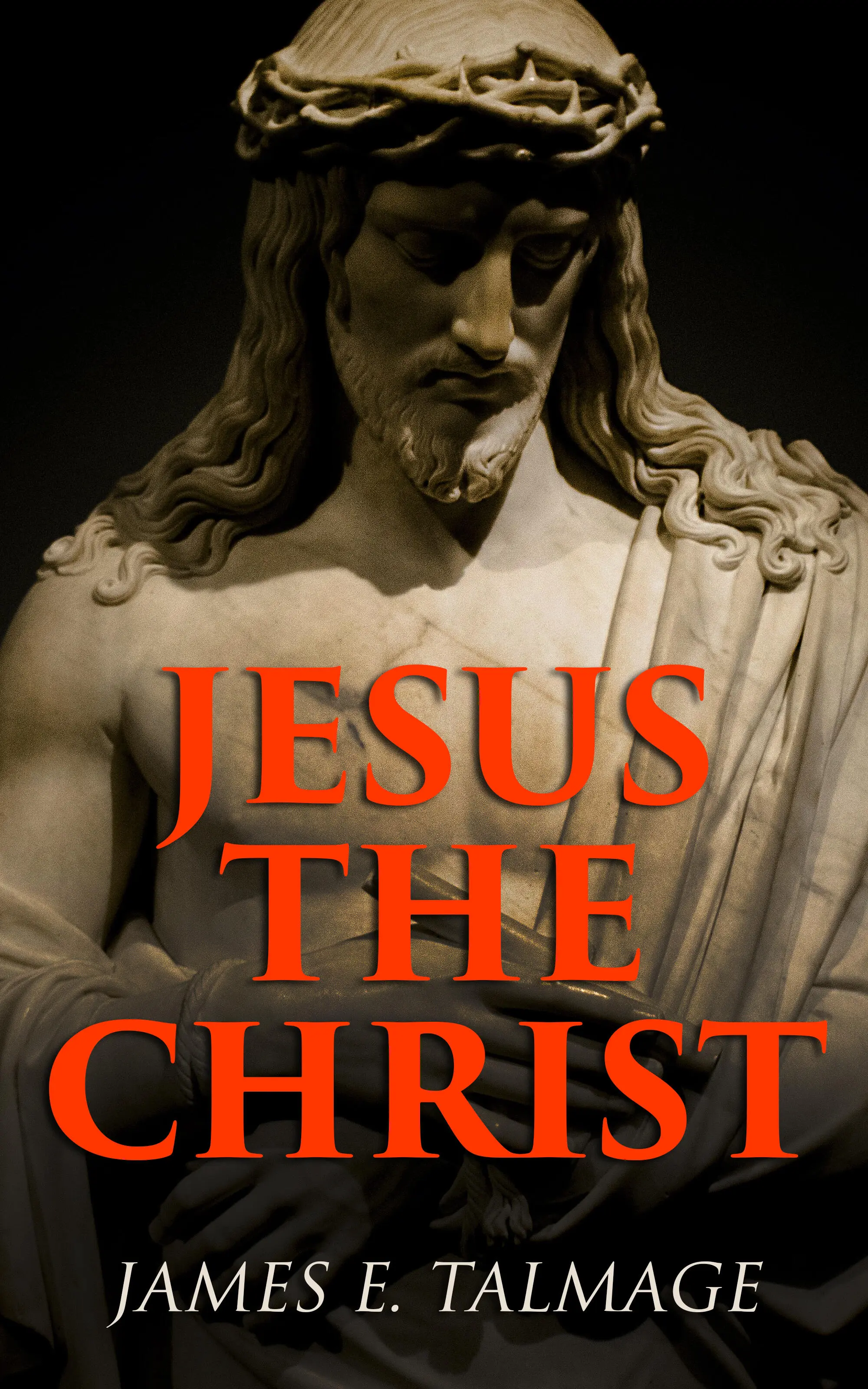
- Название:Jesus the Christ
- Автор:
- Жанр:
- Год:неизвестен
- ISBN:нет данных
- Рейтинг книги:4 / 5. Голосов: 1
-
Избранное:Добавить в избранное
- Отзывы:
-
Ваша оценка:
Jesus the Christ: краткое содержание, описание и аннотация
Предлагаем к чтению аннотацию, описание, краткое содержание или предисловие (зависит от того, что написал сам автор книги «Jesus the Christ»). Если вы не нашли необходимую информацию о книге — напишите в комментариях, мы постараемся отыскать её.
Jesus the Christ — читать онлайн ознакомительный отрывок
Ниже представлен текст книги, разбитый по страницам. Система сохранения места последней прочитанной страницы, позволяет с удобством читать онлайн бесплатно книгу «Jesus the Christ», без необходимости каждый раз заново искать на чём Вы остановились. Поставьте закладку, и сможете в любой момент перейти на страницу, на которой закончили чтение.
Интервал:
Закладка:
FOOTNOTES:
216.Luke 2:1; see also verses 2–4. Note 1, end of chapter.
217.Note marginal reading, Oxford and Bagster Bibles.
218.Note 1, end of chapter.
219.Note 2, end of chapter.
220.Luke 2:6, 7.
221.Luke 2:8–14.
222.Luke 2:15.
223.Luke 2:19.
224.Luke 4:22; Matt. 13:55; Mark 6:3.
225.Gen. 17:12, 13; Lev. 12:3; compare John 7:22. Page 88.
226.Luke 2:21; compare 1:31; Matt. 1:21, 25.
227.Lev. chap. 12.
228.Exo. 12:29; 13:2, 12; 22:29, 30.
229.Numb. 8:15–18; 18:15, 16.
230.Luke 2:25; see also verse 38; Mark 15:43; compare Psa. 40:1.
231.Luke 2:29–32. These verses are known in Christian hymnology as the Nunc Dimittis; the name has reference to the first two words of the Latin version.
232.Note 3, end of chapter.
233.Matt. 2:2; read 1–10.
234.Matt. 2:5, 6; compare Micah 5:2; John 7:42.
235.Note 4, end of chapter.
236.Note 5, end of chapter.
237.Numb. 24:17.
238.B. of M., Helaman 14:5; 3 Nephi 1:21. Pp. 52, 101 and 721 herein.
239.Matt. 2:13.
240.Matt. 2:16.
241.Matt. 2:17, 18; compare Jer. 31:15.
242.Page 49.
243.B. of M., Helaman 14:2; read 1–9.
244.B. of M., 3 Nephi 1:9; read verses 4–21.
245.B. of M., 3 Nephi 1:12–21.
246.Marginal reading, Oxford and Bagster Bibles, Matt. 2:1.
247.Doc. and Cov. 20:1; compare 21:3. Note 6, end of chapter.
248.B. of M., 1 Nephi 1:4; 2:2–4.
249.B. of M., 1 Nephi 10:4.
250.B. of M., 1 Nephi 19:8; 2 Nephi 25:19.
251.B. of M., 3 Nephi 1:1.
252."Standard Bible Dictionary," edited by Jacobus, Nourse, and Zenos, pub. by Funk & Wagnalls Co., New York and London, 1909, p. 915, article "Zedekiah."
253.Doc. and Cov. 20:1; compare 21:2
CHAPTER 9.
THE BOY OF NAZARETH.
Table of Contents
Joseph, Mary, and her Son remained in Egypt until after the death of Herod the Great, which event was made known by another angelic visitation. Their stay in the foreign land was probably brief, for Herod did not long survive the babes he had slain in Bethlehem. In the return of the family from Egypt the evangelist finds a fulfilment of Hosea's prophetic vision of what should be: "Out of Egypt have I called my son." 254
It appears to have been Joseph's intention to make a home for the family in Judea, possibly at Bethlehem—the city of his ancestors and a place now even more endeared to him as the birthplace of Mary's Child—but, learning on the way that Herod's son Archelaus ruled in the place of his wicked father, Joseph modified his purpose; and, "being warned of God in a dream, he turned aside into the parts of Galilee: and he came and dwelt in a city called Nazareth: that it might be fulfilled which was spoken by the prophets, He shall be called a Nazarene." 255
While Archelaus, who appears to have been a natural heir to his infamous father's wickedness and cruelty, ruled in Judea, 256for a short time as king, then with the less exalted title of ethnarch, which had been decreed to him by the emperor, his brother Antipas governed as tetrarch in Galilee. Herod Antipas was well nigh as vicious and reprobate as others of his unprincipled family, but he was less aggressive in vindictiveness, and in that period of his reign was comparatively tolerant. 257
Concerning the home life of Joseph and his family in Nazareth, the scriptural record makes but brief mention. The silence with which the early period of the life of Jesus is treated by the inspired historians is impressive; while the fanciful accounts written in later years by unauthorized hands are full of fictitious detail, much of which is positively revolting in its puerile inconsistency. None but Joseph, Mary, and the other members of the immediate family or close associates of the household could have furnished the facts of daily life in the humble home at Nazareth; and from these qualified informants Matthew and Luke probably derived the knowledge of which they wrote. The record made by those who knew is marked by impressive brevity. In this absence of detail we may see evidence of the genuineness of the scriptural account. Inventive writers would have supplied, as, later, such did supply, what we seek in vain within the chapters of the Gospels. With hallowed silence do the inspired scribes honor the boyhood of their Lord; he who seeks to invent circumstances and to invest the life of Christ with fictitious additions, dishonors Him. Read thoughtfully the attested truth concerning the childhood of the Christ: "And the child grew, and waxed strong in spirit, filled with wisdom: and the grace of God was upon him." 258
In such simplicity is the normal, natural development of the Boy Jesus made clear. He came among men to experience all the natural conditions of mortality; He was born as truly a dependent, helpless babe as is any other child; His infancy was in all common features as the infancy of others; His boyhood was actual boyhood, His development was as necessary and as real as that of all children. Over His mind had fallen the veil of forgetfulness common to all who are born to earth, by which the remembrance of primeval existence is shut off. The Child grew, and with growth there came to Him expansion of mind, development of faculties, and progression in power and understanding. His advancement was from one grace to another, not from gracelessness to grace; from good to greater good, not from evil to good; from favor with God to greater favor, not from estrangement because of sin to reconciliation through repentance and propitiation. 259
Our knowledge of Jewish life in that age justifies the inference that the Boy was well taught in the law and the scriptures, for such was the rule. He garnered knowledge by study, and gained wisdom by prayer, thought, and effort. Beyond question He was trained to labor, for idleness was abhorred then as it is now; and every Jewish boy, whether carpenter's son, peasant's child, or rabbi's heir, was required to learn and follow a practical and productive vocation. Jesus was all that a boy should be, for His development was unretarded by the dragging weight of sin; He loved and obeyed the truth and therefore was free. 260
Joseph and Mary, devout and faithful in all observances of the law, went up to Jerusalem every year at the feast of the Passover. This religious festival, it should be remembered, was one of the most solemn and sacred among the many ceremonial commemorations of the Jews; it had been established at the time of the peoples' exodus from Egypt, in remembrance of the outstretched arm of power by which God had delivered Israel after the angel of destruction had slain the firstborn in every Egyptian home and had mercifully passed over the houses of the children of Jacob. 261It was of such importance that its annual recurrence was made the beginning of the new year. The law required all males to present themselves before the Lord at the feast. The rule was that women should likewise attend if not lawfully detained; and Mary appears to have followed both the spirit of the law and the letter of the rule, for she habitually accompanied her husband to the annual gathering at Jerusalem.
When Jesus had attained the age of twelve years He was taken by His mother and Joseph to the feast as the law required; whether the Boy had ever before been present on such an occasion we are not told: At twelve years of age a Jewish boy was recognized as a member of his home community; he was required then to enter with definite purpose upon his chosen vocation; he attained an advanced status as an individual in that thereafter he could not be arbitrarily disposed of as a bond-servant by his parents; he was appointed to higher studies in school and home; and, when accepted by the priests, he became a "son of the law." It was the common and very natural desire of parents to have their sons attend the feast of the Passover and be present at the temple ceremonies as recognized members of the congregation when of the prescribed age. Thus came the Boy Jesus to the temple.
Читать дальшеИнтервал:
Закладка:
Похожие книги на «Jesus the Christ»
Представляем Вашему вниманию похожие книги на «Jesus the Christ» списком для выбора. Мы отобрали схожую по названию и смыслу литературу в надежде предоставить читателям больше вариантов отыскать новые, интересные, ещё непрочитанные произведения.

Обсуждение, отзывы о книге «Jesus the Christ» и просто собственные мнения читателей. Оставьте ваши комментарии, напишите, что Вы думаете о произведении, его смысле или главных героях. Укажите что конкретно понравилось, а что нет, и почему Вы так считаете.