James E. Talmage - Jesus the Christ
Здесь есть возможность читать онлайн «James E. Talmage - Jesus the Christ» — ознакомительный отрывок электронной книги совершенно бесплатно, а после прочтения отрывка купить полную версию. В некоторых случаях можно слушать аудио, скачать через торрент в формате fb2 и присутствует краткое содержание. Жанр: unrecognised, на английском языке. Описание произведения, (предисловие) а так же отзывы посетителей доступны на портале библиотеки ЛибКат.
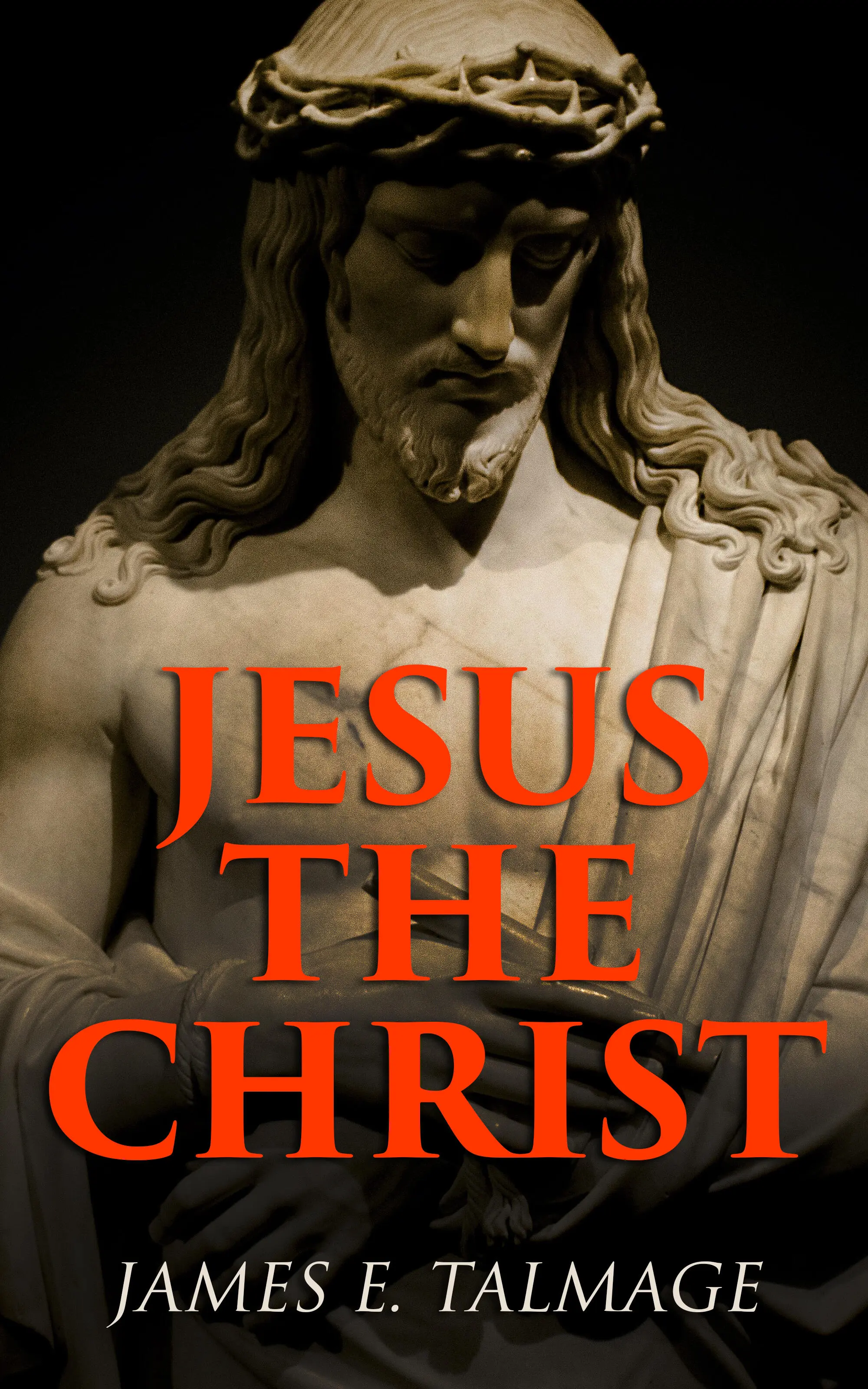
- Название:Jesus the Christ
- Автор:
- Жанр:
- Год:неизвестен
- ISBN:нет данных
- Рейтинг книги:4 / 5. Голосов: 1
-
Избранное:Добавить в избранное
- Отзывы:
-
Ваша оценка:
Jesus the Christ: краткое содержание, описание и аннотация
Предлагаем к чтению аннотацию, описание, краткое содержание или предисловие (зависит от того, что написал сам автор книги «Jesus the Christ»). Если вы не нашли необходимую информацию о книге — напишите в комментариях, мы постараемся отыскать её.
Jesus the Christ — читать онлайн ознакомительный отрывок
Ниже представлен текст книги, разбитый по страницам. Система сохранения места последней прочитанной страницы, позволяет с удобством читать онлайн бесплатно книгу «Jesus the Christ», без необходимости каждый раз заново искать на чём Вы остановились. Поставьте закладку, и сможете в любой момент перейти на страницу, на которой закончили чтение.
Интервал:
Закладка:
Great was Joseph's relief of mind; and great his joy in the realization that the long predicted coming of the Messiah was at hand; the words of the prophets would be fulfilled; a virgin, and she the one in the world most dear to him, had conceived, and in due time would bring forth that blessed Son, Emmanuel, which name by interpretation means "God with us." 208The angel's salutation was significant; "Joseph, thou son of David," was the form of address; and the use of that royal title must have meant to Joseph that, though he was of kingly lineage, marriage with Mary would cast no shadow upon his family status. Joseph waited not; to insure Mary all possible protection and establish his full legal right as her lawful guardian he hastened the solemnization of the marriage, and "did as the angel of the Lord had bidden him, and took unto him his wife: and knew her not till she had brought forth her firstborn son: and he called his name JESUS." 209
The national hope of a Messiah based on promise and prophecy had become confused in the Jewish mind, through the influence of rabbinism with its many vagaries, and its "private interpretation" 210made to appear authoritative by the artificially sustained prestige of the expositors; yet certain conditions had been emphasized as essential, even by the rabbis, and by these essentials would be judged the claim of any Jew who might declare himself to be the long expected One. It was beyond question that the Messiah was to be born within the tribe of Judah and through the line of descent from David, and, being of David He must of necessity be of the lineage of Abraham, through whose posterity, according to the covenant, all nations of the earth were to be blessed. 211
Two genealogical records, purporting to give the lineage of Jesus are found in the New Testament, one in the first chapter of Matthew, the other in the third chapter of Luke. These records present several apparent discrepancies, but such have been satisfactorily reconciled by the research of specialists in Jewish genealogy. No detailed analysis of the matter will be attempted here; but it should be borne in mind that the consensus of judgment on the part of investigators is that Matthew's account is that of the royal lineage, establishing the order of sequence among the legal successors to the throne of David, while the account given by Luke is a personal pedigree, demonstrating descent from David without adherence to the line of legal succession to the throne through primogeniture or nearness of kin. 212Luke's record is regarded by many, however, as the pedigree of Mary, while Matthew's is accepted as that of Joseph. The all important fact to be remembered is that the Child promised by Gabriel to Mary, the virginal bride of Joseph, would be born in the royal line. A personal genealogy of Joseph was essentially that of Mary also, for they were cousins. Joseph is named as son of Jacob by Matthew, and as son of Heli by Luke; but Jacob and Heli were brothers, and it appears that one of the two was the father of Joseph and the other the father of Mary and therefore father-in-law to Joseph. That Mary was of Davidic descent is plainly set forth in many scriptures; for since Jesus was to be born of Mary, yet was not begotten by Joseph, who was the reputed, and, according to the law of the Jews, the legal, father, the blood of David's posterity was given to the body of Jesus through Mary alone. Our Lord, though repeatedly addressed as Son of David, never repudiated the title but accepted it as rightly applied to Himself. 213Apostolic testimony stands in positive assertion of the royal heirship of Christ through earthly lineage, as witness the affirmation of Paul, the scholarly Pharisee: "Concerning his Son Jesus Christ our Lord, which was made of the seed of David according to the flesh;" and again: "Remember that Jesus Christ of the seed of David was raised from the dead." 214
In all the persecutions waged by His implacable haters, in all the false accusations brought against Him, in the specific charges of sacrilege and blasphemy based on His acknowledgment of the Messiahship as His own, no mention is found of even an insinuation that He could not be the Christ through any ineligibility based on lineage. Genealogy was assiduously cared for by the Jews before, during, and after the time of Christ; indeed their national history was largely genealogical record; and any possibility of denying the Christ because of unattested descent would have been used to the fullest extent by insistent Pharisee, learned scribe, haughty rabbi, and aristocratic Sadducee.
At the time of the Savior's birth, Israel was ruled by alien monarchs. The rights of the royal Davidic family were unrecognized; and the ruler of the Jews was an appointee of Rome. Had Judah been a free and independent nation, ruled by her rightful sovereign, Joseph the carpenter would have been her crowned king; and his lawful successor to the throne would have been Jesus of Nazareth, the King of the Jews.
Gabriel's annunciation to Mary was that of the Son of David, on whose coming the hope of Israel rested as on a sure foundation. The One, thus announced, was Emmanuel, even God who was to dwell in flesh with His people, 215the Redeemer of the world, Jesus the Christ.
NOTES TO CHAPTER 7.
1. John the Baptist Regarded as a Nazarite.—The instruction of the angel Gabriel to Zacharias, that the promised son, John, was to "drink neither wine nor strong drink," and the adult life of John as a dweller in the desert, together with his habit of wearing rough garb, have led commentators and Biblical specialists to assume that he was a "Nazarite for life." It is to be remembered, however, that nowhere in scripture extant is John the Baptist definitely called a Nazarite. A Nazarite, the name signifying consecrated or separated , was one, who by personal vow or by that made for him by his parents, was set apart to some special labor or course of life involving self denial. (See page 67). Smith's Comp. Dict, of the Bible says: "There is no notice in the Pentateuch of Nazarites for life; but the regulations for the vow of a Nazarite of days are given (Numb. 6:1–2). The Nazarite, during the term of his consecration, was bound to abstain from wine, grapes, and every production of the vine, and from every kind of intoxicating drink. He was forbidden to cut the hair of his head, or to approach any dead body, even that of his nearest relation." The sole instance of a Nazarite for life named in the scriptures is that of Samson, whose mother was required to put herself under Nazarite observances prior to his birth, and the child was to be a Nazarite to God from his birth (Judges 13:3–7, 14). In the strictness of his life, John the Baptist is to be credited with all the personal discipline required of Nazarites whether he was under voluntary or parental vows or was not so bound.
2. Circumcision, while not exclusively a Hebrew or an Israelitish practise, was made a definite requirement through the revelations of God to Abraham, as the sign of the covenant between Jehovah and the patriarch. (Gen. 17:9–14.) This covenant was made to include the establishment of Abraham's posterity as a great nation, and provided that through his descendants should all nations of the earth be blessed (Gen. 22:18)—a promise which has been proved to mean that through that lineage should the Messiah be born. Circumcision was a binding condition; and its practise therefore became a national characteristic. Every male was to be circumcized eight days after birth (Gen. 17:12; Lev. 12:3). This requirement as to age came to be so rigidly enforced, that even if the eighth day fell on a Sabbath the rite had to be performed on that day (John 7:22, 23). All male slaves had to be circumcized (Gen. 17:12, 13) and even strangers who sojourned with the Hebrews and desired to partake of the Passover with them had to submit to the requirement (Exo. 12:48). From the Standard Bible Dictionary we take the following: "The ceremony indicated the casting off of uncleanness as a preparation for entrance into the privileges of membership in Israel. In the New Testament, with its transfer of emphasis from the external and formal to the inner and spiritual side of things, it was first declared unnecessary for Gentile converts to the gospel to be circumcized (Acts 15:28), and afterward the rite was set aside even by Jewish Christians." It became customary to name a child at the time it was circumcized, as is instanced in the case of John, son of Zacharias (Luke 1:59).
Читать дальшеИнтервал:
Закладка:
Похожие книги на «Jesus the Christ»
Представляем Вашему вниманию похожие книги на «Jesus the Christ» списком для выбора. Мы отобрали схожую по названию и смыслу литературу в надежде предоставить читателям больше вариантов отыскать новые, интересные, ещё непрочитанные произведения.

Обсуждение, отзывы о книге «Jesus the Christ» и просто собственные мнения читателей. Оставьте ваши комментарии, напишите, что Вы думаете о произведении, его смысле или главных героях. Укажите что конкретно понравилось, а что нет, и почему Вы так считаете.