James E. Talmage - Jesus the Christ
Здесь есть возможность читать онлайн «James E. Talmage - Jesus the Christ» — ознакомительный отрывок электронной книги совершенно бесплатно, а после прочтения отрывка купить полную версию. В некоторых случаях можно слушать аудио, скачать через торрент в формате fb2 и присутствует краткое содержание. Жанр: unrecognised, на английском языке. Описание произведения, (предисловие) а так же отзывы посетителей доступны на портале библиотеки ЛибКат.
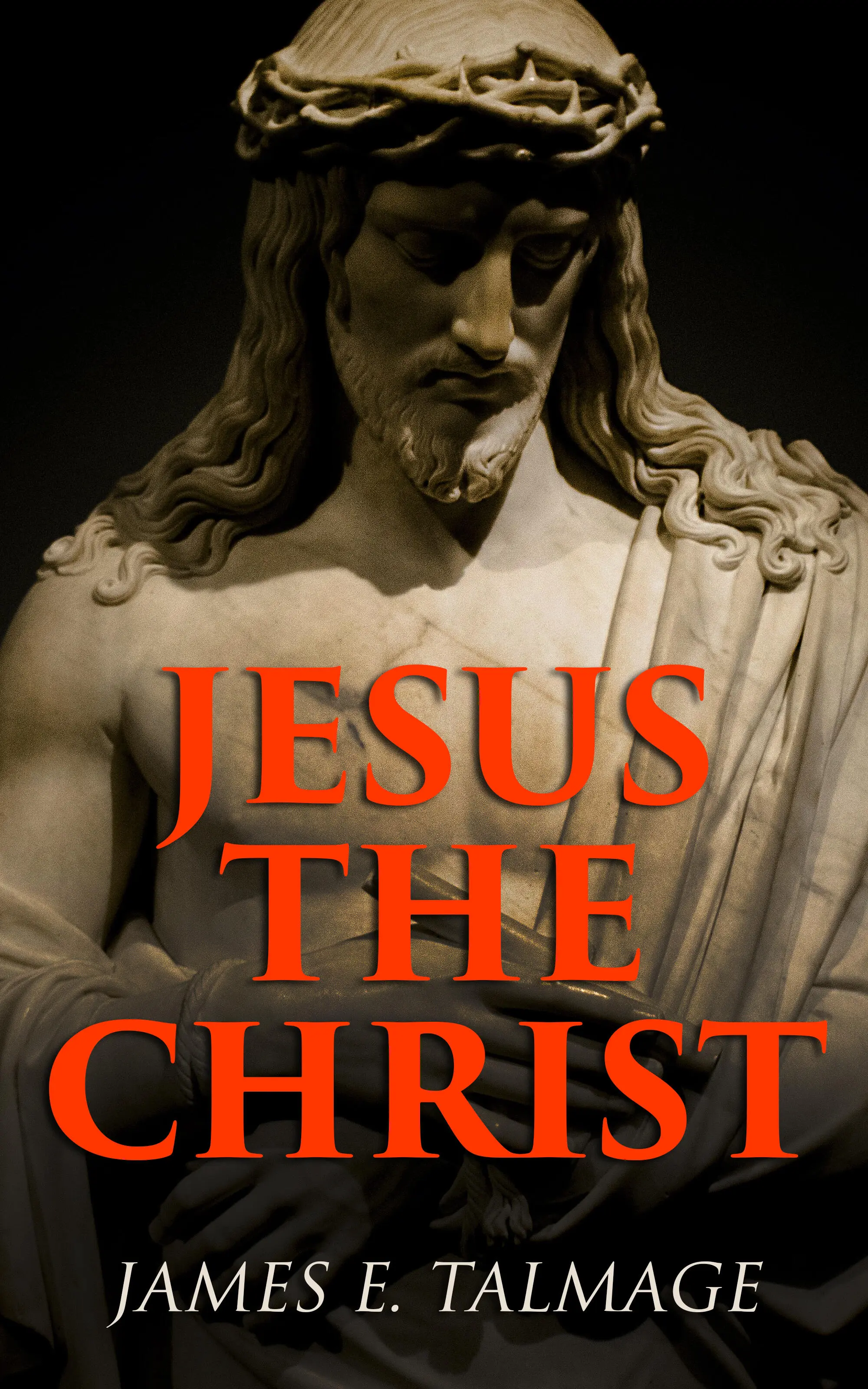
- Название:Jesus the Christ
- Автор:
- Жанр:
- Год:неизвестен
- ISBN:нет данных
- Рейтинг книги:4 / 5. Голосов: 1
-
Избранное:Добавить в избранное
- Отзывы:
-
Ваша оценка:
Jesus the Christ: краткое содержание, описание и аннотация
Предлагаем к чтению аннотацию, описание, краткое содержание или предисловие (зависит от того, что написал сам автор книги «Jesus the Christ»). Если вы не нашли необходимую информацию о книге — напишите в комментариях, мы постараемся отыскать её.
Jesus the Christ — читать онлайн ознакомительный отрывок
Ниже представлен текст книги, разбитый по страницам. Система сохранения места последней прочитанной страницы, позволяет с удобством читать онлайн бесплатно книгу «Jesus the Christ», без необходимости каждый раз заново искать на чём Вы остановились. Поставьте закладку, и сможете в любой момент перейти на страницу, на которой закончили чтение.
Интервал:
Закладка:
In the New Testament the Pharisees are often mentioned as in opposition to the Sadducees; and such were the relations of the two parties that it becomes a simpler matter to contrast one with the other than to consider each separately. The Sadducees came into existence as a reactionary organization during the second century B.C., in connection with an insurgent movement against the Maccabean party. Their platform was that of opposition to the ever-increasing mass of traditional lore, with which the law was not merely being fenced or hedged about for safety, but under which it was being buried. The Sadducees stood for the sanctity of the law as written and preserved, while they rejected the whole mass of rabbinical precept both as orally transmitted and as collated and codified in the records of the scribes. The Pharisees formed the more popular party; the Sadducees figured as the aristocratic minority. At the time of Christ's birth the Pharisees existed as an organized body numbering over six thousand men, with Jewish women very generally on their side in sympathy and effort; 174while the Sadducees were so small a faction and of such limited power that, when they were placed in official positions, they generally followed the policy of the Pharisees as a matter of incumbent expediency. The Pharisees were the Puritans of the time, unflinching in their demand for compliance with the traditional rules as well as the original law of Moses. In this connection note Paul's confession of faith and practise when arraigned before Agrippa—"That after the most straitest sect of our religion I lived a Pharisee." 175The Sadducees prided themselves on strict compliance with the law, as they construed it, irrespective of all scribes or rabbis. The Sadducees stood for the temple and its prescribed ordinances, the Pharisees for the synagog and its rabbinical teachings. It is difficult to decide which were the more technical if we judge each party by the standard of its own profession. By way of illustration: the Sadducees held to the literal and full exaction of the Mosaic penalty—an eye for an eye and a tooth for a tooth 176—while the Pharisees contended on the authority of rabbinical dictum, that the wording was figurative, and that therefore the penalty could be met by a fine in money or goods.
Pharisees and Sadducees differed on many important if not fundamental matters of belief and practise, including the preexistence of spirits, the reality of a future state involving reward and punishment, the necessity for individual self-denial, the immortality of the soul, and the resurrection from the dead; in each of which the Pharisees stood for the affirmative while the Sadducees denied. 177Josephus avers—the doctrine of the Sadducees is that the soul and body perish together; the law is all that they are concerned to observe. 178They were "a skeptical school of aristocratic traditionalists; adhering only to the Mosaic law." 179
Among the many other sects and parties established on the ground of religious or political differences, or both, are the Essenes, the Nazarites, the Herodians and the Galileans. The Essenes were characterized by professions of ultra-piety; they considered even the strictness of Pharisaic profession as weak and insufficient; they guarded membership in their order by severe exactions extending through a first and a second novitiate; they were forbidden even to touch food prepared by strangers; they practised strict temperance and rigid self-denial, indulged in hard labor—preferably that of agriculture, and were forbidden to trade as merchants, to take part in war, or to own or employ slaves. 180Nazarites are not named in the New Testament, though of specific record in the earlier scriptures; 181and from sources other than scriptural we learn of their existence at and after the time of Christ. The Nazarite was one of either sex who was bound to abstinence and sacrifice by a voluntary vow for special service to God; the period of the vow might be limited or for life. While the Essenes cultivated an ascetic brotherhood, the Nazarites were devoted to solitary discipline.
The Herodians constituted a politico-religious party who favored the plans of the Herods under the professed belief that through that dynasty alone could the status of the Jewish people be maintained and a reestablishment of the nation be secured. We find mention of the Herodians laying aside their partisan antipathies and acting in concert with the Pharisees in the effort to convict the Lord Jesus and bring Him to death. 182The Galileans or people of Galilee were distinguished from their fellow Israelites of Judea by greater simplicity and less ostentatious devotion in matters pertaining to the law. They were opposed to innovations, yet were generally more liberal or less bigoted than some of the professedly devout Judeans. They were prominent as able defenders in the wars of the people, and won for themselves a reputation for bravery and patriotism. They are mentioned in connection with certain tragical occurrences during our Lord's lifetime. 183
The authority of the priesthood was outwardly acknowledged by the Jews at the time of Christ; and the appointed order of service for priest and Levite was duly observed. During the reign of David, the descendants of Aaron, who were the hereditary priests in Israel, had been divided into twenty-four courses, 184and to each course the labors of the sanctuary were alloted in turn. Representatives of but four of these courses returned from the captivity, but from these the orders were reconstructed on the original plan. In the days of Herod the Great the temple ceremonies were conducted with great display and outward elaborateness, as an essential matter of consistency with the splendor of the structure, which surpassed in magnificence all earlier sanctuaries. 185Priests and Levites, therefore, were in demand for continuous service, though the individuals were changed at short intervals according to the established system. In the regard of the people the priests were inferior to the rabbis, and the scholarly attainments of a scribe transcended in honor that pertaining to ordination in the priesthood. The religion of the time was a matter of ceremony and formality, of ritual and performance; it had lost the very spirit of worship, and the true conception of the relationship between Israel and Israel's God was but a dream of the past.
Such in brief were the principal features of the world's condition, and particularly as concerns the Jewish people, when Jesus the Christ was born in the meridian of time.
NOTES TO CHAPTER 6.
1. The Sanhedrin.—This, the chief court or high council of the Jews, derives its name from the Greek sunedrion , signifying "a council." In English it is sometimes though inaccurately, written "Sanhedrim." The Talmud traces the origin of this body to the calling of the seventy elders whom Moses associated with himself, making seventy-one in all, to administer as judges in Israel (Numb. 11:16, 17). The Sanhedrin in the time of Christ, as also long before, comprized seventy-one members, including the high-priest who presided in the assembly. It appears to have been known in its earlier period as the Senate, and was occasionally so designated even after Christ's death (Josephus, Antiquities xii, 3:3; compare Acts 5:21); the name "Sanhedrin" came into general use during the reign of Herod the Great; but the term is not of Biblical usage; its equivalent in the New Testament is "council" (Matt. 5:22; 10:17; 26:59) though it must be remembered that the same term is applied to courts of lesser jurisdiction than that of the Sanhedrin, and to local tribunals. (Matt 5:22; 10:17; 26:59; Mark 13:9; see also Acts 25:12.)
The following, from the Standard Bible Dictionary , is instructive: "Those qualified to be members were in general of the priestly house and especially of the Sadducean nobility. But from the days of Queen Alexandra (69–68 B.C.) onward, there were with these chief priests also many Pharisees in it under the name of scribes and elders. These three classes are found combined in Matt. 27:41; Mark 11:27; 14:43, 53; 15:1. How such members were appointed is not entirely clear. The aristocratic character of the body and the history of its origin forbid the belief that it was by election. Its nucleus probably consisted of the members of certain ancient families, to which, however, from time to time others were added by the secular rulers. The presiding officer was the high priest, who at first exercized in it more than the authority of a member, claiming a voice equal to that of the rest of the body. But after the reduction of the high priesthood from a hereditary office to one bestowed by the political ruler according to his pleasure, and the frequent changes in the office introduced by the new system, the high priest naturally lost his prestige. Instead of holding in his hands the 'government of the nation,' he came to be but one of many to share this power; those who had served as high priests being still in esteem among their nation, and having lost their office not for any reason that could be considered valid by the religious sense of the community, exerted a large influence over the decisions of the assembly. In the New Testament they are regarded as the rulers (Matt. 26:59; 27:41; Acts 4:5, 8; Luke 23:13, 35; John 7:26), and Josephus' testimony supports this view. The functions of the Sanhedrin were religious and moral, and also political. In the latter capacity they further exercized administrative as well as judicial functions. As a religious tribunal, the Sanhedrin wielded a potent influence over the whole of the Jewish world (Acts 9:2); but as a court of justice, after the division of the country upon the death of Herod, its jurisdiction was limited to Judea. Here, however, its power was absolute even to the passing of sentence of death (Josephus, Ant. xiv, 9:3, 4; Matt. 26:3; Acts 4:5; 6:12; 22:30), although it had no authority to carry the sentence into execution except as approved and ordered by the representative of the Roman government. The law by which the Sanhedrin governed was naturally the Jewish, and in the execution of it this tribunal had a police of its own, and made arrests at its discretion (Matt 26:47). … While the general authority of the Sanhedrin extended over the whole of Judea, the towns in the country had local councils of their own (Matt. 5:22; 10:17; Mark 13:9; Josephus, B. J. ii, 14:1), for the administration of local affairs. These were constituted of elders (Luke 7:3), at least seven in number, (Josephus, Ant. iv, 8:14; B. J. ii, 20:5), and in some of the largest towns as many as twenty-three. What the relation of these to the central council in Jerusalem was does not appear clearly. … Some sort of mutual recognition existed among them; for whenever the judges of the local court could not agree it seems that they were in the habit of referring their cases to the Sanhedrin in Jerusalem. (Josephus, Ant. iv, 8:14; Mishna, Sanh. 11:2)."
Читать дальшеИнтервал:
Закладка:
Похожие книги на «Jesus the Christ»
Представляем Вашему вниманию похожие книги на «Jesus the Christ» списком для выбора. Мы отобрали схожую по названию и смыслу литературу в надежде предоставить читателям больше вариантов отыскать новые, интересные, ещё непрочитанные произведения.










Обсуждение, отзывы о книге «Jesus the Christ» и просто собственные мнения читателей. Оставьте ваши комментарии, напишите, что Вы думаете о произведении, его смысле или главных героях. Укажите что конкретно понравилось, а что нет, и почему Вы так считаете.