James E. Talmage - Jesus the Christ
Здесь есть возможность читать онлайн «James E. Talmage - Jesus the Christ» — ознакомительный отрывок электронной книги совершенно бесплатно, а после прочтения отрывка купить полную версию. В некоторых случаях можно слушать аудио, скачать через торрент в формате fb2 и присутствует краткое содержание. Жанр: unrecognised, на английском языке. Описание произведения, (предисловие) а так же отзывы посетителей доступны на портале библиотеки ЛибКат.
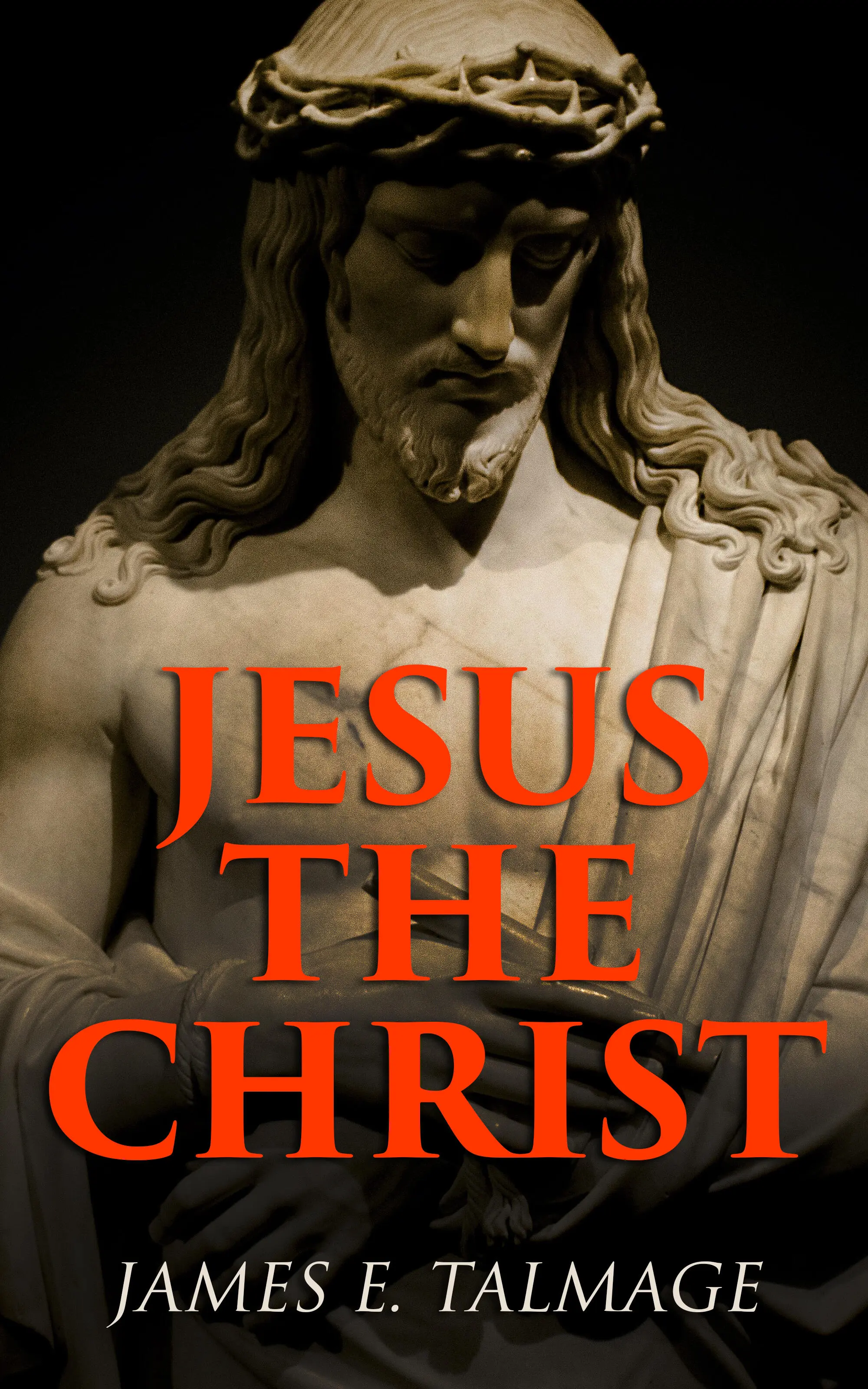
- Название:Jesus the Christ
- Автор:
- Жанр:
- Год:неизвестен
- ISBN:нет данных
- Рейтинг книги:4 / 5. Голосов: 1
-
Избранное:Добавить в избранное
- Отзывы:
-
Ваша оценка:
Jesus the Christ: краткое содержание, описание и аннотация
Предлагаем к чтению аннотацию, описание, краткое содержание или предисловие (зависит от того, что написал сам автор книги «Jesus the Christ»). Если вы не нашли необходимую информацию о книге — напишите в комментариях, мы постараемся отыскать её.
Jesus the Christ — читать онлайн ознакомительный отрывок
Ниже представлен текст книги, разбитый по страницам. Система сохранения места последней прочитанной страницы, позволяет с удобством читать онлайн бесплатно книгу «Jesus the Christ», без необходимости каждый раз заново искать на чём Вы остановились. Поставьте закладку, и сможете в любой момент перейти на страницу, на которой закончили чтение.
Интервал:
Закладка:
The records known to us as the books of the Old Testament, together with other inspired writings once regarded as authentic but excluded from later compilations as not strictly canonical, were current among the Hebrews at and long before the time of Christ's birth. These scriptures had their beginning in the proclamation of the law through Moses, 101who wrote the same, and delivered the writing into the official custody of the priests with an express command that it be read in the assemblies of the people at stated times. To these earlier writings were added the utterances of divinely commissioned prophets, the records of appointed historians, and the songs of inspired poets, as the centuries passed; so that at the time of our Lord's ministry the Jews possessed a great accumulation of writings accepted and revered by them as authoritative. 102These records are rich in prediction and promise respecting the earthly advent of the Messiah, as are other scriptures to which the Israel of old had not access.
Adam, the patriarch of the race, rejoiced in the assurance of the Savior's appointed ministry, through the acceptance of which, he, the transgressor, might gain redemption. Brief mention of the plan of salvation, the author of which is Jesus Christ, appears in the promise given of God following the fall—that though the devil, represented by the serpent in Eden, should have power to bruise the heel of Adam's posterity, through the seed of the woman should come the power to bruise the adversary's head. 103It is significant that this assurance of eventual victory over sin and its inevitable effect, death, both of which were introduced to earth through Satan the arch-enemy of mankind, was to be realized through the offspring of woman; the promise was not made specifically to the man, nor to the pair. The only instance of offspring from woman dissociated from mortal fatherhood is the birth of Jesus the Christ, who was the earthly Son of a mortal mother, begotten by an immortal Father. He is the Only Begotten of the Eternal Father in the flesh, and was born of woman.
Through scriptures other than those embodied in the Old Testament we learn with greater fulness of the revelations of God to Adam respecting the coming of the Redeemer. As a natural and inevitable result of his disobedience, Adam had forfeited the high privilege he once enjoyed—that of holding direct and personal association with his God; nevertheless in his fallen state he was visited by an angel of the Lord, who revealed unto him the plan of redemption: "And after many days an angel of the Lord appeared unto Adam, saying: Why dost thou offer sacrifices unto the Lord? And Adam said unto him: I know not, save the Lord commanded me. And then the angel spake, saying: This thing is a similitude of the sacrifice of the Only Begotten of the Father, which is full of grace and truth. Wherefore, thou shalt do all that thou doest in the name of the Son, and thou shalt repent and call upon God in the name of the Son for evermore. And in that day the Holy Ghost fell upon Adam, which beareth record of the Father and the Son, saying: I am the Only Begotten of the Father from the beginning, henceforth and for ever, that as thou hast fallen thou mayest be redeemed, and all mankind, even as many as will." 104
The Lord's revelation to Adam making known the ordained plan whereby the Son of God was to take upon Himself flesh in the meridian of time, and become the Redeemer of the world, was attested by Enoch, son of Jared and father of Methuselah. From the words of Enoch we learn that to him as to his great progenitor, Adam, the very name by which the Savior would be known among men was revealed—"which is Jesus Christ, the only name which shall be given under heaven, whereby salvation shall come unto the children of men." 105The recorded covenant of God with Abraham, and the reiteration and confirmation thereof with Isaac and in turn with Jacob—that through their posterity should all nations of the earth be blessed—presaged the birth of the Redeemer through that chosen lineage. 106Its fulfilment is the blessed heritage of the ages.
In pronouncing his patriarchal blessing upon the head of Judah, Jacob prophesied: "The sceptre shall not depart from Judah, nor a lawgiver from between his feet, until Shiloh come; and unto him shall the gathering of the people be." 107That by Shiloh is meant the Christ is evidenced by the fulfilment of the conditions set forth in the prediction, in the state of the Jewish nation at the time of our Lord's birth. 108
Moses proclaimed the coming of a great Prophet in Israel, whose ministry was to be of such importance that all men who would not accept Him would be under condemnation; and that this prediction had sole reference to Jesus Christ is conclusively shown by later scriptures. Thus spake the Lord unto Moses: "I will raise them up a Prophet from among their brethren, like unto thee, and will put my words in his mouth; and he shall speak unto them all that I shall command him. And it shall come to pass, that whosoever will not hearken unto my words which he shall speak in my name, I will require it of him." 109The system of sacrifice expressly enjoined in the Mosaic code was essentially a prototype of the sacrificial death to be accomplished by the Savior on Calvary. The blood of countless altar victims, slain by Israel's priests in the course of prescribed ritual, ran throughout the centuries from Moses to Christ as a prophetic flood in similitude of the blood of the Son of God appointed to be shed as an expiatory sacrifice for the redemption of the race. But, as already shown, the institution of bloody sacrifice as a type of the future death of Jesus Christ dates from the beginning of human history; since the offering of animal sacrifices through the shedding of blood was required of Adam, to whom the significance of the ordinance, as "a similitude of the sacrifice of the Only Begotten of the Father", was expressly defined. 110
The paschal lamb, slain for every Israelitish household at the annually recurring feast of the Passover, was a particular type of the Lamb of God who in due time would be slain for the sins of the world. The crucifixion of Christ was effected at the Passover season; and the consummation of the supreme Sacrifice, of which the paschal lambs had been but lesser prototypes, led Paul the apostle to affirm in later times: "For even Christ our passover is sacrificed for us." 111
Job in the day of dire affliction rejoiced in his testimony of the coming Messiah, and declared with prophetic conviction: "I know that my redeemer liveth, and that he shall stand at the latter day upon the earth." 112The songs of David the psalmist abound in oft-recurring allusion to the earthly life of Christ, many circumstances of which are described in detail, and, as to these, corroboration of the utterances is found in New Testament scriptures. 113
Isaiah, whose prophetic office was honored by the personal testimony of Christ and the apostles, manifested in numerous passages the burden of his conviction relating to the great event of the Savior's advent and ministry on earth. With the forcefulness of direct revelation he told of the Virgin's divine maternity, whereof Immanuel should be born, and his prediction was reiterated by the angel of the Lord, over seven centuries later. 114Looking down through the ages the prophet saw the accomplishment of the divine purposes as if already achieved, and sang in triumph: "For unto us a child is born, unto us a son is given: and the government shall be upon his shoulder: and his name shall be called Wonderful, Counselor, The mighty God, The everlasting Father, The Prince of Peace. Of the increase of his government and peace there shall be no end, upon the throne of David, and upon his kingdom, to order it, and to establish it with judgment and with justice from henceforth even forever." 115
Читать дальшеИнтервал:
Закладка:
Похожие книги на «Jesus the Christ»
Представляем Вашему вниманию похожие книги на «Jesus the Christ» списком для выбора. Мы отобрали схожую по названию и смыслу литературу в надежде предоставить читателям больше вариантов отыскать новые, интересные, ещё непрочитанные произведения.

Обсуждение, отзывы о книге «Jesus the Christ» и просто собственные мнения читателей. Оставьте ваши комментарии, напишите, что Вы думаете о произведении, его смысле или главных героях. Укажите что конкретно понравилось, а что нет, и почему Вы так считаете.