Thomas B. Costain - The Silver Chalice
Здесь есть возможность читать онлайн «Thomas B. Costain - The Silver Chalice» — ознакомительный отрывок электронной книги совершенно бесплатно, а после прочтения отрывка купить полную версию. В некоторых случаях можно слушать аудио, скачать через торрент в формате fb2 и присутствует краткое содержание. Жанр: unrecognised, на английском языке. Описание произведения, (предисловие) а так же отзывы посетителей доступны на портале библиотеки ЛибКат.
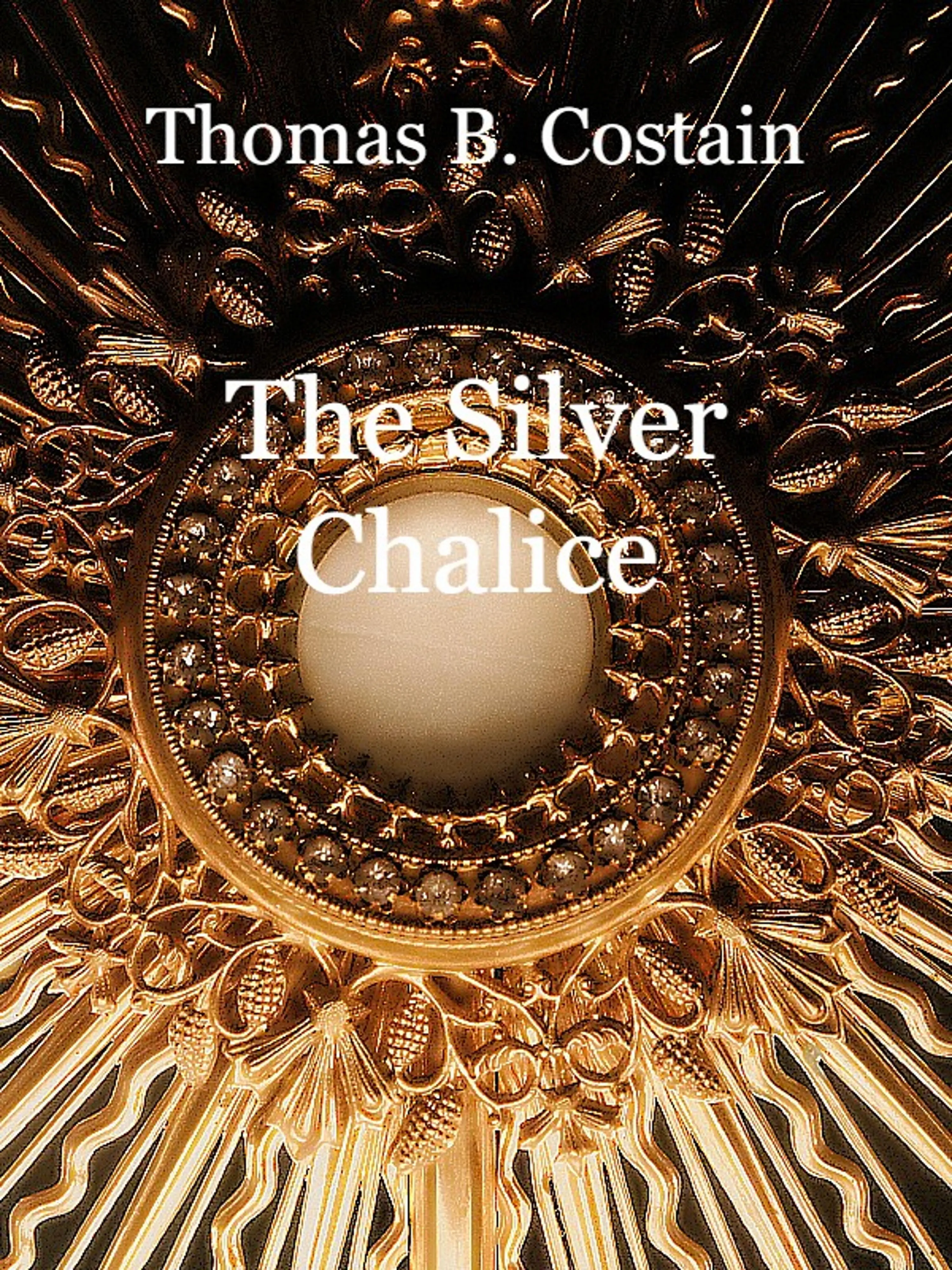
- Название:The Silver Chalice
- Автор:
- Жанр:
- Год:неизвестен
- ISBN:нет данных
- Рейтинг книги:5 / 5. Голосов: 1
-
Избранное:Добавить в избранное
- Отзывы:
-
Ваша оценка:
The Silver Chalice: краткое содержание, описание и аннотация
Предлагаем к чтению аннотацию, описание, краткое содержание или предисловие (зависит от того, что написал сам автор книги «The Silver Chalice»). Если вы не нашли необходимую информацию о книге — напишите в комментариях, мы постараемся отыскать её.
The Silver Chalice — читать онлайн ознакомительный отрывок
Ниже представлен текст книги, разбитый по страницам. Система сохранения места последней прочитанной страницы, позволяет с удобством читать онлайн бесплатно книгу «The Silver Chalice», без необходимости каждый раз заново искать на чём Вы остановились. Поставьте закладку, и сможете в любой момент перейти на страницу, на которой закончили чтение.
Интервал:
Закладка:
“Yes, yes!” cried the girl.
But Basil shook his head. “It is not enough yet,” he said, speaking as freely as though no one else were in the room. “True, I have the likeness now. But I am getting him as he is today. There must be as well a hint of the power of his earlier years. It will be empty without that. And again the secret is in his nose—that fine, fighting proud nose. I shall have to work still harder. But,” confidently, “it will come. When one has attained this stage, it can be taken as certain that the final goal will be reached.”
“I am sure of it,” said the girl.
“Perhaps you young people will suspend your discussion long enough to let me see it,” said Joseph. “It is my face you are discussing with such frankness. It is my nose that seems to cause so much concern.”
He reached out a hand. His fingers, which had almost the transparency of ivory, trembled slightly. He accepted the wax from Basil and frowned a little in his shortsighted study of it. There was at the same time, however, an almost immediate display of approval.
“Yes, Deborra,” he said, “the young man has a likeness of me here. I think it is going to be good, very good indeed.”
Basil warmed to this welcome praise from his employer. All doubt left him. He was going to succeed. He was so certain of it that he accepted the head back and set to work again with a feeling of full confidence.
Deborra returned to her chair beside the couch. Her praise had increased Basil’s interest in her, and he was now fully conscious of the grace of her movements and the fine line of her profile. As noses had been so much under discussion, he gave hers a close scrutiny. It was short and straight and with the merest indentation at the end, which made it the very pleasantest kind of nose, pretty and slightly pert. He decided that he liked it.
“How can you be so calm about this, Grandfather?” she asked. “I think it is quite wonderful!”
The eyes of the two young people met across the room, hers still wide with the pleasure she was taking in the success of his efforts. She smiled at Basil so warmly that he began to wonder if it was entirely her interest in the work that prompted her. Was she willing to let him see that he himself was included in the approbation she felt?
CHAPTER IV
1
For a week Basil saw nothing more of Joseph of Arimathea or his granddaughter. Adam ben Asher, he learned, had departed from the city. He worked a little on the wax bust from memory but found it unwise to attempt much, fearing he might lose the likeness. It was at best an elusive thing and could be destroyed by the indiscreet pressure of a fingertip.
He had been consigned to a small room on what obviously was the wrong side of the house, an airless space within sound of warehousing activities and on a dark hall that swarmed with workmen at all hours of the day. He washed with the domestic staff, waiting in a long line for his turn at a stream of water spouting sluggishly from a pipe, and sharing a piece of soap with the others. At intervals he visited an open and somewhat malodorous trench in the slave quarters. This treatment was so different from the warmth of his reception that he could not understand it. Had Joseph, on second thoughts, been less pleased with the start he had made? Was the parsimonious son of the house responsible for this unfriendly accommodation?
He took his meals alone in a small underground room lighted by an oil lamp in a bracket close to a ceiling that dripped moisture. The food was wholesome but decidedly plain and by the third day had become monotonous. Through an open door he looked on a long and dark chamber where the slaves of the household sat down to meat at the same hours. They gathered around a table large enough to accommodate forty or more at a time. He watched them as they ate (their food the same as his) and was surprised at the cheerfulness they displayed. They were a motley gathering, with skins of many colors, but dressed without exception in the plain gray tunic and the brass collar of servitude. There was much chaffing and laughing and, as both sexes shared the table, a tendency to ogle and flirt. An official sat at the head; the overseer, no doubt, for a whip was tucked into his belt, which he wore outside his tunic. He was a heavyish individual but not without good nature. He indulged in much humor of a heavy, bludgeoning variety and did a great deal of winking at the women.
The food on which the servants subsisted was in ample quantity; there was always something left over, at any rate. As soon as they had filed out of the room, the doors would be opened and beggars who had gathered at the rear door in readiness would be brought in to finish it. They were always an unclean and gluttonous lot, eating with a savage relish and disputing bitterly over the filling of the wine cups.
Basil spent his mornings in rambles about the city, finding himself involved in the busiest phase of life in the Holy City. It was crowded with visitors who had come for Pentecost. They filled the streets at all hours of the day and far into the night. Every house was filled to overflowing and tents had been set up outside the walls for the accommodation of the earnest men and women from all parts of the Diaspora [2]who asked no more than two things: to watch the paschal moon rise over Jerusalem and to bow their heads in reverence in the Temple. It was difficult for him under these circumstances to pursue his quest for information about Kester of Zanthus, but he did not allow himself to become discouraged.
| [2] | The Diaspora is a term applied to the Jewish people who had left Jerusalem in the dispersal. |
His first jaunt carried him down into the Cheesemakers’ Valley to a gate in the Southern wall of the city; surely the busiest of all the gates, he thought, for its iron-plated doors were swung far back to permit the crowds to stream through. For the most part, those who used it were farmers bringing leban to the city, the thickened milk which did not sour quickly and which, therefore, was used instead of sweet milk. They were a hairy-chested, black-skinned lot, unfriendly in manner and loud of tongue.
The first vendor of leban to whom Basil put his inquiry regarded him with a slight hint of good nature. “Kester of Zanthus?” he said. “No, I have not heard of such a one. What is his occupation?”
“He is concerned with supplies for the Roman army.”
The tolerance of the native turned at once to scoffing. “A contractor! Aiy, aiy! Have you lost your wits? Even a Greek should know that the Dung Gate is not the place to seek word of an army contractor.” The farmer pointed with his elbow toward the northwest. “Go and ask your questions there. Go to that insult in stone which Herod the Accursed raised to flout the children of Israel.”
So Basil went to Castle Antonia standing on a great stone escarpment, its four towers frowning high above the city. As he climbed the graded approach he could hear the sharp call of military orders and the tramp of feet in unison from the walled-in courtyard. A sentry stopped him at the gate.
“You seek word of an army contractor?” said the latter. “It is lucky for you, my foolhardy youth, that I am a man of kindly heart. Anyone who comes here seeking information about army matters is like to be carried within and treated to a questioning that is not pleasant at all and that a sliver of flesh like you might not survive. Get you gone!”
He had no better luck in the vicinity of the Temple. Penetrating into the Court of the Gentiles, from which he could see as far inside as the narrow terrace of the Hel, he found himself face to face with a forbidding notice, which read:
LET NO STRANGER ENTER
WITHIN THE BALUSTRADE
Читать дальшеИнтервал:
Закладка:
Похожие книги на «The Silver Chalice»
Представляем Вашему вниманию похожие книги на «The Silver Chalice» списком для выбора. Мы отобрали схожую по названию и смыслу литературу в надежде предоставить читателям больше вариантов отыскать новые, интересные, ещё непрочитанные произведения.










Обсуждение, отзывы о книге «The Silver Chalice» и просто собственные мнения читателей. Оставьте ваши комментарии, напишите, что Вы думаете о произведении, его смысле или главных героях. Укажите что конкретно понравилось, а что нет, и почему Вы так считаете.