Thomas B. Costain - The Silver Chalice
Здесь есть возможность читать онлайн «Thomas B. Costain - The Silver Chalice» — ознакомительный отрывок электронной книги совершенно бесплатно, а после прочтения отрывка купить полную версию. В некоторых случаях можно слушать аудио, скачать через торрент в формате fb2 и присутствует краткое содержание. Жанр: unrecognised, на английском языке. Описание произведения, (предисловие) а так же отзывы посетителей доступны на портале библиотеки ЛибКат.
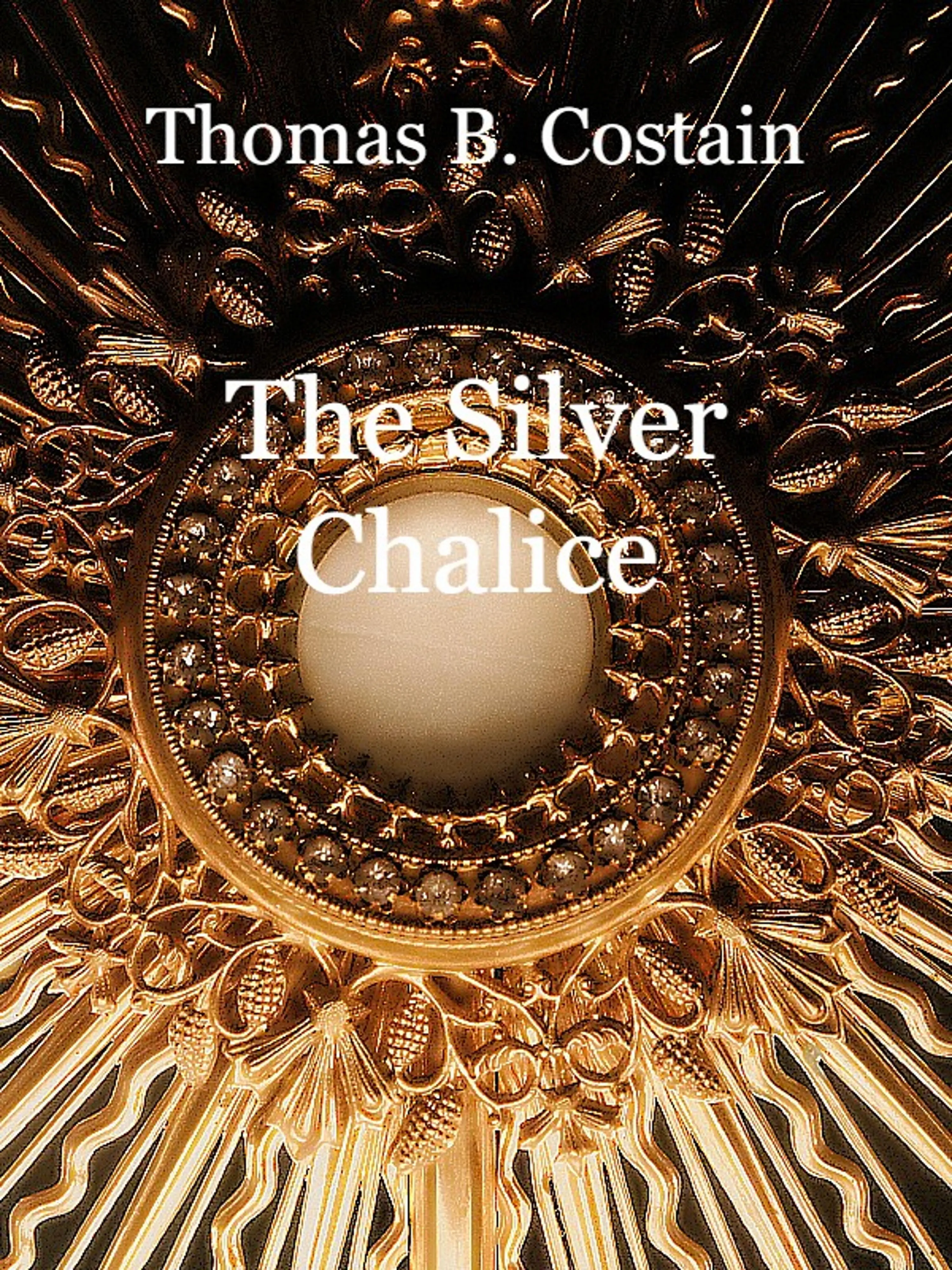
- Название:The Silver Chalice
- Автор:
- Жанр:
- Год:неизвестен
- ISBN:нет данных
- Рейтинг книги:5 / 5. Голосов: 1
-
Избранное:Добавить в избранное
- Отзывы:
-
Ваша оценка:
The Silver Chalice: краткое содержание, описание и аннотация
Предлагаем к чтению аннотацию, описание, краткое содержание или предисловие (зависит от того, что написал сам автор книги «The Silver Chalice»). Если вы не нашли необходимую информацию о книге — напишите в комментариях, мы постараемся отыскать её.
The Silver Chalice — читать онлайн ознакомительный отрывок
Ниже представлен текст книги, разбитый по страницам. Система сохранения места последней прочитанной страницы, позволяет с удобством читать онлайн бесплатно книгу «The Silver Chalice», без необходимости каждый раз заново искать на чём Вы остановились. Поставьте закладку, и сможете в любой момент перейти на страницу, на которой закончили чтение.
Интервал:
Закладка:
“In Rome it is so. That city is filled with ex-slaves, and the old Romans resent their wealth and insolence. They still speak angrily of the marriage of Drusilla, a granddaughter of Antony and Cleopatra, to a freedman of Judea named Felix. They mutter a great deal because Nero admits so many freedmen to posts of authority under him. But outside of Rome it is different. Have you ever seen a pileus worn on the head of a freedman in Antioch?”
Basil shook his head. “I do not think so.”
“They must still wear it in Rome.” Luke paused reflectively. “In your case we have a definite advantage, for you were born free and your father was a citizen of Rome. I am sure, my son, that you may sleep easily and in full confidence that you will never have to don the pileus!”
2
Luke left the next day. For a week thereafter Adam ben Asher traded and bought and sold while Basil waited. After the talk to which he had listened between the two older men, Basil did not look forward to the long journey over the hot trails to Jerusalem in the company of Adam, who thought so ill of him.
“I hope you have a stout heart under those skinny ribs of yours,” said Adam as they sat together over what they thought would be their last evening meal in Aleppo. “We will be two weeks at least on the road, and the heat will be enough to fry a lizard on a rock.” He swallowed his last bite of food and wiped his lips with a quick flick of one hand. “We start at dawn.”
But they did not start at dawn. Basil developed a fever during the night, the result, perhaps, of the state of anxiety in which he had existed, but more still of the undernourishment and overwork of two long years. For three days he tossed about in a stupor, his eyes closed, his brow hot and dry. Adam ben Asher, grumbling loudly about the delay and the absence of Luke in this emergency, dosed the sick youth with every medicine he could find. On the morning of the fourth day he detected a trace of moisture on the patient’s forehead.
“Luke could not have done better,” said the caravan captain to himself with a sense of pride in his success. “Was it the black hellebore or the pods of the carob I bought from that old Armenian? Whichever it was, he’s going to live.” Rubbing a hand over his unshaved jaw, he studied the patient with an eye which still lacked friendliness. “If he had stayed sick another day, I would have left him and gone on my way. It would have been necessary for Luke to find another artist, and he might have the good sense this time to pick a man of good round years, a fellow with a fat belly, perhaps, and a bald head. I would be easier in my mind if I were taking into the house of Joseph a chisel-wielder with a rheumy eye and a sourness of breath instead of this slim young sprig.”
The day following, when the freshness of dawn was in the air, Basil was lifted to the back of a camel that had been fitted out with a musattah, a litter consisting of a small square tent and a comfortable back against which he could lean. He was still weak and ill but grimly determined not to cause the fuming caravan captain any further delay.
Adam watched an assistant tie the pale young artist to the rear cushions with tasseled cords of twisted goat’s hair and grunted an order. The man gave the reins a jerk and said “Khikh!” in a sharp tone. The camel groaned, thrust its head forward, and rose slowly to its knees. Basil felt himself being tilted forward as the animal elevated its rear quarters without moving either foreleg. Lacking the strength to move his arms, he was certain that he was going to slip out of the front of the musattah. In the nick of time, however, one of the forelegs was raised until the foot touched the ground and the whole of the front quarter began to rise in turn. After what seemed a long time, and to the accompaniment of much groaning and grumbling, the front established equilibrium and the sick rider sighed with relief.
“Khikh!” cried the overseer, the leader of the train, who had come up to watch. He was a stout fellow with a bronze face and he looked around at Adam as the camel started off at a slow swinging gait. “Walk?” he asked.
“Walk,” affirmed Adam. “For the next two days. If we try for more than twenty-five miles at first we will have an artist to bury. I would not object myself, but the old man in Jerusalem would not be pleased.”
“There are times,” said the overseer, “when we cannot consider our own pleasure and have to think about the old man in Jerusalem.”
“He has some use for this young bag of bones,” explained Adam.
The long train had swept out from the encampment, which lay under the walls of the city, and was moving slowly down the Jerusalem Road when Adam brought his camel up beside Basil’s. He raised the flap of the tent and squinted in at the patient.
“You look as yellow as a mummy,” he said. “Are you going to be sick again?”
“I think not,” Basil answered without making the effort required to turn his head. “But I need more air.”
“I will raise the canvas on this side where the sun does not strike. Keep your eyes straight ahead and you will get accustomed in time to the camel’s gait.”
He kept pace alongside and after a few moments of silence he began to talk, beginning with a question. “What do you know about Joseph of Arimathea?”
“I know nothing about him.”
“Joseph,” declared Adam with obvious pride, “is a very rich man. Some say he is the richest man in the world, and it may be true. Is it necessary to tell you that the Jews are the greatest people in the world? They are bright and sharp and they have the gift of understanding. Also, they are acquisitive and they make great fortunes, sometimes out of nothing. There was once a Jew named Job and he was so rich that he owned six thousand camels as well as great herds of cattle and flocks of sheep and enough horses to mount a Roman army. But that was a thousand years ago, and trade has grown so much since then that today Joseph of Arimathea is wealthier than half a dozen Jobs rolled into one. His connections are so wide that if he went bankrupt every business roof in Jerusalem would fall in. I am not boasting, young artist. I am trying to give you the truth about this great old man you are going to work for in Jerusalem.
“Joseph has one fault,” he went on. “He is a Christian. He became one in the earliest days—when there was real danger in it. Joseph was sure his business would suffer if it was known and so he didn’t go about beating his breast and singing hymns. It was not,” emphatically, “because he was afraid. After the crucifixion, he went to Pontius Pilate, that weak man, and asked for the body. He placed the body in his own tomb and rolled the stone over the entrance; and as to what happened after, I offer no opinion.”
Basil was listening intently, but it would not have mattered if he had turned his head away: Adam had started to tell the story and nothing could stop him.
“Joseph has lived a long life. For over thirty years he has been the financial mainstay of the Christians. The Lord performs miracles, they say, but He does not cause the shekels to multiply in the purses of His people. There are others to help, but when it is said that ‘Paul has been called into Macedonia’ or ‘Peter has decided to go to Rome,’ it is Joseph of Arimathea they come to for help. He never refuses.”
Adam paused, to catch his breath and to heave a deep sigh of regret. “He cannot live much longer, that fine old man. And when he dies his only son Aaron, the father of Deborra, will take his place. Things will be different then. Bismillah, what a difference there will be!
“How could it come about that a man like Joseph, who has glowed warmly all his life like a bail of fire in the sky, could sire a dried-up pod of seeds like Aaron? It was not necessary for Aaron to learn his arithmetic, he came into the world knowing how to add and multiply. If all the words spoken by the children of Israel over the ages had been written down and counted and put into columns, it would be found that our helpful, generous Aaron has said ‘no’ oftener than all the others put together. Have you ever camped on a high plain of a winter night and felt the cold turning you into a solid cake of ice? The heart of Aaron is colder than that, because you can always start a fire on the plains, but you cannot burn camel dung inside him to relieve the chill. When Joseph dies, the Christians will not get as much as one half shekel out of that man of small and shriveled soul.” It was clear that he did not fear the possible consequences of speaking with such freedom. “Why do I tell you this about the man who will sit over me someday? I will tell you, young artist. It is because I do not care. I have said all this before, and to Aaron’s own face.”
Читать дальшеИнтервал:
Закладка:
Похожие книги на «The Silver Chalice»
Представляем Вашему вниманию похожие книги на «The Silver Chalice» списком для выбора. Мы отобрали схожую по названию и смыслу литературу в надежде предоставить читателям больше вариантов отыскать новые, интересные, ещё непрочитанные произведения.





Обсуждение, отзывы о книге «The Silver Chalice» и просто собственные мнения читателей. Оставьте ваши комментарии, напишите, что Вы думаете о произведении, его смысле или главных героях. Укажите что конкретно понравилось, а что нет, и почему Вы так считаете.