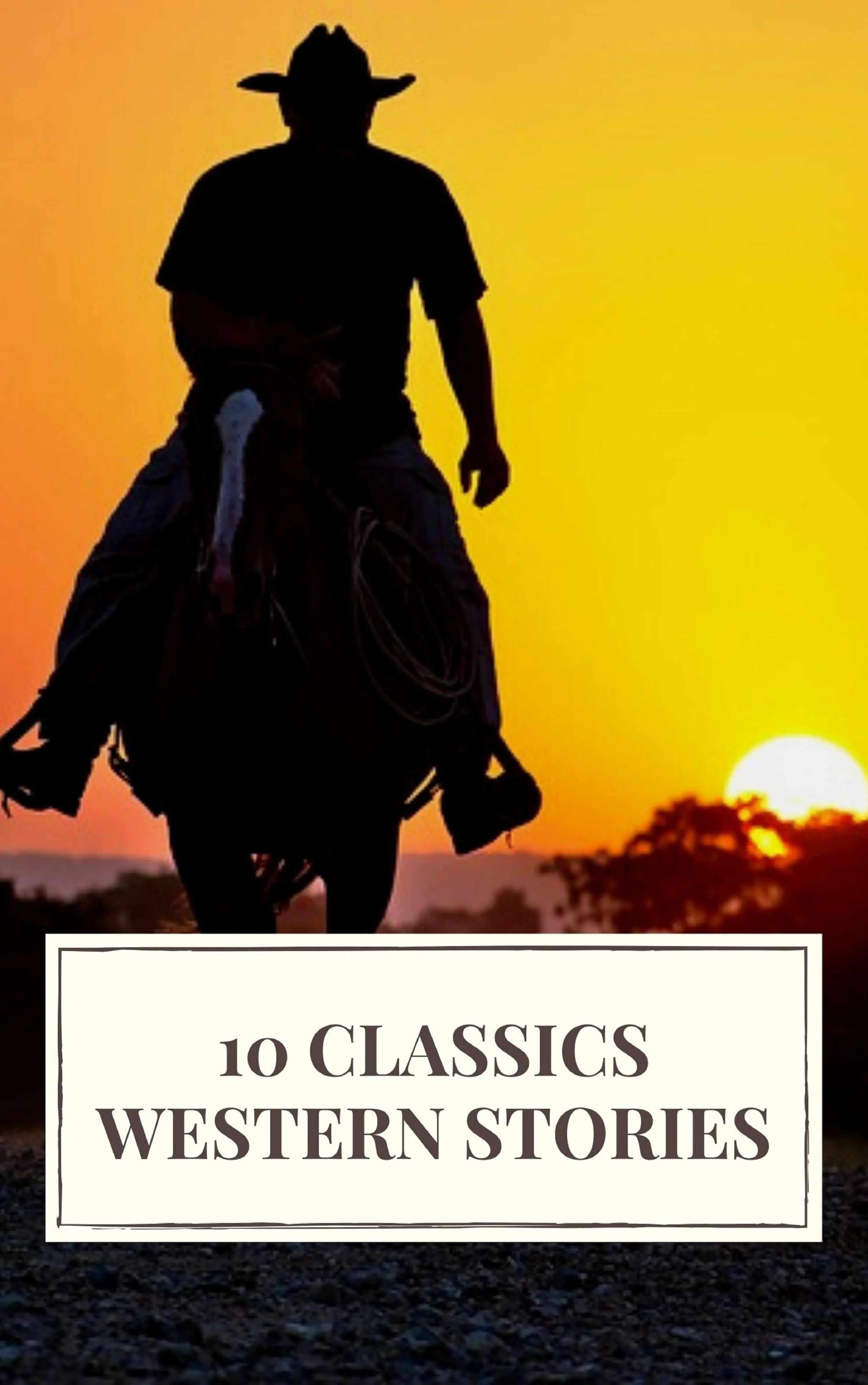
Samuel Merwin - 10 Classics Western Stories
Здесь есть возможность читать онлайн «Samuel Merwin - 10 Classics Western Stories» — ознакомительный отрывок электронной книги совершенно бесплатно, а после прочтения отрывка купить полную версию. В некоторых случаях можно слушать аудио, скачать через торрент в формате fb2 и присутствует краткое содержание. Жанр: unrecognised, на английском языке. Описание произведения, (предисловие) а так же отзывы посетителей доступны на портале библиотеки ЛибКат.
- Название:10 Classics Western Stories
- Автор:
- Жанр:
- Год:неизвестен
- ISBN:нет данных
- Рейтинг книги:3 / 5. Голосов: 1
-
Избранное:Добавить в избранное
- Отзывы:
-
Ваша оценка:
10 Classics Western Stories: краткое содержание, описание и аннотация
Предлагаем к чтению аннотацию, описание, краткое содержание или предисловие (зависит от того, что написал сам автор книги «10 Classics Western Stories»). Если вы не нашли необходимую информацию о книге — напишите в комментариях, мы постараемся отыскать её.
The novels are sorted alphabetically by the authors.
Content:
The Log of a Cowboy by Andy Adams
The Bridge of the Gods by Frederic Homer Balch
The Lure of the Dim Trails by B.M. Bower
Hidden Water by Dane Coolidge
The Last of the Mohicans by James Fenimore Cooper
The Prairie by James Fenimore Cooper
Salomy Jane by Bret Harte
Astoria by Washington Irving
The road to Frontenac by Samuel Merwin
That Girl Montana by Marah Ellis Ryan
10 Classics Western Stories — читать онлайн ознакомительный отрывок
Ниже представлен текст книги, разбитый по страницам. Система сохранения места последней прочитанной страницы, позволяет с удобством читать онлайн бесплатно книгу «10 Classics Western Stories», без необходимости каждый раз заново искать на чём Вы остановились. Поставьте закладку, и сможете в любой момент перейти на страницу, на которой закончили чтение.
Интервал:
Закладка:
Chapter 3 THE GREAT CAMP ON THE ISLAND.
Of different language, form and face,
A various race of men.
Scott.
“You say that we shall see the Bridge of the Gods to-day?” asked Cecil of the young Willamette runner the next morning. “Tell me about it; is it high?”
The young Willamette rose to his full height, arched his right hand above his eyes, looked skyward with a strained expression as if gazing up at an immense height, and emitted a prolonged “ah-h-h!”
That was all, but it was enough to bring the light to Cecil’s eyes and a sudden triumphant gladness to his heart. At last he approached the land of his vision, at last he should find the bridge whose wraith had faded before him into the west eight years before!
The Cayuse band had started early that morning. The chief Snoqualmie was impatient of delay, and wished to be one of the earliest at the council; he wanted to signalize himself in the approaching struggle by his loyalty to Multnomah, whose daughter he was to marry and whom he was to succeed as war-chief.
The women were in advance, driving the pack-horses; Cecil rode behind them with the Shoshone renegade and the young Willamette runner; while Snoqualmie brought up the rear, looking sharply after stragglers,—for some of his young men were very much inclined to linger at the rendezvous and indulge in a little gambling and horse-racing with the other bands, who were not to start till later in the day.
The young Willamette still rode the pretty little pony whose ears and tail he had so barbarously mutilated. It reeled under him from sheer weakness, so young was it and so worn by the journey of the day before. In vain did Cecil expostulate. With true Indian obtuseness and brutality, the Willamette refused to see why he should be merciful to a horse.
“Suppose he rode me, what would he care? Now I ride him, what do I care? Suppose he die, plenty more hiagua shells, plenty more horses.”
After which logical answer he plied the whip harder than ever, making the pony keep up with the stronger and abler horses of the other riders. The long train of squaws and warriors wound on down the trail by the river-side. In a little while Wishram and Tumwater passed from sight. The wind began to blow; the ever drifting sand of the Columbia came sifting in their faces. They passed the Dalles of the Columbia; and the river that, as seen from the heights the evening before, wound like a silver thread among the rocks, was found to be a compressed torrent that rushed foaming along the narrow passage,—literally, as it has been described, “a river turned on edge.”
There too they passed the camp of the Wascos, who were preparing to start, but suspended their preparations at the approach of the cavalcade and stood along the path eager to see the white man. Cecil noticed that as they descended the river the language of the local tribes became more gutteral, and the custom of flattening the head prevailed more and more. [9]
Below, the scenery was less barren; the river entered the Cascade Range, and the steep banks, along which wound the trail, grew dark with pines, relieved here and there with brighter verdure. They saw bands of Indians on the opposite shore, descending the trail along that side on the way to the council. Many were on foot, though some horses were among them. They were Indians of the nine tribes of the Klickitat, and as yet had but few horses. A century later they owned thousands. Indian women never accompanied war-parties; and Cecil noticed that some of the bands were composed entirely of men, which gave them the appearance of going to war. It had an ominous and doubtful look.
At the Wau-coma (place of cottonwoods), the modern Hood River, they found the tribe that inhabited that beautiful valley already on the march, and the two bands mingled and went on together. The Wau-comas seemed to be peaceably inclined, for their women were with them.
A short distance below the Wau-coma, the young Willamette’s horse, urged till it could go no farther, fell beneath him. The blood gushed from its nostrils; in a few moments it was dead. The Willamette extricated himself from it. “A bad horse, cultus [no good]!” he said, beating it with his whip. After venting his anger on it in that way, he strode forward on foot.
And now Cecil was all expectation, on the alert for the first sight of the bridge.
“Shall we see it soon?” he asked the young Willamette.
“When the sun is there, we shall see it,” replied the Indian, pointing to the zenith. The sun still lacked several hours of noon, and Cecil had to restrain his impatience as best he could.
Just then an incident occurred that for the time effectually obliterated all thought of the bridge, and made him a powerful enemy where he least desired one.
At a narrow place in the trail, the loose horses that were being driven at the head of the column became frightened and ran back upon their drivers. In a moment, squaws, pack-horses, and ponies were all mingled together. The squaws tried in vain to restore order; it seemed as if there was going to be a general stampede. The men dashed up from the rear, Snoqualmie and Cecil among them. Cecil’s old nurse happened to be in Snoqualmie’s way. The horse she rode was slow and obstinate; and when she attempted to turn aside to let Snoqualmie pass he would not obey the rein, and the chief’s way was blocked. To Snoqualmie an old Indian woman was little more than a dog, and he raised his whip and struck her across the face.
Like a flash, Cecil caught the chief’s rein and lifted his own whip. An instant more, and the lash would have fallen across the Indian’s face; but he remembered that he was a missionary, that he was violating his own precepts of forgiveness in the presence of those whom he hoped to convert.
The blow did not fall; he grappled with his anger and held it back; but Snoqualmie received from him a look of scorn so withering, that it seemed when Cecil’s flashing eyes met his own as if he had been struck, and he grasped his tomahawk. Cecil released the rein and turned away without a word. Snoqualmie seemed for a moment to deliberate within himself; then he let go his weapon and passed on. Order was restored and the march resumed.
“You are strong,” said the Shoshone renegade to Cecil. He had seen the whole of the little drama. “You are strong; you held your anger down, but your eyes struck him as if he were a dog.”
Cecil made no reply, but rode on thinking that he had made an enemy. He regretted what had happened; and yet, when he recalled the insult, his blood burned and he half regretted that the blow had not been given. So, absorbed in painful thought, he rode on, till a murmur passing down the line roused him.
“The bridge! The bridge!”
He looked up hastily, his whole frame responding to the cry. There it was before him, and only a short distance away,—a great natural bridge, a rugged ridge of stone, pierced with a wide arched tunnel through which the waters flowed, extending across the river. It was covered with stunted pine and underbrush growing in every nook and crevice; and on it were Indian horsemen with plumed hair and rude lances. It was the bridge of the Wauna, the Bridge of the Gods, the bridge he had seen in his vision eight years before.
For a moment his brain reeled, everything seemed shadowy and unreal, and he half expected to see the bridge melt, like the vision, into mist before his eyes.
Like one in a dream, he rode with the others to the place where the path turned abruptly and led over the bridge to the northern bank of the Columbia. Like one in a dream he listened, while the young Willamette told him in a low tone that this bridge had been built by the gods when the world was young, that it was the tomanowos of the Willamettes, that while it stood they would be strongest of all the tribes, and that if it fell they would fall with it. As they crossed it, he noted how the great arch rung to his horse’s hoofs; he noted the bushes growing low down to the tunnel’s edge; he noted how majestic was the current as it swept into the vast dark opening below, how stately the trees on either bank. Then the trail turned down the river-bank again toward the Willamette, and the dense fir forest shut out the mysterious bridge from Cecil’s backward gaze.
Читать дальшеИнтервал:
Закладка:
Похожие книги на «10 Classics Western Stories»
Представляем Вашему вниманию похожие книги на «10 Classics Western Stories» списком для выбора. Мы отобрали схожую по названию и смыслу литературу в надежде предоставить читателям больше вариантов отыскать новые, интересные, ещё непрочитанные произведения.


Обсуждение, отзывы о книге «10 Classics Western Stories» и просто собственные мнения читателей. Оставьте ваши комментарии, напишите, что Вы думаете о произведении, его смысле или главных героях. Укажите что конкретно понравилось, а что нет, и почему Вы так считаете.