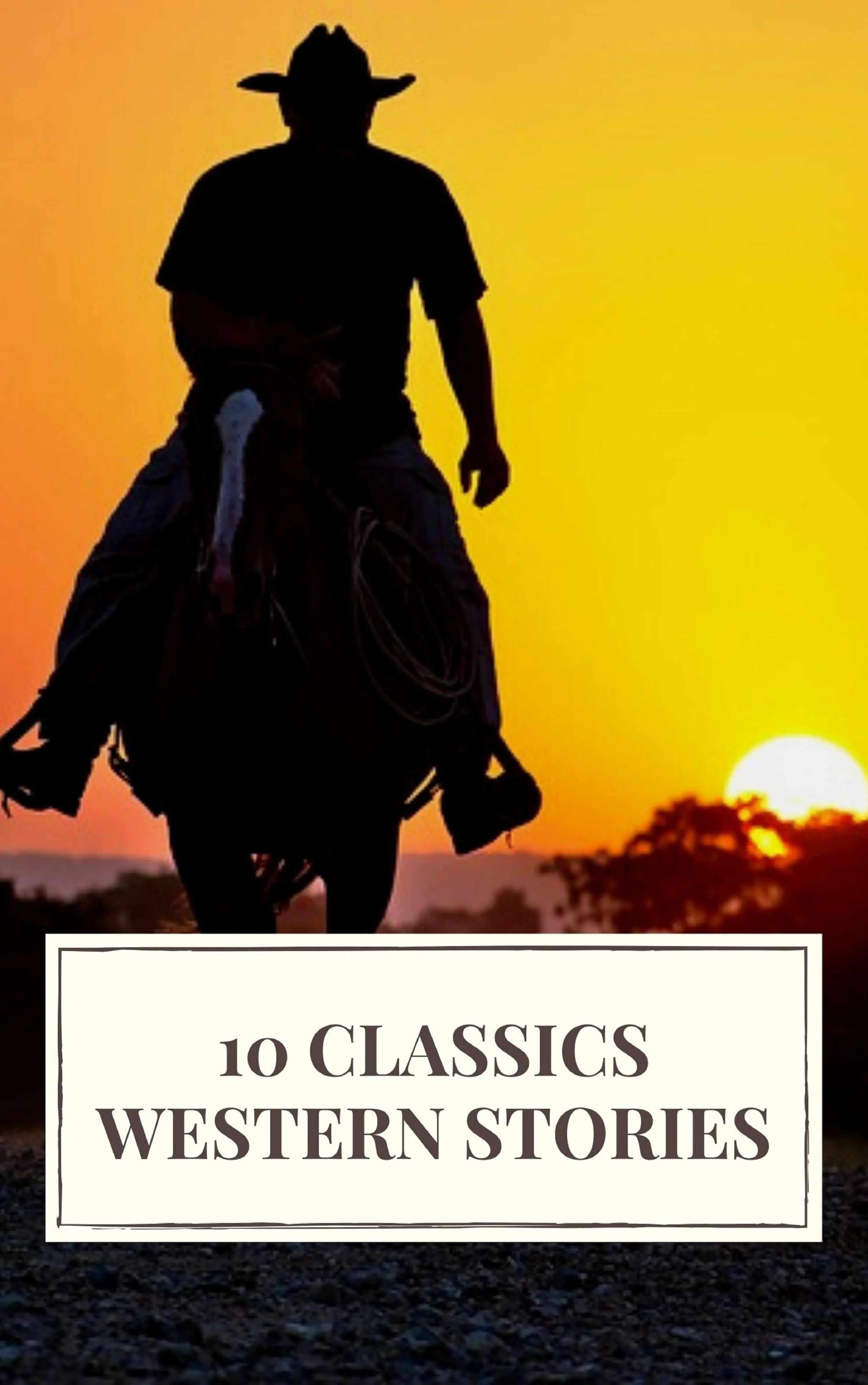
Samuel Merwin - 10 Classics Western Stories
Здесь есть возможность читать онлайн «Samuel Merwin - 10 Classics Western Stories» — ознакомительный отрывок электронной книги совершенно бесплатно, а после прочтения отрывка купить полную версию. В некоторых случаях можно слушать аудио, скачать через торрент в формате fb2 и присутствует краткое содержание. Жанр: unrecognised, на английском языке. Описание произведения, (предисловие) а так же отзывы посетителей доступны на портале библиотеки ЛибКат.
- Название:10 Classics Western Stories
- Автор:
- Жанр:
- Год:неизвестен
- ISBN:нет данных
- Рейтинг книги:3 / 5. Голосов: 1
-
Избранное:Добавить в избранное
- Отзывы:
-
Ваша оценка:
10 Classics Western Stories: краткое содержание, описание и аннотация
Предлагаем к чтению аннотацию, описание, краткое содержание или предисловие (зависит от того, что написал сам автор книги «10 Classics Western Stories»). Если вы не нашли необходимую информацию о книге — напишите в комментариях, мы постараемся отыскать её.
The novels are sorted alphabetically by the authors.
Content:
The Log of a Cowboy by Andy Adams
The Bridge of the Gods by Frederic Homer Balch
The Lure of the Dim Trails by B.M. Bower
Hidden Water by Dane Coolidge
The Last of the Mohicans by James Fenimore Cooper
The Prairie by James Fenimore Cooper
Salomy Jane by Bret Harte
Astoria by Washington Irving
The road to Frontenac by Samuel Merwin
That Girl Montana by Marah Ellis Ryan
10 Classics Western Stories — читать онлайн ознакомительный отрывок
Ниже представлен текст книги, разбитый по страницам. Система сохранения места последней прочитанной страницы, позволяет с удобством читать онлайн бесплатно книгу «10 Classics Western Stories», без необходимости каждый раз заново искать на чём Вы остановились. Поставьте закладку, и сможете в любой момент перейти на страницу, на которой закончили чтение.
Интервал:
Закладка:
He entered, and the doorway behind him was immediately blocked up by the motley crowd excluded from the interior. Not a warrior in the council looked at him; even the chief, Snoqualmie, did not turn his head. The messenger advanced a few paces into the room, stopped, and stood as impassive as the rest. Then, when the demands of Indian stoicism had been satisfied, Snoqualmie turned his face, a handsome but treacherous and cruel face, upon the messenger.
“The warrior comes to speak the words of our brother, the chief of the Bannocks; he is welcome. Shall we smoke the pipe of peace before we hear our brother’s words?”
The Bannock gazed steadily at Snoqualmie. In that fierce and proud regard was something the Cayuse could not fathom.
“Why should the peace-pipe be smoked?” he asked. “Was it not smoked in the great council a moon ago? Did not Snoqualmie say then that the two tribes should henceforth be as one tribe, and that the Bannocks should be the brethren of the Cayuses forever?”
“Those were the words,” replied the chief with dignity. “Snoqualmie has not forgotten them.”
All eyes were now turned on the messenger; they saw that something unexpected was coming. The Bannock drew his form up to its full height, and his resolute features expressed the bitterest scorn.
“Nor have the Bannocks forgotten. At the council you talked ‘peace, peace.’ Last night some of your young men surprised a little camp of Bannocks,—a few old men and boys who were watching horses,—and slew them and ran off the horses. Is that your peace? The Bannocks will have no such peace. This is the word the chief of the Bannocks sends you!”
Holding up the peace-pipe that had been smoked at the great council and afterward given to the medicine-men of the Bannocks as a pledge of Cayuse sincerity, he broke the long slender stem twice, thrice, crushed the bowl in his fingers, and dashed the pieces at Snoqualmie’s feet. It was a defiance, a contemptuous rejection of peace, a declaration of war more disdainful than any words could have made it.
Then, before they could recover from their astonishment, the Bannock turned and leaped through the crowd at the door,—for an instant’s stay was death. Even as he leaped, Snoqualmie’s tomahawk whizzed after him, and a dozen warriors were on their feet, weapon in hand. But the swift, wild drama had been played like lightning, and he was gone. Only, a brave who had tried to intercept his passage lay on the ground outside the lodge, stabbed to the heart. They rushed to the door in time to see him throw himself on his horse and dash off, looking back to give a yell of triumph and defiance.
In less time than it takes to describe it, the horses tethered near the lodges were mounted and twenty riders were in pursuit. But the Bannock was considerably in advance now, and the fine black horse he rode held its own nobly. Out over the prairie flew the pursuing Cayuses, yelling like demons, the fugitive turning now and then to utter a shout of derision.
Back at the lodges, the crowd of spectators looked on with excited comments.
“His horse is tired, ours are fresh!” “They gain on him!” “No, he is getting farther from them!” “See, he throws away his blanket!” “They are closer, closer!” “No, no, his horse goes like a deer.”
Out over the prairies, fleeting like the shadow of a hurrying cloud, passed the race, the black horse leading, the Cayuse riders close behind, their long hair outstreaming, their moccasins pressed against their horses’ sides, their whips falling without mercy. Down a canyon they swept in pursuit and passed from the ken of the watchers at the camp, the black horse still in the van.
But it could not cope with the fresh horses of the Cayuses, and they gained steadily. At last the pursuers came within bowshot, but they did not shoot; the fugitive knew too well the reason why. Woe unto him if he fell alive into their hands! He leaned low along his horse’s neck, chanting a weird refrain as if charming it to its utmost speed, and ever and anon looked back with that heart-shaking shout of defiance. But steadily his pursuers gained on him; and one, outstripping the rest, rode alongside and reached out to seize his rein. Even as he touched it, the Bannock’s war-club swung in air and the Cayuse reeled dead from his saddle. A howl of rage burst from the others, a whoop of exultation from the fugitive.
But at length his horse’s breath grew short and broken, he felt its body tremble as it ran, and his enemies closed in around him.
Thrice the war-club rose and fell, thrice was a saddle emptied; but all in vain. Quickly his horse was caught, he was dragged from the saddle and bound hand and foot.
He was thrown across a horse and brought back to the village. What a chorus of triumph went up from the camp, when it was seen that they were bringing him back! It was an ominous sound, with something of wolfish ferocity in it. But the Bannock only smiled grimly.
He is bound to a post,—a charred, bloodstained post to which others of his race have been bound before him. The women and children taunt him, jeer at him, strike him even. The warriors do not. They will presently do more than that. Some busy themselves building a fire near by; others bring pieces of flint, spear points, jagged fragments of rock, and heat them in it. The prisoner, dusty, torn, parched with thirst, and bleeding from many wounds, looks on with perfect indifference. Snoqualmie comes and gazes at him; the prisoner does not notice him, is seemingly unconscious of his presence.
By and by a band of hunters ride up from a long excursion. They have heard nothing of the trouble. With them is a young Bannock who is visiting the tribe. He rides up with his Cayuse comrades, laughing, gesticulating in a lively way. The jest dies on his lips when he recognizes the Bannock who is tied to the stake. Before he can even think of flight, he is dragged from his horse and bound,—his whilom comrades, as soon as they understand the situation, becoming his bitterest assailants.
For it is war again, war to the death between the tribes, until, two centuries later, both shall alike be crushed by the white man.
At length the preparations are complete, and the women and children, who have been swarming around and taunting the captives, are brushed aside like so many flies by the stern warriors. First, the young Bannock who has just come in is put where he must have a full view of the other. Neither speaks, but a glance passes between them that is like a mutual charge to die bravely. Snoqualmie comes and stands close by the prisoner and gives directions for the torture to begin.
The Bannock is stripped. The stone blades that have been in the fire are brought, all red and glowing with heat, and pressed against his bare flesh. It burns and hisses under the fiery torture, but the warrior only sneers.
“It doesn’t hurt; you can’t hurt me. You are fools. You don’t know how to torture.” [4]
No refinement of cruelty could wring a complaint from him. It was in vain that they burned him, cut the flesh from his fingers, branded his cheek with the heated bowl of the pipe he had broken.
“Try it again,” he said mockingly, while his flesh smoked. “I feel no pain. We torture your people a great deal better, for we make them cry out like little children.”
More and more murderous and terrible grew the wrath of his tormentors, as this stream of vituperation fell on their ears. Again and again weapons were lifted to slay him, but Snoqualmie put them back.
“He can suffer more yet,” he said; and the words were like a glimpse into the cold, merciless heart of the man. Other and fiercer tortures were devised by the chief, who stood over him, pointing out where and how the keenest pain could be given, the bitterest pang inflicted on that burned and broken body. At last it seemed no longer a man, but a bleeding, scorched, mutilated mass of flesh that hung to the stake; only the lips still breathed defiance and the eyes gleamed deathless hate. Looking upon one and another, he boasted of how he had slain their friends and relatives. Many of his boasts were undoubtedly false, but they were very bitter.
Читать дальшеИнтервал:
Закладка:
Похожие книги на «10 Classics Western Stories»
Представляем Вашему вниманию похожие книги на «10 Classics Western Stories» списком для выбора. Мы отобрали схожую по названию и смыслу литературу в надежде предоставить читателям больше вариантов отыскать новые, интересные, ещё непрочитанные произведения.

Обсуждение, отзывы о книге «10 Classics Western Stories» и просто собственные мнения читателей. Оставьте ваши комментарии, напишите, что Вы думаете о произведении, его смысле или главных героях. Укажите что конкретно понравилось, а что нет, и почему Вы так считаете.