Alexander Etkind - Nature's Evil
Здесь есть возможность читать онлайн «Alexander Etkind - Nature's Evil» — ознакомительный отрывок электронной книги совершенно бесплатно, а после прочтения отрывка купить полную версию. В некоторых случаях можно слушать аудио, скачать через торрент в формате fb2 и присутствует краткое содержание. Жанр: unrecognised, на английском языке. Описание произведения, (предисловие) а так же отзывы посетителей доступны на портале библиотеки ЛибКат.
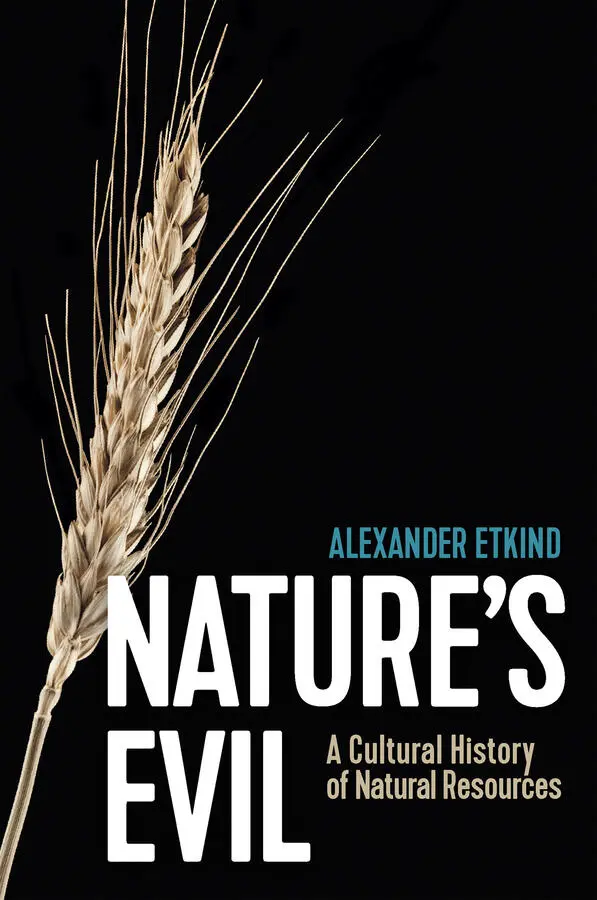
- Название:Nature's Evil
- Автор:
- Жанр:
- Год:неизвестен
- ISBN:нет данных
- Рейтинг книги:4 / 5. Голосов: 1
-
Избранное:Добавить в избранное
- Отзывы:
-
Ваша оценка:
Nature's Evil: краткое содержание, описание и аннотация
Предлагаем к чтению аннотацию, описание, краткое содержание или предисловие (зависит от того, что написал сам автор книги «Nature's Evil»). Если вы не нашли необходимую информацию о книге — напишите в комментариях, мы постараемся отыскать её.
The uneven spread of available resources was the prime mover for trade, which in turn led to the accumulation of wealth, the growth of inequality and the proliferation of evil. Different sorts of raw material have different political implications and give rise to different social institutions. When a country switches its reliance from one commodity to another, this often leads to wars and revolutions. But none of these crises goes to waste – they all lead to dramatic changes in the relations between matter, labour and the state.
Our world is the result of a fragile pact between people and nature. As we stand on the verge of climate catastrophe, nature has joined us in our struggle to distinguish between good and evil. And since we have failed to change the world, now is the moment to understand how it works.
Nature's Evil — читать онлайн ознакомительный отрывок
Ниже представлен текст книги, разбитый по страницам. Система сохранения места последней прочитанной страницы, позволяет с удобством читать онлайн бесплатно книгу «Nature's Evil», без необходимости каждый раз заново искать на чём Вы остановились. Поставьте закладку, и сможете в любой момент перейти на страницу, на которой закончили чтение.
Интервал:
Закладка:
The beaver pelts were processed using mercury, an extremely hazardous substance. The furrier’s craft was one of the most risky jobs, on a par with mining or metallurgy, which also used mercury. The most expensive hats still contain so much mercury that they cannot be safely exhibited in museums. Hatters fell ill with neurological diseases unknown to science, went mad and died young. As the beaver became rarer in distant Canada, hatters started mixing its nap with rabbit’s fur, which was fifty times cheaper. Still, this trade consumed an enormous quantity of beaver pelts – the import to France was counted in hundreds of thousands. In Canada, the French learnt the tricky art of enticing the Native Americans into bartering goods on their terms. Having no intention of populating these vast territories, they set up trading posts where beaver pelts were exchanged for weapons, alcohol or cauldrons. The most important trading partners were from the Huron tribe. Living in clusters round trading posts and adopting firearms, the Huron turned into settled traders. Their traditional skills, such as making a canoe by covering a light frame with birch bark, also came in useful; the Europeans had no means of transportation other than these canoes.
In alliance with the Huron, France prevented the penetration of these shores by the Dutch, who were collaborating with the Iroquois. In 1670 the English founded the Hudson Bay Company, which competed with the French trading posts across the Great Lakes to the south. The traditional hostility between indigenous tribes turned into proxy wars, a typical instrument of imperial influence. Between 1675 and 1687, the annual delivery of beaver pelts to Europe doubled. But on the cusp of the eighteenth century the suppliers of fur encountered a new phenomenon: the prices for beaver were falling – silk hats came into fashion. But new markets in Germany, Poland and Russia had started using beaver pelts for making fur coats. The market became specialised and global. White beaver fur went to England, where white hats were in fashion. Dutch firms first combed out the nap to make hats for local consumption and then sent the pelts with the outer fur to Russia to make fur coats. Some beaver pelts were exported to Arkhangelsk, via Amsterdam, for specialised processing; the Russian Pomors, a northern people, had a method of combing out the underhair which wasn’t known in Western Europe. 18
The British, French and Dutch colonies in America tried to limit the supply of pelts and stop the fall in prices. In 1720 New York prohibited trade with the French colonies; in response, the Iroquois started smuggling beaver pelts to English ships, avoiding customs and lowering prices. In the Seven Years’ War France lost its territories to the English. ‘You know that these two nations are at war about a few acres of barren land in the neighbourhood of Canada, and that they have expended much greater sums in the contest than all Canada is worth,’ wrote Voltaire in Candide . As a result of her victory, England obtained a monopoly on beaver fur, but after the American Revolution England lost her trading posts on United States territory though she kept those in Canada. In 1821 the British Hudson Bay Company merged with the Canadian North West Company. Its rival, the American Fur Company, was even more successful; its owner, John Jacob Astor, diversified his business by smuggling opium to China and engaging in New York real estate. For a while he was the richest man in America, but the fur trade was in decline.
The Canadian sociologist Harold Innis, in his pioneering history of the fur trade (1930), showed that the modern borders of Canada coincide with the territory of the beaver. Just as Siberia in its current form was created by the sable, Canada was created by the beaver. As the fur trade flourished, the number of colonists grew, and the number of trappers grew even faster. But the beaver died out in the places populated by men. The white population developed more peaceful relations with the indigenous people in Canada than was the case in the USA or Russia: these relations were based on barter and collaboration between the races and not on competition for land. Innis states that the trade in raw materials divided North America into three zones: the northern zone that produced fur; the southern zone that produced cotton; and the central zone that depended mainly on the labour of its own population, though it also relied on local resources. In his ‘staple theory’, Innis traced how the timber industry replaced the beaver trade. When steamships replaced canoes, it turned out that agriculture was entirely viable, and the export of timber and paper also increased. The sawmills and paper factories used the same water routes as the beaver trading posts had done, and the same agricultural lands provided them with food. But every change of staple created new ecological-economic problems. Tree felling and rafting turned rivers into marshland. Felling activities and sawmills had to be situated further and further upstream. Large cities developed on the sites of the trading posts; where there had once been beaver ponds, there were now power plants. Canals and then railways were constructed to streamline the routes for transporting raw materials, which had formerly followed the bends in the rivers. The Atlantic ports, built for fishing and then for the fur trade, now exported timber, paper and grain to Europe and the USA. As Innis wrote, Canada emerged not in spite of geography but because of it. 19This is also true of Russia and other resource-dependent countries. The vast expanses of Russia and Canada were equally formed by the fur trade.
The sea otter
In the middle of the eighteenth century, fur was still the major Russian export to China, which bought every sort – even hundreds of thousands of cat pelts a year. Catherine the Great turned the state monopoly on fur into a private one, transferring the running of the fur trade from the Siberian office to her private cabinet. But the sable was almost extinct and squirrel was out of fashion. After the Seven Years’ War, Catherine sent her best sailor, the British-trained Captain Vasily Chichagov, to map the northern extremity of Siberia. He failed to find the Northern Passage to the Pacific but heard rumours about incredible animals that would make your fortune if you could catch them. In 1774 Grigory Shelikhov, a Siberian merchant, made a voyage to the North Pacific. He founded a colony on the island of Kodiak, which had abundant animals and spruce forests. The island made an excellent base for ship repairs and for mounting new expeditions to the east. The native Aleutian population were dispersed with cannon shots; hundreds were killed, but the survivors agreed to exchange pelts for beads and vodka. The Aleutians had always used their prisoners as slave labour – now the Russians put themselves at the top of this hierarchy. In 1786 Shelikhov returned with pelts of the sea otter, or sea beaver as he called it; his cargo was valued at the astronomical sum of 300,000 roubles. To develop the colony he wished to double the sum and asked for a monopoly on all Russian trade on the American coasts. Catherine refused – she had been reading Adam Smith and believed in the free market. But she dispatched four battleships to Alaska and ordered Captain Grigory Mulovsky, another British-educated seafarer, to sail them round the world. George Forster, one of Captain Cook’s companions, agreed to join the voyage as a scientist. But yet another war broke out against Sweden, and Mulovsky was killed in battle. The ambitious expedition came to naught.
English and French ships were already plying between Kamchatka and Alaska. All of Europe was reading the memoirs of the American John Ledyard, a member of Cook’s final expedition. Cook’s sailors had traded glass beads in exchange for a few sea otter pelts, which they sold in Macao for £2,000. This unusually thick fur was especially prized in China, where the pelts were used to make imperial robes. Ledyard was so enamoured of sea otters that he tried to reach Alaska overland, travelling alone from St Petersburg across Siberia. He travelled many thousand miles by sledge but was arrested in Yakutsk in 1788. The experienced Shelikhov used other tactics. The turnover of his fur business was the equivalent of a tenth of the Russian budget, and he raised more capital after registering several companies on the St Petersburg stock market. Preparing for his new voyage, he hired British sailors. He even recruited Samuel Bentham, the brother of Jeremy Bentham. Since 1783, Samuel had been in the service of the Russian government – he supervised the mines in Olonets, inspected the Ural factories of the Demidovs (see chapter 6), built ships for Prince Grigory Potemkin and even established a school in Siberia. He also had a secret plan for seizing America. In 1790, he went through Siberia with his Cossacks, intending to sail across to California and win it for his boss, Prince Potemkin. This plan was cut short by the death of the prince, and Samuel returned to Europe. 20Shelikhov fared better – he reached the Pacific coast and built a frigate in Okhotsk. But English ships were already anchored in the bays of Alaska, and in 1790 they drove off the Spanish ships. That was bad news: before Shelikhov could start skinning sea otters he would have to fight the British fleet.
Читать дальшеИнтервал:
Закладка:
Похожие книги на «Nature's Evil»
Представляем Вашему вниманию похожие книги на «Nature's Evil» списком для выбора. Мы отобрали схожую по названию и смыслу литературу в надежде предоставить читателям больше вариантов отыскать новые, интересные, ещё непрочитанные произведения.











Обсуждение, отзывы о книге «Nature's Evil» и просто собственные мнения читателей. Оставьте ваши комментарии, напишите, что Вы думаете о произведении, его смысле или главных героях. Укажите что конкретно понравилось, а что нет, и почему Вы так считаете.