John Forrest - Doing Field Projects
Здесь есть возможность читать онлайн «John Forrest - Doing Field Projects» — ознакомительный отрывок электронной книги совершенно бесплатно, а после прочтения отрывка купить полную версию. В некоторых случаях можно слушать аудио, скачать через торрент в формате fb2 и присутствует краткое содержание. Жанр: unrecognised, на английском языке. Описание произведения, (предисловие) а так же отзывы посетителей доступны на портале библиотеки ЛибКат.
- Название:Doing Field Projects
- Автор:
- Жанр:
- Год:неизвестен
- ISBN:нет данных
- Рейтинг книги:5 / 5. Голосов: 1
-
Избранное:Добавить в избранное
- Отзывы:
-
Ваша оценка:
Doing Field Projects: краткое содержание, описание и аннотация
Предлагаем к чтению аннотацию, описание, краткое содержание или предисловие (зависит от того, что написал сам автор книги «Doing Field Projects»). Если вы не нашли необходимую информацию о книге — напишите в комментариях, мы постараемся отыскать её.
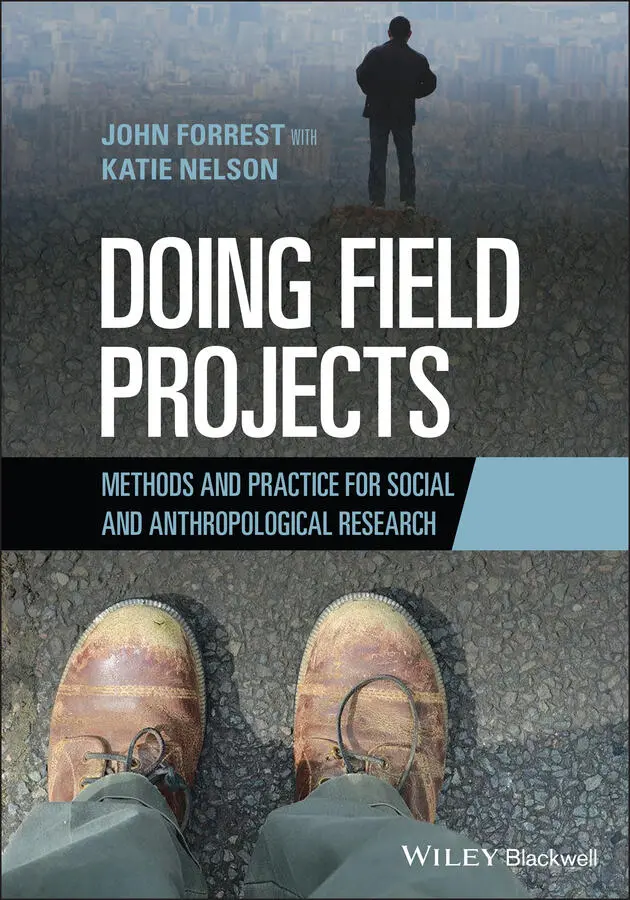
covers each critical area of qualitative fieldwork students are likely to encounter. Every project also contains discussions of how to execute the research, avoid common problems and mistakes, and present the uncovered data in several different formats.
This important resource also offers students:
A thorough introduction to fieldwork, including the history of fieldwork methods, the shift from colonial to post-colonial anthropology, and discussion of fieldwork vs. ethnography Comprehensive explorations of getting started with fieldwork, including necessary equipment, research design, data presentation, and journal keeping Practical discussions of the ethics of fieldwork, including the «Do No Harm» principle, institutional approval, openness, and anonymity In-depth examinations of autoethnography, proxemics, mapping, recorded interviews, participant observation, and engaged anthropology The opportunity to conduct a complete fieldwork course using digital and online resources only Supporting learning material for each chapter, including a brief outline of Learning Goals and a paragraph summarizing the contents
is the perfect guide for undergraduate students taking courses and programs in which qualitative field methods are central to the field, like anthropology and sociology.
Doing Field Projects — читать онлайн ознакомительный отрывок
Ниже представлен текст книги, разбитый по страницам. Система сохранения места последней прочитанной страницы, позволяет с удобством читать онлайн бесплатно книгу «Doing Field Projects», без необходимости каждый раз заново искать на чём Вы остановились. Поставьте закладку, и сможете в любой момент перейти на страницу, на которой закончили чтение.
Интервал:
Закладка:
The key to writing good research questions is to ask them in such a way as to get to a deeper and deeper understanding of the roots of social and cultural phenomena than is evident on the surface. A simple exercise you might carry out is similar to a common questioning game that many young children ask of their parents or other adults. The child asks: “Why do I have to go to bed?” The adult responds: “Because it is bedtime.” “But why ?” “Because it is night time and we go to bed at night.” “Why?” “Because if you don’t sleep, your body won’t work well during the day. “But why ?” “Because humans, like all animals, need sleep for their bodies to work well. And, like dogs and chickens, and many other animals, we prefer to be awake when the sun is out and we get tired and sleepy when the sun goes down.” “Why?” “Because that is how we evolved over many hundreds of thousands of years to evade predators and get enough food to reproduce. Now, go to bed.” You can keep going deeper with your research question until the possible answers to your questioning become absurd or venture too far outside of the realm of cultural anthropology, for instance, into the fields of physics, astrobiology, or basic chemistry, to be useful to a strictly anthropological inquiry.
It is important to note, however, that even seemingly excellent research questions may need to be modified throughout the course of fieldwork. All manner of things can go wrong with your research questions once you get into a project. Indeed, many professional anthropologists are likely to admit that their research questions, posed in the comfort of their universities before embarking on fieldwork, satisfied their doctoral committees, or got them research grants, but had to be revised or scrapped completely when they got into the nitty-gritty of fieldwork. This certainly was the case for me and many others I know. The point is that your research question opens the very beginning of a path through what can be a jungle of data.
In the physical sciences, hypothesis formation is the common standard for advancing research beyond simple curiosity because these sciences are generally founded on what is called the “hypothetico-deductive model”– at least, in theory. In very general terms, this approach involves surveying the data that already exists, asking why it is the way that it is (especially if there is a discernible pattern), formulating a working hypothesis to explain the data, coming up with predictions based on the hypothesis, conducting experiments to test the predictions, modifying the hypothesis if necessary based on experimental results, and so on.
Qualitative fieldwork is not an experimental science, so the model is not fully applicable, and it has its flaws and critics, even within experimental science. Development of the kind of hypothesis found in the natural sciences is not usually relevant for qualitative research because cultural anthropologists don’t build hypotheses in order to rigorously test them to derive grand, generalizable theories. Cultural anthropology today is not a predictive science in this way. Instead, cultural anthropologists seek to understand the larger political, economic, historical, cultural factors that shape microsocial phenomena by looking for patterns in social life. Nevertheless, elements of the model are useful when it comes to developing a research design.
If we think of “hypothesis” in a looser way, as an interpretation or an explanation of the data derived from a research question, then the iterative process of asking a research question, seeing if there are any patterns or regularities, refining the question, and so on, resembles the scientific method in some respects. This is because cultural anthropologists do not simply gather information randomly: we have a purpose in mind. Thus, when you ask a research question, at the outset you can consider what kinds of answers you might expect, and if the answers that you ultimately receive are quite different from what you expected, then you can consider why this is the case.
Identifying a Unit of Analysis
One of the variables that will affect the kinds of questions that you ask is the unit of analysisof your project. That is, will you be looking at large-scale patterns within a society, phenomena that occur within subcultures, or patterns within the course of an individual’s life? Your research questions have to be tailored to the situation. In the case of a life history interview, you are concerned with documenting an individual’s experience, so that your initial question to the person being interviewed is likely to be some version of, “What happened?” Your research question can be something like, “Does the experience of this person match or contradict the public perception of this event?” or “In what ways do the fine-grained details of personal experience add a dimension to generic descriptions of an event?” or “How did this person’s individual choices shape their life course or experiences?” Whereas, when observing, let’s say, a wedding, your research questions are likely to focus on collective behaviors, such as, formalized movements and deportment, language, and dress codes: “Are there features of a wedding or a wedding between two men or two women that are distinctive in comparison with one between one woman and one man?” If it is between two women, do both/neither wear white?” “How does family income affect the choices of food served, and what do those choices mean? How do the couple’s ethnicity or ethnicities shape the event? What are the formal and informal expectations for behavior for guests and the bride(s) and groom(s)?
Somewhere in the mix has to be a consideration of the cultural influences on what you are observing, but “culture” is a complex variable that is neither easy to define nor readily identified in your data. Start with the immediate group that you are investigating and then move outward. You will see when you get to the mapping project ( Chapter 7) that I give examples of the layout of kitchens in two different countries. A kitchen in Italy looks very much like one you would find in the United States or in England, but in Morocco, for instance they are quite different. Why? Some of the answers to that question can be found in the differing cooking styles of the two regions, in terms of both what is expected of a meal and what cooking fuels are available. In Italy a “proper” meal consists minimally of a first course of soup or pasta and a second course of meat and vegetables, plus a dessert. In Morocco, everything is served at once (except for desert – usually fruit), and the main dish is often cooked in one large cone-shaped ceramic pot (called a Tajin). It is served on one single large plate and eaten by everyone together with bread. In Italy it is normal to have an oven for roasting and baking; in Morocco ovens are not as common because roasting and baking are inconvenient due to the year-round heat. If you want roast meat, or baked goods such as bread, cakes, or pastries, people typically buy them from vendors who have large commercial ovens. We can consider these to be cultural variables, but there are individual choices also.
In both Italy and Morocco, family income plays a major part in how a kitchen is designed and organized. In Italy, family income affects mainly the size and layout of the kitchen, including the amount of work and storage space. In Morocco the variation based on finances is much greater. The poorer households have a single heat source, usually wood or charcoal, located outside the house, whereas more well-to-do families cook over bottled propane, commonly with two burners, inside the house.
Or, I might ask the simplest of questions: Why are there virtually no accommodations for people in wheelchairs in Phnom Penh? Some major hotels have ramps as well as steps leading into them (and elevators internally), but very few other public or private buildings have any help for wheelchair-bound people, and the public streets are difficult to negotiate. The sidewalks are often clogged with parked cars, so that pedestrians have to walk in the road to bypass them – but, the curbs are high with few breaks in them to allow easy passage on and off in a wheelchair. Why has the government invested substantial funds to upgrade sidewalks so that now in heavily trafficked areas there are paving stones set in the center of the sidewalks to be used as guides for blind people walking with canes, but they have done nothing to change the curbs for wheelchairs? What do you notice about accommodations for people with disabilities where you live and why are they the way that they are? What are the cultural implications of such government decisions? These types of observations and insights are the kind that will help advance your research design.
Читать дальшеИнтервал:
Закладка:
Похожие книги на «Doing Field Projects»
Представляем Вашему вниманию похожие книги на «Doing Field Projects» списком для выбора. Мы отобрали схожую по названию и смыслу литературу в надежде предоставить читателям больше вариантов отыскать новые, интересные, ещё непрочитанные произведения.












Обсуждение, отзывы о книге «Doing Field Projects» и просто собственные мнения читателей. Оставьте ваши комментарии, напишите, что Вы думаете о произведении, его смысле или главных героях. Укажите что конкретно понравилось, а что нет, и почему Вы так считаете.