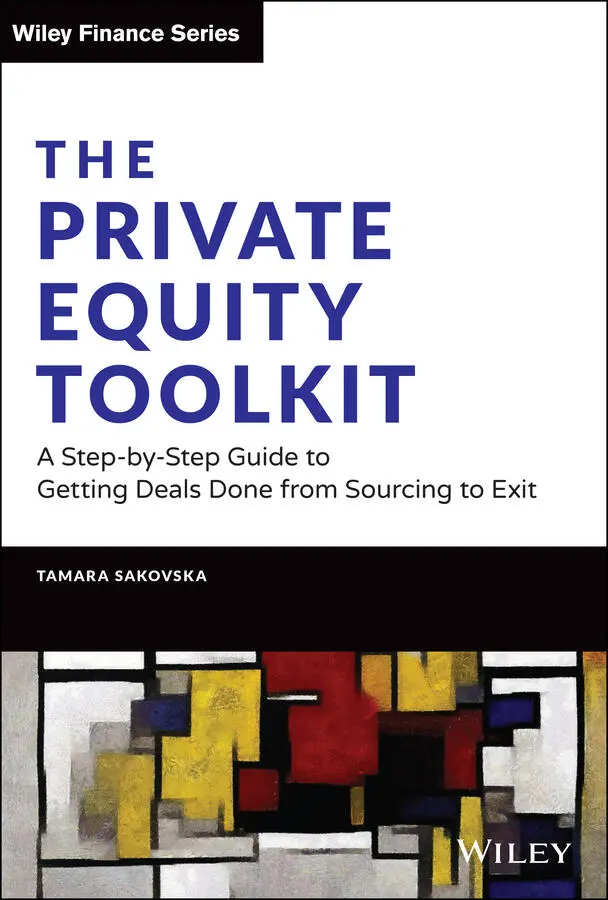
Tamara Sakovska - The Private Equity Toolkit
Здесь есть возможность читать онлайн «Tamara Sakovska - The Private Equity Toolkit» — ознакомительный отрывок электронной книги совершенно бесплатно, а после прочтения отрывка купить полную версию. В некоторых случаях можно слушать аудио, скачать через торрент в формате fb2 и присутствует краткое содержание. Жанр: unrecognised, на английском языке. Описание произведения, (предисловие) а так же отзывы посетителей доступны на портале библиотеки ЛибКат.
- Название:The Private Equity Toolkit
- Автор:
- Жанр:
- Год:неизвестен
- ISBN:нет данных
- Рейтинг книги:4 / 5. Голосов: 1
-
Избранное:Добавить в избранное
- Отзывы:
-
Ваша оценка:
The Private Equity Toolkit: краткое содержание, описание и аннотация
Предлагаем к чтению аннотацию, описание, краткое содержание или предисловие (зависит от того, что написал сам автор книги «The Private Equity Toolkit»). Если вы не нашли необходимую информацию о книге — напишите в комментариях, мы постараемся отыскать её.
: A Step-by-Step Guide to Getting Deals Done from Sourcing to Exit
This book covers every stage of the private equity process, from sourcing the deal to company exit. It provides a systematic overview of how to:
· Originate attractive investment opportunities;
· Generate superior deal insights;
· Form effective working relationships with management teams;
· Add value on portfolio company boards; and
· Achieve profitable investment exits.
The Private Equity Toolkit
The Private Equity Toolkit — читать онлайн ознакомительный отрывок
Ниже представлен текст книги, разбитый по страницам. Система сохранения места последней прочитанной страницы, позволяет с удобством читать онлайн бесплатно книгу «The Private Equity Toolkit», без необходимости каждый раз заново искать на чём Вы остановились. Поставьте закладку, и сможете в любой момент перейти на страницу, на которой закончили чтение.
Интервал:
Закладка:
What sources can you utilize for your industry research, especially if you are on a limited budget? If there are publicly listed companies operating in the sector, I always find it useful to read reports prepared by equity research analysts that cover these companies. Typically, company initiation research reports tend to be quite comprehensive and feature a detailed industry section. It is also worth keeping an eye out for any up-to-date comments on the industry provided in the investor relations sections of websites of publicly listed companies as well as in their annual reports. Regulatory bodies, industry associations and trade journals may also publish extensive information about the sector.
Make sure to check out sources such as current news and in-depth articles about the industry as well. Is there valuable information you can gather from reputable industry blogs or relevant online business communities? If you have a budget for this project, you might decide to purchase extensive industry reports from specialized market research firms or hire strategy consultants to perform a tailored industry analysis for your fund. In case the sector becomes of significant strategic importance to your organization and there are imperative issues that you need to investigate, consider conducting a private survey 4 that addresses your specific research questions.
3. Elaborate on your knowledge by mapping out key players operating in the industry

This step enables you to understand the market structure, evaluate what competitive forces are at play and benchmark the companies against each other as well as against best-in-class peers. You may also be able to discover valuable second-order effects from this exercise, such as identifying suppliers or customers of the industry that may be interesting deal targets in their own right. In every industry analysis, I find that some companies can be difficult to research because they may represent smaller subsidiaries of big publicly listed enterprises or may already be owned by private equity or big strategic conglomerates. Private companies, as a rule, do not disclose many details of their operations. Ideally, you should aim to gather enough data to cover the following areas:
Company overview. This section should include a business overview, description of products or services, market share, strategic positioning, high-level financials, ownership details and any recent company news.
Benchmarking. What are the key operating statistics for each company? How do they compare to direct competitors and global best-in-class peers? Are you able to assess the key success factors for companies operating in this industry? Are there companies that you have identified in the sector that went out of business recently? Are you able to understand why?
There are several ways I typically go about gathering the necessary information. To the extent that there are public companies in this universe, locating recent equity research reports can help you gain insight into the company itself, as well as its peer group and global competitors. Public equity research reports also help you to get up to speed on what operating metrics are used in the sector.
Other useful sources for mapping out who is active in the sector are participant lists of relevant trade fairs and industry award ceremonies, membership directories of leading industry associations as well as speakers and sponsors at industry conferences. Another option is to conduct a search through a paid-for company intelligence database that allows you to narrow down potential targets by industry classification, geography, company description, shareholder details and keywords. While potentially expensive, these databases provide comprehensive information on both public and private companies that includes key financials and recent developments, such as ownership changes.
4. Build a network of experts and company executives to fill knowledge gaps

We are more than halfway through the Thematic Deal Sourcing ICEBERG Roadmap™! Now that you have done a good amount of thorough sector research, you should have a good sense of the areas where there are gaps in your knowledge and who can help you at this stage. Apart from striving to perfect your understanding of the industry, you should begin to think about building productive relationships with people who might assist you with transactions down the road. Who can help you generate actionable deal ideas, introduce you to companies or even serve as a Chairman or a Chief Executive Officer (“CEO”) in a target company?
There are numerous resources at your disposal:
The existing network of your firm. If you are working on an industry already known to your firm (i.e. someone worked on a similar investment in a different geography), it is a good idea to connect with your colleagues and understand the sources of insight that they found valuable. What existing network does your firm already have and who can help you with introductions?
Your personal network. Next, explore your own network, including any second or third-degree connections that you have: Can you detect any actionable links to the industry that you are researching?
Reaching out to industry experts on your own. Through your sector research, you might have already identified prominent figures in the sector. Who is regularly talking to the press about key sector issues? Who are keynote speakers at industry events? Who is on the board of the industry association? Are there any retired executives currently working in an advisory capacity? Are there influential industry bloggers?
Networking at industry events. Make an effort to go to industry conferences and trade fairs to meet people working in the sector. Are there industry experts or company executives that you might be interested in meeting?
Expert networks and headhunters. This strategy will require a budget from your fund; however, it will allow you to conduct a bespoke and precise search. You will be able to identify a number of industry experts, current or retired company executives as well as any other participants of the industry's value chain, such as customers, suppliers or regulators.
Other intermediaries. Experienced accountants, lawyers, consultants and bankers generally have sector expertise and sometimes develop truly deep and unique insights into the industry, albeit shaped by the perspective of their profession. If they already work with your firm on other transactions, they should be willing to engage in a thoughtful dialogue with you and potentially introduce you to more people in the industry.
This brings us to a sensitive and a potentially awkward subject. As you are working on enhancing your connectivity in the sector, it is very important to keep in mind what may motivate the people you meet to spend their time with you. Sometimes your relationship will be very clear as some industry participants will work with you only on a retained basis and get an hourly or daily rate for their services. At other times, however, some experts may be talking to you as a gesture of goodwill. Why? Some of them might simply want recognition as a sector authority and an industry spokesperson. Others might be genuinely interested in your work and will, from an investor's point of view, find your insights educational. Finally, there will be some people who will hope to monetize their relationship with your fund in the future, either as retained advisers or members of an executive management team in a target company.
Читать дальшеИнтервал:
Закладка:
Похожие книги на «The Private Equity Toolkit»
Представляем Вашему вниманию похожие книги на «The Private Equity Toolkit» списком для выбора. Мы отобрали схожую по названию и смыслу литературу в надежде предоставить читателям больше вариантов отыскать новые, интересные, ещё непрочитанные произведения.












Обсуждение, отзывы о книге «The Private Equity Toolkit» и просто собственные мнения читателей. Оставьте ваши комментарии, напишите, что Вы думаете о произведении, его смысле или главных героях. Укажите что конкретно понравилось, а что нет, и почему Вы так считаете.