Rodney Whitaker - The Main
Здесь есть возможность читать онлайн «Rodney Whitaker - The Main» весь текст электронной книги совершенно бесплатно (целиком полную версию без сокращений). В некоторых случаях можно слушать аудио, скачать через торрент в формате fb2 и присутствует краткое содержание. Год выпуска: 1989, ISBN: 1989, Издательство: Jove Books; Reissue edition (January 1, 1989), Жанр: Прочие приключения, на английском языке. Описание произведения, (предисловие) а так же отзывы посетителей доступны на портале библиотеки ЛибКат.
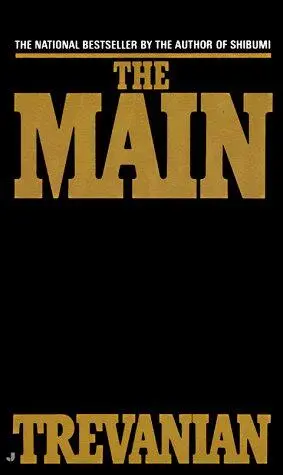
- Название:The Main
- Автор:
- Издательство:Jove Books; Reissue edition (January 1, 1989)
- Жанр:
- Год:1989
- ISBN:051509272X
- Рейтинг книги:4 / 5. Голосов: 1
-
Избранное:Добавить в избранное
- Отзывы:
-
Ваша оценка:
The Main: краткое содержание, описание и аннотация
Предлагаем к чтению аннотацию, описание, краткое содержание или предисловие (зависит от того, что написал сам автор книги «The Main»). Если вы не нашли необходимую информацию о книге — напишите в комментариях, мы постараемся отыскать её.
The Main — читать онлайн бесплатно полную книгу (весь текст) целиком
Ниже представлен текст книги, разбитый по страницам. Система сохранения места последней прочитанной страницы, позволяет с удобством читать онлайн бесплатно книгу «The Main», без необходимости каждый раз заново искать на чём Вы остановились. Поставьте закладку, и сможете в любой момент перейти на страницу, на которой закончили чтение.
Интервал:
Закладка:
“That’s a wonderful idea, sir.” Guttmann’s stomach is still sour with all the coffee he drank yesterday. “I was hoping we’d have a chance to get some coffee.”
The Le Shalom Restaurant is bustling with customers from the small garment shops of the district: young women with only half an hour off push and crowd to get carry-out orders; boisterous forts from the loading docks push sandwiches into their mouths and ogle the girls; intense young Jewish men in suits lean over their plates, talking business. There are few older Jews because most of them are first generation and still keep Shabbes.
Even though it’s afternoon, most of the orders involve breakfast foods, because many of the people only had time for a quick cup of coffee that morning. And besides, eggs are the best food you can buy for the money. This area of Mont Royal Street is the center of the garment service industry, where labor from undereducated French Canadian girls is cheap. There are no big important companies in the district, but dozens of small, second-story operations that receive specialty orders from the bigger houses.
Two telephones behind the serving counter ring constantly. While three distraught girls hustle raggedly to clear and serve the tables, most of the real work is done by one middle-aged woman behind the counter. She does all the checks, serves the whole counter, answers all phone orders, keeps short orders rolling, argues and jokes with the customers, and wages a long-running feud with the harassed Greek cook.
To a customer: This your quarter? No? Must be for the coffee. Couldn’t be a tip. Who around here would tip a quarter? To the cook: Two meat sandwiches. And lean for once! Where’s my three orders of eggs? Like hell I didn’t! What use are you? To a customer: Look, darling, keep your shirt on. I got only two hands, right? To the phone: Restaurant? Two Danish? Right. Coffee. One double cream. Right. One no sugar. What’s the matter? Someone getting fat up there? Hold on one second, darling… To a customer: What’s your problem, honey? Here, give me that. Look, it’s added up right. Nine, sixteen, twenty-five and carry the two makes fourteen, carry the one makes two. Check it yourself. And do me a favor, eh? If I ever ask you to help me with my income tax—refuse. Back to the phone: Okay, that was two-Danish two-coffee one-double-cream one-no-sugar… and? One toast, right. One ginger ale? C’est tout? It’ll be right up. What’s that? Look, darling, if I took time to read back all the orders, I’d never get anything done. Trust me. To a customer: Here’s your eggs, honey. Enjoy. To a customer: Just hold your horses, will you? Everyone’s in a hurry. You’re something special? To the cook: Well? You got those grilled cheese? What grilled cheese? Useless! Get out of my way! To the phone: Restaurant? Just give me your order, darling. We’ll exchange cute talk some other time. Yes. Yes. I got it. You want that with the toast or instead of? Right. To a customer: Look, there’s people standing. If you want to talk, go hire a hall. To LaPointe: Here we go, Lieutenant. Lean, like you like it. So who’s the good-looking kid? Don’t tell me he’s a cop too! He looks too nice to be a cop. To a customer: I’m coming already! Take it easy; you’ll live longer— To herself: Not that anybody cares how long you live.
The woman behind the counter is Chinese. She learned her English in Montreal.
The high level of noise and babble in the restaurant insulates any given conversation, so LaPointe and Guttmann are able to talk as they eat their plump hot meat sandwiches and drink their coffee.
“He’s turning out to be a real nice kid,” Guttmann says, “our poor helpless victim in the alley.”
LaPointe shrugs. Whether or not this Tony Green was a type who deserved being stabbed is not the question. What’s more important is that someone was sassy enough to do it on LaPointe’s patch.
“Well, there’s one thing we can rule out,” Guttmann says, sipping his milky coffee after turning the cup so as to avoid the faint lipstick stain on the rim. “We can rule out the possibility of Antonio Verdini being a priest in civilian clothes.”
LaPointe snorts in agreement. Although he remembered a case in which…
“Do you feel we’re getting anywhere, sir?”
“It’s hard to say. Most murders go unsolved, you know. Chances are we’ll learn a lot about this Tony Green. Little by little, each door leading to another. We tipped the Vet because he has a funny hop to his walk. From him we got the wallet. The wallet brought us to the rooming house, where we learned a little about him, got a couple of short leads. From the girls we learned a little more. We’ll keep pushing along, following the leads. Another door will lead us to another door. Then suddenly we’ll probably come up against a wall. The last room will have no door. With a type like that—rubbers with ticklers, two women at a time, ‘blood type: hot!’—anybody might have put him away. Maybe he got rough with some little agace-pissette who decided at the last moment that she didn’t want to lose her josepheté after all, and maybe he slapped her around a little, and maybe her brother caught up with him in that alley, maybe… ah, it could be anybody.”
“Yes, sir. There’s also the possibility that we’ve already touched the killer. I mean, it could be the Vet. You don’t seem to suspect him, but he did take the wallet, and he’s not the most stable type in the world. Or, if Green was playing around with that concierge, her boyfriend Arnaud might have put him away. I mean, we have reason to suspect he’s no confirmed pacifist.” Guttmann finishes his sandwich and pushes aside the plate with its last few greasy patates frites.
“You know, you’re right there,” LaPointe says. “At some point or other in this business, the chances are we’ll touch the killer. But we probably won’t know it. We’ll probably touch him, pass over him, maybe come back and touch him again. Or her. That doesn’t mean we’ll ever get evidence in hand. But you never know. If we keep pressing, we might get him, even blind. He might get jumpy and do something dumb. Or we might flush out an informer. That’s why we have to go through the motions. Right up until we hit the blank wall.”
“What do we do now?”
“Well, you go home and see if you can make up with that girl of yours. I’m going to have a talk with someone. I’ll see you Monday at the office.”
“You’re going to question that woman who runs a restaurant? The lesbian the concierge mentioned?”
LaPointe nods.
“I’d like to come along. Who knows, I might learn something.”
“You think that’s possible? No. I know her. I’ve known her since she was a kid on the street. She’ll talk to me.”
“But not if I was around?”
“Not as openly.”
“Because I’m a callow and inexperienced youth?”
“Probably. Whatever callow means.”
As LaPointe turns off the Main, he passes a brownstone that has been converted into a shul by members of one of the more rigid Jewish sects—the ones with side-locks—he can never remember its name. A voice calls to him, and he turns to see a familiar figure on the Main, walking slowly and with dignity, his shtreimel perfectly level on his head. LaPointe walks back and asks what the matter is. Their janitor is home sick with a cold, and they need a Shabbes goy to turn on the lights. LaPointe is glad to be of help, and the old Chasidic gentleman thanks him politely, but not excessively, because after all the Lieutenant is a public servant and everyone pays taxes. Too much thanks would give the appearance of artificial humility, and too humble is half proud.
Читать дальшеИнтервал:
Закладка:
Похожие книги на «The Main»
Представляем Вашему вниманию похожие книги на «The Main» списком для выбора. Мы отобрали схожую по названию и смыслу литературу в надежде предоставить читателям больше вариантов отыскать новые, интересные, ещё непрочитанные произведения.












Обсуждение, отзывы о книге «The Main» и просто собственные мнения читателей. Оставьте ваши комментарии, напишите, что Вы думаете о произведении, его смысле или главных героях. Укажите что конкретно понравилось, а что нет, и почему Вы так считаете.