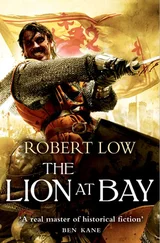
Robert Low - The Lion at bay
Здесь есть возможность читать онлайн «Robert Low - The Lion at bay» — ознакомительный отрывок электронной книги совершенно бесплатно, а после прочтения отрывка купить полную версию. В некоторых случаях можно слушать аудио, скачать через торрент в формате fb2 и присутствует краткое содержание. Жанр: Исторические приключения, на английском языке. Описание произведения, (предисловие) а так же отзывы посетителей доступны на портале библиотеки ЛибКат.
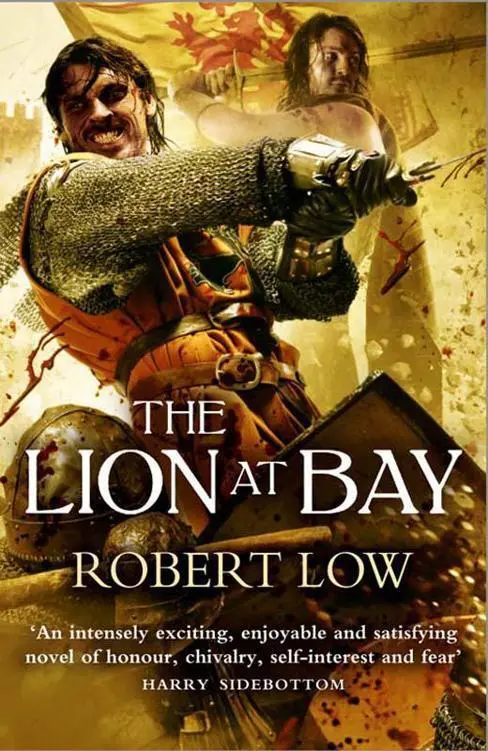
- Название:The Lion at bay
- Автор:
- Жанр:
- Год:неизвестен
- ISBN:нет данных
- Рейтинг книги:4 / 5. Голосов: 1
-
Избранное:Добавить в избранное
- Отзывы:
-
Ваша оценка:
The Lion at bay: краткое содержание, описание и аннотация
Предлагаем к чтению аннотацию, описание, краткое содержание или предисловие (зависит от того, что написал сам автор книги «The Lion at bay»). Если вы не нашли необходимую информацию о книге — напишите в комментариях, мы постараемся отыскать её.
The Lion at bay — читать онлайн ознакомительный отрывок
Ниже представлен текст книги, разбитый по страницам. Система сохранения места последней прочитанной страницы, позволяет с удобством читать онлайн бесплатно книгу «The Lion at bay», без необходимости каждый раз заново искать на чём Вы остановились. Поставьте закладку, и сможете в любой момент перейти на страницу, на которой закончили чтение.
Интервал:
Закладка:
Kilwinning, Bernard of
A Tironensian abbot in the time of the Scottish wars, he first appears as Abbot of Kilwinning in 1296, then vanishes for a decade before re-emerging as Bruce’s Chancellor, then Abbot of Arbroath. There is no evidence that he was clerk to John Duns — but he is the one generally credited with drafting the Declaration of Arbroath and later became Bishop of the Isles. He died in 1331.
Kirkpatrick, Roger
Fictional character, but based on the real Sir Roger Kirkpatrick of Closeburn, whom I have as kin to the fictional one. This is because my Kirkpatrick is a staunch Bruce supporter from the outset and the real Sir Roger was not — he even fought for Clifford in the English retinue at Falkirk. In later years, he adopted the words ‘Mak’ siccar’ (make sure) as a motto and a bloody hand holding a dagger as his heraldic device.
Lamberton, Bishop
Bishop of St Andrews and now thought to be one William Cunningham from Kilmaurs, he owed his elevation to Wallace and supported both him and Robert the Bruce. Chosen as the third Guardian, to stand between Bruce and Red John Comyn in 1299, he was used as a diplomat and envoy, while diverting the funds from his vast diocese to help the Cause.
Lamprecht Fictional character, a relic-seller and pardoner from Cologne, who speaks lingua franca, that mix of common Latin, French, Spanish and other Mediterranean languages originally used by crusaders to make themselves understood. Lamprecht pretends to be a pilgrim who has travelled to Jerusalem — but he has only ever been into Moorish Spain and has learned lingua franca while moving around the countries bordering the Mediterranean. A sometime spy and agent of those who pay most, he becomes involved in the Buchan plot against Hal of Herdmanston.
Malenfaunt, Sir Robert
Real family, fictional character — a knight of dubious renown who is smarting over being duped by Bruce, Hal and others into releasing Isabel MacDuff, captured at Stirling Bridge, to what he assumes is her husband. This makes him a suitable tool for use by the Comyn and Buchan.
Montailliou, James of
Montailliou is a real place, but this is a fictional character — a physicker of dubious standard, who professes to be a doctor but is probably no better than a barber-surgeon. Nevertheless, he is Bruce’s physician and seemingly loyal because he is a Cathar, a heretical Christian whose sect is being persecuted in Langue D’Oc, and owes his safety to his position. He is also party to the Bruce fears of leprosy, a dangerous secret to hold…
Segrave, Sir John
Black John, appointed Governor of Scotland at one time and, with his son Stephen, much hated English commander who was responsible for taking Wallace back to London in chains.
Sientcler, Sir Henry of Herdmanston
Fictional character. Known as Hal, he is the son and heir to Herdmanston, a lowly tower owing fealty to their kin, the Sientclers of Roslin. He is typical of the many poor nobles of Lothian who became embroiled in the wars on both sides of the divide. Hal himself is torn by doubts as to who he can trust, even between Wallace and Bruce, in a kingdom riven by family rivalries and betrayals. The Sientclers of Herdmanston are a little known branch of that family, appearing prominently for one brief moment in 15th century history. Herdmanston is now an anonymous pile of stones in a corner of a ploughed field and any descriptions of it are pure conjecture on my part.
Sientcler, Sir Henry of Roslin
In reality, held as a hostage for ransom by the English, with his father also held in the Tower. Eventually ransomed he later fought in the Battle of Roslin Glen alongside Red John Comyn and Sir Simon Fraser and against the English of Segrave and others, a famous victory for the Scots in 1303, when victories were scarce.
Thweng, Sir Marmaduke
Lord of Kilton in Yorkshire, a noted knight and married to a Lucia de Brus, distant kin to Bruce himself, Sir Marmaduke is the accepted, sensible face of English knighthood. A noted thief-taker — bounty hunter — in his own realm, he was also part of the tourney circuit with the young Robert Bruce. Fought at Stirling Bridge and was one of few to battle his way back to Stirling Castle, where he was eventually taken prisoner. Took part in subsequent campaigns against the Scots including Bannockburn, where, in his 60s, he fought until he could surrender personally to Bruce and was subsequently released without ransom.
Valence, Aymer de
Eventual second Earl of Pembroke, de Valence was related to the French royal house and was one of the Lords Ordainers who attempted to curb the power of Edward II and Gaveston. At this time he was the young, thrusting commander (knighted only in 1297) and trusted by Edward I with control of the English army in Scotland.
Wallace, William
The legend who led Scottish forces to victory at Stirling Bridge and defeat at Falkirk was forced to relinquish his Guardianship and eventually betrayed to the English. Described as a ‘chief of brigands’ at the time of the rebellion, he was barely of the nobility of Scotland and accepted by them unwillingly and only while he was winning. He was, however, the only one of them all who never gave in, or changed sides. The arguments regarding his prowess continue — there is, even allowing for hero-worship, enough evidence to show his personal fighting skills, though historians disagree on his expertise with commanding large bodies of men, claiming Moray was the one with this (being a noble born and so trained to it). They offer as proof of this, the glorious victory of Stirling Bridge with Moray present, and the disaster at Falkirk, organized by Wallace alone. This seems dubious to me — if nothing else, what few documents we have reveal Wallace as a man who, if not skilled in diplomacy and dealing with foreign interests, had the wit to surround himself with those who did. Similarly, he would not be short of experts in the grand tactics of the age — but no battle ever goes to plan. If you look closely at the battle at Falkirk, it becomes clear that even the victor, King Edward 1, greatest warrior general in Christendom, badly mismanaged the affair himself and almost lost control of his knights. Ironically, of course, it was Wallace’s own brigand tactics that became the norm for Scottish armies too small and weak to oppose their neighbour’s forces — hit and run, almost all the way down to Bannockburn. However, the one glaring flaw in the Wallace character is also the one which made him great — the undying obsession with putting John Balliol back on the throne and a refusal to admit when that cause was lost.
Wishart, Robert, Bishop of Glasgow
One of the original Guardians of Scotland following the death of King Alexander III — and partly responsible for inviting Edward I to preside over subsequent proceedings — Bishop Wishart became the engine of rebellion and a staunch supporter of first Wallace, then Bruce. He and Lamberton, Bishop of St Andrews, were instrumental in bringing support to Bruce. The bishops’ reasons for rebelling were simple — the Scottish church was responsible only to the Pope, who appointed all their senior prelates; they did not want the English version, where the King performed that function, and could only maintain that difference if Scotland remained a distinct and separate realm.
Интервал:
Закладка:
Похожие книги на «The Lion at bay»
Представляем Вашему вниманию похожие книги на «The Lion at bay» списком для выбора. Мы отобрали схожую по названию и смыслу литературу в надежде предоставить читателям больше вариантов отыскать новые, интересные, ещё непрочитанные произведения.







Обсуждение, отзывы о книге «The Lion at bay» и просто собственные мнения читателей. Оставьте ваши комментарии, напишите, что Вы думаете о произведении, его смысле или главных героях. Укажите что конкретно понравилось, а что нет, и почему Вы так считаете.