Томас Гоббс - Leviathan
Здесь есть возможность читать онлайн «Томас Гоббс - Leviathan» — ознакомительный отрывок электронной книги совершенно бесплатно, а после прочтения отрывка купить полную версию. В некоторых случаях можно слушать аудио, скачать через торрент в формате fb2 и присутствует краткое содержание. Год выпуска: 2014, Издательство: epubBooks Classics, Жанр: Философия, Политика, Религия, на английском языке. Описание произведения, (предисловие) а так же отзывы посетителей доступны на портале библиотеки ЛибКат.
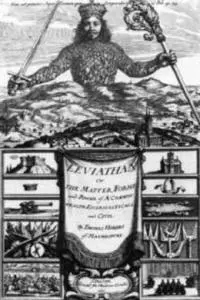
- Название:Leviathan
- Автор:
- Издательство:epubBooks Classics
- Жанр:
- Год:2014
- ISBN:нет данных
- Рейтинг книги:4 / 5. Голосов: 1
-
Избранное:Добавить в избранное
- Отзывы:
-
Ваша оценка:
Leviathan: краткое содержание, описание и аннотация
Предлагаем к чтению аннотацию, описание, краткое содержание или предисловие (зависит от того, что написал сам автор книги «Leviathan»). Если вы не нашли необходимую информацию о книге — напишите в комментариях, мы постараемся отыскать её.
Leviathan — читать онлайн ознакомительный отрывок
Ниже представлен текст книги, разбитый по страницам. Система сохранения места последней прочитанной страницы, позволяет с удобством читать онлайн бесплатно книгу «Leviathan», без необходимости каждый раз заново искать на чём Вы остановились. Поставьте закладку, и сможете в любой момент перейти на страницу, на которой закончили чтение.
Интервал:
Закладка:
From this that hath been said of the Kingdom of God, and of Salvation, it is not hard to interpret, what is meant by the WORLD TO COME. There are three worlds mentioned in Scripture, the Old World, the Present World, and the World to Come. Of the first, St. Peter speaks, (2 Pet. 2.5.) "If God spared not the Old World, but saved Noah the eighth person, a Preacher of righteousnesse, bringing the flood upon the world of the ungodly," etc. So the First World, was from Adam to the generall Flood. Of the present World, our Saviour speaks (John 18.36.) "My Kingdome is not of this World." For he came onely to teach men the way of Salvation, and to renew the Kingdome of his Father, by his doctrine. Of the World to come, St. Peter speaks, (2 Pet. 3. 13.) "Neverthelesse we according to his promise look for new Heavens, and a new Earth." This is that WORLD, wherein Christ coming down from Heaven, in the clouds, with great power, and glory, shall send his Angels, and shall gather together his elect, from the four winds, and from the uttermost parts of the Earth, and thence forth reign over them, (under his Father) Everlastingly.
Redemption
Salvation of a sinner, supposeth a precedent REDEMPTION; for he that is once guilty of Sin, is obnoxious to the Penalty of the same; and must pay (or some other for him) such Ransome, as he that is offended, and has him in his power, shall require. And seeing the person offended, is Almighty God, in whose power are all things; such Ransome is to be paid before Salvation can be acquired, as God hath been pleased to require. By this Ransome, is not intended a satisfaction for Sin, equivalent to the Offence, which no sinner for himselfe, nor righteous man can ever be able to make for another; The dammage a man does to another, he may make amends for by restitution, or recompence, but sin cannot be taken away by recompence; for that were to make the liberty to sin, a thing vendible. But sins may bee pardoned to the repentant, either Gratis, or upon such penalty, as God is pleased to accept. That which God usually accepted in the Old Testament, was some Sacrifice, or Oblation. To forgive sin is not an act of Injustice, though the punishment have been threatned. Even amongst men, though the promise of Good, bind the promiser; yet threats, that is to say, promises, of Evill, bind them not; much lesse shall they bind God, who is infinitely more mercifull then men. Our Saviour Christ therefore to Redeem us, did not in that sense satisfie for the Sins of men, as that his Death, of its own vertue, could make it unjust in God to punish sinners with Eternall death; but did make that Sacrifice, and Oblation of himself, at his first coming, which God was pleased to require, for the Salvation at his second coming, of such as in the mean time should repent, and beleeve in him. And though this act of our Redemption, be not alwaies in Scripture called a Sacrifice, and Oblation, but sometimes a Price, yet by Price we are not to understand any thing, by the value whereof, he could claim right to a pardon for us, from his offended Father, but that Price which God the Father was pleased in mercy to demand.
Chapter XXXIX.
Of the Signification in Scripture of the Word Church
Church The Lords House
The word Church, (Ecclesia) signifieth in the Books of Holy Scripture divers things. Sometimes (though not often) it is taken for Gods House, that is to say, for a Temple, wherein Christians assemble to perform holy duties publiquely; as, 1 Cor. 14. ver. 34. "Let your women keep silence in the Churches:" but this is Metaphorically put, for the Congregation there assembled; and hath been since used for the Edifice it self, to distinguish between the Temples of Christians, and Idolaters. The Temple of Jerusalem was Gods House, and the House of Prayer; and so is any Edifice dedicated by Christians to the worship of Christ, Christs House: and therefore the Greek Fathers call it Kuriake, The Lords House; and thence, in our language it came to be called Kyrke, and Church.
Ecclesia Properly What
Church (when not taken for a House) signifieth the same that Ecclesia signified in the Grecian Common–wealths; that is to say, a Congregation, or an Assembly of Citizens, called forth, to hear the Magistrate speak unto them; and which in the Common–wealth of Rome was called Concio, as he that spake was called Ecclesiastes, and Concionator. And when they were called forth by lawfull Authority, (Acts 19.39.) it was Ecclesia Legitima, a Lawfull Church, Ennomos Ecclesia. But when they were excited by tumultuous, and seditious clamor, then it was a confused Church, Ecclesia Sugkechumene.
It is taken also sometimes for the men that have right to be of the Congregation, though not actually assembled; that is to say, for the whole multitude of Christian men, how far soever they be dispersed: as (Act. 8.3.) where it is said, that "Saul made havock of the Church:" And in this sense is Christ said to be Head of the Church. And sometimes for a certain part of Christians, as (Col. 4.15.) "Salute the Church that is in his house." Sometimes also for the Elect onely; as (Ephes. 5.27.) "A Glorious Church, without spot, or wrinkle, holy, and without blemish;" which is meant of the Church Triumphant, or, Church To Come. Sometimes, for a Congregation assembled, of professors of Christianity, whether their profession be true, or counterfeit, as it is understood, Mat. 18.17. where it is said, "Tell it to the Church, and if hee neglect to hear the Church, let him be to thee as a Gentile, or Publican."
In What Sense The Church Is One Person Church Defined
And in this last sense only it is that the Church can be taken for one Person; that is to say, that it can be said to have power to will, to pronounce, to command, to be obeyed, to make laws, or to doe any other action whatsoever; For without authority from a lawfull Congregation, whatsoever act be done in a concourse of people, it is the particular act of every one of those that were present, and gave their aid to the performance of it; and not the act of them all in grosse, as of one body; much lesse that act of them that were absent, or that being present, were not willing it should be done. According to this sense, I define a CHURCH to be, "A company of men professing Christian Religion, united in the person of one Soveraign; at whose command they ought to assemble, and without whose authority they ought not to assemble." And because in all Common–wealths, that Assembly, which is without warrant from the Civil Soveraign, is unlawful; that Church also, which is assembled in any Common–wealth, that hath forbidden them to assemble, is an unlawfull Assembly.
A Christian Common–wealth, And A Church All One
It followeth also, that there is on Earth, no such universall Church as all Christians are bound to obey; because there is no power on Earth, to which all other Common–wealths are subject: There are Christians, in the Dominions of severall Princes and States; but every one of them is subject to that Common–wealth, whereof he is himself a member; and consequently, cannot be subject to the commands of any other Person. And therefore a Church, such as one as is capable to Command, to Judge, Absolve, Condemn, or do any other act, is the same thing with a Civil Common–wealth, consisting of Christian men; and is called a Civill State, for that the subjects of it are Men; and a Church, for that the subjects thereof are Christians. Temporall and Spirituall Government, are but two words brought into the world, to make men see double, and mistake their Lawfull Soveraign. It is true, that the bodies of the faithfull, after the Resurrection shall be not onely Spirituall, but Eternall; but in this life they are grosse, and corruptible. There is therefore no other Government in this life, neither of State, nor Religion, but Temporall; nor teaching of any doctrine, lawfull to any Subject, which the Governour both of the State, and of the Religion, forbiddeth to be taught: And that Governor must be one; or else there must needs follow Faction, and Civil war in the Common–wealth, between the Church and State; between Spiritualists, and Temporalists; between the Sword Of Justice, and the Shield Of Faith; and (which is more) in every Christian mans own brest, between the Christian, and the Man. The Doctors of the Church, are called Pastors; so also are Civill Soveraignes: But if Pastors be not subordinate one to another, so as that there may bee one chief Pastor, men will be taught contrary Doctrines, whereof both may be, and one must be false. Who that one chief Pastor is, according to the law of Nature, hath been already shewn; namely, that it is the Civill Soveraign; And to whom the Scripture hath assigned that Office, we shall see in the Chapters following.
Читать дальшеИнтервал:
Закладка:
Похожие книги на «Leviathan»
Представляем Вашему вниманию похожие книги на «Leviathan» списком для выбора. Мы отобрали схожую по названию и смыслу литературу в надежде предоставить читателям больше вариантов отыскать новые, интересные, ещё непрочитанные произведения.


Обсуждение, отзывы о книге «Leviathan» и просто собственные мнения читателей. Оставьте ваши комментарии, напишите, что Вы думаете о произведении, его смысле или главных героях. Укажите что конкретно понравилось, а что нет, и почему Вы так считаете.