Томас Гоббс - Leviathan
Здесь есть возможность читать онлайн «Томас Гоббс - Leviathan» — ознакомительный отрывок электронной книги совершенно бесплатно, а после прочтения отрывка купить полную версию. В некоторых случаях можно слушать аудио, скачать через торрент в формате fb2 и присутствует краткое содержание. Год выпуска: 2014, Издательство: epubBooks Classics, Жанр: Философия, Политика, Религия, на английском языке. Описание произведения, (предисловие) а так же отзывы посетителей доступны на портале библиотеки ЛибКат.
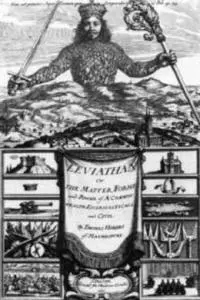
- Название:Leviathan
- Автор:
- Издательство:epubBooks Classics
- Жанр:
- Год:2014
- ISBN:нет данных
- Рейтинг книги:4 / 5. Голосов: 1
-
Избранное:Добавить в избранное
- Отзывы:
-
Ваша оценка:
Leviathan: краткое содержание, описание и аннотация
Предлагаем к чтению аннотацию, описание, краткое содержание или предисловие (зависит от того, что написал сам автор книги «Leviathan»). Если вы не нашли необходимую информацию о книге — напишите в комментариях, мы постараемся отыскать её.
Leviathan — читать онлайн ознакомительный отрывок
Ниже представлен текст книги, разбитый по страницам. Система сохранения места последней прочитанной страницы, позволяет с удобством читать онлайн бесплатно книгу «Leviathan», без необходимости каждый раз заново искать на чём Вы остановились. Поставьте закладку, и сможете в любой момент перейти на страницу, на которой закончили чтение.
Интервал:
Закладка:
The Question Of The Authority Of The Scriptures Stated.
It is a question much disputed between the divers sects of Christian Religion, From Whence The Scriptures Derive Their Authority; which question is also propounded sometimes in other terms, as, How Wee Know Them To Be The Word Of God, or, Why We Beleeve Them To Be So: and the difficulty of resolving it, ariseth chiefly from the impropernesse of the words wherein the question it self is couched. For it is beleeved on all hands, that the first and originall Author of them is God; and consequently the question disputed, is not that. Again, it is manifest, that none can know they are Gods Word, (though all true Christians beleeve it,) but those to whom God himself hath revealed it supernaturally; and therefore the question is not rightly moved, of our Knowledge of it. Lastly, when the question is propounded of our Beleefe; because some are moved to beleeve for one, and others for other reasons, there can be rendred no one generall answer for them all. The question truly stated is, By What Authority They Are Made Law.
Their Authority And Interpretation
As far as they differ not from the Laws of Nature, there is no doubt, but they are the Law of God, and carry their Authority with them, legible to all men that have the use of naturall reason: but this is no other Authority, then that of all other Morall Doctrine consonant to Reason; the Dictates whereof are Laws, not Made, but Eternall.
If they be made Law by God himselfe, they are of the nature of written Law, which are Laws to them only to whom God hath so sufficiently published them, as no man can excuse himself, by saying, he know not they were his.
He therefore, to whom God hath not supernaturally revealed, that they are his, nor that those that published them, were sent by him, is not obliged to obey them, by any Authority, but his, whose Commands have already the force of Laws; that is to say, by any other Authority, then that of the Common–wealth, residing in the Soveraign, who only has the Legislative power. Again, if it be not the Legislative Authority of the Common–wealth, that giveth them the force of Laws, it must bee some other Authority derived from God, either private, or publique: if private, it obliges onely him, to whom in particular God hath been pleased to reveale it. For if every man should be obliged, to take for Gods Law, what particular men, on pretence of private Inspiration, or Revelation, should obtrude upon him, (in such a number of men, that out of pride, and ignorance, take their own Dreams, and extravagant Fancies, and Madnesse, for testimonies of Gods Spirit; or out of ambition, pretend to such Divine testimonies, falsely, and contrary to their own consciences,) it were impossible that any Divine Law should be acknowledged. If publique, it is the Authority of the Common–wealth, or of the Church. But the Church, if it be one person, is the same thing with a Common–wealth of Christians; called a Common–wealth, because it consisteth of men united in one person, their Soveraign; and a Church, because it consisteth in Christian men, united in one Christian Soveraign. But if the Church be not one person, then it hath no authority at all; it can neither command, nor doe any action at all; nor is capable of having any power, or right to any thing; nor has any Will, Reason, nor Voice; for all these qualities are personall. Now if the whole number of Christians be not contained in one Common–wealth, they are not one person; nor is there an Universall Church that hath any authority over them; and therefore the Scriptures are not made Laws, by the Universall Church: or if it bee one Common–wealth, then all Christian Monarchs, and States are private persons, and subject to bee judged, deposed, and punished by an Universall Soveraigne of all Christendome. So that the question of the Authority of the Scriptures is reduced to this, "Whether Christian Kings, and the Soveraigne Assemblies in Christian Common–wealths, be absolute in their own Territories, immediately under God; or subject to one Vicar of Christ, constituted over the Universall Church; to bee judged, condemned, deposed, and put to death, as hee shall think expedient, or necessary for the common good."
Which question cannot bee resolved, without a more particular consideration of the Kingdome of God; from whence also, wee are to judge of the Authority of Interpreting the Scripture. For, whosoever hath a lawfull power over any Writing, to make it Law, hath the power also to approve, or disapprove the interpretation of the same.
Chapter XXXIV.
Of the Signification of Spirit, Angel, and Inspiration in the Books of Holy Scripture
Body And Spirit How Taken In The Scripture
Seeing the foundation of all true Ratiocination, is the constant Signification of words; which in the Doctrine following, dependeth not (as in naturall science) on the Will of the Writer, nor (as in common conversation) on vulgar use, but on the sense they carry in the Scripture; It is necessary, before I proceed any further, to determine, out of the Bible, the meaning of such words, as by their ambiguity, may render what I am to inferre upon them, obscure, or disputable. I will begin with the words BODY, and SPIRIT, which in the language of the Schools are termed, Substances, Corporeall, and Incorporeall.
The Word Body, in the most generall acceptation, signifieth that which filleth, or occupyeth some certain room, or imagined place; and dependeth not on the imagination, but is a reall part of that we call the Universe. For the Universe, being the Aggregate of all Bodies, there is no reall part thereof that is not also Body; nor any thing properly a Body, that is not also part of (that Aggregate of all Bodies) the Universe. The same also, because Bodies are subject to change, that is to say, to variety of apparence to the sense of living creatures, is called Substance, that is to say, Subject, to various accidents, as sometimes to be Moved, sometimes to stand Still; and to seem to our senses sometimes Hot, sometimes Cold, sometimes of one Colour, Smel, Tast, or Sound, somtimes of another. And this diversity of Seeming, (produced by the diversity of the operation of bodies, on the organs of our sense) we attribute to alterations of the Bodies that operate, & call them Accidents of those Bodies. And according to this acceptation of the word, Substance and Body, signifie the same thing; and therefore Substance Incorporeall are words, which when they are joined together, destroy one another, as if a man should say, an Incorporeall Body.
But in the sense of common people, not all the Universe is called Body, but only such parts thereof as they can discern by the sense of Feeling, to resist their force, or by the sense of their Eyes, to hinder them from a farther prospect. Therefore in the common language of men, Aire, and Aeriall Substances, use not to be taken for Bodies, but (as often as men are sensible of their effects) are called Wind, or Breath, or (because the some are called in the Latine Spiritus) Spirits; as when they call that aeriall substance, which in the body of any living creature, gives it life and motion, Vitall and Animall Spirits. But for those Idols of the brain, which represent Bodies to us, where they are not, as in a Looking–glasse, in a Dream, or to a Distempered brain waking, they are (as the Apostle saith generally of all Idols) nothing; Nothing at all, I say, there where they seem to bee; and in the brain it self, nothing but tumult, proceeding either from the action of the objects, or from the disorderly agitation of the Organs of our Sense. And men, that are otherwise imployed, then to search into their causes, know not of themselves, what to call them; and may therefore easily be perswaded, by those whose knowledge they much reverence, some to call them Bodies, and think them made of aire compacted by a power supernaturall, because the sight judges them corporeall; and some to call them Spirits, because the sense of Touch discerneth nothing in the place where they appear, to resist their fingers: So that the proper signification of Spirit in common speech, is either a subtile, fluid, and invisible Body, or a Ghost, or other Idol or Phantasme of the Imagination. But for metaphoricall significations, there be many: for sometimes it is taken for Disposition or Inclination of the mind; as when for the disposition to controwl the sayings of other men, we say, A Spirit Contradiction; For A Disposition to Uncleannesse, An Unclean Spirit; for Perversenesse, A Froward Spirit; for Sullennesse, A Dumb Spirit, and for Inclination To Godlinesse, And Gods Service, the Spirit of God: sometimes for any eminent ability, or extraordinary passion, or disease of the mind, as when Great Wisdome is called the Spirit Of Wisdome; and Mad Men are said to be Possessed With A Spirit.
Читать дальшеИнтервал:
Закладка:
Похожие книги на «Leviathan»
Представляем Вашему вниманию похожие книги на «Leviathan» списком для выбора. Мы отобрали схожую по названию и смыслу литературу в надежде предоставить читателям больше вариантов отыскать новые, интересные, ещё непрочитанные произведения.

Обсуждение, отзывы о книге «Leviathan» и просто собственные мнения читателей. Оставьте ваши комментарии, напишите, что Вы думаете о произведении, его смысле или главных героях. Укажите что конкретно понравилось, а что нет, и почему Вы так считаете.