Томас Гоббс - Leviathan
Здесь есть возможность читать онлайн «Томас Гоббс - Leviathan» — ознакомительный отрывок электронной книги совершенно бесплатно, а после прочтения отрывка купить полную версию. В некоторых случаях можно слушать аудио, скачать через торрент в формате fb2 и присутствует краткое содержание. Год выпуска: 2014, Издательство: epubBooks Classics, Жанр: Философия, Политика, Религия, на английском языке. Описание произведения, (предисловие) а так же отзывы посетителей доступны на портале библиотеки ЛибКат.
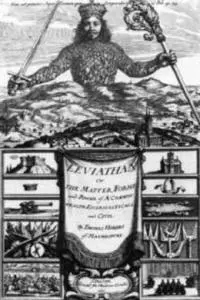
- Название:Leviathan
- Автор:
- Издательство:epubBooks Classics
- Жанр:
- Год:2014
- ISBN:нет данных
- Рейтинг книги:4 / 5. Голосов: 1
-
Избранное:Добавить в избранное
- Отзывы:
-
Ваша оценка:
Leviathan: краткое содержание, описание и аннотация
Предлагаем к чтению аннотацию, описание, краткое содержание или предисловие (зависит от того, что написал сам автор книги «Leviathan»). Если вы не нашли необходимую информацию о книге — напишите в комментариях, мы постараемся отыскать её.
Leviathan — читать онлайн ознакомительный отрывок
Ниже представлен текст книги, разбитый по страницам. Система сохранения места последней прочитанной страницы, позволяет с удобством читать онлайн бесплатно книгу «Leviathan», без необходимости каждый раз заново искать на чём Вы остановились. Поставьте закладку, и сможете в любой момент перейти на страницу, на которой закончили чтение.
Интервал:
Закладка:
The Authenticall Interpretation Of Law Is Not That Of Writers
The Interpretation of the Lawes of Nature, in a Common–wealth, dependeth not on the books of Morall Philosophy. The Authority of writers, without the Authority of the Common–wealth, maketh not their opinions Law, be they never so true. That which I have written in this Treatise, concerning the Morall Vertues, and of their necessity, for the procuring, and maintaining peace, though it bee evident Truth, is not therefore presently Law; but because in all Common–wealths in the world, it is part of the Civill Law: For though it be naturally reasonable; yet it is by the Soveraigne Power that it is Law: Otherwise, it were a great errour, to call the Lawes of Nature unwritten Law; whereof wee see so many volumes published, and in them so many contradictions of one another, and of themselves.
The Interpreter Of The Law Is The Judge Giving Sentence Viva Voce
In Every Particular Case
The Interpretation of the Law of Nature, is the Sentence of the Judge constituted by the Soveraign Authority, to heare and determine such controversies, as depend thereon; and consisteth in the application of the Law to the present case. For in the act of Judicature, the Judge doth no more but consider, whither the demand of the party, be consonant to naturall reason, and Equity; and the Sentence he giveth, is therefore the Interpretation of the Law of Nature; which Interpretation is Authentique; not because it is his private Sentence; but because he giveth it by Authority of the Soveraign, whereby it becomes the Soveraigns Sentence; which is Law for that time, to the parties pleading.
The Sentence Of A Judge, Does Not Bind Him, Or Another Judge
To Give Like Sentence In Like Cases Ever After
But because there is no Judge Subordinate, nor Soveraign, but may erre in a Judgement of Equity; if afterward in another like case he find it more consonant to Equity to give a contrary Sentence, he is obliged to doe it. No mans error becomes his own Law; nor obliges him to persist in it. Neither (for the same reason) becomes it a Law to other Judges, though sworn to follow it. For though a wrong Sentence given by authority of the Soveraign, if he know and allow it, in such Lawes as are mutable, be a constitution of a new Law, in cases, in which every little circumstance is the same; yet in Lawes immutable, such as are the Lawes of Nature, they are no Lawes to the same, or other Judges, in the like cases for ever after. Princes succeed one another; and one Judge passeth, another commeth; nay, Heaven and Earth shall passe; but not one title of the Law of Nature shall passe; for it is the Eternall Law of God. Therefore all the Sentences of precedent Judges that have ever been, cannot all together make a Law contrary to naturall Equity: Nor any Examples of former Judges, can warrant an unreasonable Sentence, or discharge the present Judge of the trouble of studying what is Equity (in the case he is to Judge,) from the principles of his own naturall reason. For example sake, 'Tis against the Law of Nature, To Punish The Innocent; and Innocent is he that acquitteth himselfe Judicially, and is acknowledged for Innocent by the Judge. Put the case now, that a man is accused of a capitall crime, and seeing the powers and malice of some enemy, and the frequent corruption and partiality of Judges, runneth away for feare of the event, and afterwards is taken, and brought to a legall triall, and maketh it sufficiently appear, he was not guilty of the crime, and being thereof acquitted, is neverthelesse condemned to lose his goods; this is a manifest condemnation of the Innocent. I say therefore, that there is no place in the world, where this can be an interpretation of a Law of Nature, or be made a Law by the Sentences of precedent Judges, that had done the same. For he that judged it first, judged unjustly; and no Injustice can be a pattern of Judgement to succeeding Judges. A written Law may forbid innocent men to fly, and they may be punished for flying: But that flying for feare of injury, should be taken for presumption of guilt, after a man is already absolved of the crime Judicially, is contrary to the nature of a Presumption, which hath no place after Judgement given. Yet this is set down by a great Lawyer for the common Law of England. "If a man," saith he, "that is Innocent, be accused of Felony, and for feare flyeth for the same; albeit he judicially acquitteth himselfe of the Felony; yet if it be found that he fled for the Felony, he shall notwithstanding his Innocency, Forfeit all his goods, chattels, debts, and duties. For as to the Forfeiture of them, the Law will admit no proofe against the Presumption in Law, grounded upon his flight." Here you see, An Innocent Man, Judicially Acquitted, Notwithstanding His Innocency, (when no written Law forbad him to fly) after his acquitall, Upon A Presumption In Law, condemned to lose all the goods he hath. If the Law ground upon his flight a Presumption of the fact, (which was Capitall,) the Sentence ought to have been Capitall: if the presumption were not of the Fact, for what then ought he to lose his goods? This therefore is no Law of England; nor is the condemnation grounded upon a Presumption of Law, but upon the Presumption of the Judges. It is also against Law, to say that no Proofe shall be admitted against a Presumption of Law. For all Judges, Soveraign and subordinate, if they refuse to heare Proofe, refuse to do Justice: for though the Sentence be Just, yet the Judges that condemn without hearing the Proofes offered, are Unjust Judges; and their Presumption is but Prejudice; which no man ought to bring with him to the Seat of Justice, whatsoever precedent judgements, or examples he shall pretend to follow. There be other things of this nature, wherein mens Judgements have been perverted, by trusting to Precedents: but this is enough to shew, that though the Sentence of the Judge, be a Law to the party pleading, yet it is no Law to any Judge, that shall succeed him in that Office.
In like manner, when question is of the Meaning of written Lawes, he is not the Interpreter of them, that writeth a Commentary upon them. For Commentaries are commonly more subject to cavill, than the Text; and therefore need other Commentaries; and so there will be no end of such Interpretation. And therefore unlesse there be an Interpreter authorised by the Soveraign, from which the subordinate Judges are not to recede, the Interpreter can be no other than the ordinary Judges, in the some manner, as they are in cases of the unwritten Law; and their Sentences are to be taken by them that plead, for Lawes in that particular case; but not to bind other Judges, in like cases to give like judgements. For a Judge may erre in the Interpretation even of written Lawes; but no errour of a subordinate Judge, can change the Law, which is the generall Sentence of the Soveraigne.
The Difference Between The Letter And Sentence Of The Law
In written Lawes, men use to make a difference between the Letter, and the Sentence of the Law: And when by the Letter, is meant whatsoever can be gathered from the bare words, 'tis well distinguished. For the significations of almost all words, are either in themselves, or in the metaphoricall use of them, ambiguous; and may be drawn in argument, to make many senses; but there is onely one sense of the Law. But if by the Letter, be meant the Literall sense, then the Letter, and the Sentence or intention of the Law, is all one. For the literall sense is that, which the Legislator is alwayes supposed to be Equity: For it were a great contumely for a Judge to think otherwise of the Soveraigne. He ought therefore, if the Word of the Law doe not fully authorise a reasonable Sentence, to supply it with the Law of Nature; or if the case be difficult, to respit Judgement till he have received more ample authority. For Example, a written Law ordaineth, that he which is thrust out of his house by force, shall be restored by force: It happens that a man by negligence leaves his house empty, and returning is kept out by force, in which case there is no speciall Law ordained. It is evident, that this case is contained in the same Law: for else there is no remedy for him at all; which is to be supposed against the Intention of the Legislator. Again, the word of the Law, commandeth to Judge according to the Evidence: A man is accused falsly of a fact, which the Judge saw himself done by another; and not by him that is accused. In this case neither shall the Letter of the Law be followed to the condemnation of the Innocent, nor shall the Judge give Sentence against the evidence of the Witnesses; because the Letter of the Law is to the contrary: but procure of the Soveraign that another be made Judge, and himselfe Witnesse. So that the incommodity that follows the bare words of a written Law, may lead him to the Intention of the Law, whereby to interpret the same the better; though no Incommodity can warrant a Sentence against the Law. For every Judge of Right, and Wrong, is not Judge of what is Commodious, or Incommodious to the Common–wealth.
Читать дальшеИнтервал:
Закладка:
Похожие книги на «Leviathan»
Представляем Вашему вниманию похожие книги на «Leviathan» списком для выбора. Мы отобрали схожую по названию и смыслу литературу в надежде предоставить читателям больше вариантов отыскать новые, интересные, ещё непрочитанные произведения.


Обсуждение, отзывы о книге «Leviathan» и просто собственные мнения читателей. Оставьте ваши комментарии, напишите, что Вы думаете о произведении, его смысле или главных героях. Укажите что конкретно понравилось, а что нет, и почему Вы так считаете.