Томас Гоббс - Leviathan
Здесь есть возможность читать онлайн «Томас Гоббс - Leviathan» — ознакомительный отрывок электронной книги совершенно бесплатно, а после прочтения отрывка купить полную версию. В некоторых случаях можно слушать аудио, скачать через торрент в формате fb2 и присутствует краткое содержание. Год выпуска: 2014, Издательство: epubBooks Classics, Жанр: Философия, Политика, Религия, на английском языке. Описание произведения, (предисловие) а так же отзывы посетителей доступны на портале библиотеки ЛибКат.
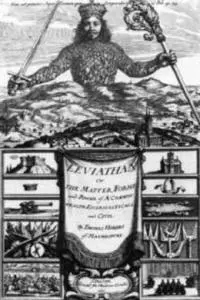
- Название:Leviathan
- Автор:
- Издательство:epubBooks Classics
- Жанр:
- Год:2014
- ISBN:нет данных
- Рейтинг книги:4 / 5. Голосов: 1
-
Избранное:Добавить в избранное
- Отзывы:
-
Ваша оценка:
Leviathan: краткое содержание, описание и аннотация
Предлагаем к чтению аннотацию, описание, краткое содержание или предисловие (зависит от того, что написал сам автор книги «Leviathan»). Если вы не нашли необходимую информацию о книге — напишите в комментариях, мы постараемся отыскать её.
Leviathan — читать онлайн ознакомительный отрывок
Ниже представлен текст книги, разбитый по страницам. Система сохранения места последней прочитанной страницы, позволяет с удобством читать онлайн бесплатно книгу «Leviathan», без необходимости каждый раз заново искать на чём Вы остановились. Поставьте закладку, и сможете в любой момент перейти на страницу, на которой закончили чтение.
Интервал:
Закладка:
Comparison Of Monarchy, With Soveraign Assemblyes
The difference between these three kindes of Common–wealth, consisteth not in the difference of Power; but in the difference of Convenience, or Aptitude to produce the Peace, and Security of the people; for which end they were instituted. And to compare Monarchy with the other two, we may observe; First, that whosoever beareth the Person of the people, or is one of that Assembly that bears it, beareth also his own naturall Person. And though he be carefull in his politique Person to procure the common interest; yet he is more, or no lesse carefull to procure the private good of himselfe, his family, kindred and friends; and for the most part, if the publique interest chance to crosse the private, he preferrs the private: for the Passions of men, are commonly more potent than their Reason. From whence it follows, that where the publique and private interest are most closely united, there is the publique most advanced. Now in Monarchy, the private interest is the same with the publique. The riches, power, and honour of a Monarch arise onely from the riches, strength and reputation of his Subjects. For no King can be rich, nor glorious, nor secure; whose Subjects are either poore, or contemptible, or too weak through want, or dissention, to maintain a war against their enemies: Whereas in a Democracy, or Aristocracy, the publique prosperity conferres not so much to the private fortune of one that is corrupt, or ambitious, as doth many times a perfidious advice, a treacherous action, or a Civill warre.
Secondly, that a Monarch receiveth counsell of whom, when, and where he pleaseth; and consequently may heare the opinion of men versed in the matter about which he deliberates, of what rank or quality soever, and as long before the time of action, and with as much secrecy, as he will. But when a Soveraigne Assembly has need of Counsell, none are admitted but such as have a Right thereto from the beginning; which for the most part are of those who have beene versed more in the acquisition of Wealth than of Knowledge; and are to give their advice in long discourses, which may, and do commonly excite men to action, but not governe them in it. For the Understanding is by the flame of the Passions, never enlightned, but dazled: Nor is there any place, or time, wherein an Assemblie can receive Counsell with secrecie, because of their owne Multitude.
Thirdly, that the Resolutions of a Monarch, are subject to no other Inconstancy, than that of Humane Nature; but in Assemblies, besides that of Nature, there ariseth an Inconstancy from the Number. For the absence of a few, that would have the Resolution once taken, continue firme, (which may happen by security, negligence, or private impediments,) or the diligent appearance of a few of the contrary opinion, undoes to day, all that was concluded yesterday.
Fourthly, that a Monarch cannot disagree with himselfe, out of envy, or interest; but an Assembly may; and that to such a height, as may produce a Civill Warre.
Fifthly, that in Monarchy there is this inconvenience; that any Subject, by the power of one man, for the enriching of a favourite or flatterer, may be deprived of all he possesseth; which I confesse is a great and inevitable inconvenience. But the same may as well happen, where the Soveraigne Power is in an Assembly: for their power is the same; and they are as subject to evill Counsell, and to be seduced by Orators, as a Monarch by Flatterers; and becoming one an others Flatterers, serve one anothers Covetousnesse and Ambition by turnes. And whereas the Favorites of an Assembly, are many; and the Kindred much more numerous, than of any Monarch. Besides, there is no Favourite of a Monarch, which cannot as well succour his friends, as hurt his enemies: But Orators, that is to say, Favourites of Soveraigne Assemblies, though they have great power to hurt, have little to save. For to accuse, requires lesse Eloquence (such is mans Nature) than to excuse; and condemnation, than absolution more resembles Justice.
Sixtly, that it is an inconvenience in Monarchie, that the Soveraigntie may descend upon an Infant, or one that cannot discerne between Good and Evill: and consisteth in this, that the use of his Power, must be in the hand of another Man, or of some Assembly of men, which are to governe by his right, and in his name; as Curators, and Protectors of his Person, and Authority. But to say there is inconvenience, in putting the use of the Soveraign Power, into the hand of a Man, or an Assembly of men; is to say that all Government is more Inconvenient, than Confusion, and Civill Warre. And therefore all the danger that can be pretended, must arise from the Contention of those, that for an office of so great honour, and profit, may become Competitors. To make it appear, that this inconvenience, proceedeth not from that forme of Government we call Monarchy, we are to consider, that the precedent Monarch, hath appointed who shall have the Tuition of his Infant Successor, either expressely by Testament, or tacitly, by not controlling the Custome in that case received: And then such inconvenience (if it happen) is to be attributed, not to the Monarchy, but to the Ambition, and Injustice of the Subjects; which in all kinds of Government, where the people are not well instructed in their Duty, and the Rights of Soveraignty, is the same. Or else the precedent Monarch, hath not at all taken order for such Tuition; And then the Law of Nature hath provided this sufficient rule, That the Tuition shall be in him, that hath by Nature most interest in the preservation of the Authority of the Infant, and to whom least benefit can accrue by his death, or diminution. For seeing every man by nature seeketh his own benefit, and promotion; to put an Infant into the power of those, that can promote themselves by his destruction, or dammage, is not Tuition, but Trechery. So that sufficient provision being taken, against all just quarrell, about the Government under a Child, if any contention arise to the disturbance of the publique Peace, it is not to be attributed to the forme of Monarchy, but to the ambition of Subjects, and ignorance of their Duty. On the other side, there is no great Common–wealth, the Soveraignty whereof is in a great Assembly, which is not, as to consultations of Peace, and Warre, and making of Lawes, in the same condition, as if the Government were in a Child. For as a Child wants the judgement to dissent from counsell given him, and is thereby necessitated to take the advise of them, or him, to whom he is committed: So an Assembly wanteth the liberty, to dissent from the counsell of the major part, be it good, or bad. And as a Child has need of a Tutor, or Protector, to preserve his Person, and Authority: So also (in great Common–wealths,) the Soveraign Assembly, in all great dangers and troubles, have need of Custodes Libertatis; that is of Dictators, or Protectors of their Authoritie; which are as much as Temporary Monarchs; to whom for a time, they may commit the entire exercise of their Power; and have (at the end of that time) been oftner deprived thereof, than Infant Kings, by their Protectors, Regents, or any other Tutors.
Though the Kinds of Soveraigntie be, as I have now shewn, but three; that is to say, Monarchie, where one Man has it; or Democracie, where the generall Assembly of Subjects hath it; or Aristocracie, where it is in an Assembly of certain persons nominated, or otherwise distinguished from the rest: Yet he that shall consider the particular Common–wealthes that have been, and are in the world, will not perhaps easily reduce them to three, and may thereby be inclined to think there be other Formes, arising from these mingled together. As for example, Elective Kingdomes; where Kings have the Soveraigne Power put into their hands for a time; of Kingdomes, wherein the King hath a power limited: which Governments, are nevertheless by most Writers called Monarchie. Likewise if a Popular, or Aristocraticall Common–wealth, subdue an Enemies Countrie, and govern the same, by a President, Procurator, or other Magistrate; this may seeme perhaps at first sight, to be a Democraticall, or Aristocraticall Government. But it is not so. For Elective Kings, are not Soveraignes, but Ministers of the Soveraigne; nor limited Kings Soveraignes, but Ministers of them that have the Soveraigne Power: nor are those Provinces which are in subjection to a Democracie, or Aristocracie of another Common–wealth, Democratically, or Aristocratically governed, but Monarchically.
Читать дальшеИнтервал:
Закладка:
Похожие книги на «Leviathan»
Представляем Вашему вниманию похожие книги на «Leviathan» списком для выбора. Мы отобрали схожую по названию и смыслу литературу в надежде предоставить читателям больше вариантов отыскать новые, интересные, ещё непрочитанные произведения.



Обсуждение, отзывы о книге «Leviathan» и просто собственные мнения читателей. Оставьте ваши комментарии, напишите, что Вы думаете о произведении, его смысле или главных героях. Укажите что конкретно понравилось, а что нет, и почему Вы так считаете.