Kisari Mohan Ganguli - The Mahabharata of Krishna-Dwaipayana Vyasa
Здесь есть возможность читать онлайн «Kisari Mohan Ganguli - The Mahabharata of Krishna-Dwaipayana Vyasa» весь текст электронной книги совершенно бесплатно (целиком полную версию без сокращений). В некоторых случаях можно слушать аудио, скачать через торрент в формате fb2 и присутствует краткое содержание. Издательство: ManyBooks.net, Жанр: на английском языке. Описание произведения, (предисловие) а так же отзывы посетителей доступны на портале библиотеки ЛибКат.
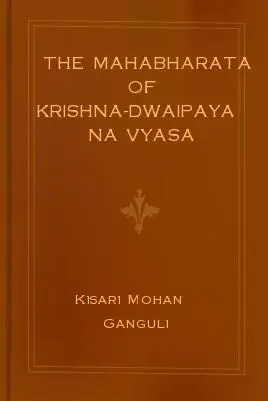
- Название:The Mahabharata of Krishna-Dwaipayana Vyasa
- Автор:
- Издательство:ManyBooks.net
- Жанр:
- Год:неизвестен
- ISBN:нет данных
- Рейтинг книги:3 / 5. Голосов: 1
-
Избранное:Добавить в избранное
- Отзывы:
-
Ваша оценка:
The Mahabharata of Krishna-Dwaipayana Vyasa: краткое содержание, описание и аннотация
Предлагаем к чтению аннотацию, описание, краткое содержание или предисловие (зависит от того, что написал сам автор книги «The Mahabharata of Krishna-Dwaipayana Vyasa»). Если вы не нашли необходимую информацию о книге — напишите в комментариях, мы постараемся отыскать её.
The Mahabharata of Krishna-Dwaipayana Vyasa — читать онлайн бесплатно полную книгу (весь текст) целиком
Ниже представлен текст книги, разбитый по страницам. Система сохранения места последней прочитанной страницы, позволяет с удобством читать онлайн бесплатно книгу «The Mahabharata of Krishna-Dwaipayana Vyasa», без необходимости каждый раз заново искать на чём Вы остановились. Поставьте закладку, и сможете в любой момент перейти на страницу, на которой закончили чтение.
Интервал:
Закладка:
"Uma said, 'In the world some men are seen well-versed in inferences and the premises leading to them. Indeed, they are possessed of science and knowledge, have large progeny, and are endued with learning and wisdom. Others, O god, are destitute of wisdom, science, and knowledge, and are characterised by folly. By what particular acts does a person become possessed of wisdom? By what acts, again, does one become possessed of little wisdom and distorted vision? Do thou dispel this doubt of mine, O thou that art the foremost of all beings conversant with duties. Others there are, O god, that are blind from the moment of their birth. Others there are that are diseased and afflicted and impotent. Do thou, O god, tell me the reason of this.'
"Maheswara said, 'Those men that always enquire, about what is for their benefit and what is to their detriment, Brahmanas learned in the Vedas, crowned with success, and conversant with all duties, that avoid all kinds of evil deeds and achieve only such deeds as are good, succeed in ascending to Heaven after departing from this world and enjoy great happiness as long as they live here. Indeed, upon the exhaustion of their merit when they take birth in the order of humanity, they become born as men possessed of great intelligence. Every kind of felicity and auspiciousness becomes theirs in consequence of that intelligence with which they are born. Those men of foolish understandings who cast wicked eyes upon the wedded spouses of other men, become cursed with congenital blindness in consequence of that sinfulness of theirs. Those men who, impelled by desire in their hearts, cast their eyes on naked women, those men of wicked deeds take birth in this world to pass their whole lives in one continuous disease. Those men of foolish and wicked deeds who indulge in sexual congress with women of orders different from their own,--those men of little wisdom,--have to take birth in their next lives as persons destitute of virility. Those men who cause animals to be slain, and those who violate the beds of their preceptors, and those who indulge promiscuously in sexual congress, have to take birth in their next lives as persons destitute of the virile power.'
"Uma said, 'What acts, O foremost of the deities, are faulty, and what acts are faultless? What, indeed, are those acts by doing which a man succeeds in attaining to what is for your highest good?'
"Maheswara said, 'That man who is desirous of ascertaining what is righteousness, and who wishes to acquire prominent virtues and accomplishments, and who always puts questions to the Brahmanas with a view to find out the path that leads to his highest good, succeed in ascending to Heaven. If (after exhaustion of his merit) he takes birth in the order of humanity, he becomes endued with intelligence and memory and great wisdom. This, O goddess, is the line of conduct that the righteous are to follow and that is fraught with great benefit. I have told thee of it for the good of human beings.'
"Uma said, 'There are men who hate righteousness and who are possessed of little understanding. They never wish to approach Brahmanas conversant with the Vedas. There are others who are observant of vows and who are devoted to the duty of performing Sraddhas. Others, again, are destitute of all vows. They are unmindful of observance and are like Rakshasas in conduct. Some there are who are devoted to the performance of sacrifices and some who are unmindful of the Homa. Through the consequences of what acts do men become possessed of These different natures?'
"Maheswara said, 'Through the Vedas, the limits have been assigned of all the acts of human beings. Those men that conduct themselves according to the authority of the Vedas, are seen (in their next lives) to become devoted to the observance of vows. Those men, however, who having become subject to the sway of folly accept unrighteousness for its reverse, become destitute of vows, transgress all restraints, and come to be regarded as Brahmarakshasas. Indeed, it is these men that become unmindful of the Homa, that never utter the Vashat and other sacred Mantras, and that come to be regarded as the lowest and vilest of men Thus, O goddess, have I explained to thee the entire ocean of duties in respect of human beings for the sake of removing thy doubts, not omitting the sins of which they become guilty.'"
SECTION CXLVI
"Narada said, 'Having said these words, the puissant Mahadeva himself became desirous of hearing (instead of talking), and with that view he questioned his dear spouse who was seated by his side and she was fully inclined to act up to his desire.'
"Mahadeva said, 'Thou, O goddess, art conversant with what is Supreme and what is not.[576] Thou art acquainted with all duties, O thou that lovest to reside in the retreats of ascetics. Thou art endued with every virtue, possessed of beautiful eyebrows and hair ending in the fairest curls, O daughter of Himavat, the king of mountains! Thou art skilled in every work. Thou art endued with self-restraint and thou lookest impartially upon all creatures. Divested of the sense of meum, thou art devoted to the practice of all the duties. O thou of beautiful features, I desire to ask thee about something. I wish that, asked by me, thou wilt discourse to me on that topic. Savitri is the chaste wife of Brahma. The chaste Sachi is the wife of Indra. Dhumrorna is the spouse of Markandeya, and Riddhi of (king) Vaisravana. Varuna has Gauri for his spouse, and Surya has Suvarchala. Rohini is the chaste wife of Sasin, and Swaha of Vibhavasu. Kasyapa has Aditi. All these regard their husbands as their gods. Thou hast, O goddess, conversed and associated with all of them every day. It is for this reason, O thou that art conversant with every duty, that I desire to question thee about the duties of women, O thou whose words are always consistent with righteousness. I desire to hear thee discourse on that subject from the beginning. Thou practisest all the duties of righteousness with me. Thy conduct is exactly like mine, and the vows thou observest are the same that are observed by me. Thy puissance and energy are equal to mine, and thou hast undergone the austerest penances. The subject, when discoursed upon by thee, will become endued with great merit. Indeed, that discourse will then become authoritative in the world. Women, in especial, are the highest refuge of women. O thou of beautiful hips, among human beings that course of conduct which thou wilt lay down will be followed from generation to generation.[577] Half of my body is made up of half thy body. Thou art always engaged in doing the work of the deities, and it is thou that art the cause of the peopling of the earth, O auspicious lady, all the eternal duties of women are well-known to thee. Do thou, therefore, tell me in detail what are the duties of thy sex.'
"Uma said, 'O holy one, O lord of all created things, O source of all that is past, present, and future, it is through thy grace that the words I am uttering are taking their rise in my mind. All these Rivers (that are of my sex), O god of gods, endued with the waters of all the Tirthas, are approaching thy presence for enabling thee to perform thy ablutions in them.[578] After consulting them I shall discourse on the topic named, in due order. That person who, though competent, is still free from egotism, is rightly called a Purusha.[579] As regards woman, O lord of all beings, she follows persons of her sex. By consulting these foremost of Rivers, they will be honoured by me. The sacred Saraswati is the foremost river of all rivers. She courses towards the ocean and is truly the first of all streams. Vipasa also here, and Vitasta, and Chandrabhaga, and Iravati, and Satadru, and the river Devika, and Kausiki, and Gomati.[580] and this celestial River who has in her all the sacred Tirthas, viz., the goddess Ganga, who having her rise in Heaven hath descended on the Earth and is regarded as the foremost of all streams; Having said this, the spouse of that god of gods, that foremost of all righteous persons, smilingly addressed all those Rivers of her sex. Indeed, the spouse of the great god, devoted to the performance of all duties, questioned those individuals of her sex about the duties of women. Verily, those foremost of rivers having Ganga for their first are all conversant with the duties of women.'
Читать дальшеИнтервал:
Закладка:
Похожие книги на «The Mahabharata of Krishna-Dwaipayana Vyasa»
Представляем Вашему вниманию похожие книги на «The Mahabharata of Krishna-Dwaipayana Vyasa» списком для выбора. Мы отобрали схожую по названию и смыслу литературу в надежде предоставить читателям больше вариантов отыскать новые, интересные, ещё непрочитанные произведения.











Обсуждение, отзывы о книге «The Mahabharata of Krishna-Dwaipayana Vyasa» и просто собственные мнения читателей. Оставьте ваши комментарии, напишите, что Вы думаете о произведении, его смысле или главных героях. Укажите что конкретно понравилось, а что нет, и почему Вы так считаете.