K Parker - Pattern
Здесь есть возможность читать онлайн «K Parker - Pattern» весь текст электронной книги совершенно бесплатно (целиком полную версию без сокращений). В некоторых случаях можно слушать аудио, скачать через торрент в формате fb2 и присутствует краткое содержание. Жанр: Фэнтези, на английском языке. Описание произведения, (предисловие) а так же отзывы посетителей доступны на портале библиотеки ЛибКат.
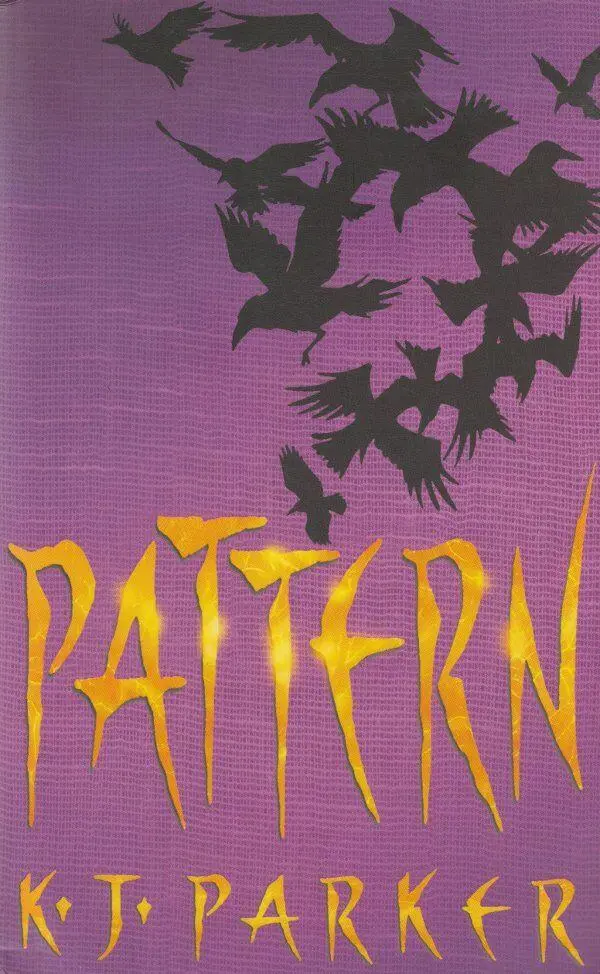
- Название:Pattern
- Автор:
- Жанр:
- Год:неизвестен
- ISBN:нет данных
- Рейтинг книги:3 / 5. Голосов: 1
-
Избранное:Добавить в избранное
- Отзывы:
-
Ваша оценка:
Pattern: краткое содержание, описание и аннотация
Предлагаем к чтению аннотацию, описание, краткое содержание или предисловие (зависит от того, что написал сам автор книги «Pattern»). Если вы не нашли необходимую информацию о книге — напишите в комментариях, мы постараемся отыскать её.
Pattern — читать онлайн бесплатно полную книгу (весь текст) целиком
Ниже представлен текст книги, разбитый по страницам. Система сохранения места последней прочитанной страницы, позволяет с удобством читать онлайн бесплатно книгу «Pattern», без необходимости каждый раз заново искать на чём Вы остановились. Поставьте закладку, и сможете в любой момент перейти на страницу, на которой закончили чтение.
Интервал:
Закладка:
'Anyway,' Elja said with an effort, 'we're starting to get organised; that's good. Any chance of someone making a start on some furniture tomorrow? Two stools and the floor are all very well, but I could do with a little luxury, like a table.'
Then everyone began talking at once, urging the claims of their own favoured projects and laying claim to use of the tools. As for what Asburn and Poldarn should do the next day, there was no shortage of suggestions. Pot hooks and fire irons, rakes, pitchforks, hoes, mattocks, spades, more hammers, more files, more knives, more axes, more saws and chisels, an adze (Poldarn didn't happen to notice who asked for that, but he was impressed), pots and kettles, rasps, calipers, nails, a lamp-stand ('But we haven't got any lamps,' Asburn pointed out), new hinges for the barn door, bolts and hasps and brackets, and-if there was time-a lathe spindle, ploughshares and the metal parts for a spinning-wheel treadle. Poldarn kept nodding till he was dizzy; there didn't seem to be any reason why they couldn't make them all, if not tomorrow then the next day. It wasn't as if anything they were asking for was particularly difficult, it was just a matter of knowing what to do. And he did, he realised: somehow he'd known it all along but it was only just beginning to drift up from the depths of his memory. Suddenly he was having visions of himself beside an anvil, bending and twisting and drawing down and jumping up endless rods and bars and odd-shaped pieces from the scrap, while someone whose face he couldn't see was saying, No, not like that, and Now you've got it, that's the ticket. He found himself grinning because he'd known it all already, even when he'd been struggling to make a straight nail in the forge at Haldersness; he'd known the whole craft, even better than Asburn did-everything, of course, except how to get a fire going.
He woke up even earlier next day, and beat Asburn to the forge by several minutes. He still couldn't get the fire to catch, but this time at least he knew why. By the time he was so tired that the hammer was slipping through his fingers, he'd made a heap of priceless, indispensable tools and implements, each one a vital contribution to the life of the farm. Wire, Asburn was saying, if we could only make up some plates for drawing wire; but Poldarn knew exactly how to go about that, though he kept it to himself so he wouldn't look like he was boasting. He'd drawn wire before, any amount of it. It was like everything else, easy if you knew the trick. What a difference just a little scrap of memory made.
Poldarn thought about that as he dug a broken halberd-blade in under the coals. He considered the memory of steel, imparted by intense heat and sudden cold: take a piece of hardening steel, heat it until it glows red and quench it and heat it again until the colours crawl upwards, yellow and brown and purple and blue, and you can teach it to remember its own shape. Bend it back on itself and let it go, and it'll spring back into the shape you've taught it to keep. Heat it again and let it cool slowly in the air, and it forgets; bend it, and it stays bent, bend it back and forth often enough and it fatigues and breaks. Memory gives it not only identity, but strength.
Next he considered the memory of flesh, imparted by intense experience and sudden understanding: take a piece of flesh, fill it with knowledge, learning, wisdom, experience; quench it in pain, heat it again in friendship, love and understanding, and you can teach it to remember its own name. Bend it back on itself and let go, and it'll spring back into the identity it's learned to inhabit. Heat it again in horror, shame and understanding, let it cool slowly in confused sleep, and it forgets. Bend it, and it follows whatever force is applied to it, adapting itself without resistance to whatever shape will get it out of the way of the pressure, until in time it fatigues and breaks. Memory gives it not only identity, but strength.
Then he considered the broken steel and the broken flesh. One can be put back in the fire over and over again; each time it goes from intense heat to sudden cold to gradual, accumulating heat it accepts a new memory, gains new strength, becomes capable of taking and holding an edge. Put the other in the fire and it burns away, converted into smoke and ash, like the effluent of a volcano. The defining property of flesh is that it can only be worked once; unlike steel, which, if it warps in the quench and comes out distorted, crooked, bad, can be saved by fire and water and more fire, making it infinitely more versatile and enduring than muscle, skin and bone. Even supposing it were possible to take flesh with a bad set and heat out the offending memory, the result would inevitably be weak and ductile, unable to hold an edge, bending and stretching and buckling under pressure until finally the ignorant material fatigues, cracks, tears, snaps, fails. Memory is understanding. Memory is strength.
But supposing you were to take flesh that could withstand heat, even the heat of the fire-stream that had turned Barn and the old man who'd wanted to help into ash and smoke, but that had taken a bad set in the quench and become warped, distorted, untrue. Supposing you could find such a piece of flesh in a ditch or the corner of a barn or in the mud and blood of a river bank, annealed of its memory until it was as soft as a bloom of virgin iron, and supposing you heated and forged and heated and quenched and heated it, in the fire of burning houses and Polden's Forge and the river mud of the Bohec (as he'd coddled the file-blade in mud so the fine steel of the teeth wouldn't burn; yes, maybe that was how to save flesh from burning)-suppose you could do that, and keep on doing it over and over again until at last, eventually, it came out straight from the quench, filled with good memory and set in the desired shape. That would be the very best hardening flesh. That would be a god.
But he doubted that-because flesh burns, even when coated in mud or wrapped in oxhides saturated with water; a defining property of flesh is that it burns. That limits its usefulness and cramps its versatility, because nothing survives burning except smoke and the ash that covers fields and buries growth. The thought depressed him, because he'd had such high hopes for flesh as a material for the manufacture of useful and enduring things. But then he thought of how steel burns too, if too much heat gets into it, blanching the orange to white; he thought of the welding heat, the incandescent white that crackles and glitters with sparks, at which point it can be joined to another piece in marriage under the hammer, in the brief moment of love between taking a heat and burning. He considered the way Asburn had made the pattern-welded blade, binding together flat leaves of steel and bringing them to the very brink of burning, and how his hammer had joined the many into one (like the mind of the crows, or the people of Haldersness and Ciartanstead). It seemed to him that in order to make a join in steel or flesh, it was necessary to bring the material to the point of destruction, when the skin is molten and fluid and one piece can flow into another, as the Mahec and the Bohec merge into each other and then the sea, at Boc Bohec. Once joined, of course, they can take heat and sudden cold and incremental heat as well as a piece of the solid, and the only indication that they were ever separate is-of course-the pattern: the maiden's hair, the butterfly, the pools and eyes. And that made him wonder whether the best hope for flesh wasn't the coddling in clay but the welding heat, the love of separate pieces achieving union at the point of burning. In the pattern weld, he remembered, Asburn had interleaved hardening steel and soft iron, so that the brittle strength of one should be saved by the soft ductility of the other while still being capable of taking and holding an edge, taking and keeping memory. He remembered what Asburn had told him; that when they first came to this country these people (his people) were dangerously short of good material and so learned the knack of burning and hammering separate pieces of scrap into useful and enduring things; at least until they'd grown strong enough to go across the sea and strip what they needed from the dead bodies of their enemies. Maybe, he thought, the answer to the problem of flesh is the pattern-weld, where muscle and skin and bone are fluxed out and burnt away, but the memory remains in the pattern, the ripples of the pools and eyes, the ascending rungs of Polden's Ladder.
Читать дальшеИнтервал:
Закладка:
Похожие книги на «Pattern»
Представляем Вашему вниманию похожие книги на «Pattern» списком для выбора. Мы отобрали схожую по названию и смыслу литературу в надежде предоставить читателям больше вариантов отыскать новые, интересные, ещё непрочитанные произведения.




Обсуждение, отзывы о книге «Pattern» и просто собственные мнения читателей. Оставьте ваши комментарии, напишите, что Вы думаете о произведении, его смысле или главных героях. Укажите что конкретно понравилось, а что нет, и почему Вы так считаете.