K Parker - Pattern
Здесь есть возможность читать онлайн «K Parker - Pattern» весь текст электронной книги совершенно бесплатно (целиком полную версию без сокращений). В некоторых случаях можно слушать аудио, скачать через торрент в формате fb2 и присутствует краткое содержание. Жанр: Фэнтези, на английском языке. Описание произведения, (предисловие) а так же отзывы посетителей доступны на портале библиотеки ЛибКат.
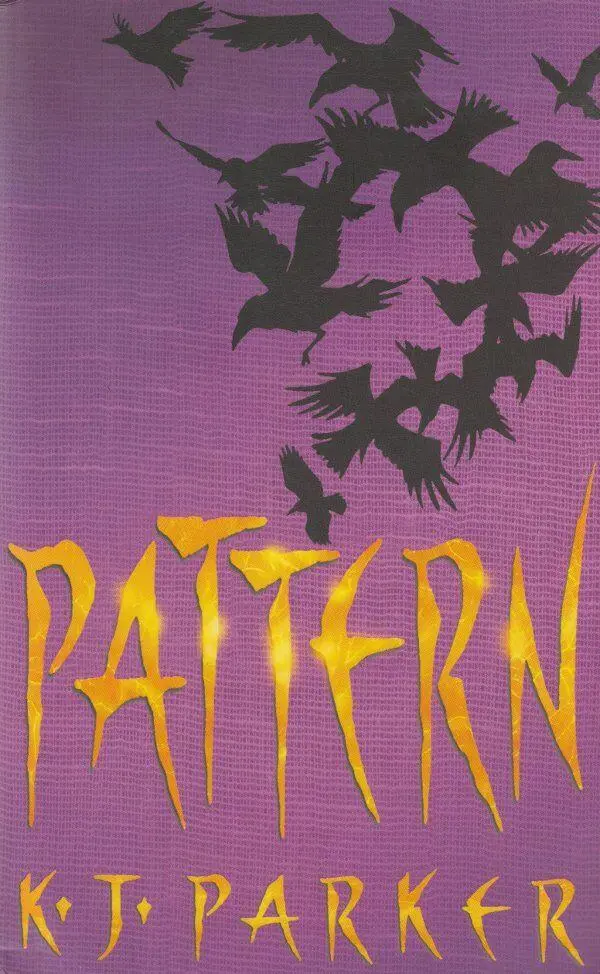
- Название:Pattern
- Автор:
- Жанр:
- Год:неизвестен
- ISBN:нет данных
- Рейтинг книги:3 / 5. Голосов: 1
-
Избранное:Добавить в избранное
- Отзывы:
-
Ваша оценка:
Pattern: краткое содержание, описание и аннотация
Предлагаем к чтению аннотацию, описание, краткое содержание или предисловие (зависит от того, что написал сам автор книги «Pattern»). Если вы не нашли необходимую информацию о книге — напишите в комментариях, мы постараемся отыскать её.
Pattern — читать онлайн бесплатно полную книгу (весь текст) целиком
Ниже представлен текст книги, разбитый по страницам. Система сохранения места последней прочитанной страницы, позволяет с удобством читать онлайн бесплатно книгу «Pattern», без необходимости каждый раз заново искать на чём Вы остановились. Поставьте закладку, и сможете в любой момент перейти на страницу, на которой закончили чтение.
Интервал:
Закладка:
But although the last line of the verse kept eluding him, he found that as he trawled his memory, other things came up in the net. Mostly they were trivial and he had no idea what they meant-little broken glimpses of himself, random as dug-up potsherds, each bearing a tiny fragment of the pattern but never enough to make any sense. In one he was climbing out of a stream, all wet, while people on the bank were laughing at him. In another, he'd just been stung by a bee, in a field of nearly ripe oats. In another, he was sitting on the deck of a ship, looking straight up at the mast above his head. In another, he was throwing a stick for a dog. In another, he was stuck in a deep patch of muddy bog, which had just sucked the boot off his left foot. In another, he was up a ladder, picking cherries off a tree. In another, he was waking up out of a recurring bad dream, in which he'd seen a man tortured to death, and either he was the victim, or else he was the evil monster who'd given the order to the executioners He tried to catch hold of that memory, but it was too far back; the version of himself who'd had that dream was only a boy, maybe nine or ten years old. He could see himself waking up out of that dream-he was on the porch at Haldersness, curled up in a nest of blankets and pillows, and he was howling and sobbing with terror, as people came running to see what the matter was. Was it that dream again? they were asking, and he was nodding tearfully, the salt stinging his eyes (and a tear dribbled down onto his lips, and a calm part of his mind savoured the interesting taste).
When it finally deigned to show up, the dawn took him almost by surprise. It came out of the dull red glow of the volcano like a party of soldiers sneaking out from an ambush; it was only when the sun showed its rim over the red clouds that he recognised it for what it was.
It was a spectacularly beautiful dawn, an extraordinary fusion of shapes and colours, in which the familiar landscape suddenly appeared strange, different and new. He sat for a while and stared at it, trying to remember the last time he'd paid a sunrise the attention it deserved; and he found himself thinking, what if there was a day so perfect in every respect that a man could be entirely content, simply living that day over and over again? What if a man could pull up the ends of the straight line from birth to death and forge-weld them together, making his life a circle, a closed loop into which nothing bad could intrude and nothing good escape? Even if the day wasn't perfect, what would it be like to circle endlessly over life, observing rather than participating, like the crow scouts? Nothing would matter, and so there could be no pain or sorrow, nothing behind or ahead to be afraid of; there would be no death overshadowing the future, no hidden guilt casting its shadow over the past, no causes or consequences, nothing ever irrevocable, nothing that couldn't be put right next time around, nothing that needed putting right to begin with. Wouldn't it be fine to divert the fire-stream and make it turn a wheel driving a shaft powering a mill or a lathe or a pump or a trip-hammer, something capable of doing useful work, tirelessly and for ever?
Then he remembered who he was and where he was going; and as the memory came back, he considered the thing he had to do that day. Before the sun rose again, he would have taken an utterly irrevocable step, channelling the fire-stream down onto the roof of his own house. In theory, here in the dawn's apparent infinity of choice, he could simply get up and walk away, keep walking until he reached the sea; in practice he couldn't turn back because he was already there, he couldn't abandon the job in hand because it had already been done. Understanding that, he realised that he was already committed to the circle, not the straight line, but his endlessly recurring day was the opposite of perfect. This was the day where he would have to live for ever, and he was locked into it just as he was locked into every previous day of his life, and that every past day controlled every day yet to come. The hammer-weld that kept the world out kept him in, and there could be no escape. The circle was nothing more than the steel band of memory, circumscribing his life as a tyre surrounds a wheel, supporting and confining the spokes.
Then the others started waking up, and he turned his attention to details.
'On your feet,' he told them all. 'We've got a long way to go today, and we're behind as it is.'
As they marched he went over the minutiae of the plan until he'd annoyed all of them to the point of mutiny. After he'd finished doing that, none of them said a word, to him or to each other. That made for a very long day.
Fortunately, he'd figured out the necessary diversions pretty well, and had estimated accurately the time their journey would take; as he'd anticipated, they came within sight of the roof of Ciartanstead just as the light was beginning to fade. When they'd reached the patch of dead ground where he'd paused after killing Carey, he ordered a halt.
'We'll hang on here for a while,' he said.
Raffen, who'd sat down and was rubbing his neck where the straps of his rucksack had bitten into it, grunted. 'How long's a while?' he asked.
'As long as it needs to be,' Poldarn replied. 'If you like you can get some sleep, all of you. I'll wake you up when it's time.'
They didn't need to hear the suggestion twice. How they could sleep, so close to the house, was beyond him entirely. While they slept, he kept watch from the lip of the rise. As he'd hoped, there was nothing to see. The Ciartanstead household were all inside, eating dinner, resting after what must have been a tense, fraught day. By now, he knew the routines so well that he could picture them all with total clarity-pulling out the benches and tables, sitting down, waiting for the food to be brought, passing round the dishes, porridge and onions again, why can't we have a bit of meat for a change? Of course he couldn't hear their voices or read their minds, but he could make himself think he could hear the silence as they concentrated wholeheartedly on the job in hand, eating and drinking with the same diligent efficiency that these people, his people, brought to everything they did. It would be a bit cosy in there tonight, needless to say, with all the Haldersness people as well as the Ciartanstead hands; they'd be squashed up tight on the benches, no room to spread elbows, they'd all be sitting up straight, shoulder to shoulder. Now they were done eating, and tables and benches were put away and the blankets were fetched out and laid on the floor; not to worry, room for everyone provided that nobody was selfish about personal space. Nobody was going to have any trouble getting to sleep tonight, not after such a tiring and eventful day; nobody was going to want to sit up late nattering, there was serious sleeping to be done. He wondered: when they sleep (when we sleep), do they dream, or is dreaming too frivolous and unproductive for them to countenance? And if they dream, do they all share the same words and images, do they all go to the same place and relive the same moments? Do they share the dreams of the head of house, taking their lead from him in that as in everything else? Where Eyvind was concerned, he could believe they did-he was a good householder, one you could confidently take as a model of a perfect community leader, a paradigm of his people. So; what did Eyvind dream about, he wondered, and did he remember his dreams when he woke up, or did they fade with the darkness? And even if he didn't remember, how about the rest of them? Did they retain the dreams he forgot? Did they all share the same recurring nightmares?
(He hoped that the Poldarn's Forge hands didn't share his dreams, or at least not the one he'd been having lately, where he watched the executioners cut open the man who was either his best friend or himself, while either he or his best friend watched approvingly. That dream, for some reason, he had no trouble remembering, though on balance he'd have preferred it otherwise.)
Читать дальшеИнтервал:
Закладка:
Похожие книги на «Pattern»
Представляем Вашему вниманию похожие книги на «Pattern» списком для выбора. Мы отобрали схожую по названию и смыслу литературу в надежде предоставить читателям больше вариантов отыскать новые, интересные, ещё непрочитанные произведения.








Обсуждение, отзывы о книге «Pattern» и просто собственные мнения читателей. Оставьте ваши комментарии, напишите, что Вы думаете о произведении, его смысле или главных героях. Укажите что конкретно понравилось, а что нет, и почему Вы так считаете.