Hugh Howey - Machine Learning
Здесь есть возможность читать онлайн «Hugh Howey - Machine Learning» весь текст электронной книги совершенно бесплатно (целиком полную версию без сокращений). В некоторых случаях можно слушать аудио, скачать через торрент в формате fb2 и присутствует краткое содержание. Город: New York, Год выпуска: 2017, ISBN: 2017, Издательство: John Joseph Adams/Houghton Mifflin Harcourt, Жанр: Фантастика и фэнтези, на английском языке. Описание произведения, (предисловие) а так же отзывы посетителей доступны на портале библиотеки ЛибКат.
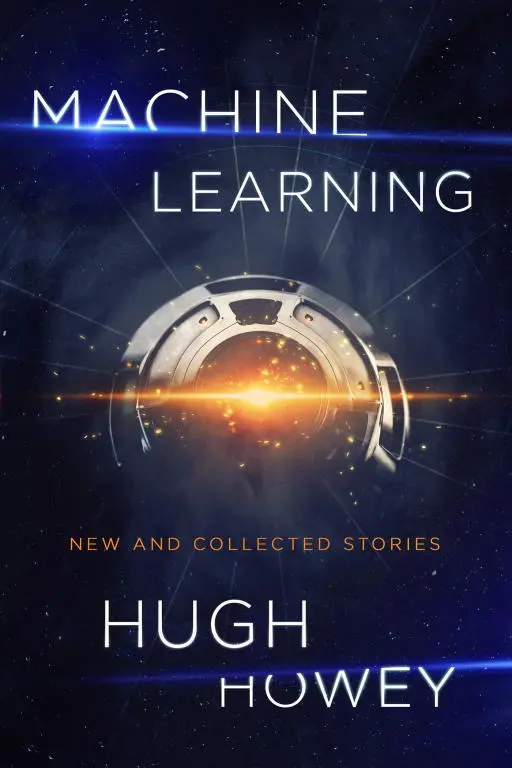
- Название:Machine Learning
- Автор:
- Издательство:John Joseph Adams/Houghton Mifflin Harcourt
- Жанр:
- Год:2017
- Город:New York
- ISBN:978-1-328-76753-0
- Рейтинг книги:3 / 5. Голосов: 1
-
Избранное:Добавить в избранное
- Отзывы:
-
Ваша оценка:
Machine Learning: краткое содержание, описание и аннотация
Предлагаем к чтению аннотацию, описание, краткое содержание или предисловие (зависит от того, что написал сам автор книги «Machine Learning»). Если вы не нашли необходимую информацию о книге — напишите в комментариях, мы постараемся отыскать её.
best-selling author of the Silo trilogy Hugh Howey is known for crafting riveting and immersive page-turners of boundless imagination, spawning millions of fans worldwide, first with his best-selling novel
, and then with other enthralling works such as
and
.
Now comes
, an impressive collection of Howey’s science fiction and fantasy short fiction, including three stories set in the world of Wool, two never-before-published tales written exclusively for this volume, and fifteen additional stories collected here for the first time. These stories explore everything from artificial intelligence to parallel universes to video games, and each story is accompanied by an author’s note exploring the background and genesis of each story.
Howey’s incisive mind makes
a compulsively readable and thought-provoking selection of short works—from a modern master at the top of his game.
Machine Learning — читать онлайн бесплатно полную книгу (весь текст) целиком
Ниже представлен текст книги, разбитый по страницам. Система сохранения места последней прочитанной страницы, позволяет с удобством читать онлайн бесплатно книгу «Machine Learning», без необходимости каждый раз заново искать на чём Вы остановились. Поставьте закладку, и сможете в любой момент перейти на страницу, на которой закончили чтение.
Интервал:
Закладка:
Enough to know.
“I’m sorry,” she told her father, unable to stomach the disappointment on his face.
“When—?” April asked.
Tracy turned to her sister, the schoolteacher, who knew only that Tracy worked for the government, who had no idea about all the classified blood on her hands. April was four years older, would always be older than Tracy in all the ways that didn’t matter and in none of the ways that did.
“In a few hours,” Tracy said. “It’ll all be over in a few hours.”
“And will we feel anything?” April rubbed her forearm. “What about everyone out there? Everyone we know. They’ll just—?”
Remy sat beside his wife and wrapped his arms around her. The air around Tracy grew cold. Even more empty.
“ We were supposed to be out there when it happened, too,” Tracy said. “The four of us. Remember that. We’ll talk more later. I have to get to a meeting—”
“A meeting?” April asked. “A meeting? To do what? Decide the rest of our lives? Decide who lives and who dies? What kind of meeting?”
And now Remy was no longer embracing his wife. He was restraining her.
“How dare you!” April screamed at Tracy. Their father shivered on the bed, tried to say something, to reach out to his daughters and tell them not to fight. Tracy retreated toward the door. She was wrong about the hysteria, about it not coming. There was just some delay. And as she slipped into the hall and shut the small room on her sister’s screaming, she heard that she’d been wrong about her beating on the door as well.
Saving a person seemed simple. But saving them against their will was not. Tracy realized this as she navigated the corridors toward the command room, her sister’s screams still with her. She could hear muffled sobs and distant shouting from other rooms as she passed—more people learning the truth. Tracy had thought that preserving a life would absolve all other sins, but the sin of not consulting with that life first was perhaps the only exception. She recalled an ancient argument she’d had with her mother when she was a teenager, remembered yelling at her mom and saying she wished she’d never been born. And she’d meant it. What right did someone else have to make that decision for her? Her mom had always expected her to be grateful simply for having been brought into the world.
Now Tracy had made the same mistake.
She left the apartment wing, those two thousand rooms dug laterally and tacked on to a complex built long ago, and she entered the wide corridors at the heart of the original bunker. The facility had been designed to house fifteen hundred people for five years. The founders had invited more than three times that number, but they wouldn’t need to stay as long. The biggest job had been cleaning out and refilling the water and diesel tanks.
The entire place was a buried relic from a different time, a time capsule for a different threat, built for a different end-of-the-world scenario. The facility had been abandoned years ago. It had become a tourist attraction. And then it had fallen into disrepair. The founders chose the location after considering several options. Igor and Anatoly used their research credentials and leased the space under the auspices of searching for neutrinos, some kind of impossible-to-find subatomic particles. But it was a much different and invisible threat they actually set out to find: the machines that polluted the air and swam through every vein.
Tracy used her key to unlock the cluttered command room. A round table dominated the center of the space. A doughnut of monitors ringed the ceiling above, tangles of wires drooping from them and running off to equipment the engineers had set up. In one corner, a gleaming steel pod stood like some part of an alien ship. It had been built according to stolen plans, was thought at first to be necessary for clearing the small machines from their bloodstreams, but it ended up being some sort of cryo-device, a side project the Atlanta team had undertaken. The only machine Tracy knew how to operate in that room was the coffeemaker. She started a pot and watched the countdown clock overhead tick toward Armageddon.
The other founders trickled in one at a time. Many had red eyes and chapped cheeks. There was none of the chatting, debating, and arguing that had marked their prior meetings in that room. Just the same funereal silence they’d held by the crypt doors.
A second pot was brewed. One of the engineers got the screens running, and they watched the TV feeds in silence. There was speculation among the talking heads that the presidential nomination was not quite the lock everyone had presumed. The excitement in the newsrooms was palpable and eerie. Tracy watched dead men discuss a future that did not exist.
Two minutes.
The talking heads fell silent, and the feeds switched from newsrooms to a stage outside Atlanta. The distant downtown towers gleamed in the background. On the stage, a young girl in a black dress held a microphone and took a deep breath, a little nervous as she began to sing.
The national anthem brought tears to Tracy’s eyes. She reminded herself to breathe. And not for the first time, she had an awful premonition that she was wrong, that the book was just a book, that John had believed in something that would not come to pass, and that she would soon be embarrassed in that room with all the people she’d convinced to join her. She would be another in a long line of failed messiahs. Her sister would look at her like she was crazy for the rest of her life. National headlines would mock the kooks in a mountain who had thought the world was going to end. And somehow all of this felt worse than twelve billion dead.
It was a guilty thought, the panic that she might be wrong.
Large red numbers on the clock counted down. No part of her wanted to be right. Either way, her world was ending. When the clock struck all zeroes, Tracy would either be an outcast or a shut-in.
On the array of televisions, the same scene was shown from half a dozen angles, all the various news stations and networks tuned to that young girl in her black dress. One of the screens cut to the obligatory jets screaming in formation overhead. Another screen showed a group of senators and representatives, hands on their goddamn patriotic chests. Tracy searched for John, thought she might see him there near the stage with his suit jacket that showed off his handsome shoulders but also that bulge by his ribs. There were five seconds on the clock. One of the founders started counting, whispering the numbers as they fell.
Three.
Two.
One.
A line of zeroes.
And nothing happened.
“They’re still breathing,” someone said.
Igor cursed and fumbled for that damned watch of his.
An eternity squeezed itself into a span of three seconds. No one moved.
“Holy shit,” someone said.
CNN’s feed spun sickeningly to the side, the cameraman whirling, and Tracy realized it was one of the reporters who had cursed. Another screen showed a bright flash, a brief glimpse of a mushroom cloud, and then that monitor went black.
The young girl was no longer singing. She had been replaced with station identifiers and shots of stunned newscasters who stared at their feeds in disbelief. More bright flashes erupted on the last monitor running, which showed a wide vista from some great distance. Three classic and terrifying mushroom clouds rose toward the heavens, shouldering the other clouds aside. And then that last screen succumbed as well, promising impotently to “Be right back.”
“Shut it off!” a reporter screamed. He waved at someone off-camera. “Shut it off—”
And then someone did. A switch flipped somewhere, in all those veins, and all the talking heads on all the screens bowed forward or tilted to the side. Blood flowed from the nose of the man who had just been waving. His jaw fell slack; his eyes focused on nothing—a quiet death.
Читать дальшеИнтервал:
Закладка:
Похожие книги на «Machine Learning»
Представляем Вашему вниманию похожие книги на «Machine Learning» списком для выбора. Мы отобрали схожую по названию и смыслу литературу в надежде предоставить читателям больше вариантов отыскать новые, интересные, ещё непрочитанные произведения.







Обсуждение, отзывы о книге «Machine Learning» и просто собственные мнения читателей. Оставьте ваши комментарии, напишите, что Вы думаете о произведении, его смысле или главных героях. Укажите что конкретно понравилось, а что нет, и почему Вы так считаете.