Ben Bova - The Silent War
Здесь есть возможность читать онлайн «Ben Bova - The Silent War» весь текст электронной книги совершенно бесплатно (целиком полную версию без сокращений). В некоторых случаях можно слушать аудио, скачать через торрент в формате fb2 и присутствует краткое содержание. Год выпуска: 2004, ISBN: 2004, Издательство: NEL, Жанр: Фантастика и фэнтези, на английском языке. Описание произведения, (предисловие) а так же отзывы посетителей доступны на портале библиотеки ЛибКат.
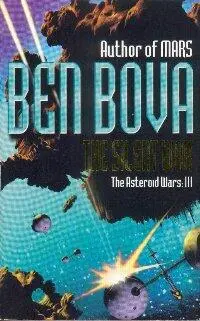
- Название:The Silent War
- Автор:
- Издательство:NEL
- Жанр:
- Год:2004
- ISBN:0-340-76963-7
- Рейтинг книги:5 / 5. Голосов: 1
-
Избранное:Добавить в избранное
- Отзывы:
-
Ваша оценка:
The Silent War: краткое содержание, описание и аннотация
Предлагаем к чтению аннотацию, описание, краткое содержание или предисловие (зависит от того, что написал сам автор книги «The Silent War»). Если вы не нашли необходимую информацию о книге — напишите в комментариях, мы постараемся отыскать её.
As they fight it out, the lives of thousands of innocents hang in the balance, including the rock rats, who make their living off the asteroids, and the inhabitants of Selene City on Earth’s moon. As if matters weren’t complicated enough, the shadowy Yamagata corporation sets its sights on taking advantage of other people’s quarrels, and space pirate Lars Fuchs decides it’s time to make good on his own personal vendetta…
It’s a breakneck finale that can end only in earth’s salvation—or the annihilation of all that humankind has ever accomplished in space.
The Silent War — читать онлайн бесплатно полную книгу (весь текст) целиком
Ниже представлен текст книги, разбитый по страницам. Система сохранения места последней прочитанной страницы, позволяет с удобством читать онлайн бесплатно книгу «The Silent War», без необходимости каждый раз заново искать на чём Вы остановились. Поставьте закладку, и сможете в любой момент перейти на страницу, на которой закончили чтение.
Интервал:
Закладка:
Then his eyes narrowed. Why is their chief administrator traipsing through the Belt? Has he ever done that before? he asked the computer. The answer returned almost before he finished uttering the question. Never. This was the first inspection tour on record.
Harbin smiled grimly. Maybe the computer isn’t so stupid, after all. He sent a message to Grigor, all the way back at Selene. “Do you have any way of finding out who’s on the torch ship Mathilda II with the rock rats’ chief administrator?”
Grigor replied in little more than an hour. “No passenger list is available. Apparently the vessel carries only its crew of three, and the man Ambrose.”
Harbin nodded and remembered that Pancho Lane had once been a professional astronaut. She could probably take the place of a crewman on Ambrose’s ship.
To his own navigator he commanded, “Set a course to follow the vessel shown on the computer display. Stay well behind it. I don’t want them to know we’re following them.”
Mathilda II was a great deal more comfortable than the original Waltzing Matilda. That old bucket had been a mining ship before it was shot to shreds in the first asteroid war. Mathilda II was a comfortably fitted torch ship capable of carrying important passengers while serving as a mobile office for the chief administrator of the Ceres settlement.
Sitting in a swivel chair in the galley, George was explaining, “I left the message for Lars and told him where we’ll be waitin’ for him. This way we don’t surprise him.”
Pancho was seated across the galley table from George. They were in the middle of dinner, Pancho picking at a salad while George wholeheartedly attacked a rack of ribs.
“And the spot you picked to rendezvous with him isn’t where one of the transceivers is stashed?” she asked.
“Naw,” said George, dabbing at his sauce-soaked beard with a napkin. “We’ll rendezvous in dead-empty space. I gave him the coordinates. If anybody’s followin’ us we’ll both be able to see ’em long before they can cause any trouble.”
Pancho nodded. “And you send all your messages to Lars over a tight laser link?”
“Yup. Just about impossible for anybody to intercept ’em or eavesdrop. If somebody does get into the beam we see it right away as a drop in received power.”
“Pretty cute.”
“Pretty necessary,” George said, picking up another sauce-dripping barbecued rib.
In the weeks since his encounter with the disguised logistics ship Roebuck, Lars Fuchs had added a new wrinkle to his Nautilus.
Ships operating in deep space required radiation shielding. When solar flares erupted and spewed planet-engulfing clouds of deadly ionizing particles through interplanetary space, a ship without shielding was little more than a coffin for its crew. The powerful protons in such clouds were particularly dangerous, capable of killing humans and frying electronics systems within minutes unless they were properly protected.
Most spacecraft shielded themselves by charging their outer skins to a very high positive electrical potential. This diverted the deadly high-energy protons of the radiation cloud. The cloud also contained electrons, however, which were less energetic but capable of discharging the ship’s positive electrical field. To keep the electrons at bay, the ships surrounded themselves with a magnetic field, generated by lightweight superconducting wires. Thus spacecraft operating beyond the Earth/Moon system were wrapped in an invisible but powerful magnetic field of their own, and charged their outer skins to high positive potential when a solar storm broke out.
Fuchs, once a planetary geochemist, used Nautilus’s electron guns to charge up his craft’s skin, then covered the spacecraft with pebbles and dust from a loosely aggregated chondritic asteroid. A radar probe of his spacecraft gave a return that looked like the pebbly surface of a small “beanbag” type of chondritic asteroid. Moreover, the dust and pebbles would scatter a laser beam and absorb its energy even better than the copper shields he had affixed earlier to Nautilus’s hull.
If he let his ship drift in a Sun-centered orbit, Fuchs felt confident that Nautilus would look to a casual probe just like a small, dumbbell-shaped asteroid. He felt less confident, though, about responding to Big George’s latest message.
Pancho wants to meet me face to face, he mused. Why? What’s so important that she’s coming out here into the Belt to find me?
“I don’t like it,” he muttered to himself.
Sanja, on duty in the pilot’s chair, the son of a former Mongol tribesman, turned his shaved head toward Fuchs and asked, “Sir?”
“Nothing, Sanja,” said Fuchs. “Nothing. Once you’ve reached orbital velocity, cut power and let the ship coast.”
MATHILDA II
“We have arrived at the designated position,” said the pilot.
Pancho was sitting in the copilot’s chair of Mathilda II ’s snug, efficiently laid-out bridge. The pilot, seated on her left, was a youngster she had met when she’d come aboard for this flight. He looked like a kid to Pancho, blond and soft-cheeked and scrubbed pink, but he ran the vessel well enough. Good square shoulders, she noticed. Pancho’s piloting skills were rusty, she knew, but inwardly she longed for a chance to fly this bucket, just for a little larking around. She couldn’t ask, of course. The chairman of the board of Astro Corporation isn’t supposed to be a fly-girl. One of the epithets that Humphries often threw at her was “greasemonkey.” Pancho had no intention of giving the Humper any ammunition.
Still, she thought as she watched the young man play his fingers over the control panel’s keyboard, it’d be fun to goose up the engines and see what this flying machine can do.
“This is the spot, is it?” George asked. Standing behind the pilot’s seat, he bent forward slightly to peer out the forward window. Nothing visible except the desert of dark empty space spangled with solemn, unblinking stars.
The pilot’s name was Oskar Johannson. Despite his youthful appearance, he was stiffly formal with George and Pancho.
“Yes, sir,” he said, pointing to the control panel’s main display screen. “These are the coordinates, in yellow, and this is our position, the blinking red cursor. As you can see, sir, they overlap. We are at the proper position.”
George nodded. Pancho admired Johannson’s strong jaw and gleaming white teeth. Wish he’d smile, she thought. I wonder what it’d take to ruffle his composure a bit.
“No ships in sight?”
“Nothing in view, sir, except a small asteroid about five hundred klicks off, in about the four o’clock position.” He tapped the keyboard once. “Five hundred seventeen kilometers, one hundred twenty-two degrees relative to our position, eight degrees elevation.”
Pancho grinned at the kid’s earnestness. “I thought this position was clear of rocks for at least a thousand klicks all round,” she said.
George scratched at his beard, answering, “Rocks get kicked into new orbits all the time, Pancho. Gravity resonances from Jupiter and the other planets are always scrambling the smaller chunks.”
Resisting the urge to run the display herself, she said, “An unnumbered rock. Might’s well claim it.”
“To do that one of us would hafta suit up and go out there and plant a marker on it.”
“Why not?” Pancho said, pushing herself up from her seat. “I’ll do it. Claim it for Astro.”
“Gimme a closer look at it, Oskar,” George said.
The radar image showed a dumbbell-shaped chondritic asteroid, slowly tumbling end over end.
Читать дальшеИнтервал:
Закладка:
Похожие книги на «The Silent War»
Представляем Вашему вниманию похожие книги на «The Silent War» списком для выбора. Мы отобрали схожую по названию и смыслу литературу в надежде предоставить читателям больше вариантов отыскать новые, интересные, ещё непрочитанные произведения.
Обсуждение, отзывы о книге «The Silent War» и просто собственные мнения читателей. Оставьте ваши комментарии, напишите, что Вы думаете о произведении, его смысле или главных героях. Укажите что конкретно понравилось, а что нет, и почему Вы так считаете.