Ben Bova - The Silent War
Здесь есть возможность читать онлайн «Ben Bova - The Silent War» весь текст электронной книги совершенно бесплатно (целиком полную версию без сокращений). В некоторых случаях можно слушать аудио, скачать через торрент в формате fb2 и присутствует краткое содержание. Год выпуска: 2004, ISBN: 2004, Издательство: NEL, Жанр: Фантастика и фэнтези, на английском языке. Описание произведения, (предисловие) а так же отзывы посетителей доступны на портале библиотеки ЛибКат.
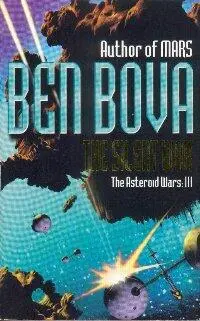
- Название:The Silent War
- Автор:
- Издательство:NEL
- Жанр:
- Год:2004
- ISBN:0-340-76963-7
- Рейтинг книги:5 / 5. Голосов: 1
-
Избранное:Добавить в избранное
- Отзывы:
-
Ваша оценка:
The Silent War: краткое содержание, описание и аннотация
Предлагаем к чтению аннотацию, описание, краткое содержание или предисловие (зависит от того, что написал сам автор книги «The Silent War»). Если вы не нашли необходимую информацию о книге — напишите в комментариях, мы постараемся отыскать её.
As they fight it out, the lives of thousands of innocents hang in the balance, including the rock rats, who make their living off the asteroids, and the inhabitants of Selene City on Earth’s moon. As if matters weren’t complicated enough, the shadowy Yamagata corporation sets its sights on taking advantage of other people’s quarrels, and space pirate Lars Fuchs decides it’s time to make good on his own personal vendetta…
It’s a breakneck finale that can end only in earth’s salvation—or the annihilation of all that humankind has ever accomplished in space.
The Silent War — читать онлайн бесплатно полную книгу (весь текст) целиком
Ниже представлен текст книги, разбитый по страницам. Система сохранения места последней прочитанной страницы, позволяет с удобством читать онлайн бесплатно книгу «The Silent War», без необходимости каждый раз заново искать на чём Вы остановились. Поставьте закладку, и сможете в любой момент перейти на страницу, на которой закончили чтение.
Интервал:
Закладка:
Stavenger shook his head. “I don’t believe so.”
“But who would want to knock out a cable car? That’s the kind of random violence a terrorist would do. Or a nutcase.”
“Or an assassin.”
Pancho’s insides clenched. There it was. The same conclusion her own security people had swiftly come to. Yet she heard herself ask, “Assassin?”
“Selene’s security investigators think somebody was trying to kill you, Pancho.”
And twenty-three other people who happened to be aboard the car, she added silently.
Stavenger asked, “What do your own security people think?”
“Exactly the same,” she replied.
“I’m not surprised,” said Stavenger.
“Neither am I, I guess,” she said. Then she admitted, “I just didn’t want to believe that he’d try to kill me.”
“He?”
“Humphries. Who else?”
And she remembered their exchange at Humphries’s party:
“Why don’t you retire gracefully, Pancho, and let me take my rightful place as chairman of the Astro board?”
“In your dreams, Martin.”
“Then I’ll just have to find some other way to take control of Astro.”
“Over my dead body.”
“Remember, you said that, Pancho. I didn’t.”
The sonofabitch! Pancho thought.
Stavenger took a deep breath. “I don’t want you fighting here in Selene.”
Pancho understood his meaning. If Astro and Humphries are going to war, let it be out in the Belt.
“Doug,” she said earnestly, “I don’t want a war. I thought we had ended all that eight years ago.”
“So had I.”
“The sumbitch wants control of Astro, and he knows I won’t step aside and let him take over.”
“Pancho,” said Stavenger wearily, rubbing a hand across his eyes, “Humphries wants control of the Belt and all its resources. That seems clear.” “And if he gets the Belt, he’ll have control of the whole solar system. And everybody in it.”
“Including Selene.”
Pancho nodded. “Including Selene.”
“I can’t allow that to happen.”
“So what’re you going to do about it, Doug?”
He spread his hands in a gesture of uncertainty. “That’s just it, Pancho. I don’t know what I can do. Humphries isn’t trying to take political control of Selene. He’s after economic power. He knows that if he controls the resources of the Belt, he’ll have Selene and everyone else under his thumb. He can let us continue to govern ourselves. But we’ll have to buy our water and most of our other raw materials from him.”
Pancho shook her head. Once Selene had been virtually self-sufficient, mining water from the deposits of ice at the lunar poles, and using the raw materials scraped from the Moon’s surface layers of regolith. Selene even exported fusion fuels to Earth and supplied the aluminum and silicon for building solar power satellites in Earth orbit.
But once Selene’s government decided to allow limited immigration from the devastated Earth, the lunar nation’s self-sufficiency ended. Selene became dependent on the metals and minerals, even the water, imported from the asteroids. And the trickle of immigration from Earth had become an ever-increasing stream, Pancho knew.
“What’re you going to do?” Pancho repeated.
Looking decidedly unhappy, Stavenger said, “I’ll have a talk with Humphries. Not that it’ll do much good, I expect.”
Pancho heard his unspoken words. It’s up to me to stop Humphries, she realized. I’ve got to fight him. Nobody else can.
“Okay,” she said to Stavenger. “You talk. I’ll act.”
“No fighting here,” Stavenger snapped. “Not here.”
“Not here, Doug,” Pancho promised. Already in her head she was starting to figure how much it would cost to go to war against Humphries Space Systems out in the Asteroid Belt.
Flying in the rattling, roaring helicopter from SeaTac Aerospaceport, the Asian-American who had been assigned to make certain that Pancho Lane survived the sabotage of the cable car looked forward to returning to his home in the mountains of Washington State’s Olympic peninsula. His family would be waiting for him, he knew. So would the fat stipend from Yamagata Corporation.
The helicopter touched down on the cleared gravel area at the foot of the path that led up to his cabin. Strangely, no one was there to greet him. Surely his wife and children heard the copter’s throbbing engines. He walked to the edge of the helipad, clutching his travel bag in one hand, squinting in the miniature sandstorm of gravel and grit from the helicopter’s swirling rotors.
From the gravel pad he could see downslope to the drowned city of Port Townsend and the cluster of scuba-diving camps huddled around it. On a clear day, he could gaze through binoculars at the shattered remains of Seattle’s high-rise towers poking up above the waters of Puget Sound.
It had been a curious assignment, he thought. Fly to the Moon as a tourist—at a cost that would have emptied his life savings—and ride in a certain cable car at a certain time, carrying emergency survival equipment to make certain that Ms. Lane would not be killed by the “accident.”
He shrugged his heavy shoulders as he watched the helicopter dwindle into the cloudy sky, then turned and headed up the winding path toward his home.
He never saw his wife and children, who lay in their bloody beds, each of them shot through the head. Two men grabbed him as he stepped through the front door of his cabin and put a gun to his temple. By the time the local police arrived on the scene, several days later, it seemed obvious to them that the man had slaughtered his family and then committed suicide.
“He must’ve gone nuts,” said the police chief. “It happens. A guy just snaps, for no apparent reason.”
Case closed.
At Selene, the maintenance technician who had planted the tiny explosive device that knocked the car off its cable was also found dead: of an overdose of narcotics. His papers showed that although he was an employee of Selene’s maintenance department, he had recently received a sizeable amount of money from some unknown benefactor. The money was untraceable; apparently he had used it to buy the drugs that killed him.
Rumors quickly bruited through Selene that the money had come from Humphries Space Systems. There was no hint that it had actually been provided by Yamagata Corporation.
HUMPHRIES MANSION
“Somebody tried to kill Pancho?” Martin Humphries could barely hide his elation. “You mean there’s somebody else who wants that guttersnipe offed?”
Grigor Malenkovich was not smiling. Humphries sometimes wondered if the man knew how to smile. The chief of HSS’s security department, Grigor was a lean, silent man with thinning dark hair combed straight back from his forehead, and dark, probing eyes. He said little, and moved like a furtive shadow. He habitually wore suits of slate gray. He could fade into a crowd and remain unnoticed by all except the most discerning eye. Humphries thought of him as the ultimate bureaucrat, functioning quietly, obeying any order without question, as inconspicuous as a mouse, as dangerous as a plague bacillus.
He stood before Humphries’s desk, sallow-faced, humorless.
“You are being blamed for the attempt on her life,” he said, his voice low and soft as a lullaby.
“Me?”
Grigor nodded wordlessly.
“I didn’t order her killed,” Humphries snapped. “If you freelanced this—”
“Not me,” said Grigor. “Nor anyone in my department.”
“Then who?”
Grigor shrugged.
“Find out,” Humphries commanded. “I want to know who tried to kill Pancho. Maybe I’ll give him a reward.”
Читать дальшеИнтервал:
Закладка:
Похожие книги на «The Silent War»
Представляем Вашему вниманию похожие книги на «The Silent War» списком для выбора. Мы отобрали схожую по названию и смыслу литературу в надежде предоставить читателям больше вариантов отыскать новые, интересные, ещё непрочитанные произведения.

Обсуждение, отзывы о книге «The Silent War» и просто собственные мнения читателей. Оставьте ваши комментарии, напишите, что Вы думаете о произведении, его смысле или главных героях. Укажите что конкретно понравилось, а что нет, и почему Вы так считаете.