Robert Sawyer - Watch
Здесь есть возможность читать онлайн «Robert Sawyer - Watch» весь текст электронной книги совершенно бесплатно (целиком полную версию без сокращений). В некоторых случаях можно слушать аудио, скачать через торрент в формате fb2 и присутствует краткое содержание. Год выпуска: 2010, ISBN: 2010, Издательство: Ace Books, Жанр: Фантастика и фэнтези, на английском языке. Описание произведения, (предисловие) а так же отзывы посетителей доступны на портале библиотеки ЛибКат.
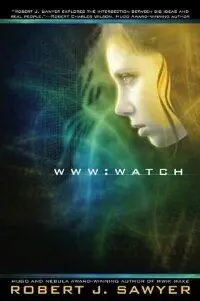
- Название:Watch
- Автор:
- Издательство:Ace Books
- Жанр:
- Год:2010
- ISBN:978-0-441-01818-5
- Рейтинг книги:5 / 5. Голосов: 1
-
Избранное:Добавить в избранное
- Отзывы:
-
Ваша оценка:
Watch: краткое содержание, описание и аннотация
Предлагаем к чтению аннотацию, описание, краткое содержание или предисловие (зависит от того, что написал сам автор книги «Watch»). Если вы не нашли необходимую информацию о книге — напишите в комментариях, мы постараемся отыскать её.
WATCH is convinced that Webmind represents a risk to national security and wants it purged from cyberspace. But Caitlin believes in Webmind’s capacity for compassion—and she will do anything and everything necessary to protect her friend.
Watch — читать онлайн бесплатно полную книгу (весь текст) целиком
Ниже представлен текст книги, разбитый по страницам. Система сохранения места последней прочитанной страницы, позволяет с удобством читать онлайн бесплатно книгу «Watch», без необходимости каждый раз заново искать на чём Вы остановились. Поставьте закладку, и сможете в любой момент перейти на страницу, на которой закончили чтение.
Интервал:
Закладка:
But even not quite looking at him, she could see another expression she now knew well: the deer-caught-in-the-headlights look. “Ah,” he said again. He was clearly nervous, and he quickly changed the topic. “So, um, so what do you think about the upcoming election in the States? ”
Caitlin shook her head; she had her work cut out for her. She wheeled her chair a little closer to his; their knees were now touching. “I hope he gets re-elected,” she said. “My parents have already done the paperwork to be able to vote from Canada.”
Matt nodded. “They’re allowed to vote from here?”
“Sure. They’ll do absentee ballots. They’ll be counted for Austin, which was their last US address.”
“Um, are—are you guys going to stay in Canada, or is your dad’s job a temporary thing?”
Caitlin smiled. “As long as he doesn’t accidentally push Professor Hawking down the staircase, he’s here for good. In fact, he’s already talking about taking out Canadian citizenship. He has to travel a lot to conferences and, well, there are some places it’s just not safe to go as an American.”
It was awkward facing each other in separate chairs, and—
And Matt probably weighed only 130 pounds, and she was only 110—and these chairs had had no trouble supporting Dr. Kuroda, and he surely had weighed a lot more than 240. She got up from her chair and gave it a push to send it rolling away, and she said, “Do you mind?” with her eyebrows raised.
Matt smiled. “Um, no, no, not at all.”
She sat in his lap, and he put his arms around her waist, and the chair’s hydraulics compressed a bit under their combined weight.
They kissed for a while, and she shifted her bottom a bit to get more comfortable, and—
And, well, well! Penises did do that!
Matt seemed a bit embarrassed. “Um, so, ah, is this the last time he’ll get to vote for president?”
“Who? My dad?”
“Uh-huh.”
Caitlin stroked Matt’s short blond hair. “No. He’ll become a dual citizen.”
“I thought the US didn’t allow that.”
“They didn’t used to, unless you were born with it—and that was hard to come by. But, well, they—we—bowed to international pressure, and do allow it now, in fact, have allowed it for decades.”
“Ah,” said Matt, but there was something about his voice.
“Yes?”
“No, nothing.”
Caitlin kissed him on the nose. “It’s fine,” she said. “Go ahead.”
“Well, it’s just, um, you know, you should be either a Canadian or an American.”
“Oh, I think dual citizenship is a wonderful thing. It’s… see, it’s anti-Dawkinsian.”
“Oh. Um, I know you’re from Texas, but, ah…”
She flicked her forefinger against his shoulder. “We’re not all rubes, Matt. Of course I believe in evolution. But—”
“Yes?”
Caitlin’s heart started pounding even harder than it had when Matt had first arrived. She suddenly felt the way she did when she saw something in math: something that was suddenly, obviously, gloriously true. She leaned back a little so she could look clearly into his blue eyes. “Evolution—natural selection—is only effective up to a point. The problem with evolution is everything Richard Dawkins talked about: selfish genes, kin selection. Favoring your closest genetic relatives initially lets you out-compete those who aren’t related to you, but then it actually becomes counterproductive once you become a technological civilization.”
“How so?”
“Look, take a bunch of… I dunno, a bunch of wolves, right? They’re all competing for the same resources, the same food. Well, if you and your close relatives outnumber them—if you squeeze the other wolves off the fertile land or keep them from getting access to prey, they die out, and you survive. That’s evolution: survival of the fittest, and it works so long as numerical superiority is all that counts. But as soon as you become a truly technological species, evolution doesn’t provide the right… um, what’s that word?”
“Paradigm?” suggested Matt.
She kissed him as his reward. “Exactly! The right paradigm! If there are a hundred of you and your close relatives and only one of the guy who you’ve been squeezing out, but he’s got a machine gun and you don’t, he wins; he just blows you all away.”
“Ah,” said Matt in a teasing tone. “You’re not packing heat now, are you?”
Caitlin thought about saying, “I’m not the one who’s packing,” but she couldn’t quite get the words out. So instead she said, “No. Us blind Americans tend to prefer hand grenades—they don’t require a precise aim.”
Matt tightened his arms around her waist. “Good to know.”
“But, in fact, that is the point: it doesn’t have to be guns. Any technology that allows you to take out large numbers of your competitors changes the whole evolutionary equation. And… ah! Yes! And that’s why sophisticated consciousness evolved, why it was selected for. Consciousness has survival value because it lets you override your genetic programming. Instead of mindlessly squeezing out those who aren’t like you—pushing them back to the point where they retaliate with their weapons—consciousness lets you decide not to squeeze them further. It lets us say to our genes, hey, give this guy who isn’t our close relative a chance, too—because that way he’s not going to feel a need to come after us while we’re sleeping. Making sure that only your own family is well-off is an advantage only when those who aren’t well-off can’t hurt you.”
Matt was slowly getting bolder. He brought his face close to hers and kissed her, then said: “That makes sense. I mean, it’s usually not happy people who lash out with terrorism or try to take their neighbor’s land.”
“Exactly! Those things are done by the desperate, or the forgotten, or—I don’t know—the envious. By eliminating poverty—by improving conditions half a world away—you do make yourself safer. Selfish genes could never come to that conclusion, but to a conscious mind it’s…” She paused, then allowed herself a grin. “…blindingly obvious.”
Matt kissed her again, then said, “I read a novel a couple of years ago that had this discussion of a scientist named Benjamin Libet. I thought the author was making it all up, but I googled it and it was true: Libet noticed that our bodies start to do things about a fifth of a second before our conscious minds become aware of the action. Get it? The body starts doing things first, unconsciously; consciousness doesn’t initiate the action, it just vetoes actions that it realizes are dangerous or inappropriate.”
“Really?” said Caitlin, leaning back again so she could see his face. “Wow, I didn’t know that.”
“But that would be proof of what you’re saying,” Matt said. “Consciousness’s role is to stop us doing things that we’d otherwise mindlessly do.”
“That’s cool. And I really do think that’s what’s happening. Dr. Kuroda told me that Japan is governed by something called the Pacifist Constitution, did you know that?”
Matt shook his head. “No.”
She snuggled in closer to him now, and he began gently stroking her back between her shoulders.
“There’s a huge difference in Japan before and after World War II,” she said. “Before, they thought they could take over the world; after, they simply gave that up—or, perhaps more precisely, they started vetoing what their selfish genes wanted them to do. They said ‘no more, never again’: better to live and let live than push the rest of the world so hard that the world decides to wipe you out.”
Читать дальшеИнтервал:
Закладка:
Похожие книги на «Watch»
Представляем Вашему вниманию похожие книги на «Watch» списком для выбора. Мы отобрали схожую по названию и смыслу литературу в надежде предоставить читателям больше вариантов отыскать новые, интересные, ещё непрочитанные произведения.




Обсуждение, отзывы о книге «Watch» и просто собственные мнения читателей. Оставьте ваши комментарии, напишите, что Вы думаете о произведении, его смысле или главных героях. Укажите что конкретно понравилось, а что нет, и почему Вы так считаете.