Neal Stephenson - Reamde
Здесь есть возможность читать онлайн «Neal Stephenson - Reamde» весь текст электронной книги совершенно бесплатно (целиком полную версию без сокращений). В некоторых случаях можно слушать аудио, скачать через торрент в формате fb2 и присутствует краткое содержание. Город: New York, Год выпуска: 2011, ISBN: 2011, Издательство: William Morrow, Жанр: Фантастика и фэнтези, thriller_techno, на английском языке. Описание произведения, (предисловие) а так же отзывы посетителей доступны на портале библиотеки ЛибКат.
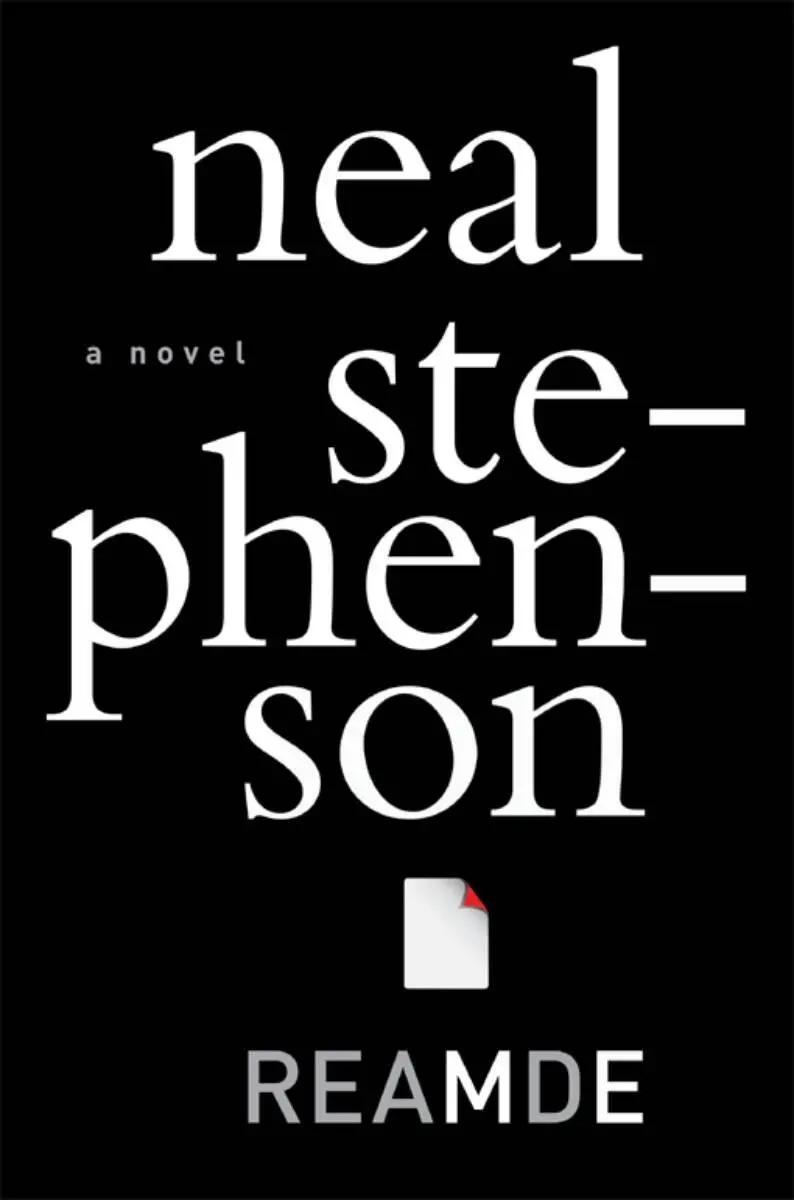
- Название:Reamde
- Автор:
- Издательство:William Morrow
- Жанр:
- Год:2011
- Город:New York
- ISBN:978-0-06-197796-1
- Рейтинг книги:4 / 5. Голосов: 1
-
Избранное:Добавить в избранное
- Отзывы:
-
Ваша оценка:
Reamde: краткое содержание, описание и аннотация
Предлагаем к чтению аннотацию, описание, краткое содержание или предисловие (зависит от того, что написал сам автор книги «Reamde»). Если вы не нашли необходимую информацию о книге — напишите в комментариях, мы постараемся отыскать её.
For Richard, the game was the perfect opportunity to launder his aging hundred dollar bills and begin his own high-tech start up—a venture that has morphed into a Fortune 500 computer gaming group, Corporation 9592, with its own super successful online role-playing game, T’Rain. But the line between fantasy and reality becomes dangerously blurred when a young gold farmer accidently triggers a virtual war for dominance—and Richard is caught at the center.
In this edgy, 21st century tale, Neal Stephenson, one of the most ambitious and prophetic writers of our time, returns to the terrain of his cyberpunk masterpieces
and
, leading readers through the looking glass and into the dark heart of imagination.
Reamde — читать онлайн бесплатно полную книгу (весь текст) целиком
Ниже представлен текст книги, разбитый по страницам. Система сохранения места последней прочитанной страницы, позволяет с удобством читать онлайн бесплатно книгу «Reamde», без необходимости каждый раз заново искать на чём Вы остановились. Поставьте закладку, и сможете в любой момент перейти на страницу, на которой закончили чтение.
Интервал:
Закладка:
She wasn’t sure whether that was a bad or a good thing. It might cause them to blurt out useful information they’d never divulge if her eyes were on their faces. On the other hand, maybe it was easier to command the execution of someone you couldn’t see.
Abdul-Wahaab, Jones’s right-hand man, was the last of the hikers to depart the camp. Before hoisting his pack onto his shoulders, he gathered the stay-behind group around him: Ershut, Jahandar, Zakir, and Sayed. They were all of about twenty feet from Zula, standing around the stove and drinking tea.
“I’ll speak Arabic,” said Abdul-Wahaab. Somewhat redundantly, since he was, in fact, speaking Arabic.
Trying not to make obvious nylon-swishing noises, Zula pulled the sleeping bag off her face and rolled toward them, straining to hear as much as she could. She had been in the company of men speaking Arabic for two solid weeks and was continually frustrated that she hadn’t learned more of it. And yet she had come a long way; her time in the refugee camp had planted some seeds that had been slow to sprout but that were now growing noticeably from day to day.
“I have spoken with our leader,” said Abdul-Wahaab. “He has learned some things about the way south from the guide.”
Zula’s mental translation just barely kept up. Fortunately Abdul-Wahaab was not a torrential speaker. He uttered short, pithy sentences and paused between them to sip tea. Zula’s understanding was largely based on picking out nouns: leader. The way to the south . And this word “dalil,” which she had heard frequently in the last few days and finally remembered meant “guide.”
“The path is difficult, but he knows of shortcuts and secret ways,” Abdul-Wahaab continued, actually using the English word “shortcuts.”
“He thinks two days for us to cross the border. After that, one more day before we could reach a place with Internet. Maybe two days.”
The others listened and waited for Abdul-Wahaab to give orders. After sipping more tea, he went on: “After four days, if you hear nothing, kill her and go where you will. But we will try to get a message to our brothers waiting in Elphinstone. They will then come here and find you. We will send GPS coordinates showing the way south. God willing, you can then join us for the martyrdom operation.”
“In that case, should we kill her?” Zakir asked.
“We will give instructions. She might be useful to us.” He sipped his tea. “The guide states that there will be no phone coverage, unless we climb to the top of a mountain and have good luck. If this happens, perhaps you will get a text with other instructions.”
Beyond that, the talk turned to what they would all do once they had crossed the border: the challenges they would face there and their eagerness to pursue various opportunities for mayhem. Abdul-Wahaab discouraged all such talk, though, insisting that they maintain their focus on getting through the next few days. He seemed to become aware that he was holding up the rest of the group, and drained his tea, and accepted Ershut’s help in hoisting his heavy pack onto his back. Then, after exchanging embraces with the four stay-behinds, he turned away and began tromping down toward the trail.
Zula decided that she would make her move after dark tonight.
WHEN SOKOLOV HAD been a little boy growing up in the Soviet Union, he had been exposed to more than a few magazine articles and television programs depicting the misery of life under capitalism. A reporter would travel to some squalid place in Appalachia or the South Bronx and take a few depressing photographs, then jot down, or make up, some equally depressing anecdotes and package it into a story intended to make it clear that people back in the USSR didn’t have it so bad. While no one was stupid enough to take such propaganda at face value, all but the most cynical persons assumed that there was some truth to them. Yes, the standard of living could be higher in the West. Everyone knew this. But it could be lower too.
Both ends of that spectrum were on display during Sokolov’s hour-long journey from Golden Gardens to the home of Igor. He waited for a bus near a marina crowded with yachts. The bus took him to a sleek modern downtown, where he did a bit of shopping and then boarded a light rail train headed in the direction of the airport. During that journey, the view out its windows became steadily more like a photo spread from a Soviet propaganda article. The railway line had been threaded through the poorest neighborhoods. The urban part was a complex and densely packed mixture of black people and pan-global immigration; it wasn’t pretty, but at least it was striving. Then there was a light-industrial buffer zone that separated it from a sort of white ghetto in the suburbs. The train ran high above this on towering reinforced-concrete pylons, and he looked almost straight down into the backyards of tiny, rotting bungalows strewn with detritus.
He climbed out at the last station before the airport and then walked for a mile and a half, wending his way into a neighborhood full of houses like that. He had not acquired a phone yet, but he had been able to purchase a street map at a bookstore downtown, and he had Igor’s address written down in a little book that had been with him through all his adventures.
Igor’s house stood at the end of a cul-de-sac, backed up against a freeway embankment held together by a felt of blackberries and ivy. This mat of vegetation had covered and killed several trees and was making a bid to take over a shed in the back. But the house that Igor shared with his friend Vlad was actually tidier than many on this street: the two vehicles parked in its driveway both appeared to be in working order, and neither of them had turned green with moss. They did not store junk on their front porch, and they had taken sensible precautions, covering the front windows with expanded steel mesh and beefing up the locks on the front door.
Igor’s fear caused Sokolov nothing more than mild irritation at first, since its sole effect was to slow everything down. But he could hardly blame the man for being cautious. Sokolov took his hands out of his pockets and held them out wide, palms up. “A couple of hours,” he insisted, “and then I will be gone. Forever.”
HIS CHOICE TO come to this place was debatable, to say the least. He had been thinking about it all through the sea voyage.
He had to go somewhere and do something . His only real means of making a living was doing what he did: security consultant. The fact that he was fluent only in Russian and that he carried a Russian passport placed certain limits on where he could ply that trade. He could make his way back to Russia and retreat into the woods and spend the rest of his life chopping wood and hunting deer, but he had grown rather accustomed to living in big cities and being paid a decent amount of money and, for lack of a better word, being respected for who he was and what he did. Most of his clients had been nothing like Ivanov, and, after this, he would never work for such a person again. But the regrettable incidents of the last few weeks would need to be explained to the owners of the obshchak from which Ivanov had stolen the money, and to the families of the men who had been slain by Abdallah Jones. And Sokolov was actually confident that it all could be explained. For the owners of the obshchak were, at bottom, reasonable people. Courtesy went a long way with them. In what had happened to Wallace and Ivanov, they would perceive a kind of poetry and a kind of justice. Ivanov had, in effect, obtained just the fate he had wanted, in that he had died while trying to get the money back. The story worked perfectly well as a cautionary tale: look what happens to those who steal money with which they have been entrusted. It would all work out just fine if Sokolov could merely relate the story to the people Ivanov had betrayed.
Читать дальшеИнтервал:
Закладка:
Похожие книги на «Reamde»
Представляем Вашему вниманию похожие книги на «Reamde» списком для выбора. Мы отобрали схожую по названию и смыслу литературу в надежде предоставить читателям больше вариантов отыскать новые, интересные, ещё непрочитанные произведения.





Обсуждение, отзывы о книге «Reamde» и просто собственные мнения читателей. Оставьте ваши комментарии, напишите, что Вы думаете о произведении, его смысле или главных героях. Укажите что конкретно понравилось, а что нет, и почему Вы так считаете.