Neal Stephenson - Reamde
Здесь есть возможность читать онлайн «Neal Stephenson - Reamde» весь текст электронной книги совершенно бесплатно (целиком полную версию без сокращений). В некоторых случаях можно слушать аудио, скачать через торрент в формате fb2 и присутствует краткое содержание. Город: New York, Год выпуска: 2011, ISBN: 2011, Издательство: William Morrow, Жанр: Фантастика и фэнтези, thriller_techno, на английском языке. Описание произведения, (предисловие) а так же отзывы посетителей доступны на портале библиотеки ЛибКат.
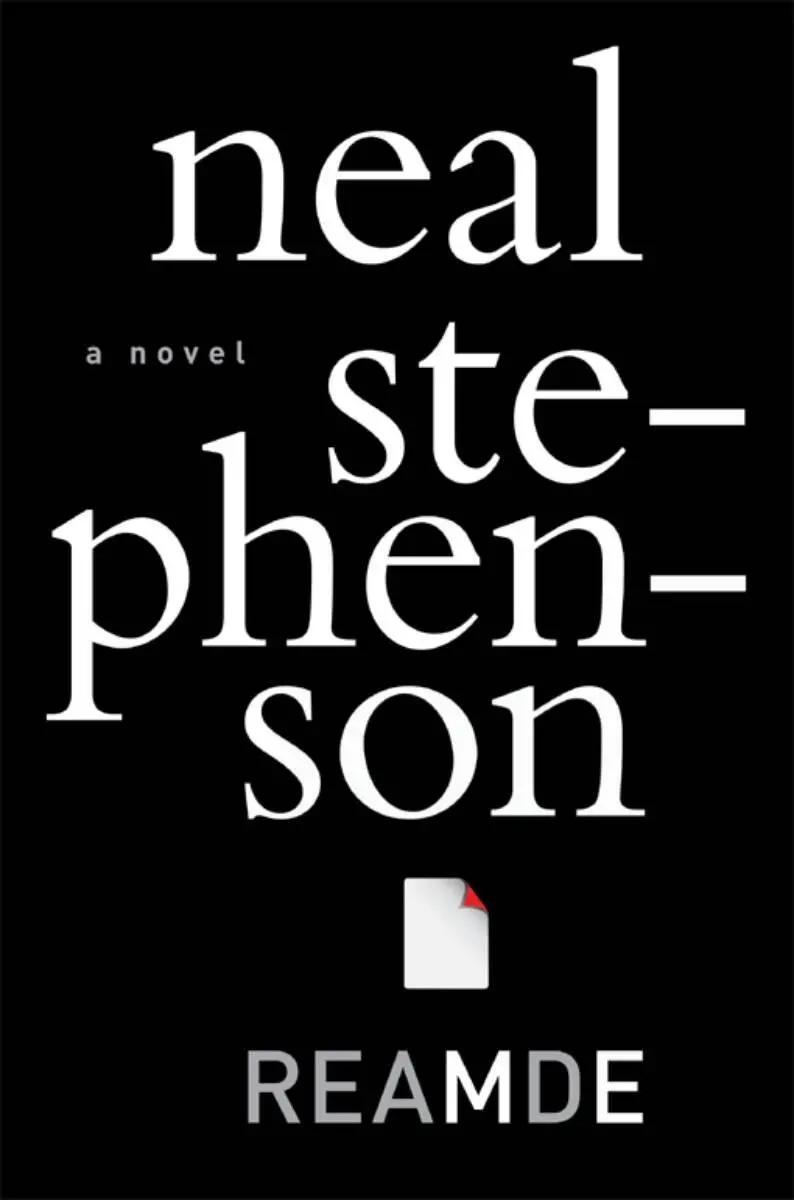
- Название:Reamde
- Автор:
- Издательство:William Morrow
- Жанр:
- Год:2011
- Город:New York
- ISBN:978-0-06-197796-1
- Рейтинг книги:4 / 5. Голосов: 1
-
Избранное:Добавить в избранное
- Отзывы:
-
Ваша оценка:
Reamde: краткое содержание, описание и аннотация
Предлагаем к чтению аннотацию, описание, краткое содержание или предисловие (зависит от того, что написал сам автор книги «Reamde»). Если вы не нашли необходимую информацию о книге — напишите в комментариях, мы постараемся отыскать её.
For Richard, the game was the perfect opportunity to launder his aging hundred dollar bills and begin his own high-tech start up—a venture that has morphed into a Fortune 500 computer gaming group, Corporation 9592, with its own super successful online role-playing game, T’Rain. But the line between fantasy and reality becomes dangerously blurred when a young gold farmer accidently triggers a virtual war for dominance—and Richard is caught at the center.
In this edgy, 21st century tale, Neal Stephenson, one of the most ambitious and prophetic writers of our time, returns to the terrain of his cyberpunk masterpieces
and
, leading readers through the looking glass and into the dark heart of imagination.
Reamde — читать онлайн бесплатно полную книгу (весь текст) целиком
Ниже представлен текст книги, разбитый по страницам. Система сохранения места последней прочитанной страницы, позволяет с удобством читать онлайн бесплатно книгу «Reamde», без необходимости каждый раз заново искать на чём Вы остановились. Поставьте закладку, и сможете в любой момент перейти на страницу, на которой закончили чтение.
Интервал:
Закладка:
“So someone probably used the window to get inside and get a door open, then carried the plasma cutter up the stairs.”
“Yeah,” said the welder, “but I don’t think your average burglar carries one around on his person.”
“Agreed,” Richard said.
The welder looked over his shoulder, a little uneasily, at Peter’s apartment. “Seen anything else… funky?”
“No,” Richard said, “nothing funky.”
“Fuckin’ weird, man,” said the welder, and left.
Richard found his way to the front door, which had a deadbolt, a chain, and a pushbutton lock in the middle of the doorknob. The latter was locked, but the other two weren’t. After breaking in via the window, the burglar must have unlocked this door from the inside and used it to bring the plasma cutter in and out, and used the button to secure it behind him when he’d left.
So, to all appearances, the plasma-cutter gun-safe caper had happened when the place was already vacant.
But how did its being vacant square with the presence of three cars in the bay? And why would the sports car’s owner leave his key chain in the ignition? Generally, people needed their key chains for other purposes, such as getting into their houses.
Turning around, he noticed a red LED gleaming at him from the top of a shelving unit where Peter was in the habit of storing his raincoats, hats, and boots. He walked closer and found a little webcam, mounted there with a web of white nylon zip ties. An Ethernet wire trailed away from it and disappeared into a hole in the wall. Richard traced it back into the shop area where the cars were parked, and found a place, not far from the plywood panel with the telecommunications gear, where a computer must have sat at one time. It had been on the bottom shelf of a workbench. Above it were a monitor, keyboard, and mouse, but their cables dangled into the space below. A power cable and an Ethernet wire were there too.
Richard assumed that the computer must have been taken, until a minute later when he literally tripped over it while circling the sports car. The CPU—a simple rectangular box—had been thrown down on the concrete floor and attacked with the plasma cutter: a single pass cutting down the side of it, slicing through the stack of drives.
Richard cursed. He’d imagined he was on to something. Peter had set up security cameras around his place. Perhaps one of them had captured some footage of interest. But the intruder had anticipated this and made sure that the hard drive was destroyed.
He orbited all the cars, peering in through their windows, not wanting to disturb the evidence any more than he already had. Peter’s had not been fully unpacked; whatever had happened must have happened shortly after they’d gotten back to the place on Monday night.
He was jotting down the license plate number of the car from B.C. when his ears picked up a familiar clicking and whooshing noise: the sound of a hard drive coming awake and going to work.
Following the sound, and assisted by some conveniently placed Ethernet cables, he got underneath the flight of wooden stairs that led to Peter’s loft, and found a little box, mounted to an improvised shelf and plugged into an outlet through a string of extension cords. It was a Wi-Fi access point. A little bigger than most nowadays.
It was bigger, he realized, because it wasn’t just a Wi-Fi router. It was also a backup device. It had its own built-in hard drive.
NONE OF THE jihadists was in a great hurry to explain anything to Zula, but she pieced the following data together from looking out the windows and from half-understood Arabic.
They had been saved by the light of dawn, which had shown them a place to touch down: a landing strip that, however, was evidently too short for this kind of plane. It dead-ended in woods. Which seemed an awkward way to lay out a landing strip. But as Zula began to understand, the people who had put it there hadn’t been afforded a lot of choice. This was some sort of valley in high mountains. It was spacious enough, wandering across several square miles of high cold territory, but its shape was convoluted, and its bottom was hacked up by gullies and ridged with outcroppings of hard rock, leaving few alternatives as to where a landing strip might be constructed. And culture shock might have been a factor; maybe Pavel and Sergei, accustomed to big international airports and Hyatts, had not made allowances for north woods bush-pilot dash, and had imputed prudence, or at least sanity, to the architects of this strip.
Or maybe they had just been desperate and unable to make any other choice; or maybe they’d had guns to their heads.
The landing strip was part of an industrial complex that, from Zula’s point of view, wandered and sprawled aimlessly into parts of the valley that were hidden behind trees. Encouragingly, this included a small compound of buildings only a hundred meters or so from the landing strip. These all looked the same, and it was obvious enough that they were prefabricated structures that had been brought in on trucks and bolted together. Some of them looked like storage units, but one had a rust-fuzzed chimney protruding from the three feet of snow that covered its roof. Its south-facing wall was fortified by at least two cords of stacked wood. Zula watched through a window as one of the soldiers slogged over to it, moving at a pace of perhaps ten feet per minute as his legs broke through hip-deep snow on every step. When he finally reached the front door he destroyed its lock with a burst of submachine gun fire and staggered inside. A few minutes later, smoke began to emerge from the chimney.
THE DISCOVERY OF the hard-drive-equipped Wi-Fi unit under Peter’s stairs placed Richard at a distinct fork in the road. He reckoned that this property housed so much evidence of wrongdoing that the police would have to send someone around to investigate. The physical link between this crime scene and Zula—her car was parked right in the middle of it —might pump a bit of energy into the investigation of her disappearance. But Richard had already gone the cop route and found it not nearly as productive as driving around with a sledgehammer and retaining the services of men with oxyacetylene torches.
And yet on the other hand, if the cops did finally get serious about this, they could do things he couldn’t, such as get access to phone and motor vehicle records.
So he adopted a hedging strategy. He unplugged the Wi-Fi hub and threw it in his car and drove it to the Seattle offices of Corporation 9592. There was an information technology department there, which had a little lab where they assembled and repaired computers. No one was there; it was Sunday. In a manner that would spark outrage tomorrow morning, when his depredations were noticed by technicians coming in for work, Richard opened up toolboxes and pulled computers from inventory and generally made a mess of things on someone’s workbench. He opened up the Wi-Fi hub and removed the drive. Following instructions drawn from all over the Internet, including even a YouTube video, he connected this to a computer and made a copy of all the files on the drive. He then drove the reassembled Wi-Fi device back to Peter’s building, where he plugged it in just as it had been before.
Then he called the cops.
As much as he wanted to hang around and watch them investigate the crime scene, he knew that the first thing they’d do would be to eject him from the premises and surround it with yellow tape. So he hung around only long enough to tell a drastically truncated version of the day’s story to the first cop who arrived on the scene. He admitted to cutting off the padlock and then walking around the apartment for a while, but he said nothing about his other activities.
Читать дальшеИнтервал:
Закладка:
Похожие книги на «Reamde»
Представляем Вашему вниманию похожие книги на «Reamde» списком для выбора. Мы отобрали схожую по названию и смыслу литературу в надежде предоставить читателям больше вариантов отыскать новые, интересные, ещё непрочитанные произведения.





Обсуждение, отзывы о книге «Reamde» и просто собственные мнения читателей. Оставьте ваши комментарии, напишите, что Вы думаете о произведении, его смысле или главных героях. Укажите что конкретно понравилось, а что нет, и почему Вы так считаете.