Neal Stephenson - Reamde
Здесь есть возможность читать онлайн «Neal Stephenson - Reamde» весь текст электронной книги совершенно бесплатно (целиком полную версию без сокращений). В некоторых случаях можно слушать аудио, скачать через торрент в формате fb2 и присутствует краткое содержание. Город: New York, Год выпуска: 2011, ISBN: 2011, Издательство: William Morrow, Жанр: Фантастика и фэнтези, thriller_techno, на английском языке. Описание произведения, (предисловие) а так же отзывы посетителей доступны на портале библиотеки ЛибКат.
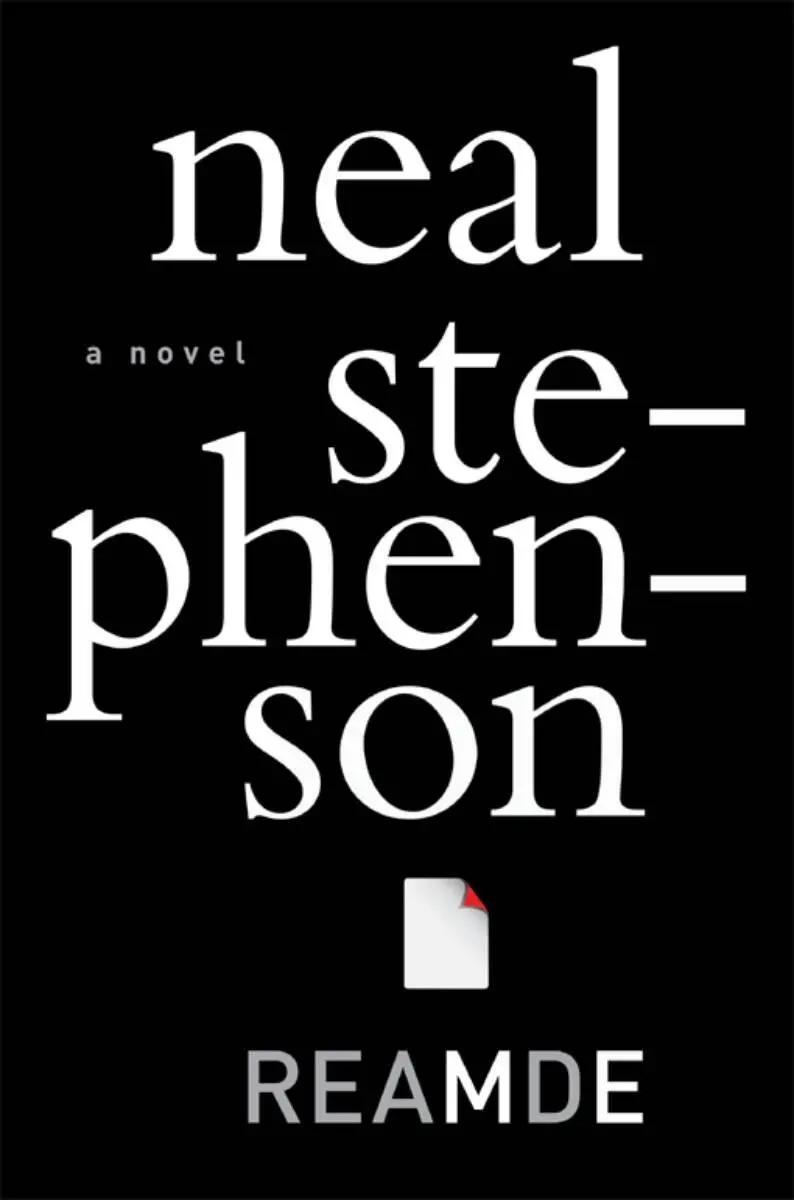
- Название:Reamde
- Автор:
- Издательство:William Morrow
- Жанр:
- Год:2011
- Город:New York
- ISBN:978-0-06-197796-1
- Рейтинг книги:4 / 5. Голосов: 1
-
Избранное:Добавить в избранное
- Отзывы:
-
Ваша оценка:
Reamde: краткое содержание, описание и аннотация
Предлагаем к чтению аннотацию, описание, краткое содержание или предисловие (зависит от того, что написал сам автор книги «Reamde»). Если вы не нашли необходимую информацию о книге — напишите в комментариях, мы постараемся отыскать её.
For Richard, the game was the perfect opportunity to launder his aging hundred dollar bills and begin his own high-tech start up—a venture that has morphed into a Fortune 500 computer gaming group, Corporation 9592, with its own super successful online role-playing game, T’Rain. But the line between fantasy and reality becomes dangerously blurred when a young gold farmer accidently triggers a virtual war for dominance—and Richard is caught at the center.
In this edgy, 21st century tale, Neal Stephenson, one of the most ambitious and prophetic writers of our time, returns to the terrain of his cyberpunk masterpieces
and
, leading readers through the looking glass and into the dark heart of imagination.
Reamde — читать онлайн бесплатно полную книгу (весь текст) целиком
Ниже представлен текст книги, разбитый по страницам. Система сохранения места последней прочитанной страницы, позволяет с удобством читать онлайн бесплатно книгу «Reamde», без необходимости каждый раз заново искать на чём Вы остановились. Поставьте закладку, и сможете в любой момент перейти на страницу, на которой закончили чтение.
Интервал:
Закладка:
Csongor flicked off the pistol’s safety and cocked the hammer. He aimed it at Mohammed, but his view along the sights was blocked abruptly by Yuxia, who threw herself across the bridge and made a grab at the microphone. There was a few moments’ wrestling match. Mohammed shoved her away, but she dragged him back with her. This happened to give Csongor a clear shot at the radio. One bullet through that box would put an end to the pilot’s broadcasting ambitions. Csongor drew a bead on it.
Mohammed reached up and grabbed a flashlight bracketed above the bridge windows and clocked Yuxia in the head with it and she fell backward to the deck, clutching her face and crying out, more in anger than pain. He raised the mike to his mouth again. Csongor squeezed the trigger and went deaf. The pistol snapped his hands back. A hole appeared in the window above the radio, and cracks networked across the glass. Csongor fired a second time and made another hole in the glass, a few centimeters from the first. He lowered his aim just a hair and pulled the trigger three times in succession.
Mohammed had frozen for a moment after the first bullet had been fired. Then, looking across the bridge to see Csongor aiming in roughly his direction, he assumed that Csongor was aiming at him and decided to get out of there. His way out happened to take him directly in front of the radio and so at least one of Csongor’s three-round fusillade struck him in the thorax. He went down immediately.
MARLON RAN HALFWAY up the steps and then paused, wondering if he was about to get his head blown off. But then he heard Csongor’s voice, and then Yuxia’s, and so he climbed up the rest of the way and entered the bridge.
Csongor was lying on the deck, twisted around in an awkward position. Yuxia was sitting in one corner, holding one hand over a bloody laceration on the side of her head and weeping. Mohammed was lying on the deck surrounded by a lot of blood, still gripping a radio microphone. Its cable, now stretched nearly straight, ran almost vertically up from the microphone to a small box mounted to the top of the ship’s control panel. The box had been perforated by a bullet, and the window above it sported two more bullet holes and a fan of cracks.
The mike slipped out of Mohammed’s relaxing hand and jumped up and bobbed on the end of its cord like a yo-yo.
Csongor did something with the pistol to make it safe, then drew himself back toward a crude bench at the back of the bridge. Something was amiss with his ankles. Stepping over to get a better look, Marlon saw that both had been lashed to the bench’s supporting angle irons by several turns of electrical wire. A reel and a pair of wire cutters rested on the deck nearby.
Marlon fetched the wire cutters and tossed them to Csongor, who went to work snipping himself loose. “I went to sleep,” Csongor said. “He wanted to use the radio—to call his friends, I suppose. But he must have been afraid that I would wake up from the sound of his voice. He couldn’t attack me because he didn’t have any weapons. So he did this. He knew that he would have time to send out a distress call before I could get loose and come stop him. But Yuxia showed up.”
“Did she show up in time?” Marlon asked.
“I don’t know,” Csongor said, “but I think she did.”
Marlon, stepping over a broad ribbon of blood that had found a path across the deck, went to Yuxia. A flashlight was rolling around on the floor with blood on it. Controlling a strong feeling of disgust, Marlon picked this up and turned it on. Yuxia was fully conscious but very upset. “Let me see it,” Marlon said. “Let me see it.”
“It’s fine,” she said. “It’s nothing.”
“Let me have a look.”
“It’s fine.”
“I want to see.”
He finally understood that she did not care about the wound on her head and just wanted some comfort. He did not feel it was appropriate, just yet, to put his arms around her, or anything like that, and so he reached down with his free hand and rested it on top of her shoulder and gave it a squeeze. “I’ll get some ice from Batu,” he said.
“Thank you,” she said in a tiny voice, like a child. Not like her.
Marlon got up and passed out through the hatch to the gangway just in time to hear a loud scraping and bumping noise from above. Batu was not down in the galley, where Marlon had left him; he was up on the roof of the bridge. Thumping footsteps suggested he had now gone into rapid motion.
A large white fiberglass capsule rolled and banged down from above, nearly catching Marlon in the head. It splashed down into the sea alongside the ship.
Batu was above him, perched like a cat on the railing. A faded orange life preserver was slung over one shoulder. “There’s more water down in the hold,” he said, “in plastic drums. Use it sparingly. You don’t know how long you’ll be drifting.” And then he sprang from the railing and plummeted about five meters into the water.
The white capsule was bobbing in the ship’s wake now. It had fallen open, and something big and orange was blooming on the water: the life raft, inflating automatically. Batu, belly down on his life preserver, was dog-paddling toward it.
Marlon went back into the bridge and stepped gingerly across a remarkably wide pool of blood to the control panel, where he pulled back on the lever that controlled engine speed. Then he swung the wheel around so that the vessel was pointed due east, toward Taiwan.
“Why did you slow us down?” Yuxia asked.
“To conserve fuel,” Marlon said.
“You think we’re going to run out?” Csongor asked.
“Batu does.”
FINE, SEE YOU AT ELEVEN.
This was the text message that Olivia found on the phone when she turned it on while peeing in a thicket at 6:49 the next morning. It was a response to last night’s HAVE GONE TO HAICANG TO CHECK IN ON GRANDMOTHER.
Actually the whole island was a thicket; she had found an especially dense part of it for this purpose and checked for snakes and bugs before dropping into a squat.
She and whoever was at the other end of this connection—presumably a handler in London, routed through an untraceable connection to the instant messaging network—were using a completely open and public channel to pass messages in the clear. They had to be coy. HAVE GONE TO HAICANG TO CHECK IN ON GRANDMOTHER was written in a prearranged code, using characters calculated not to arouse the interest of the PSB. She spent a minute or two squatting there and puzzling over SEE YOU AT ELEVEN before realizing that it probably meant exactly what it said. Kinmen was connected to Taiwan by a long-range ferry, used mostly by mainland Chinese tourists, and by regular air service. The ferry wasn’t much use in these circumstances, but it would be easy for the British embassy in Taipei to send someone out on a commercial flight to meet with her at the airport.
This was a virgin phone with no traceable connections to Olivia or anyone else, and she was on Taiwanese soil anyway, and so she felt no hesitation about using its Internet connection to surf for airline schedules. It seemed that a flight from Taipei was coming in to the local terminal at 10:45.
She returned to the bunker to find it empty. But after a bit of looking around, she found Sokolov standing near the edge of the minefield, gazing up the length of the beach. Back toward Xiamen. He checked his watch, then turned to look at her.
She reached out with one hand and found his. He did not snatch it out of her grasp, and so she pulled on it and began walking.
She led him back to the bunker. Still not looking at him, she got up on tiptoe and steadied herself with an elbow crooked around the back of his neck and carefully touched her lips to his. Her heart beating hard, more from fear than from passion, since she was afraid that he would turn away, reject her. That his not taking advantage of her last night was simple lack of interest. But his hand came around against the small of her back, and it became clear that he had only been waiting for her permission.
Читать дальшеИнтервал:
Закладка:
Похожие книги на «Reamde»
Представляем Вашему вниманию похожие книги на «Reamde» списком для выбора. Мы отобрали схожую по названию и смыслу литературу в надежде предоставить читателям больше вариантов отыскать новые, интересные, ещё непрочитанные произведения.






Обсуждение, отзывы о книге «Reamde» и просто собственные мнения читателей. Оставьте ваши комментарии, напишите, что Вы думаете о произведении, его смысле или главных героях. Укажите что конкретно понравилось, а что нет, и почему Вы так считаете.