Neal Stephenson - Reamde
Здесь есть возможность читать онлайн «Neal Stephenson - Reamde» весь текст электронной книги совершенно бесплатно (целиком полную версию без сокращений). В некоторых случаях можно слушать аудио, скачать через торрент в формате fb2 и присутствует краткое содержание. Город: New York, Год выпуска: 2011, ISBN: 2011, Издательство: William Morrow, Жанр: Фантастика и фэнтези, thriller_techno, на английском языке. Описание произведения, (предисловие) а так же отзывы посетителей доступны на портале библиотеки ЛибКат.
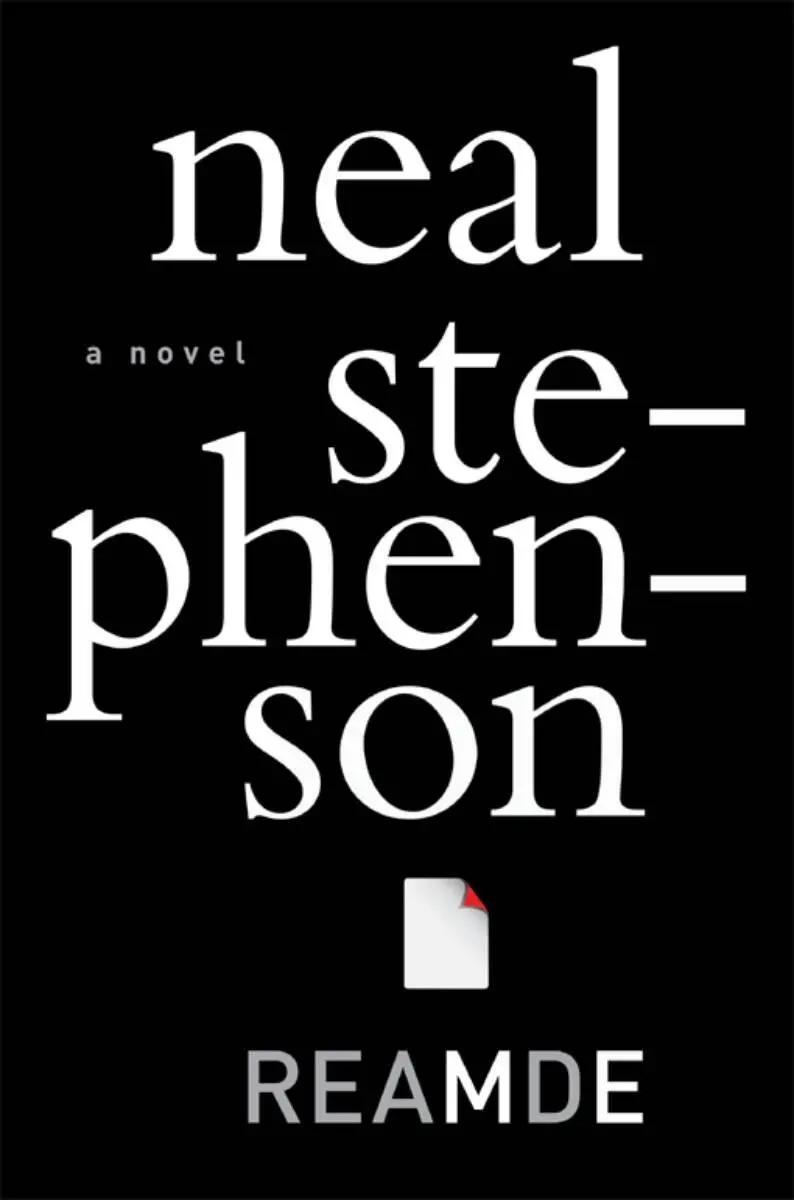
- Название:Reamde
- Автор:
- Издательство:William Morrow
- Жанр:
- Год:2011
- Город:New York
- ISBN:978-0-06-197796-1
- Рейтинг книги:4 / 5. Голосов: 1
-
Избранное:Добавить в избранное
- Отзывы:
-
Ваша оценка:
Reamde: краткое содержание, описание и аннотация
Предлагаем к чтению аннотацию, описание, краткое содержание или предисловие (зависит от того, что написал сам автор книги «Reamde»). Если вы не нашли необходимую информацию о книге — напишите в комментариях, мы постараемся отыскать её.
For Richard, the game was the perfect opportunity to launder his aging hundred dollar bills and begin his own high-tech start up—a venture that has morphed into a Fortune 500 computer gaming group, Corporation 9592, with its own super successful online role-playing game, T’Rain. But the line between fantasy and reality becomes dangerously blurred when a young gold farmer accidently triggers a virtual war for dominance—and Richard is caught at the center.
In this edgy, 21st century tale, Neal Stephenson, one of the most ambitious and prophetic writers of our time, returns to the terrain of his cyberpunk masterpieces
and
, leading readers through the looking glass and into the dark heart of imagination.
Reamde — читать онлайн бесплатно полную книгу (весь текст) целиком
Ниже представлен текст книги, разбитый по страницам. Система сохранения места последней прочитанной страницы, позволяет с удобством читать онлайн бесплатно книгу «Reamde», без необходимости каждый раз заново искать на чём Вы остановились. Поставьте закладку, и сможете в любой момент перейти на страницу, на которой закончили чтение.
Интервал:
Закладка:
This was all very diverting, but he needed to have a plan for what to do when the carter finally got him to the hotel. For by now they had made it to the big boulevard that ran along the waterfront, and from here progress would be quicker. Sokolov flipped open his mobile and refreshed his memory of the place by flipping through the snapshots he had taken a couple of days ago. There was not much here to help him: it was the front entrance of a big Western-style luxury business hotel, and as such it was indistinguishable from the same sort of place as might be seen in Moscow, Sydney, or L.A.
He kept flipping back and forth through the same half-dozen photos, looking for anything that might be of use. Most of the people around the entrance were, of course, bellhops and taxi drivers. Guests went in and out. Some were dressed in business suits, others in casual tourist attire. He did not see any commandos in tracksuits.
Still, something about tracksuit nagged at him. He flipped through the series a few more times until he found it: a man entering the hotel. He appeared in two successive pictures. In the first his naked leg and bare arm were just swinging into the frame. In the second, he was nodding to a smiling bellhop who had pulled the door open for him. The man was probably in his early forties, tall, slender, blond hair with bald patch, wearing a skimpy pair of loose shorts and a haggard tank-top shirt emblazoned with the logo of a triathlon. Track shoes completed the ensemble. Strapped around his waist was a fanny pack, with a water bottle holstered in a black mesh pocket.
Sokolov was carrying three knives, one of which sported a back-curving hook at the top of the blade, made for slicing quickly through fabric. Working in small, fidgety movements, he got it caught in the fabric of the tracksuit at about midthigh and then made a circumferential cut, slashing off most of one trouser leg. He repeated the same procedure on the other side. Now he was wearing what he hoped would pass for a pair of athletic shorts. With painstaking care he divested himself of his windbreaker, his gear harness, and his gun belt, leaving his upper body clad only in a T-shirt.
He sucked the CamelBak as dry as he could make it. This was a ballistic nylon sack about the size of a loaf of bread, with a circular filling port at its top. The port was large—about the size of the palm of his hand—which made it easier to fill the thing up. He threw in the woman’s mobile, her ID card and most of the contents of her wallet—everything that might be used to identify her. This amounted to a few credit cards and slips of paper and didn’t take up much room. He added his little notebook and a couple of his knives. He removed the slide from the Makarov pistol and then threw all the gun’s parts in, as well as two spare clips that he had been carrying on his belt. He crammed the remaining volume with currency, partly because he might need it and partly to make it bulge as though it were full of water. Then he closed the CamelBak’s port again.
Neatly folded in a pocket of his vest he kept a towel—actually half of a diaper, sufficiently threadbare that it could be compressed into a little packet. This was another thing that he had learned never to be without. He extracted this from its compartment and stuffed it into his waistband.
All his other stuff he crammed into the garbage bag. He was moving a little less stealthily now because the carter had made his way out onto a street that was not so crowded. Sokolov had saved out one zip tie, which he used to knot the bag shut.
He risked a peek out from under the tarp and saw the tower of the hotel a couple of hundred meters ahead.
Even if his jogger disguise were perfect, it wouldn’t do for him to jump out from under a tarp on a cart in plain view of the bellhops, or of anyone for that matter. And he still had to get rid of the garbage bag. He flipped his mobile open again and reviewed his snapshots one more time. The other day, after looking at this hotel, they had crossed the street to the waterfront and done some reconnoitering there. Though much of it was built-up and crowded ferry terminals, some of it, farther to the north, was a slum of seedy docks and rubbishy stretches of disused shoreline. He found a snapshot of that general part of the waterfront, then got the carter’s attention by hissing at him.
They were now peering at each other through a little gap under the edge of the tarp. Sokolov made a finger-crooking motion. The carter reached his hand under the tarp. Sokolov handed him the phone. The carter pulled it out and looked at it for a few moments, then nodded and thrust it back underneath. Sokolov took it and shoved it into a small external pocket on the CamelBak.
He had worked out a way that he could look out from under the edge of the tarp and thus keep an eye on where they going. From the heavy traffic of the boulevard they moved off onto a smaller and quieter frontage road that ran between it and the shore and got to a place where there was surprisingly little traffic. He could hear water lapping and smell the unmistakable stink of waterfront. He risked pulling the edge of the tarp back, but the carter, without looking back, shook his head and spoke some kind of warning that made Sokolov freeze. A few seconds later, a bicyclist whizzed past them from behind.
But a minute later the carter diverted onto a ramp that ran down onto a rickety pier, brought the cart to a stop, and lit a cigarette. After puffing on it for a minute or so, he suddenly peeled the tarp back and muttered something.
Sokolov rolled out onto his feet, pulling the garbage bag behind him. He executed a 360-degree pirouette, scanning in all directions for witnesses. Seeing none, he completed another spin, moving faster, and let go of the garbage bag. It flew about four meters and sank in water that probably would not have come up to the middle of his thigh, had he been so unwise as to wade into it. But that was enough to conceal the bag perfectly, since this water was not easy to see through, and the bag was black.
Turning his back on the splash, Sokolov noted that the carter had already discovered his tip waiting for him in the bottom of the cart: another brick of magenta bills. This disappeared instantly into the man’s trousers. He was saying something to Sokolov. Thanking him, probably. Sokolov ignored him and broke into an easy jog. In less than a minute he was out on the waterfront, headed for the hotel tower, loping from one patch of shade to the next, and trying not to listen to the screaming alarm bells that were going off in his mind. For he had spent the entire day hoping that no one would see him. And now he was being watched, pointed out, remarked on, gawked at by a thousand people. But they were not—he kept reminding himself—doing it because they knew who or what he was. They were doing it in the same way they’d stare at any Western jogger crazy enough to go out in the midday sun.
OLIVIA MADE IT all the way down to street level before she fully took in the fact that she was barefoot. She had been blown out of her shoes. They were up in the office with the Russian dog-of-war.
In a hypothetical footrace between Olivia barefoot and Olivia in high-heeled career-girl shoes, over uneven, rubble-strewn ground, it was not clear which Olivia would stand the best chance of winning. It probably depended on how long it took barefoot Olivia to step on a shard of glass and slice her foot open. Not very long, unless she was careful.
The building had an old front that faced toward the building that had just blown up, and, on the opposite side, a new front, still under construction, facing toward a commercial district in the making. Access to the latter was complicated by its being an active construction zone, but she knew how to get there, because the people who had trained her in London had drilled it into her that she must always know every possible way of getting out of a building. So instead of taking the obvious exit through the front, which she envisioned as an ankle-deep surf zone of broken glass, she doubled back and followed the escape route she had already scouted through the construction zone. This changed from day to day as temporary barriers were erected and removed between the various shops and offices that the workers were creating. Today, though, they had left all the doors open as they had fled the building, so all that Olivia really needed to do was pursue daylight while scanning the floor ahead of her for dropped nails.
Читать дальшеИнтервал:
Закладка:
Похожие книги на «Reamde»
Представляем Вашему вниманию похожие книги на «Reamde» списком для выбора. Мы отобрали схожую по названию и смыслу литературу в надежде предоставить читателям больше вариантов отыскать новые, интересные, ещё непрочитанные произведения.





Обсуждение, отзывы о книге «Reamde» и просто собственные мнения читателей. Оставьте ваши комментарии, напишите, что Вы думаете о произведении, его смысле или главных героях. Укажите что конкретно понравилось, а что нет, и почему Вы так считаете.