John Schettler - Kirov
Здесь есть возможность читать онлайн «John Schettler - Kirov» весь текст электронной книги совершенно бесплатно (целиком полную версию без сокращений). В некоторых случаях можно слушать аудио, скачать через торрент в формате fb2 и присутствует краткое содержание. Жанр: Фантастика и фэнтези, Альтернативная история, на английском языке. Описание произведения, (предисловие) а так же отзывы посетителей доступны на портале библиотеки ЛибКат.
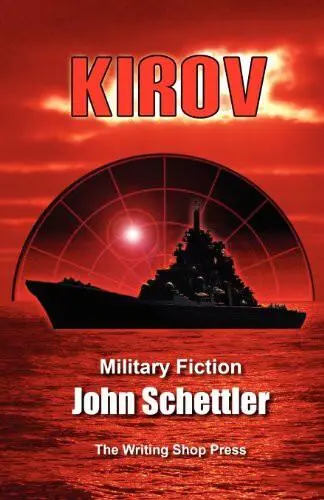
- Название:Kirov
- Автор:
- Жанр:
- Год:неизвестен
- ISBN:нет данных
- Рейтинг книги:5 / 5. Голосов: 1
-
Избранное:Добавить в избранное
- Отзывы:
-
Ваша оценка:
Kirov: краткое содержание, описание и аннотация
Предлагаем к чтению аннотацию, описание, краткое содержание или предисловие (зависит от того, что написал сам автор книги «Kirov»). Если вы не нашли необходимую информацию о книге — напишите в комментариях, мы постараемся отыскать её.
Kirov — читать онлайн бесплатно полную книгу (весь текст) целиком
Ниже представлен текст книги, разбитый по страницам. Система сохранения места последней прочитанной страницы, позволяет с удобством читать онлайн бесплатно книгу «Kirov», без необходимости каждый раз заново искать на чём Вы остановились. Поставьте закладку, и сможете в любой момент перейти на страницу, на которой закончили чтение.
Интервал:
Закладка:
The radio soundings and pressure, temperature, and humidity checks made by the station offered a vital early appraisal of the weather, and figured heavily in some of the most momentous decisions of the war, particularly Eisenhower’s choice as to the timing of the D-Day invasion. By 1959 NATO set up a large 200 foot Loran-C antenna for Long Range Radio Navigation which eventually saw a few more buildings set up at facility called Olonkin. In modern times the meteorological station was a sturdy pre-fabricated all weather building with aluminum siding painted olive drab green, and a rust colored burgundy roof that blended in with the loamy russet soil there. Compared to earlier facilities, it would seem like a luxurious lodge. In WWII the station was built on the old burned out ruins of the 1921 facility, with a few salvageable beams of wood forming a lean-to against the biting arctic wind, and a trench dug into the stony cold ground there. Yet by 2021 it was a comfortable, modern facility, with a sitting room mounting the hide of a great polar bear on its wall, a library, full kitchen, and offices equipped with computers and satellite phones.
Fedorov planned to head for this location first. If the building was not there it would tell him everything he needed to know. He was seated up front, sandwiched between the pilot and Orlov, and feeling a bit uncomfortable next to the sour faced Chief. Orlov was a temperamental man. One moment he could chat with you as if you were an old friend, and the next minute he would berate you for the slightest lapse of duty. It was clear that he was not happy to be put into a support role on this mission.
“What were you doing in the sick bay, Fedorov? The Admiral seems overly fond of you all of a sudden.”
Fedorov noted the implication, but dared say nothing in return. He sat silently, uncomfortably, and pretended to be scanning ahead for the island. A squad of six Marines were seated on the two back benches, led by the ruthlessly efficient Sergeant Kandemir Troyak, the stony, iron man of the ship’s twenty man marine detachment. Fedorov was not a fighting man. His skill as a navigator and pathfinder were well proven, but he felt ill at ease with the gruff and dour faced marines.
It was not long before they spotted the high icy cone of the volcano ahead, and Orlov needled Fedorov as they approached the bleak island. “What have you been digging up this time, Fedorov? Got on the Admiral’s good side, did you? Are you thinking to get your hands on some vodka or perhaps a box of those wonderful Cuban cigars?”
The Admiral’s generosity was well known with those that had gained his favor, but Fedorov merely smiled. Volsky had pulled him aside and told him to say nothing of their discussion with the doctor, and keep his wits about him at all times, particularly with Orlov and Troyak aboard.
“Make for the panhandle, that narrow low-lying neck there,” Fedorov pointed as they drew closer. “I want to over-fly the Meteorological station first.”
The helo banked and edged around the flank of the stark icy massif of the volcano, buffeted by the winds that would swirl about its frozen summit. White clouds streamed over the top of the ragged highlands, deeply cratered with the old cinder cones that had once been volcanic hot spots. Fedorov had good sea legs, but he hated flying, particularly in these grim arctic conditions where any mishap over the ocean would likely mean a freezing death within minutes. As the chopper swept in, descending, they saw a drab, empty lowland connecting the more rocky handle of the island in a narrow neck that seemed to be swamped by seawater, but the lagoon was actually ice water from the summer runoff.
“Cameras on, please,” said Fedorov as he held a pair of high power field glasses to his eyes. This time they would not broadcast a signal back to Kirov, to preclude the possibility that it might be intercepted and spoofed. They were recording direct to disk. Their first observation of the unknown surface action group to their south had been at extreme long range, a live video feed, and the men aboard never got close enough to verify the footage filmed with their own eyes. This time it would be different.
Fedorov could see the black volcanic soil resolve to rusty brown and dreary green as the lowland slowly gained elevation further south. He had visited this station several times in the past, once with Rodenko, who helped with the compilation of the ship’s weather report. The new Met station was painted out in exactly these colors, so it would be difficult to spot from a distance. The station at Olonkin should be much easier to pick out, he thought, as its buildings were all silver aluminum siding. Yet, as the helo descended, it was what he did not see that set his heart thumping with anticipation. There was no road running along the dark, muddied shore of the island, and no sign of any buildings at all. The long brown air strip at the edge of the low island neck was not there either.
“There,” said Fedorov over the whirl of the helo props. He pointed to an area just beyond the thick volcanic head of the island, right where it joined to the flat lowland handle. “That metal framework there. Can you get closer?”
The pilot descended, and they saw what looked like the old steel framework of a roof structure, its wood beams burned away and dark stains of smoke evident on the brighter metal. Then they saw a man emerge from behind a pile of black basalt and volcanic rocks with a husky dog restrained by a leather leash. He seemed to be staring up at them, his goggled eyes shielded by a thick gloved hand. Another man emerged with a rifle, and Orlov frowned.
“Can you set us down here?” said Fedorov.
“Why here?” asked Orlov. “Where is the weather station?”
“Admiral’s orders,” said Fedorov, playing the only trump card in his hand with the gruff Chief. His heart was racing, amazed at what he was sure he was discovering. There would be no further argument after this, he thought. Even Karpov would be convinced.
“The place looks like a war zone,” said Orlov. He pointed to obvious signs in near the area that looked like freshly cratered soil.
“Very well,” said Orlov. “Secure this area after landing, Sergeant Troyak. And disarm that man!”
The helo set down on a flat muddy area and the cold arctic air swept in when the marines slid back the rear doors and leapt out in their white parkas and thick caps with heavy ear muffs. They carried a carbine variant of the AK-74M airborne compact assault rifle, fully automatic, with 60 round casket magazines. The troops fanned out, with two men dropping low to take up overwatch firing positions, their weapons aimed at the Norwegians, who gaped in awe at the scene, their eyes still mostly on the amazing sight of the helicopter with its twin overhead counter-rotating props.
To them it looked like some huge insect, a dark wasp buzzing fitfully in the cold air. The strange overhead rotors swirled, kicking up flecks of snow and frosting them with the icy wash of their rotation. Yet there was no mistaking the gleaming metal of a long cannon protruding from the nose of the craft. They stared, utterly amazed at what they were seeing. Only the dog continued barking, prompting Orlov to lunge at the animal, which only made the situation worse.
The single armed Norwegian noted the odds and quickly lowered his rifle. The marines fanned out, surrounding the zone, and Sergeant Troyak shouldered his weapon, saluting the Norwegians briskly to offer the barest courtesy before stepping up and impudently searching the first man’s pockets. The husky snarled and growled, but Troyak ignored it completely, not intimidated in the slightest. Fedorov leapt out, intent on getting to the underground station to see if he could get some photos. He pulled out the digital camera the Admiral had handed him before he left the bridge, giving him a wink as he said “let’s see if NATO can spoof this!”
Читать дальшеИнтервал:
Закладка:
Похожие книги на «Kirov»
Представляем Вашему вниманию похожие книги на «Kirov» списком для выбора. Мы отобрали схожую по названию и смыслу литературу в надежде предоставить читателям больше вариантов отыскать новые, интересные, ещё непрочитанные произведения.


Обсуждение, отзывы о книге «Kirov» и просто собственные мнения читателей. Оставьте ваши комментарии, напишите, что Вы думаете о произведении, его смысле или главных героях. Укажите что конкретно понравилось, а что нет, и почему Вы так считаете.