Robin Wasserman - Shattered
Здесь есть возможность читать онлайн «Robin Wasserman - Shattered» весь текст электронной книги совершенно бесплатно (целиком полную версию без сокращений). В некоторых случаях можно слушать аудио, скачать через торрент в формате fb2 и присутствует краткое содержание. Город: New York, Год выпуска: 2011, ISBN: 2011, Издательство: Simon Pulse, Жанр: Фантастика и фэнтези, ya, на английском языке. Описание произведения, (предисловие) а так же отзывы посетителей доступны на портале библиотеки ЛибКат.
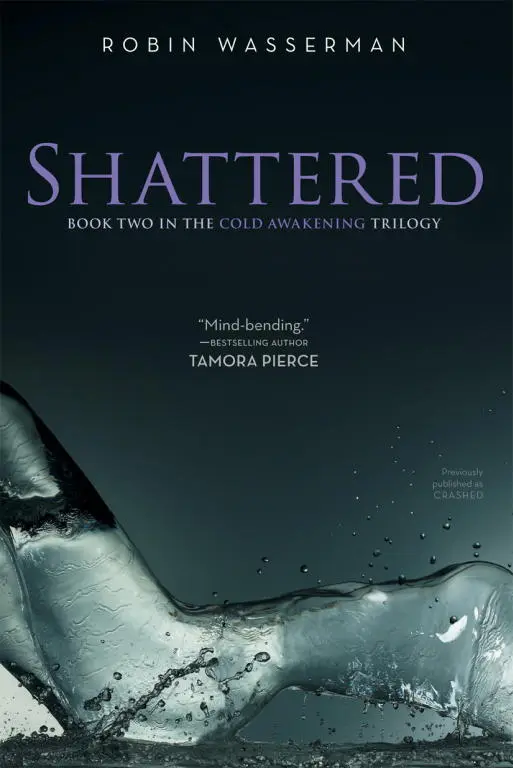
- Название:Shattered
- Автор:
- Издательство:Simon Pulse
- Жанр:
- Год:2011
- Город:New York
- ISBN:978-1-4169-7453-6
- Рейтинг книги:5 / 5. Голосов: 1
-
Избранное:Добавить в избранное
- Отзывы:
-
Ваша оценка:
Shattered: краткое содержание, описание и аннотация
Предлагаем к чтению аннотацию, описание, краткое содержание или предисловие (зависит от того, что написал сам автор книги «Shattered»). Если вы не нашли необходимую информацию о книге — напишите в комментариях, мы постараемся отыскать её.
, Lia has adjusted to downloading her brain and living in a synthetic body. But fleeing her organic family to live on a compound with other mechs has its downsides. Especially when she realizes that her mech friend Jude is dangerously devoted to a cause Lia has begun to doubt. How many people—mechanical and organic—is she willing to hurt to protect her freedom? How far is she willing to go to protect the people she loves? And, when she decides to betray Jude, how will he take his revenge?
http://www.youtube.com/watch?v=KyiOK2PgB5w http://www.youtube.com/watch?v=ol6Of0xqMrU http://www.youtube.com/watch?v=2WNgx-mqFoo
Shattered — читать онлайн бесплатно полную книгу (весь текст) целиком
Ниже представлен текст книги, разбитый по страницам. Система сохранения места последней прочитанной страницы, позволяет с удобством читать онлайн бесплатно книгу «Shattered», без необходимости каждый раз заново искать на чём Вы остановились. Поставьте закладку, и сможете в любой момент перейти на страницу, на которой закончили чтение.
Интервал:
Закладка:
“This isn’t about the water,” Riley said. “It’s about what happened. Isn’t it.”
So that was the game. Find my weakness and bear down, watch how long it would take until I broke. No wonder he and Jude got along so well.
“It doesn’t matter what it’s about,” I said. “I’m not going in.”
“Scared?”
“You think you can trick me?” I had a weird, childish urge to shove him in the water and run away. “What, I’m going to say, ‘Who, me? I’m not scared. I’ll prove it to you!’ Like I’m some idiot ten-year-old?”
Jude would have struck back. Riley looked like I’d punched him. He sat down with his back to me, cross-legged in front of the still, dark water, playing his palms across the surface of the slime. It shimmered in the light, iridescent like the Brotherhood robes, colors shifting in the dim sun. “That’s not what I meant,” he said quietly. “I asked because I wanted to know.”
“Oh.”
I sat down next to him, not mad anymore. Still confused. “That’s none of your business.” But I didn’t say it meanly.
“I know.”
I cupped my hand and plunged it through the layer of algae, into the water. It was the same temperature as my body—or close enough that I couldn’t tell the difference. “I used to love to swim,” I admitted.
“It was an accident, you know,” he said. “It wasn’t your fault.”
“You only know the story he tells on the vids—”
“Jude told me what happened,” Riley said. I swore under my breath. So much for keeping my secrets. “And he told me it wasn’t your fault.”
“That’s not what he told me.”
Riley pounded a fist softly against the water. “That’s just Jude.”
Whatever that meant. “Why’d you bring me here?”
“I thought you’d like it.”
“But so what?” I asked. “Why try to cheer me up or whatever this is?”
I was starting to recognize the crooked smile, one side a little higher than the other, eyes wide. Innocent and knowing at the same time. “That’s none of your business.”
But he didn’t say it meanly.
“Let’s go,” I said.
“You don’t have to.”
“I know.” I stood up, staring into the sludge. No reflections here. “But I’m not wearing the granny suit.”
It was nothing like the waterfall.
It was like nothing I’d ever experienced as a mech.
It was almost like being alive.
The water felt like nothing. But not the same way everything else felt like nothing, or slightly more than nothing. It was warm, almost body temperature. Even when I was alive, swimming through water like that had meant an absence of feeling, a feeling of absence, no sense of where my body left off and the water began. Buoyant, cutting effortlessly through the water, my body itself faded away.
When I was alive, swimming had been the inverse of running, and yet somehow the same. Running was all about the body, feeling every pound of the pavement, every screaming muscle, every pant, every gasp, running was my mind letting go, my body taking over, sensations flooding everything out, filling me up. Running, before the download, before it became a mechanical exercise in pumping limbs, had been like flying.
But swimming, the body disappeared. Swimming was silent and dark. Null. And somehow in the end, the same release, the same emptiness, this time filled up not with a rush of speed and adrenaline but of quiet. Swimming, before the download, had been like dreaming.
It still was.
Why didn’t anyone tell me? I thought, cutting through the water, matching Riley stroke for stroke. It wasn’t just the same as before; it was better. Because this time, I didn’t have to rise above the surface to draw a breath. I didn’t have to ruin the silent still by blowing out bubbles or thrashing around with the last of my air. I could just swim and swim and swim. I could swim forever.
We were built to withstand pressure differentials, so there was nothing to stop us from diving deep, kicking slowly to propel ourselves toward the submerged city.
We played our lights across the algae encrusted buildings poking up like massive coral from the debris-covered seafloor, overturned cars mingling with toppled roofs, tangled masses of traffic signs, the corroded, severed head of a stone statue, strewn clothing billowing in the gentle current, broken glass diamond-bright in the lightstrips’ beams. The water had preserved the ruins, enough that it should have been easy to imagine them teeming with life, intact and unsubmerged. But it was too quiet, too still, the contours of its broken buildings fading into the darkness. Hard to imagine the city thriving, even without the rising waters; easy to imagine that decay was inevitable, built into its foundation.
Riley stayed away from the buildings, but I was curious. I drew close. He shook his head, jerking a thumb up, away. I ignored him and swam up the side of one of the tall, narrow buildings, pressing close to the windows, smearing my hand across the growth of algae. Riley tugged my arm, shaking his head wildly. His hair floated like stubby seaweed above his head. I pulled away, catching hold of the window frame, pulling myself toward it—and caught sight of the bodies within. Not skeletons—bodies. Bodies preserved, mummified by the sea, bodies with bloated, waxy skin, bobbing and shaking in a watery prison. Most of the city had been evacuated in time, but there had been plenty who refused to leave. The tour guides at the Windows of Memory always made that very clear—but none of the windows looked in on the results.
I let go. Let myself float.
Down, because there was no air left in my body.
And down farther, until I sank to the ground, a cement pavement almost completely covered in soft, mossy growth. Civilization reclaimed, permanently.
Riley kicked down to me, grabbing my shoulder, pointing his index finger up to where the sky should have been. Jellyfish darted away from our lightstrip beams, like the light would burn. I shook my head; he nodded. A silent fight, and a moment later, I let him win, launching myself off the ground, my body a rocket, arms straight up, legs straight down. It was a superhero pose, and soon we were flying again.
We stayed a safe distance this time, enough space between us and the dead city that it was just that, dead buildings, dead cars, dead iron and steel and brick. No dead people.
But this time, I didn’t forget they were there.
“I’m sorry,” Riley said when we finally came back to the surface. “I didn’t think—I didn’t want you to see that.”
I climbed out of the water, using the ugly bathing suit to pat myself dry. I’d gone swimming in my tank top and underwear. Still, Riley turned away until I was dry enough to put my clothes back on. I watched him climb back into his jeans, water still dripping down his bare chest.
“No, it’s okay. Actually—thank you,” I said. “For bringing me here. For making me—Why didn’t you tell me it would be like that?”
“Like what?”
“You know,” I said. “Like when we were alive. It felt the same as swimming always felt.”
He shrugged and started walking back. “I didn’t know. I never went swimming before the download.”
“How’s that even possible?”
He stopped and glared at me. “You’ve been to the city,” he said. “See any pools?”
I kept doing that. Forgetting we didn’t all come from the same place. Forgetting that it mattered.
“I just thought you’d like it,” he said, his expression softening.
“I did.”
He smiled.
“You come here a lot?” I asked as we began walking together along the shore. “It’s kind of a long way to go, just for a swim. Not to mention it’s kind of…”
Читать дальшеИнтервал:
Закладка:
Похожие книги на «Shattered»
Представляем Вашему вниманию похожие книги на «Shattered» списком для выбора. Мы отобрали схожую по названию и смыслу литературу в надежде предоставить читателям больше вариантов отыскать новые, интересные, ещё непрочитанные произведения.







Обсуждение, отзывы о книге «Shattered» и просто собственные мнения читателей. Оставьте ваши комментарии, напишите, что Вы думаете о произведении, его смысле или главных героях. Укажите что конкретно понравилось, а что нет, и почему Вы так считаете.