Robin Wasserman - Shattered
Здесь есть возможность читать онлайн «Robin Wasserman - Shattered» весь текст электронной книги совершенно бесплатно (целиком полную версию без сокращений). В некоторых случаях можно слушать аудио, скачать через торрент в формате fb2 и присутствует краткое содержание. Город: New York, Год выпуска: 2011, ISBN: 2011, Издательство: Simon Pulse, Жанр: Фантастика и фэнтези, ya, на английском языке. Описание произведения, (предисловие) а так же отзывы посетителей доступны на портале библиотеки ЛибКат.
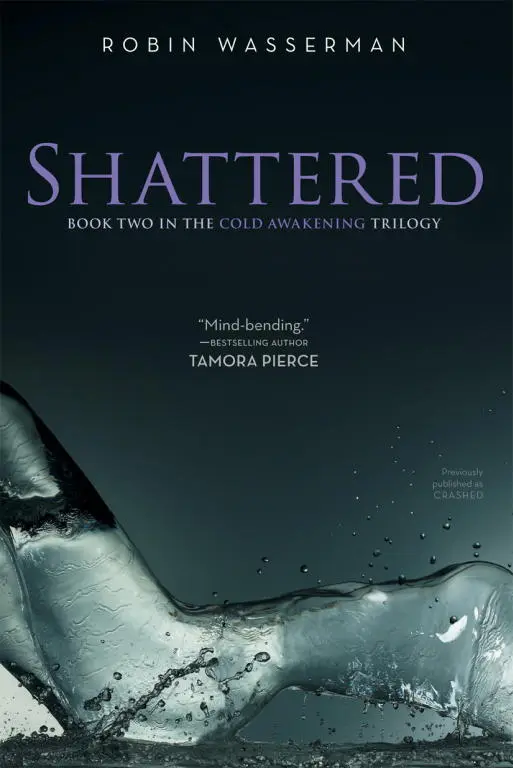
- Название:Shattered
- Автор:
- Издательство:Simon Pulse
- Жанр:
- Год:2011
- Город:New York
- ISBN:978-1-4169-7453-6
- Рейтинг книги:5 / 5. Голосов: 1
-
Избранное:Добавить в избранное
- Отзывы:
-
Ваша оценка:
Shattered: краткое содержание, описание и аннотация
Предлагаем к чтению аннотацию, описание, краткое содержание или предисловие (зависит от того, что написал сам автор книги «Shattered»). Если вы не нашли необходимую информацию о книге — напишите в комментариях, мы постараемся отыскать её.
, Lia has adjusted to downloading her brain and living in a synthetic body. But fleeing her organic family to live on a compound with other mechs has its downsides. Especially when she realizes that her mech friend Jude is dangerously devoted to a cause Lia has begun to doubt. How many people—mechanical and organic—is she willing to hurt to protect her freedom? How far is she willing to go to protect the people she loves? And, when she decides to betray Jude, how will he take his revenge?
http://www.youtube.com/watch?v=KyiOK2PgB5w http://www.youtube.com/watch?v=ol6Of0xqMrU http://www.youtube.com/watch?v=2WNgx-mqFoo
Shattered — читать онлайн бесплатно полную книгу (весь текст) целиком
Ниже представлен текст книги, разбитый по страницам. Система сохранения места последней прочитанной страницы, позволяет с удобством читать онлайн бесплатно книгу «Shattered», без необходимости каждый раз заново искать на чём Вы остановились. Поставьте закладку, и сможете в любой момент перейти на страницу, на которой закончили чтение.
Интервал:
Закладка:
“And you don’t trust him,” Riley said sourly.
“Right now I don’t trust anyone.”
“Including me.” It wasn’t a question.
He’s Jude’s best friend , I thought. Riley would do anything for him. But not this.
I had no way of knowing; I knew. He’d stepped over the bodies with me. He’d been there. And he was here now. Probably I should have suspected him. But I didn’t want to.
“If you’re out to get me, you’re not doing a very good job of it,” I pointed out, only partly for his benefit. “And you’re already stuck with what happened. Jude isn’t.”
Riley dropped down to the ground again, looking a little lost. “You’re right. Just us, then.”
I didn’t want to say it. The old Lia Kahn would never have said it. But she was dead. “They’re looking for me, not you.”
“So far,” he said darkly.
“I mean, this doesn’t have to be your problem.”
“You want me to go?” he asked.
I hesitated. Then shook my head. “But you can. If you want.”
He hesitated too, longer than I had. “I’m in this.”
“But you don’t have to be.”
“Yes. I do.”
We needed somewhere that no one would bother to look for us, where no one bothered to look at all. “I know a place,” Riley said, “but…”
There were plenty of buts.
But I haven’t been back since the download.
But it’s not safe.
But I don’t know if you can handle it.
“I can handle anything,” I told him.
It’s not that I convinced him. It’s just that we couldn’t come up with a better option. So we went with the last resort.
Riley’s city was a day’s walk—a day and a half by back roads, which was how we went. We walked through the night, navigating by the dim glow of our ViM screens and occasionally switching to infrared. We reached the city’s crumbling edge just as the sun was peeking through the jagged skyline. I’d been there before, but only at night, when the dead buildings were just ragged shadows, the city people all hidden away, in bed or in shadow. At night, the sky’s dim red glow gave the place a weird dignity. Maybe it was the illusion that the city wasn’t dead after all but just a sleeping monster that would wake when the lights switched on.
Now that the lights were on, it was easy to see that the monster wasn’t sleeping; it was dead. Unlike most of the cities on the eastern seaboard, this one was still habitable, but just barely. The streets were paved with rubble and dogshit, lined with broken cars so old they still ran on gasoline (or would have, if they ran at all). Small clumps of orgs—their teeth rotting, their faces pockmarked, their insides and outsides racing each other toward decay—gathered in burnt-out buildings with broken windows, staring slack jawed at vids playing across giant screens. None of them noticed us as we passed.
“The vids play all day,” Riley explained. “When you’re a kid, you’re supposed to watch the ed ones, learn to read and all that. After, you can do whatever you want. But there’s nothing else to do.”
There was no wireless web of energy here, which meant no one had ViMs to watch the vids of their own choosing. It also meant our mechanical bodies would be powering themselves on stored energy, good enough to last three days, four if we pushed it. Riley was convinced that would be enough. And if it wasn’t, we could always sneak back to the Sanctuary for a quick recharge. There was no network either, at least no wireless access—they jammed the signal in the cities. Instead, communal ViMs let residents link into the network for a few minutes each day. According to Riley, most never bothered.
“How did you live here?” I asked as Riley led us down widening streets. The squat, brick structures gradually gave way to cement monoliths, their faces the color of ash.
“What was the other option?” He slowed down, his eyes tracking the broken windows we passed. Once he knelt to pluck a glittering scrap of metal from a small pile of trash. He held it out to me, proud of the find. “A real coin,” he said. “You can find them all over if you know what you’re looking for.”
“So?” I didn’t need him playing tour guide. “It’s not like they have any value anymore.”
He slipped it into his pocket. “Maybe not to you.”
Shadows flickered behind the glass. I turned my face to the ground. We’d agreed we shouldn’t bother trying to disguise ourselves—no disguise would hide what we were. Even if my picture hadn’t been all over the vids, two mechs traipsing through a city was a dead giveaway we were doing something we shouldn’t. Riley had claimed it didn’t matter. “There’s no law in the city, not really. You just do what you can until someone stops you.” Meaning no law but the unspoken kind, expressed only in the native language you absorbed growing up in the city, in favors and blackmail and protection money, in the unforgiving thresher of Darwinian selection. You either figured out how to survive, or you went extinct.
“What are we waiting for?” I asked now as we passed building after building, all of them identical except for the designs sprayed in black and gold across their faces. Sensing our presence, the graffiti rippled and swirled, occasionally emitting a piercing blast of noise, the artist’s primal scream embedded in the electropaint. “Can’t we just pick one and get off the street?”
Riley shook his head. “Even in a city, everything belongs to someone.”
He stopped suddenly in front of a building capped by two forty-story towers, its doors scarred by deep fissures running diagonally across their length as if giant claws had sliced through the metal. A thick layer of grime had turned the facade a dark, earthy brown. The windows at street level were all boarded up, but through the cracks I could see figures moving around inside.
“There are people in there,” I hissed as Riley started toward the door.
“Yeah?”
“ Yeah , well, shouldn’t we go back the way we came? What about all those empty houses?”
“You don’t get it,” Riley said.
“So explain it to me.”
“Now?”
I crossed my arms. “Now or never.”
So he did. Some of the buildings we’d passed probably were empty, he explained, but in the city, empty was death, home to roving bands of the desperate and hungry, as bestial as the outside authorities made them out to be. We couldn’t be killed, but we could still be attacked, robbed, dismembered… he left the rest to my imagination. There was safety in numbers as long as you chose the right numbers. Which was why most of the city crowded into the skyscrapers at its center, seizing a place as either protector or protected. Every gang had its own territory, some owning whole towers, others sharing space in a precarious balance of power, as in this building, Riley’s building, where west and east towers coexisted as uneasy allies and occasional combatants.
We entered the lobby, a long, narrow space with ceilings that towered three stories over our heads. At ground level, the windows were boarded up with jagged-edged wooden boards. But above, a latticework of steel beams and broken glass let in the light and—judging from the puddles, the rust, and the mold—the elements. Facing the entrance, a sleek wall of black marble rose from floor to ceiling, small holes smashed into it at regular intervals like hand- and footholds for a mountain climber. And at the point where the marble met the ceiling: the climber himself, hanging from a narrow cable, his long rifle aimed out at the street. There was a matching sniper at the other end of the lobby—one to guard the west tower, I decided, the other to guard the east. On the ground, two clumps of sentries mirrored the division, each protecting the entrance to one of the towers, all with their weapons trained on us.
Читать дальшеИнтервал:
Закладка:
Похожие книги на «Shattered»
Представляем Вашему вниманию похожие книги на «Shattered» списком для выбора. Мы отобрали схожую по названию и смыслу литературу в надежде предоставить читателям больше вариантов отыскать новые, интересные, ещё непрочитанные произведения.


Обсуждение, отзывы о книге «Shattered» и просто собственные мнения читателей. Оставьте ваши комментарии, напишите, что Вы думаете о произведении, его смысле или главных героях. Укажите что конкретно понравилось, а что нет, и почему Вы так считаете.