Phoebe North - Starbreak
Здесь есть возможность читать онлайн «Phoebe North - Starbreak» весь текст электронной книги совершенно бесплатно (целиком полную версию без сокращений). В некоторых случаях можно слушать аудио, скачать через торрент в формате fb2 и присутствует краткое содержание. Год выпуска: 2014, Издательство: Simon & Schuster Books for Young Readers, Жанр: Фантастика и фэнтези, на английском языке. Описание произведения, (предисловие) а так же отзывы посетителей доступны на портале библиотеки ЛибКат.
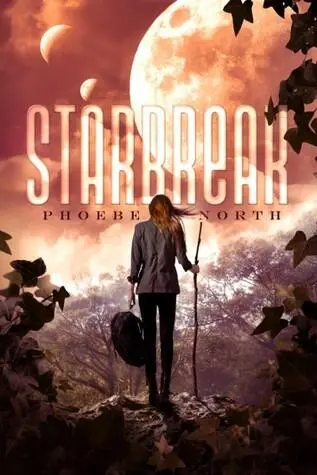
- Название:Starbreak
- Автор:
- Издательство:Simon & Schuster Books for Young Readers
- Жанр:
- Год:2014
- ISBN:нет данных
- Рейтинг книги:5 / 5. Голосов: 1
-
Избранное:Добавить в избранное
- Отзывы:
-
Ваша оценка:
Starbreak: краткое содержание, описание и аннотация
Предлагаем к чтению аннотацию, описание, краткое содержание или предисловие (зависит от того, что написал сам автор книги «Starbreak»). Если вы не нашли необходимую информацию о книге — напишите в комментариях, мы постараемся отыскать её.
Then Terra finally discovers Vadix. The boy who has haunted her dreams may be their key to survival—but his own dark past has yet to be revealed. And when Aleksandra gets humanity expelled from the planet, it’s up to Terra, with Vadix by her side, to unite her people—and to forge an alliance with the alien hosts, who want nothing more than to see humanity gone forever.
Starbreak — читать онлайн бесплатно полную книгу (весь текст) целиком
Ниже представлен текст книги, разбитый по страницам. Система сохранения места последней прочитанной страницы, позволяет с удобством читать онлайн бесплатно книгу «Starbreak», без необходимости каждый раз заново искать на чём Вы остановились. Поставьте закладку, и сможете в любой момент перейти на страницу, на которой закончили чтение.
Интервал:
Закладка:
He made a noise of agreement, but it was gobbled up by the engine’s roar. Searing. Deafening. It was almost enough to wash away my shock, the idea that now, thanks to Vadix, I’d be in a place to engineer a future for the Asherati.
But not quite.
Hours passed, and hours more. Soon I was plunged into the land of dreams again, my mind lost in those now familiar forests. But this dream was strange, different from the rest—more like the nightmares I’d known as a girl than the comforting landscape to which I’d grown accustomed. In my dream the winter’s storms had begun, blotting out the cupola and all her light. The whole world seemed cavernous and blue. Silent. Half dead.
Vadix and I walked through Raza Ait together arm in arm, examining the familiar scenery and how it had been transformed. It looked like a ruin. Everything was hollow, empty, the wind whistling through the towering structures like a mouth playing a thousand reedy pipes. The copper walls, once coated in shifting branches, were now buried beneath desiccated vines. Thanks to winter’s invasion, the forest had gone to rot. There was a sharp smell on the air—oxygen, moisture, decomposing leaves. I walked forward, fascinated by the way the snow cover muffled our voices and our footsteps. Or my footsteps at least; as we walked, Vadix’s pace grew slower and slower still.
Soon he crouched down against the freezing cobblestone.
Go on without me, he said. The winter has begun.
He drew his knees to his chest, pressing his face between his legs. I watched as the fabric of his robes began to split and tear. Tiny roots were shooting out of his flesh, tethering him to the frozen earth. Soon his skin took on a translucent cast as a net of leaves cocooned his body. I knelt down beside him, frantically clearing those leaves away. Sap covered my wrists. The cold numbed my palms. But I couldn’t fight off the progress of the season. His body grew hard, still. I watched as he was lost to me, lost to the winter.
Then I heard something—a savage howl. I glanced up toward the snow-covered glass; looked left, then right, to the city’s high walls. A beast was coming, but from where? I had no weapons—no prod, no double-bladed knife. I hardly knew how to fight, much less hunt. How could I ever protect Vadix from the oncoming storm? I wrapped my arms around his body, my shoulders tense and high. The howling went on and on and on.
I wrenched myself awake. But even there, in the dark confusion of the shuttle, the howls didn’t stop. Crying. Someone was crying. Wild, whooping tears. Clutching the armrests, I leaned forward. My heart was still wild in my chest, but I told it to be quiet. Vadix was fine. It had only been a dream, a nightmare. These cries were human; they came from no beast.
I pushed the button on my helmet. The visor snapped up. In the dim space of the shuttle, I found Ettie. Her visor was up too. In her helmet she sobbed uncontrollably, her hair plastered to her face. Hannah did her best to console her, rocking her back and forth. But it was no use.
“Would you pipe that child down?” Mara groused. Hannah gave her head a rapid shake.
“I’m trying !” she said. She examined her—the girl’s face had gone glossy with tears. “ Pupik , what’s wrong?”
“We can’t go back!” Ettie howled, a cry so fierce, it made my eardrums shake. “We can’t!”
“We have to, honey,” Hannah said, her smile gentle but uncertain. “We have no choice.”
“But the boy!” she cried. My mouth was suddenly very, very dry. “He’s waiting for me!”
“What boy?”
“The one in my dreams! He’s waiting for me! We can’t leave, Hannah! We can’t!”
She collapsed in my sister-in-law’s arms. Hannah stroked Ettie’s narrow shoulder blades with the flat of her palm. Then she looked up at me.
“How is this possible?” she asked. “You and the translator—and now the child, too?”
I remembered what Vadix had said about the scans, about Ettie. Phytodistress systems, ethylene receptors. But that didn’t matter, not right now. What mattered was Ettie, crying. Terrified of all that she’d left behind.
“Ettie,” I said evenly. In Hannah’s arms Ettie stilled. But she didn’t draw up her head. “Esther, look at me.”
At last she did, pushing her wild hair from her tear-sticky eyes with one hand, snuffling.
“Ettie, I promise you that we’ll find him. Just because we’re going back to the ship now doesn’t mean this is the end. You have your whole life ahead of you—and his, too. Do you understand?”
Ettie sucked in a breath. “Do you promise, Terra?”
I didn’t feel certain. I’d never been a leader before—never been good at keeping my own dreams safe, much less anyone else’s. But I had to believe it was true. Not just for Ettie, or the people up there on the ship. But for me, and Vadix, too.
“I promise,” I said, firmly, fiercely. Ettie only nodded. She drew her legs up to her, hugging her arms around them. Hannah gaped at me, doubt and confusion clear in her eyes. But I ignored it, ignored her. I leaned back in my seat, closed my eyes, and waited for the shuttle to take us home.
Winter, 1 Year, 1 Month After Landing
Life wasn’t easy for me back then.
Don’t get me wrong. It’s not exactly a picnic now. We all know that, given the option, I never would have chosen this work. But I guess I never expected I’d have a choice. When I was a kid, I hoped so bad that the Council would leave me alone to do my art. But when they told me I was going to be a botanist, I let myself become resigned to that fate. It was what happened on our ship. People became plowmen, or carpenters, or librarians because the vocational counselors told them it was best. After all, they’d given us tests, conducted interviews, personality profiles, had private chats with our parents and teachers. Aptitude was what mattered. Passion never, ever figured into it.
I watch how life has changed, how now my people do the work that’s necessary and not just the work that someone else says they do best. It’s still not exactly a matter of choice—it’s merely what we need to do if we’re going to survive here. Just last week the western wall collapsed under snow cover. I was the one who made the announcement: we would all put down our daily labor so that we could attend to the damages. There was quite a bit of grumbling. Some of our people even tried to shirk their duties. But I stood my ground, and within two days the avalanche had been cleared. The cupola still has a crack — we won’t be able to repair that until summer—but you wouldn’t even know where it was if you didn’t already know where to look.
It’s times like these that I wish you were here with me. At first I wanted your support. How could I possibly do my job without you there bolstering me, believing in me? How could I ever tend to every single need of our precious community? Every time I had to speak to the citizens, my hands shook—my voice caught in my throat. I was a wreck. I suspect they all saw it; that’s probably why I had to work so hard to convince them. I wouldn’t be an easy sell either, if I were a grown man or woman and some seventeen-year-old girl were telling me what to do.
But lately I miss you for another reason. I miss you because I suspect you would be proud of me, of how I’ve learned to clutch my hands behind my back to keep them steady, and how to angle my chin up, speaking clearly and with strength even when I feel anything but strong. I’ve changed in these last few months. It’s not just that I’m taller, that I’ve grown muscular from the afternoon hunt. It’s that I’m braver than I ever thought I would be.
Читать дальшеИнтервал:
Закладка:
Похожие книги на «Starbreak»
Представляем Вашему вниманию похожие книги на «Starbreak» списком для выбора. Мы отобрали схожую по названию и смыслу литературу в надежде предоставить читателям больше вариантов отыскать новые, интересные, ещё непрочитанные произведения.









Обсуждение, отзывы о книге «Starbreak» и просто собственные мнения читателей. Оставьте ваши комментарии, напишите, что Вы думаете о произведении, его смысле или главных героях. Укажите что конкретно понравилось, а что нет, и почему Вы так считаете.