Phoebe North - Starbreak
Здесь есть возможность читать онлайн «Phoebe North - Starbreak» весь текст электронной книги совершенно бесплатно (целиком полную версию без сокращений). В некоторых случаях можно слушать аудио, скачать через торрент в формате fb2 и присутствует краткое содержание. Год выпуска: 2014, Издательство: Simon & Schuster Books for Young Readers, Жанр: Фантастика и фэнтези, на английском языке. Описание произведения, (предисловие) а так же отзывы посетителей доступны на портале библиотеки ЛибКат.
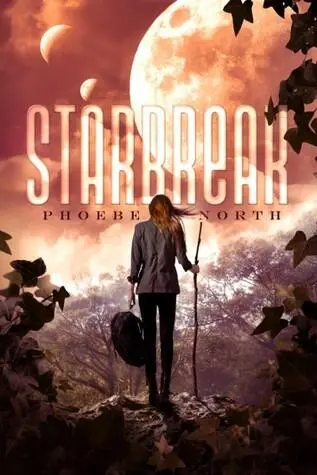
- Название:Starbreak
- Автор:
- Издательство:Simon & Schuster Books for Young Readers
- Жанр:
- Год:2014
- ISBN:нет данных
- Рейтинг книги:5 / 5. Голосов: 1
-
Избранное:Добавить в избранное
- Отзывы:
-
Ваша оценка:
Starbreak: краткое содержание, описание и аннотация
Предлагаем к чтению аннотацию, описание, краткое содержание или предисловие (зависит от того, что написал сам автор книги «Starbreak»). Если вы не нашли необходимую информацию о книге — напишите в комментариях, мы постараемся отыскать её.
Then Terra finally discovers Vadix. The boy who has haunted her dreams may be their key to survival—but his own dark past has yet to be revealed. And when Aleksandra gets humanity expelled from the planet, it’s up to Terra, with Vadix by her side, to unite her people—and to forge an alliance with the alien hosts, who want nothing more than to see humanity gone forever.
Starbreak — читать онлайн бесплатно полную книгу (весь текст) целиком
Ниже представлен текст книги, разбитый по страницам. Система сохранения места последней прочитанной страницы, позволяет с удобством читать онлайн бесплатно книгу «Starbreak», без необходимости каждый раз заново искать на чём Вы остановились. Поставьте закладку, и сможете в любой момент перейти на страницу, на которой закончили чтение.
Интервал:
Закладка:
He stood there, his long, flexible limbs stiff. At last he answered.
“They say that a Xollu is even hungrier than an Ahadizhi,” he said. “Not for meat. For knowledge.”
“You want to know the truth as badly as I do,” I said in a low voice. “The truth about me, and you, and our dreams.”
He didn’t deny it. But he didn’t agree, either.
“I must go,” he said instead, and turning on his slender feet, he rushed out the door, and left me sitting there, on the crinkling paper, alone.
When they brought us back to the quarantine camp, the Ahadizhi had already delivered the day’s ration of meat. The shuttle crew worked in silence, sorting out the good from the bad, the rancid from the fresh. As they worked, Aleksandra sat on the edge of the fire pit and continued to detail her plan. From what I could hear, it involved fashioning weapons from the sticks they’d given us to roast our food, rushing the Ahadizhi when they returned the next morning to take the men, and fighting our way out of Raza Ait.
I thought of the world beyond. The crowded city, filled with sharp-toothed hunters and delicate scholars, who would watch, fascinated and birdlike, as the Asherati were torn to pieces. It was dangerous, crazy, but aside from Rebbe Davison, their eyes were all bright—even Ettie’s—as Aleksandra gathered up the roasting sticks and set them to work sharpening the ends into points.
I sat alone, turning my meeting with Vadix over and over again in my mind. Under normal circumstances I wouldn’t have expected this strange boy to listen to my pleas. But these circumstances weren’t normal. I knew him. Nothing else could explain the electricity of his touch, or the way he’d looked at me, his head angled down, his soft mouth open. Maybe he would listen to me. Maybe . . .
“What did he do to you?”
The log beneath me suddenly bent with the weight of another body. Laurel. Her expression was flat as she stared into the fire.
“What do you mean?” I asked.
She sighed, and pushed her dingy curls away from her face. “We all heard you talking to the translator. Heard him asking for you.”
I winced at the memory. Waving my arms at him, shouting, shoving to the front of the crowd. In my urgency I’d forgotten that there were others watching. Of course, my eager shouts hadn’t inspired confidence in Laurel. They’d been the childish cries of a girl, calling out for her boyfriend as he walked across the dome.
“Nothing,” I said, ignoring how my cheeks had begun to heat. “We just talked.”
“Oh,” Laurel said. Then, after a moment, she let out a small, humorless laugh. “I thought maybe he . . . I thought he touched you. You’ve been so quiet.”
“Touched” me? I turned my head sharply, staring at Laurel. She’d been quiet too since we’d returned from the hospital. We all had—all except for Aleksandra.
“Laurel?” I asked, reaching out and grabbing her by the arm. She flinched away from my hand, bending her fingers into a tight fist. “What did they do to you ?”
“Nothing!” she said, a high blush crawling over her cheeks, making her freckles nearly invisible. “It wasn’t like that. They just examined us, and put us in this tube. Scanned us. But I can’t stand being around them after what happened to Deklan. And it’s not even just that. There’s something about them. It makes my skin crawl. The way they move. It’s just not human, just not right. Sitting there in that little room, I just got more and more nauseated. And the smell of them . . .”
I thought of the summer-sweet scent of Vadix as he stood beside me. An unconscious smile lifted my lips. But then I noticed her watching me, and I hardened my mouth into a frown.
“What’s wrong with their smell?”
“It’s just not human !”
Laurel was right; they weren’t human beings, not at all. The people I had known all had the same odor—musky, like the recycled gray water on the ship. With our water rations and our hard work, few Asherati smelled like roses. Momma’s hands had been dusted by the odor of yeast and flour; Abba’s clothes had been perfumed by the cedar boards in the clock tower where he’d worked. Field-workers smelled like fresh-turned dirt. Granary workers like dust and corn silk. But I’d grown used to the smell of flowers. Their pollen stained my lab coats yellow, and the mossy scent of the greenhouses stuck to my trousers and hair. Vadix’s scent was like that, only amplified tenfold. Sweet, pungent, rich.
“It’s not,” I finally agreed. “Because they’re not like us. And if we’re going to live here among them, then we have to get used to it.”
“Among them,” she said, and shook her head. “But Aleksandra says that we can’t. She says that we need to get back to the ship and land the dome. She says it doesn’t matter what they want.”
I glanced over at Aleksandra, at the way she brandished one of the hand-wrought spears and jabbed the air with it. Her body seemed so lithe, strong despite the trials of the past several days. If anyone could push their way out of the city, Aleksandra probably could.
But it wasn’t going to work, I felt sure of that. It was too dangerous—would be too bloody.
“It’s a terrible plan,” I said, turning back to Laurel and dropping my voice down low. “The city is full of aliens. You’ll die, Laurel.”
She watched me impassively, her mouth a faint line.
“We have weapons,” she said at last.
“Sticks! They have knives and prods and who knows what else.”
There was a long stretch of silence. We watched the other adults pick up their spears and skewer the air. Their movements were far less graceful than Aleksandra’s but just as forceful.
“It’s our only way out of this place,” Laurel said at last. She lifted herself up from the log, then gestured overhead—to the white canopy, the city’s cupola, and to space, far, far beyond. “I just want to go home, Terra. There’s nothing for me here. Not without Deck.”
I didn’t know what to say. I looked at her, swallowing hard to chase away the lump in my throat. I’d never convince her, not me, not after all that had happened. And besides, she didn’t even give me a chance. She only shook her head, once, twice, then went to join the others.
I didn’t stick around to watch her pick up a spear. Instead I rose, and ducked inside my tent. Squeezing my eyes closed, I willed the whole world—Laurel, Aleksandra, the city, all of it—away.
13
He waited for me in the forest. Or maybe I waited for him. It wasn’t clear how the physics of this place worked. Sometimes I felt like the paths were familiar, an extension of the domed forests of my childhood but grown wild in the corners of my mind. Sometimes the paths felt new and strange and foreign—as foreign as his body, foreign as him . But there he was, at the center of them, and there I was, and we both hurried down the overcrowded paths toward each other, our bare feet slapping against the flattened soil as we drew near.
But we stopped just short of touching. We watched each other, cautious, uncertain. Now that we’d seen each other in the flesh, how could we ever go back to that raw state where we tumbled together and I kissed him until I couldn’t tell where my mouth ended and his body began? When I’d believed him to be imaginary, it had been easy to draw him into my arms. But now that he was Vadix . . .
Is Mara Stone here yet? I asked. His lips parted. He wet them again—a nervous tic. I was beginning to see so many, like how he touched his hand to his chest when he spoke, covering a wound that was buried deep under his translucent skin.
Читать дальшеИнтервал:
Закладка:
Похожие книги на «Starbreak»
Представляем Вашему вниманию похожие книги на «Starbreak» списком для выбора. Мы отобрали схожую по названию и смыслу литературу в надежде предоставить читателям больше вариантов отыскать новые, интересные, ещё непрочитанные произведения.








Обсуждение, отзывы о книге «Starbreak» и просто собственные мнения читателей. Оставьте ваши комментарии, напишите, что Вы думаете о произведении, его смысле или главных героях. Укажите что конкретно понравилось, а что нет, и почему Вы так считаете.