Arthur Train - The Goldfish
Здесь есть возможность читать онлайн «Arthur Train - The Goldfish» — ознакомительный отрывок электронной книги совершенно бесплатно, а после прочтения отрывка купить полную версию. В некоторых случаях можно слушать аудио, скачать через торрент в формате fb2 и присутствует краткое содержание. Жанр: Биографии и Мемуары, popular_business, foreign_antique, на английском языке. Описание произведения, (предисловие) а так же отзывы посетителей доступны на портале библиотеки ЛибКат.
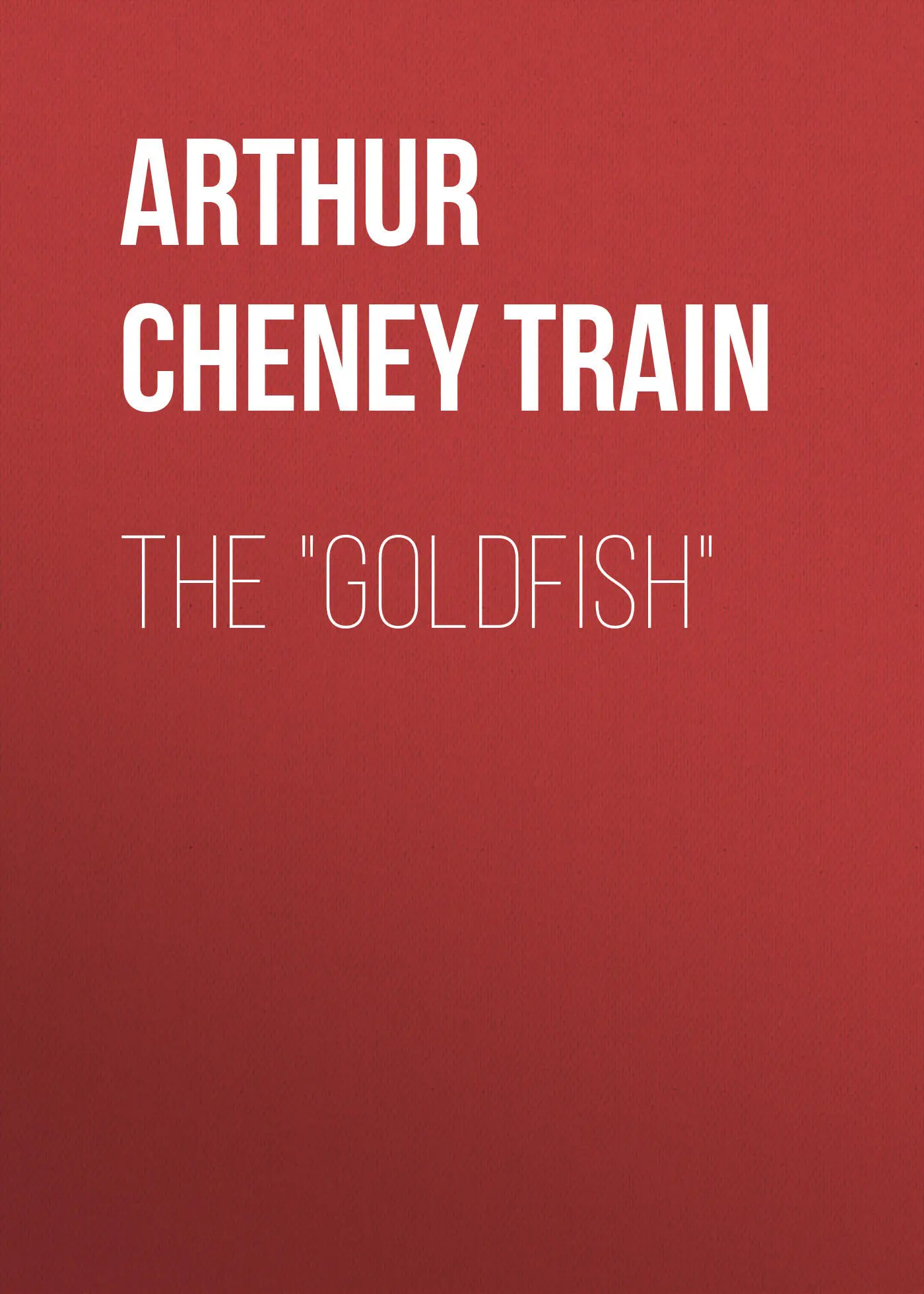
- Название:The Goldfish
- Автор:
- Жанр:
- Год:неизвестен
- ISBN:нет данных
- Рейтинг книги:5 / 5. Голосов: 1
-
Избранное:Добавить в избранное
- Отзывы:
-
Ваша оценка:
The Goldfish: краткое содержание, описание и аннотация
Предлагаем к чтению аннотацию, описание, краткое содержание или предисловие (зависит от того, что написал сам автор книги «The Goldfish»). Если вы не нашли необходимую информацию о книге — напишите в комментариях, мы постараемся отыскать её.
The Goldfish — читать онлайн ознакомительный отрывок
Ниже представлен текст книги, разбитый по страницам. Система сохранения места последней прочитанной страницы, позволяет с удобством читать онлайн бесплатно книгу «The Goldfish», без необходимости каждый раз заново искать на чём Вы остановились. Поставьте закладку, и сможете в любой момент перейти на страницу, на которой закончили чтение.
Интервал:
Закладка:
Our less desirable acquaintances, and those toward whom we have minor social obligations, my wife disposes of by means of an elaborate "at home," where the inadequacies of the orchestra are drowned in the roar of conversation, and which a sufficient number of well-known people are good-natured enough to attend in order to make the others feel that the occasion is really smart and that they are not being trifled with. This method of getting rid of one's shabby friends and their claims is, I am informed, known as "killing them off with a tea."
We have a slaughter of this kind about once in two years. In return for these courtesies we are invited yearly by the élite to some two hundred dinners, about fifty balls and dances, and a large number of miscellaneous entertainments such as musicales, private theatricals, costume affairs, bridge, poker, and gambling parties; as well as in the summer to clambakes—where champagne and terrapin are served by footmen—and other elegant rusticities.
Besides these chic functions we are, of course, deluged with invitations to informal meals with old and new friends, studio parties, afternoon teas, highbrow receptions and conversaziones , reformers' lunch parties, and similar festivities. We have cut out all these long ago. Keeping up with our smart acquaintances takes all our energy and available time. There are several old friends of mine on the next block to ours whom I have not met socially for nearly ten years.
We have definitely arrived however. There is no question about that. We are in society and entitled to all the privileges pertaining thereto. What are they? you ask. Why, the privilege of going to all these balls, concerts and dinners, of course; of calling the men and women one reads about in the paper by their first names; of having the satisfaction of knowing that everybody who knows anything knows we are in society; and of giving our daughters and son the chance to enjoy, without any effort on their part, these same privileges that their parents have spent a life of effort to secure.
Incidentally, I may add, our offspring will, each of them—if I am not very much mistaken—marry money, since I have observed a certain frankness on their part in this regard, which seems to point that way and which, if not admirable in itself, at least does credit to their honesty.
Now it is undubitably the truth that my wife regards our place among the socially elect as the crowning achievement—the great desideratum—of our joint career. It is what we have always been striving for. Without it we—both of us—would have unquestionably acknowledged failure. My future, my reputation, my place at the bar and my domestic life would have meant nothing at all to us, had not the grand cordon of success been thrown across our shoulders by society.
As I have achieved my ambition in this respect it is no small part of my self-imposed task to somewhat analyze this, the chief reward of my devotion to my profession, my years of industrious application, my careful following of the paths that other successful Americans have blazed for me.
I must confess at the outset that it is ofttimes difficult to determine where the pleasure ends and work begins. Even putting it in this way, I fear I am guilty of a euphemism; for, now that I consider the matter honestly, I recall no real pleasure or satisfaction derived from the various entertainments I have attended during the last five or ten years.
In the first place I am invariably tired when I come home at night—less perhaps from the actual work I have done at my office than from the amount of tobacco I have consumed and the nervous strain attendant on hurrying from one engagement to another and keeping up the affectation of hearty good-nature which is part of my stock in trade. At any rate, even if my body is not tired, my head, nerves and eyes are distinctly so.
I often feel, when my valet tells me that the motor is ordered at ten minutes to eight, that I would greatly enjoy having him slip into the dress-clothes he has so carefully laid out on my bed and go out to dinner in my place. He would doubtless make himself quite as agreeable as I. And then—let me see—what would I do? I sit with one of my accordion-plaited silk socks half on and surrender myself to all the delights of the most reckless imagination!
Yes, what would I choose if I could do anything in the world for the next three hours? First, I think, I would like an egg—a poached egg, done just right, like a little snowball, balanced nicely in the exact center of a hot piece of toast! My mouth waters. Aunt Jane used to do them like that. And then I would like a crisp piece of gingerbread and a glass of milk. Dress? Not on your life! Where is that old smoking-jacket of mine? Not the one with Japanese embroidery on it—no; the old one. Given away? I groan aloud.
Well, the silk one will have to do—and a pair of comfortable slippers!
Where is that old brier pipe I keep to go a-fishing? Now I want a book—full of the sea and ships—of pirates and coral reefs—yes, Treasure Island; of course that's it—and Long John Silver and the Black Spot.
"Beg pardon, sir, but madam has sent me up to say the motor is waiting," admonishes my English footman respectfully.
Gone—gone is my poached egg, my pipe, my dream of the Southern Seas! I dash into my evening clothes under the solicitous guidance of my valet and hastily descend in the electric elevator to the front hall. My wife has already taken her seat in the motor, with an air of righteous annoyance, of courteously suppressed irritation. The butler is standing on the doorstep. The valet is holding up my fur coat expectantly. I am sensible of an atmosphere of sad reproachfulness.
Oh, well! I thrust my arms into my coat, grasp my white gloves and cane, receive my hat and wearily start forth on my evening's task of being entertained; conscious as I climb into the motor that this curious form of so-called amusement has certain rather obvious limitations.
For what is its raison d'être ? It is obvious that if I know any persons whose society and conversation are likely to give me pleasure I can invite them to my own home and be sure of an evening's quiet enjoyment. But, so far as I can see, my wife does not invite to our house the people who are likely to give either her or myself any pleasure at all, and neither am I likely to meet such people at the homes of my friends.
The whole thing is a mystery governed by strange laws and curious considerations of which I am kept in utter ignorance; in fact, I rarely know where I am going to dine until I arrive at the house. On several occasions I have come away without having any very clear idea as to where I have been.
"The Hobby-Smiths," my wife will whisper as we go up the steps. "Of course you've heard of her! She is a great friend of Marie Van Duser, and her husband is something in Wall Street."
That is a comparatively illuminating description. At all events it insures some remote social connection with ourselves, if only through Miss Van Duser and Wall Street. Most of our hosts are something in Wall Street. Occasionally they are something in coal, iron, oil or politics.
I find a small envelope bearing my name on a silver tray by the hatstand and open it suspiciously as my wife is divested of her wraps. Inside is a card bearing in an almost illegible scrawl the words: Mrs. Jones. I hastily refresh my recollection as to all the Joneses of my acquaintance, whether in coal, oil or otherwise; but no likely candidate for the distinction of being the husband of my future dinner companion comes to my mind. Yet there is undoubtedly a Jones. But, no! The lady may be a divorcée or a widow. I recall no Mrs. Jones, but I visualize various possible Miss Joneses—ladies very fat and bursting; ladies scrawny, lean and sardonic; facetious ladies; heavy, intelligent ladies; aggressive, militant ladies.
Читать дальшеИнтервал:
Закладка:
Похожие книги на «The Goldfish»
Представляем Вашему вниманию похожие книги на «The Goldfish» списком для выбора. Мы отобрали схожую по названию и смыслу литературу в надежде предоставить читателям больше вариантов отыскать новые, интересные, ещё непрочитанные произведения.






Обсуждение, отзывы о книге «The Goldfish» и просто собственные мнения читателей. Оставьте ваши комментарии, напишите, что Вы думаете о произведении, его смысле или главных героях. Укажите что конкретно понравилось, а что нет, и почему Вы так считаете.