Brian Freeman - The Night Bird
Здесь есть возможность читать онлайн «Brian Freeman - The Night Bird» весь текст электронной книги совершенно бесплатно (целиком полную версию без сокращений). В некоторых случаях можно слушать аудио, скачать через торрент в формате fb2 и присутствует краткое содержание. Город: Seattle, Год выпуска: 2017, ISBN: 2017, Издательство: Thomas & Mercer, Жанр: Триллер, на английском языке. Описание произведения, (предисловие) а так же отзывы посетителей доступны на портале библиотеки ЛибКат.
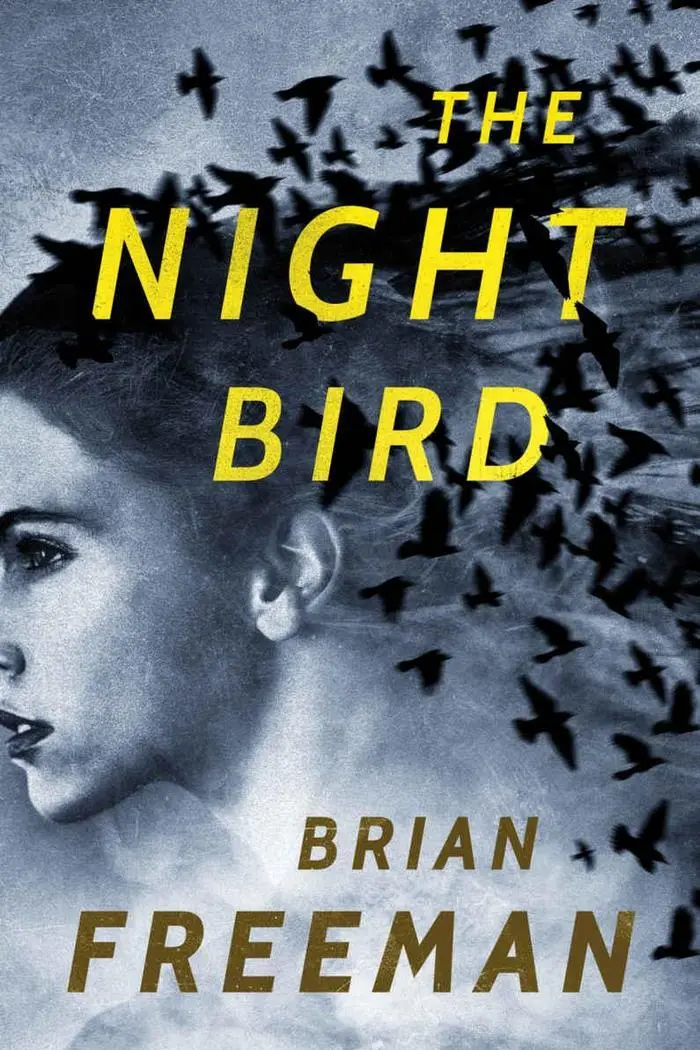
- Название:The Night Bird
- Автор:
- Издательство:Thomas & Mercer
- Жанр:
- Год:2017
- Город:Seattle
- ISBN:978-1-5039-4356-8
- Рейтинг книги:5 / 5. Голосов: 1
-
Избранное:Добавить в избранное
- Отзывы:
-
Ваша оценка:
The Night Bird: краткое содержание, описание и аннотация
Предлагаем к чтению аннотацию, описание, краткое содержание или предисловие (зависит от того, что написал сам автор книги «The Night Bird»). Если вы не нашли необходимую информацию о книге — напишите в комментариях, мы постараемся отыскать её.
their most terrifying memories... and all the victims were her patients.
As Frost and Frankie carry out their own investigations, the case becomes increasingly personal — and dangerous. Long-submerged secrets surface as someone called the Night Bird taunts the pair with cryptic messages pertaining to the deaths. Soon Frankie is forced to confront strange gaps in her own memory, and Frost faces a killer who knows the detective’s worst fears.
As the body count rises and the Night Bird circles ever closer, a dedicated cop and a brilliant doctor race to solve the puzzle before a cunning killer claims another victim.
The Night Bird — читать онлайн бесплатно полную книгу (весь текст) целиком
Ниже представлен текст книги, разбитый по страницам. Система сохранения места последней прочитанной страницы, позволяет с удобством читать онлайн бесплатно книгу «The Night Bird», без необходимости каждый раз заново искать на чём Вы остановились. Поставьте закладку, и сможете в любой момент перейти на страницу, на которой закончили чтение.
Интервал:
Закладка:
Frost counted the support columns to the spot that Christie was passing when she was snatched. When he got there, he stopped. He was only ten feet from the garage wall. It would have been easy to hide, easy to wait for her. Maybe he used chloroform on a rag or a fast-acting sedative injection. Pull her back, hold her, count the seconds until she was unconscious. Then drag her along the wall back to her own car.
He followed the wall and used his flashlight to illuminate the shadows. At each parked car, he squatted and shined the light underneath. Three feet under the chassis of a white SUV, something glinted in the beam of light. He squirmed toward it and saw that it was a brass button, the kind men wore on their suit coats.
Frost slipped a plastic evidence bag from his pocket and swept the button inside it. Maybe it had come from one of the businessmen who parked here every day. Or maybe Christie had yanked it off during a struggle, and it had rolled here. There wouldn’t have been time for the attacker to retrieve it.
Maybe.
He reached the spot where Christie had parked her Civic. The spot was empty now. She’d been dragged here, unconscious, and her assailant had used her keys to pop the trunk and deposit her body inside. And then he drove her — where?
Where did he operate on their minds?
Frost studied the grease-stained concrete. It didn’t tell him anything more. On the wall six feet away, he spotted a metal box with a glass door and a fire extinguisher inside. He noticed something on top of the wall-mounted box and walked over to check it out. He put on gloves and removed the object, which was a compact disc of an old music album inside a jewel case.
The CD was Wrap Around Joy by Carole King. Frost turned the jewel case over, and he read the track list.
The first song was “Nightingale.”
With his gloved hands, he opened the case and was startled as dozens of tiny silver needles spilled from inside and bounced and scattered on the floor, like metal insects. He squatted down and picked one up and rolled it between his fingers. It was shiny and sharp.
He remembered what Frankie had told him.
Needles.
That was what Christie Parke feared the most.
What’s your worst memory?
22
Fog chased Frankie into the coastal hills.
She took the southbound 280 freeway out of the city, then merged west onto Highway 1, the road that hugged the California coast all the way from Santa Barbara to Crescent City. It was twilight. The deep-blue sky darkened to black minute by minute. The fog made the ocean invisible below her, and its first threads feathered across the highway as the cloud moved inland.
The address that Todd Ferris had given her was on the coast in the small town of Pacifica. She didn’t know if the address was fake — like the phone number — but she needed to find Todd again and find out what else he remembered from inside that white room.
The highway cut through green hills. She saw gnarled trees that grew sideways under the assault of gusts off the Pacific. Damp chill worked its way inside her car. A few drops of rain spit on her windshield. More fog washed across the road, playing games with her eyes, and she slowed and squinted to follow the curves that wound like a snake. The trees on the hills became ghosts. Milky parkland surrounded her, appearing and disappearing.
Frankie glanced in her rearview mirror. The headlights of another car came and went in the cloud. The car hung back, keeping a steady distance behind her. She had a strange feeling about it. She liked having company on the treacherous road, and yet a paranoid voice in her head made her wonder if she was being followed.
As she neared Pacifica, the GPS advised her to turn in a quarter mile, but the road to Todd Ferris’s apartment was barely an alley, and she missed it in the fog. She kept going to the next turn that led toward Rockaway Beach. Pacifica by the water was no more than a jumble of buildings and a few dead-end streets. Mist blurred the beach road, and a few gauzy lights shined in the windows of the local motel.
She glanced behind her again. No headlights. Whoever had shadowed her route was gone.
Frankie drove to within spitting distance of the ocean and then turned on a narrow road. She drove three hundred feet back to the alley she’d missed on Highway 1 and turned again toward the beach. The pavement was water stained. Trees leaned over the lane and made a tunnel. She followed the alley until it opened up at a parking lot by the water.
It was nearly dark now. As Frankie got out of her car, the wind cut through her light jacket and made her shiver. Waves thundered and broke in whitecaps, surging toward the seawall. Tide was high. Spray and foam landed on her face. She could barely see the coastal headlands silhouetted on the sky. Next to her was a drab three-story apartment building facing the water. That was where Todd said he lived.
The beach parking lot was empty. She was alone.
Or was she?
She heard something above the roar of the ocean that sounded like a car engine in the alley. She stared at the darkness, back where she’d come, and saw a momentary flash of headlights. Then they went off. So did the noise of the engine.
With her hands shoved in her jacket pockets, Frankie marched to the apartment building. There was no entrance on the beach side. She stood in front of a low wall surrounding the building that dropped into a recessed parking lot. The building itself was built on concrete stilts because of its proximity to the water. She swung her legs over the wall and jumped, landing three feet below her.
She headed for the underground entrance to the apartment building, but it was locked. There was a panel with buttons for the various apartments, and she found the button that matched the apartment number on Todd’s patient information form. Number 305. She pushed the buzzer.
There was no answer.
She waited and tried again, but no one replied through the speakerphone or opened the lock to let her inside. No one was home.
She dug in her purse for pen and paper and taped a note to the door.
Todd. Call me right away. FS.
Frankie felt vulnerable here. She navigated the dark parking lot quickly, eyeing the cars around her. By the time she found the steps to the street, she was practically running, and her breathing came fast and sharp. She pushed between two overgrown spruce trees near the building door and bolted back to the mouth of the alley. On her left was the parking lot. On her right, the tiny street disappeared into the fog toward Highway 1.
That was when she heard it. The voice. High-pitched and terrifying, but no louder than a whisper above the wind.
“Fran-kie... Fran-kie...”
It came from everywhere and nowhere. She froze. Fear rippled up and down her skin. Mist blew in front of her eyes, and spiny tree branches in the alley knocked together with each cold gust. She stared into the fog and listened for the voice again. It was night, and that was when the Night Bird came out to sing.
Frankie held her breath. She heard nothing, only the wind and the hypnotic thunder of the waves. The more time passed, the more she believed that her brain had conjured the voice. It wasn’t real. She clutched her purse tighter on her shoulder and headed for her car. She made a point to walk, not run, but every few steps, she glanced behind her, peering through the cloud. She was alone. When she reached her car, she got inside and immediately locked the door. Her hands were trembling.
She switched on the engine. Her headlights lit up the rocks on the seawall, and she screamed.
Todd Ferris was standing in front of her car.
Her hand jumped to the gearshift. She wanted to put the car in reverse and drive away, but she didn’t. Todd stared at her through the windshield, and she stared back at him. He didn’t move. There was something in his eyes that made her uncomfortable. Grief. Confusion. Anger. She realized that she didn’t know him at all. Even so, he was the man she’d come to see.
Читать дальшеИнтервал:
Закладка:
Похожие книги на «The Night Bird»
Представляем Вашему вниманию похожие книги на «The Night Bird» списком для выбора. Мы отобрали схожую по названию и смыслу литературу в надежде предоставить читателям больше вариантов отыскать новые, интересные, ещё непрочитанные произведения.
Обсуждение, отзывы о книге «The Night Bird» и просто собственные мнения читателей. Оставьте ваши комментарии, напишите, что Вы думаете о произведении, его смысле или главных героях. Укажите что конкретно понравилось, а что нет, и почему Вы так считаете.