The Kingdom - Peter Collinson
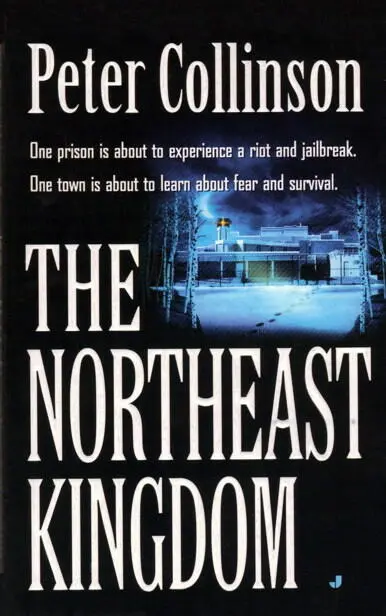
Здесь есть возможность читать онлайн «The Kingdom - Peter Collinson» весь текст электронной книги совершенно бесплатно (целиком полную версию без сокращений). В некоторых случаях можно слушать аудио, скачать через торрент в формате fb2 и присутствует краткое содержание. Город: New York, Год выпуска: 2002, ISBN: 2002, Издательство: Jove, Жанр: Триллер, на английском языке. Описание произведения, (предисловие) а так же отзывы посетителей доступны на портале библиотеки ЛибКат.
- Название:Peter Collinson
- Автор:
- Издательство:Jove
- Жанр:
- Год:2002
- Город:New York
- ISBN:978-0-515-13361-5
- Рейтинг книги:4 / 5. Голосов: 1
-
Избранное:Добавить в избранное
- Отзывы:
-
Ваша оценка:
Peter Collinson: краткое содержание, описание и аннотация
Предлагаем к чтению аннотацию, описание, краткое содержание или предисловие (зависит от того, что написал сам автор книги «Peter Collinson»). Если вы не нашли необходимую информацию о книге — напишите в комментариях, мы постараемся отыскать её.
In the upland hills of Vermont sits the small town of Gilchrist, the scenic heart of the Northeast Kingdom region. It’s also home to a high-tech twenty-first century Alcatraz — America’s most advanced maximum-security penitentiary. When the riot erupts, no one is surprised. When the break comes, no one is prepared.
NO EXIT
Gilchrist is under siege and outnumbered. All communication with the outside world has been terminated by a violent winter storm. All escape routes are guarded by the most vicious prisoners in the country. And trapped in a local inn, the town’s few survivors are left with only one recourse: to run for their lives.
NO MERCY
But fleeing into the rugged timberland is little refuge for these desperate few. They are cold, defenseless, and worse: They are being tracked by a relentless killer who has nothing left to lose.
Peter Collinson — читать онлайн бесплатно полную книгу (весь текст) целиком
Ниже представлен текст книги, разбитый по страницам. Система сохранения места последней прочитанной страницы, позволяет с удобством читать онлайн бесплатно книгу «Peter Collinson», без необходимости каждый раз заново искать на чём Вы остановились. Поставьте закладку, и сможете в любой момент перейти на страницу, на которой закончили чтение.
Интервал:
Закладка:
There was a rattle outside and he could see his ten-foot ladder now up against the house, legs were running up past the window to the second floor. An engine started up outside — his Ford. Then something hard kicked at his back door, and kicked again. Fred spun to each noise like a man taking arrows from all directions. He backed to the railing at the bottom of the stairs. Footsteps crunched glass on the kitchen linoleum and a chair fell over. Fred backed along the side of the staircase to the angled closet door. He fumbled with the latch and backed inside.
Raincoats, his father’s bagged suits, his old army jacket, all brushing against him like ghosts. He backed in deep and spun the axe again in his trembling hand, blade facing down now, Fred crazy with fear. He raised the axe over his head, and he lashed out at the first thing that appeared when he saw the door open a crack. There was a shriek of pain and an arm pulled back as the door was thrown wide open. Fred came out of the coats yelling and swinging at the shadows, but they immediately wrested the axe away from him. There were two men, each with their own hand tools. They were upon him.
Tom Duggan’s Ship had run aground. The long, black Fleetwood hit a frozen patch of road and the steering wheel turned uselessly in his hands as the funeral limousine slid off the shoulder and beached on a bed of densely packed snow. In frustration he threw it into reverse and gunned the engine and did everything he wasn’t supposed to do, and the car sank and stuck there.
He threw open the door and hobbled through the deep snowfall to the road. From the downstairs window of his funeral parlor in the town common, he had watched the armed men load the Gilchrist police onto a truck. He left immediately after they did, his usual evening commute turned nightmarish by roaming prisoners and snow. But he was alone on this dark road, and less than a mile from his mother’s house.
Tom Duggan ran through the trees. Branches tore at his undertaker’s coat, grabbing after him like fingers. Snow and time obscured the landmarks he had known since a boy, but he pressed on, falling through the woods as much as running through them.
He emerged into a clearing and found himself right around the corner from her driveway. The house was dark when he reached it, the lamp timers switched off around ten. The side door was locked. Tom Duggan’s mother never locked the door. His house key was hanging on the ring in the Fleetwood’s ignition. He rang the doorbell impatiently, then without waiting he pulled his hand into his coat sleeve and punched through the windowpane nearest the knob.
He fumbled the door open without cutting himself and rushed through the kitchen and then upstairs to her bedroom. It was still made from the morning. The bathroom was also empty. He heard voices downstairs and ran to the dim parlor but her chair was empty. It was the radio playing, and he switched it off and called her name. He checked the floors in every room in case she had fallen. Then he saw that the front hallway door was open.
They never used the front door. The storm door was closed, but the threshold was sprinkled with snow.
He ran out onto the front walk. There were footsteps in the snow, one set, a short stride, already fading with the wind. He followed them around to the side of the house.
Tom Duggan found his mother lying in a drift a few steps behind the old woodpile. He rushed to her, stumbling, finding her curled up on her side, her hands pressed to her chest, her eyes closed. He rolled her over and let out a wail. Her mouth was shut in a grimace, her neck muscles clenched, her jaw set. He groped for a pulse even as he knew that she was gone.
He stepped back. The rest of the snow was undisturbed except for his own footsteps. What had possessed her to open the front door and wander outside with only a housecoat on? Was it the news on the radio? Was she disoriented and trying to walk for help? He knew only that his mother had died afraid and alone.
He knelt, weeping, and got her up into his arms. His impulse was to carry her back inside the house, but with the prisoners loose and the snowstorm, it could be days before he could get her to the funeral home. He would not allow her to decay inside the warm house. Tom Duggan cursed the prison then, cursed the uprising, standing with his dead mother in his arms. Slowly and regrettably he lowered her back into her cradle of snow. He would see to a proper and respectful end as he had always promised. With bare, shivering hands he heaped snow over her body, snow that would preserve her until his return.
Wind howled through the trees, breaking the spell of his anguish. Only after he stood again did he realize it was not the wind howling. It was the rowdy cries of escaped prisoners, borne on the wind.
The predators Tom Duggan had lured to Gilchrist were on the road. He started toward the house in search of a weapon. For the first time in his life, he considered objects in terms of killing potential, of which his mother’s house held very few. Knives, yes, but nothing to fend off more than one convict at a time. They would not get him, he determined. He would survive this if only to see to his mother’s final details.
Tom Duggan eyed the woods behind his mother’s house. He entered them, slowly at first, still weighed down by despair. But by measures his pace increased. Murderous thoughts raged inside his head like the hungry voices of the prisoners as he headed north, tearing through the trees, not quite blindly, heading in the general direction of the old asbestos mine.
Kells entered the parlor just before the report came through. He was holding his parka and gloves, his brown face flushed from the cold. All eyes turned to him.
“Where were you?” said Terry.
“Car ran off the road,” he said, unwinding a snow-dusted scarf from around his neck. His thick, khaki pants were wet to his thighs. “Bad out there. Had to walk back.”
“Where’s Mr. Hodgkins?” asked Fern.
Kells said, “What do you mean?”
“He isn’t with you?”
Terry upped the volume then, as the CNN anchor interrupted a taped piece. “We are going to the telephone now, where one of our news producers, Justin Keane, has breaking information on the Vermont prison break. Justin, where are you?”
There was no graphic available. The shot lingered on the anchorman’s tanned face.
“Yes, Martin, there’s been an extraordinary turn of events here... I am calling from a pay phone in Beckett, Vermont, a few miles north of Gilchrist. Approximately three hours ago there was an attack upon the Gilchrist Penitentiary. A surprise attack, armed gunmen, believed to be parolees of a sympathetic national prison gang, opened fire on federal officials stationed outside the siege. The battle was brief, terribly one-sided, culminating in all law-enforcement and news-media personnel being loaded onto trucks and escorted out of town through a barricade of farm equipment. Martin, the prisoners of the Gilchrist penitentiary are free. And they have seized control of the town.”
Everyone in the parlor was standing. Sentences unfinished, then shushing each other as the report resumed.
“... equipment, radios, weapons. Also our satellite broadcast truck. My cameraman and I were taken at gunpoint.”
The anchor’s face reflected the nation’s confused dismay. “You’re saying you had a gun pointed—”
“I personally witnessed the shooting death of one Gilchrist police officer. None of us believed they were simply going to release us... The only thing I can compare this to, Martin, is a military coup.”
Fern was staring at the television, both hands covering her mouth. Terry looked dumbfounded.
The rest were like Rebecca: moving about, but not knowing which way to turn.
Читать дальшеИнтервал:
Закладка:
Похожие книги на «Peter Collinson»
Представляем Вашему вниманию похожие книги на «Peter Collinson» списком для выбора. Мы отобрали схожую по названию и смыслу литературу в надежде предоставить читателям больше вариантов отыскать новые, интересные, ещё непрочитанные произведения.








Обсуждение, отзывы о книге «Peter Collinson» и просто собственные мнения читателей. Оставьте ваши комментарии, напишите, что Вы думаете о произведении, его смысле или главных героях. Укажите что конкретно понравилось, а что нет, и почему Вы так считаете.