You-jeong Jeong - The Good Son
Здесь есть возможность читать онлайн «You-jeong Jeong - The Good Son» весь текст электронной книги совершенно бесплатно (целиком полную версию без сокращений). В некоторых случаях можно слушать аудио, скачать через торрент в формате fb2 и присутствует краткое содержание. Город: London, Год выпуска: 2018, ISBN: 2018, Издательство: Little, Brown, Жанр: Триллер, на английском языке. Описание произведения, (предисловие) а так же отзывы посетителей доступны на портале библиотеки ЛибКат.
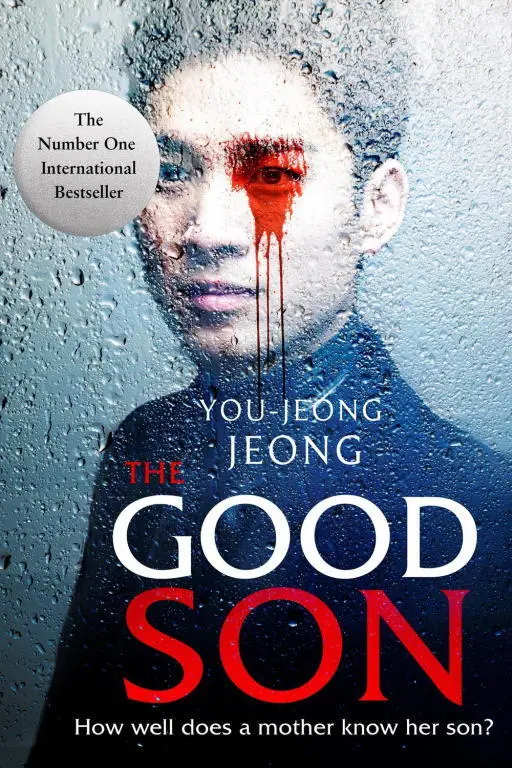
- Название:The Good Son
- Автор:
- Издательство:Little, Brown
- Жанр:
- Год:2018
- Город:London
- ISBN:978-1-4087-1123-1
- Рейтинг книги:4 / 5. Голосов: 1
-
Избранное:Добавить в избранное
- Отзывы:
-
Ваша оценка:
The Good Son: краткое содержание, описание и аннотация
Предлагаем к чтению аннотацию, описание, краткое содержание или предисловие (зависит от того, что написал сам автор книги «The Good Son»). Если вы не нашли необходимую информацию о книге — напишите в комментариях, мы постараемся отыскать её.
Yu-jin is a good son, a model student and a successful athlete. But one day he wakes up covered in blood. There’s no sign of a break-in and there’s a body downstairs. It’s the body of someone who Yu-jin knows all too well.
Yu-jin struggles to piece together the fragments of what he can remember from the night before. He suffers from regular seizures and blackouts. He knows he will be accused if he reports the body, but what to do instead? Faced with an unthinkable choice, Yu-jin makes an unthinkable decision.
Through investigating the murder, reading diaries, and looking at his own past and childhood, Yu-jin discovers what has happened. The police descend on the suburban South Korean district in which he lives. The body of a young woman is discovered. Yu-jin has to go back, right back, to remember what happened, back to the night he lost his father and brother, and even further than that.
The Good Son deals with the ultimate taboo in family life, and asks the question: how far will you go to protect your children from themselves?
The Good Son — читать онлайн бесплатно полную книгу (весь текст) целиком
Ниже представлен текст книги, разбитый по страницам. Система сохранения места последней прочитанной страницы, позволяет с удобством читать онлайн бесплатно книгу «The Good Son», без необходимости каждый раз заново искать на чём Вы остановились. Поставьте закладку, и сможете в любой момент перейти на страницу, на которой закончили чтение.
Интервал:
Закладка:
I have to accept that. That’s my life’s goal, after all, and the purpose of her treatment. For him to live as an average person, unscathed and harmless.
I felt dizzy. Was I reading this correctly? I read it again, my finger tracing each word.
I’d stopped swimming at the end of April 2006. That was when I’d approached Auntie, asking for her help to convince Mother to let me carry on. I’d told her everything because I’d so desperately wanted someone to help me. My hopes were crushed and my world was flipped upside down when she’d responded coldly, but I didn’t blame her; I just vowed never to trust her again. But I’d had no idea that the situation had been the exact opposite of what I had believed. Mother had been the one who’d wanted to let me swim and stop the medication. And Auntie was the one to disagree. The most important decision in my life had been made not by my mother but by her younger sister, a woman who hadn’t given birth to me, brought me up, or even loved me.
I remembered how I felt on the day I was deregistered as an athlete. I remembered the anger burning in my heart and the sobs I had pushed deep down my throat. I remembered how Hae-jin had stood at the entrance to the roof, feeling awful for me and not knowing what to do, as though it was all his fault that this was happening. Mother hadn’t even come up to the roof. When I came down to the living room, she’d just asked flatly, ‘Have you had something to eat?’ And it was Auntie who made her do that.
I pushed down the hot rage that bubbled up. I tried to keep a level head. I struggled to sift the truth from the confusing sentences. Did ‘live as an average person, unscathed and harmless’ mean ‘live without seizures’? But that didn’t make sense in my gut. I turned it and flipped it around in my mind, but I kept coming to the same conclusion. You didn’t become an unscathed, harmless being just because you stopped having seizures. That meant that the millions of people who went about their lives without having seizures were unscathed and harmless. The world wasn’t like that.
So this was what that meant: for him to live without being dangerous, he has to take the medication. Which meant: with medication, he won’t be a dangerous person . Why would I be dangerous? And why did I need to be medicated? Was it to suppress the seizures, or was it to achieve Mother and Auntie’s goal? I had to figure out what the pills did to me.
I typed in ‘Remotrol’ in the search bar on my phone. I already knew most of what I found. The medication was to treat epilepsy, manic depression and behavioural disorders. Nobody had said I had manic depression or behavioural disorders. But epilepsy… I could only remember having suffered two seizures. Then I found something that might contradict that diagnosis. Seizures in the temporal lobe have been reported for long-term patients who did not slowly wean themselves off the medication. Was this what had happened to me? Did the seizures come back when I stopped taking the pills, or were they mere side effects of stopping cold turkey? The answer had to be in the journal. I didn’t skim even a single sentence as I flipped back through the pages. The previous time Mother had mentioned medication was 2002.
Thursday 11 April
He was practically dead all week. The side effects are at their peak. He complains of headaches, tinnitus, lethargy. He competed yesterday, but feeling the way he was feeling, he came in 0.45 seconds too late to be considered for a medal. I can still see him looking up at the scoreboard after he hit the touchpad. His eyes were angry.
He didn’t sleep all night. I could hear him in bed, groaning and moaning like his teeth were being pulled without an anaesthetic. Pure rage. He didn’t let me try to help. He is so angry at his situation. He probably hates me for making him take the medication.
I paced in front of his room. I’m not sure I can live with this decision.
She was wrong about something, though. The most painful thing for me wasn’t the side effects or losing; it was the punishment of not being able to go to the pool any time I broke Mother’s rules. I couldn’t go for two days if I broke one, four days if I broke two. Sometimes, if I broke three or more or a really critical rule, I was banned indefinitely until Mother felt like letting me go back.
I swear I tried my best to follow her rules. But sometimes I couldn’t understand what constituted conforming to them. I couldn’t understand which behaviours were in the same category as a rule. Like how borrowing something in secret and forgetting to return it was the same as stealing, or how not acknowledging the truth was the same as lying, or how getting back at someone was the same as being violent.
The autumn of my fourth-grade year, one month before we moved to Incheon, was when I was indefinitely banned from the pool for the first time. I got home after practice and Mother’s voice flew over from the living room. ‘Han Yu-jin. Come here and sit down.’
She was sitting on the sofa with a box in front of her on the table. I knew that box. I knew what was in it, too – a butterfly hairpin, a sparkling headband, a plastic figurine, a key chain, a coin purse, a mirror, a sanitary pad, an eraser, a pencil case, a black one-piece bathing suit, a swimming cap that looked like a penguin…
I put down my bag and sat next to her.
‘What is this?’ she asked, pointing at the box.
I glanced at the name Han Yu-min written on the corner of the box with a marker.
‘Don’t disappoint me. Don’t lie to me. I found this behind your bookcase.’
I wasn’t planning on lying. It was Yu-min’s box, given to him by Mother so he could keep small objects in one place, like blocks or screws or BB gun pellets. Mother would know that better than anyone: she was the one who’d written his name on it. All I did was put in random things I’d secretly borrowed from other people. Usually girls. A girl I liked or didn’t like or one I just knew or someone I didn’t know or a sloppy one who liked to toss her things around everywhere. At first I did it for fun. Then it became a game. I began raising the stakes, trying to grab things that were harder to get. Like that sanitary pad.
‘Yu-min gave it to me,’ I said, meeting Mother’s eyes.
‘When?’
‘When I was in third grade.’
We stared at each other.
‘So you’re saying you started this last year.’
I should have told her that I didn’t know how the box ended up in my room. ‘No, this is all his stuff. I’m sorry I didn’t tell you about it. I forgot about it after Yu-min died.’
Mother didn’t question me any further or tell me a story from the Bible about not stealing or lying. Instead, she told me I was barred from the pool. I had to miss practice. The sentence was indefinite. All because I’d broken important rules: I’d stolen, lied and insulted my brother. Until we moved to Incheon, I wasn’t even allowed to go near a pool. Every night, I tried to quench my desire to be in the water by pretending to swim face-down on my bed.
Mother knew exactly how to get under my skin, what to take away from me in order to get me to submit. The guilt coming from one part of her heart would have been offset by confessing in her journal just how painful it was to bully me. I turned the page.
Monday 4 February
I am realising how desire can make someone superhuman. He no longer complains about the side effects. He takes the pills willingly and doesn’t spit them out in secret. At 5.30 every morning he wakes himself up and gets ready. After morning practice he eats his breakfast in the car on his way to school. I thought he’d get exhausted and give up if I forced him to train and study at the same time, but he doesn’t even show how hard it is. It’s been like that since December, when he asked me if epilepsy was the disease where you foam at the mouth and have seizures.
Читать дальшеИнтервал:
Закладка:
Похожие книги на «The Good Son»
Представляем Вашему вниманию похожие книги на «The Good Son» списком для выбора. Мы отобрали схожую по названию и смыслу литературу в надежде предоставить читателям больше вариантов отыскать новые, интересные, ещё непрочитанные произведения.






Обсуждение, отзывы о книге «The Good Son» и просто собственные мнения читателей. Оставьте ваши комментарии, напишите, что Вы думаете о произведении, его смысле или главных героях. Укажите что конкретно понравилось, а что нет, и почему Вы так считаете.