Timothy Johnston - The Current
Здесь есть возможность читать онлайн «Timothy Johnston - The Current» весь текст электронной книги совершенно бесплатно (целиком полную версию без сокращений). В некоторых случаях можно слушать аудио, скачать через торрент в формате fb2 и присутствует краткое содержание. Город: Chapel Hill, Год выпуска: 2019, ISBN: 2019, Издательство: Algonquin Books of Chapel Hill, Жанр: Триллер, на английском языке. Описание произведения, (предисловие) а так же отзывы посетителей доступны на портале библиотеки ЛибКат.
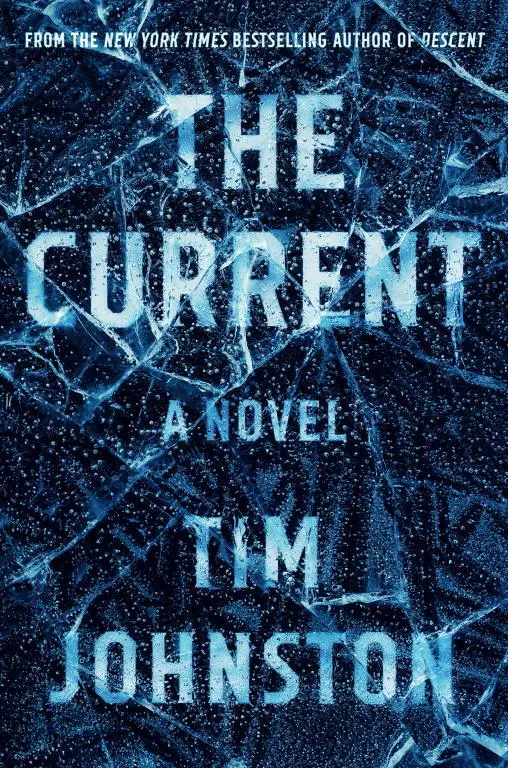
- Название:The Current
- Автор:
- Издательство:Algonquin Books of Chapel Hill
- Жанр:
- Год:2019
- Город:Chapel Hill
- ISBN:978-1-61620-889-9
- Рейтинг книги:4 / 5. Голосов: 1
-
Избранное:Добавить в избранное
- Отзывы:
-
Ваша оценка:
The Current: краткое содержание, описание и аннотация
Предлагаем к чтению аннотацию, описание, краткое содержание или предисловие (зависит от того, что написал сам автор книги «The Current»). Если вы не нашли необходимую информацию о книге — напишите в комментариях, мы постараемся отыскать её.
The Current — читать онлайн бесплатно полную книгу (весь текст) целиком
Ниже представлен текст книги, разбитый по страницам. Система сохранения места последней прочитанной страницы, позволяет с удобством читать онлайн бесплатно книгу «The Current», без необходимости каждый раз заново искать на чём Вы остановились. Поставьте закладку, и сможете в любой момент перейти на страницу, на которой закончили чтение.
Интервал:
Закладка:
He picked up his phone and gathered his jacket and his hat.
“You never said,” Gordon said.
“Never said what.”
“If he’s crazy or not.”
“Well, Gordon, you might ask yourself this: What would you expect me to say?”
He stood from the booth and put his hat on. He got into his sheriff’s jacket, then pulled his wallet from the inside breast pocket, removed several bills and dropped them on the tabletop. He replaced the wallet and stood looking down on Gordon from under the hatbrim.
“Crazy has got a way of spreading, Gordon. I just hope you’ve got sense enough not to be the one goes spreading it.” He held Gordon’s eyes, then he turned and made his way toward the door. He called, “So long” to the waitress and he clapped the old man on the back and yelled to him, “Seeya, Harold,” and then he pushed out through the door into the daylight and was gone.
43
WHEN GORDON BURKE came home the sun was just down and she was sitting on the edge of the porch with her boots on the step below and a mug of hot tea in her hands. She was wearing her father’s canvas jacket and a pair of faded Levi’s and a billcap she’d found in the downstairs coat closet. Under the jacket she wore a red fleece pullover and under that a white cotton tank top that smelled faintly of perfume. Or so she believed. His headlights swept through the trees, and she watched as he pulled up to the garage or whatever it was across the way and got out and walked to the rear of the van, opened the back doors, collected a large black garbage bag in one hand and several plastic grocery bags in the other and closed the doors again with his shoulder. He paused at the sight of her, then came along the path with the bags and stopped just short of the porchsteps and stood looking at her in the dusk.
“You shouldn’t be out here in the cold,” he said, and his voice was strange. Like he himself was sick, or had talked himself hoarse. She looked at him more carefully: the unshaved, ashy face, the shadowed eyes.
“Are you all right?” she said.
“Am I all right?”
“You didn’t catch it, did you?”
“No, I didn’t catch it. I just didn’t sleep too good last night.”
“I’m sorry.”
“It wasn’t your fault. Had nothing to do with you.”
She sat looking at him. His eyes went to the billcap on her head but he said nothing.
“What day is it?” she said.
“Friday.”
“How long have I been here?”
“Two days, two nights.”
She nodded. “Thank you. For bringing me here. For taking care of me.”
He adjusted the bags in his grips, then set them down on the path. “Wasn’t just me,” he said. “Doc Van Allen came out and looked you over. You remember that?”
“No. I didn’t think they did that anymore.”
“Did what?”
“House calls.”
“They don’t.” He looked up at the sky, then at her again. “Anyway your fever broke, so I thought I’d take off for just a little bit.” He nudged the large garbage bag with the side of his boot. “Drove on down to post bond on your clothes.”
She said nothing, and he said, “That’s a joke. There wasn’t no bond.”
Her eyes began to sting. “You didn’t have to do that.”
“I had to talk to a man down there anyhow.”
An owl hooted from the woods and he looked toward the trees as if he might see it, but there was nothing there to see. The trees. The snow. The cold early stars in the purple sky.
She said, “I hope you don’t mind I found some clothes.”
“No, I expected you might.”
“Took a shower too. Maybe the best one I ever had.”
He looked back at the van and said, “I got the luggage in the back of the van there. Your backpack. I don’t know if there’s much left you can use but I took it all anyhow. I think they put these clothes through some kind of wash but I don’t believe they ever heard of detergent down there. Thought I’d run them through again.”
“I can do it.”
“All right.” He looked at her. “You best come inside now.”
“All right.”
“I can take you on home later if you want. The gas and electric are back on.”
She stared at him, her eyes stinging. “Mr. Burke…”
“Mr. Burke nothing. I asked the woman there at Water & Gas, ‘Ma’am, what do you think is gonna happen to the waterpipes when you turn off the heat?’ She just looked at me.” He shook his head. “So then I go back to the house to light the furnace and water heater and guess what I see?”
“What?”
“I see that someone has left all the faucets dribbling.”
“Someone must’ve broken in.”
“That’s what I figured.”
She looked into her mug, the pale tea. Dark curve of sediment down there like a letter C against the white.
“What are you drinking there?” he said.
“Tea.”
“Tea,” he said. “That’s gotta be over ten years old. Come on now,” he said. “Let’s get you inside and get some food in you.”
HE MADE SPAGHETTI with meatballs and she ate two plates of it and wiped the plate clean with the last slice of garlic bread and ate that too, and then with her cup of coffee she ate a slice of store-bought cherry pie that had been warming in the oven and when that was gone she pushed the plate away from her and puffed her cheeks and blew.
In the utility room off the kitchen her clothes were tumbling in the dryer. Zippers and jeans rivets ticking irregularly on the drum.
She was looking around the kitchen and he looked too, as if he’d never done so before. Spare and neat and not much in the way of décor to suggest a wife and a daughter—their coming and going, their cooking, their teasing, their arguing. Their standing shoulder to shoulder at the sink. The sight of one or both of them at the window when he’d come home from work and was crossing the cold path toward that light, that warmth. He’d seen that, she knew. Felt that.
He began to fuss with the plates and she said, “Let me do it. You drink your coffee,” and she stood and took the plates to the counter.
“There’s a good dishwasher there,” he said.
“I’m a good dishwasher. Is that OK?”
“Can you manage with that cast?”
“I can manage anything with this thing.”
Steam rose from the sink and she scrubbed the silverware first, thinking, Did Holly Burke hold this knife, eat from this fork? Her own reflection was in the window, but beyond that a skewed rectangle of light lay on the snow, her shape in the center of the rectangle like some parallel girl looking back at her. She said, “I had such crazy dreams. When I was sick.”
“Fever dreams.”
“I saw my father clear as day. He sat there on the bed and called me Deputy.”
“Maybe it wasn’t a dream.”
She turned to him. “You believe that?”
“Doesn’t matter what I believe.” He looked down at his coffee, and she turned back to the sink. She watched her good hand moving white and slow under the suds.
“When I went into the river that day,” she said, “when we went through the ice and we were in the water, I think I must’ve drowned. I think I must’ve died.”
He said nothing. She heard him return the mug quietly to the tabletop. She turned around again. “I’m sorry—I shouldn’t have said that.”
He shook his head and made a face that said it was nothing, no harm done.
“What makes you think you drowned?” he said.
“I saw things under there, in the water. I don’t know how else I could’ve seen them otherwise.” Before he could ask what she’d seen she said, “My dreams were like that, when I was sick. It was like being in that river all over again.”
I felt her heart , she would’ve liked to tell him. All its pain but all its love too .
Читать дальшеИнтервал:
Закладка:
Похожие книги на «The Current»
Представляем Вашему вниманию похожие книги на «The Current» списком для выбора. Мы отобрали схожую по названию и смыслу литературу в надежде предоставить читателям больше вариантов отыскать новые, интересные, ещё непрочитанные произведения.



Обсуждение, отзывы о книге «The Current» и просто собственные мнения читателей. Оставьте ваши комментарии, напишите, что Вы думаете о произведении, его смысле или главных героях. Укажите что конкретно понравилось, а что нет, и почему Вы так считаете.