Timothy Johnston - The Current
Здесь есть возможность читать онлайн «Timothy Johnston - The Current» весь текст электронной книги совершенно бесплатно (целиком полную версию без сокращений). В некоторых случаях можно слушать аудио, скачать через торрент в формате fb2 и присутствует краткое содержание. Город: Chapel Hill, Год выпуска: 2019, ISBN: 2019, Издательство: Algonquin Books of Chapel Hill, Жанр: Триллер, на английском языке. Описание произведения, (предисловие) а так же отзывы посетителей доступны на портале библиотеки ЛибКат.
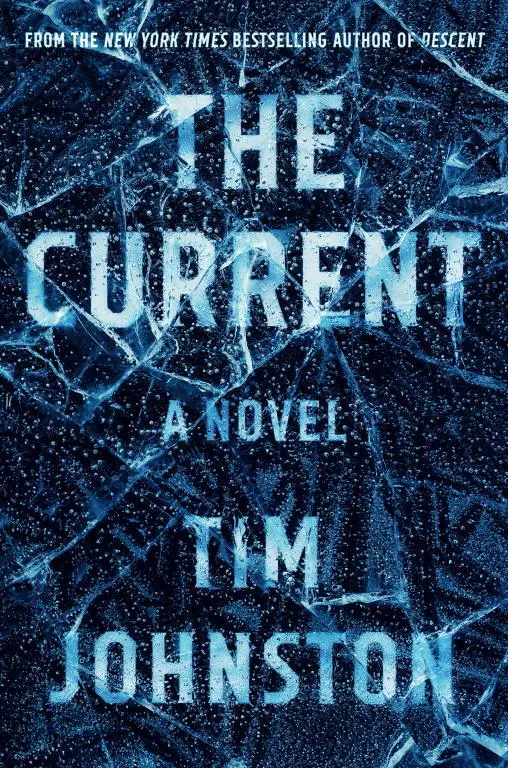
- Название:The Current
- Автор:
- Издательство:Algonquin Books of Chapel Hill
- Жанр:
- Год:2019
- Город:Chapel Hill
- ISBN:978-1-61620-889-9
- Рейтинг книги:4 / 5. Голосов: 1
-
Избранное:Добавить в избранное
- Отзывы:
-
Ваша оценка:
The Current: краткое содержание, описание и аннотация
Предлагаем к чтению аннотацию, описание, краткое содержание или предисловие (зависит от того, что написал сам автор книги «The Current»). Если вы не нашли необходимую информацию о книге — напишите в комментариях, мы постараемся отыскать её.
The Current — читать онлайн бесплатно полную книгу (весь текст) целиком
Ниже представлен текст книги, разбитый по страницам. Система сохранения места последней прочитанной страницы, позволяет с удобством читать онлайн бесплатно книгу «The Current», без необходимости каждый раз заново искать на чём Вы остановились. Поставьте закладку, и сможете в любой момент перейти на страницу, на которой закончили чтение.
Интервал:
Закладка:
A hand rests on his shoulder and the sheriff says, Gordon—and he shrugs the hand off.
I know what he’s saying, he says, and turns and walks away before he has to watch the morgue man slide her back into the dark.
11
THE STORY WAS going around, pushed along by the thumbs of girls: Holly Burke had been walking home from her boyfriend’s. No, she was walking home from the bar. She was alone. She was not alone. She’d been drinking. She was high. The girl had problems, no question about that—she’d lost her license to a DUI the year before; Rachel knew this from Gordon. The girl had been cutting through the park, along the river, and had fallen in. Jumped in. Been pushed in. She’d been in the water all night. Someone crossing the bridge on foot—the new concrete bridge, a good mile away from the park—had seen her, pinned up against the concrete piling below like driftwood.
Rachel had left the mall and was in her car again, driving across town. A brilliant, cold blue day. The sun, the blazing trees, the silvered bend of river, all exactly as it should be on a day in October, a pristine day. She was trying to picture it: Holly Burke, this girl she’d known since birth, bobbing in the water with the branches. But all she saw clearly was the blouse, the one she’d given the girl on her nineteenth birthday, Gordon looking on uneasily: a smart silk blouse she’d spent too much on, even with her discount, all night in the river under the black sky, the fabric wetted to the girl’s skin except where air slipped in, raising white, trembling swells on the water…
Gordon opened the door and stood blinking in the brightness. Startled, confused to see her. His gray face, the bruised, unfocusing eyes sweeping away anything she might’ve been ready to say. Not asking her in. Not even letting go of the stormdoor so she could put her arms around him. She wasn’t surprised—certainly not hurt. It had nothing to do with her; he had to handle things his own way, in his own time, like Roger, like every man she’d ever known.
I’m so sorry, Gordon, she said.
They took me to her, he said. The sheriff.
Oh, Gordon. By yourself?
He didn’t answer. He seemed to be listening, and she listened too: someone else in the house, on the phone. A man’s voice. A voice of calm male authority. She glanced at the extra car in the drive, a black, spotless Volkswagen sedan.
Someone’s with you?
Edgar, he said, and she said, That’s good. That’s good, Gordon.
His brother Edgar, she remembered, was some kind of lawyer for the state. She’d met him once and had been struck by the cleanliness of his fingernails, a thing she was not used to in men.
Can I do anything, Gordon, is there anything I can do?
His roving eyes found hers briefly and moved on. He said, Meredith’s on her way. Her sister’s driving her down. I thought it was them when you knocked.
Rachel nodded but couldn’t speak. She hadn’t seen Meredith in years, not since before the split-up. She remembered that night on the deck, with the wine—Mr. B., the art teacher—when her heart had filled with pity and love. They were going to be friends forever, old ladies, arm in arm in Mexico, Europe, after the kids were grown, after the husbands were gone.
They think now someone did this, Gordon said.
They—? said Rachel.
The sheriff and them. He dug at the whiskers on his face. They think someone hit her with a car, or a truck.
My God, Rachel said.
They think this… person didn’t see her maybe, Gordon said. Then tried to cover it up by pushing her in the river.
He looked off toward the woods as if he’d seen something, and she looked too, and for just a moment she thought she heard them—the kids, running through the woods, laughing. Holly in her purple Easter dress, searching for the poorly hidden eggs.
She turned back to Gordon, but he was still looking into the woods and it was like watching the eyes of a sleepwalker; they did not register what he saw of the world or even what he was seeing in his mind. What could you say? What could you possibly say? A child. A daughter.
If there’s anything I can do, Gordon, just anything, she said, and Gordon, looking beyond her with those shut-down eyes, said, Still breathing.
What?
When they pushed her in, he said. She was still breathing.
Oh, Gordon. Oh no—Rachel reaching for him then, but before she could touch him the brother, Edgar, called to him from inside the house and Gordon turned and let go the stormdoor, and she stood watching her own reflection swing into view as the door bounced once on its cylinder, gave a long hiss, and clicked shut.
12
SHE AWOKE TO the painful brightness of the room, and there were men in the room, looming over her like trees, and she immediately looked down at herself in the bed—but she was covered up, the thin sheet pulled neatly to her armpits, and beneath the sheet she wore a thin blue gown.
Her right arm lay below the sheet and her left lay above, a clear plastic tube fixed to the crook of the elbow by strips of white tape, a plastic clip attached to the tip of her forefinger. The tug of the tape on that tender skin and the bite of the clip made her feel as though this arm had been left out so that other things might feed on it while she slept.
One of the men was her father, and one was the doctor, and one was a man wearing a sheriff’s uniform like her father used to wear and she knew this man too; he’d been one of her father’s deputies. Deputy Moran. Ed Moran. He stood tapping his hat against his leg and trying to look confident that he belonged at the bedside of a young woman lying in her thin gown under a thin sheet. She herself was too foggy-headed to question his presence; he’d once been a regular feature of her life, joking and teasing her when she was little, growing quiet and awkward as she got older, and now here he was again.
The doctor bent to look into her eyes and she smelled mint and the alcohol of hand sanitizer. The other smells, the outdoor smells of snow and smoke and car exhaust, came from her father and Deputy Moran. She seemed able to smell everything in the world, the way you would if you’d been underwater, truly, all this time. The doctor watched her eyes, then moved away to lower the blinds, and the room dimmed and she could see the men without squinting.
The doctor returned to the bed and picked something up and the bed hummed, hinging her slowly at the waist until she was nearly sitting up. “Is that all right?” he said, and she nodded, and he said, “Good. How many fingers?”
“Fourteen.”
“Try again.”
“Four.”
“Excellent.” He had a young face but his buzzed head showed the dark map of hair loss. He was looking in her eyes again. “How do you feel, Audrey? Are you in pain?”
“No. But I’m thirsty,” she said, and her father was already lifting the cup and the straw to her lips. She raised her hands to take it from him—did he think she would let him hold it for her in front of the doctor and the deputy?—but only her left arm, with its tube and finger clip, rose from the bed. This was puzzling, but she was so thirsty she took the cup one-handed and sucked at the straw, water running coldly down her throat and coldly into her stomach, and only after she’d handed the empty cup back to her father did she say, looking at the shape of her arm under the sheet, “I can’t lift my right arm.”
“No,” said the doctor, “that arm is broken and we strapped it down to the bed.” He raised the sheet so she could see the cast—purple—and the white strap holding it down. “Can you wiggle your fingers for me—just the fingers? Good. Now the thumb.”
“Why’s it strapped down?”
Читать дальшеИнтервал:
Закладка:
Похожие книги на «The Current»
Представляем Вашему вниманию похожие книги на «The Current» списком для выбора. Мы отобрали схожую по названию и смыслу литературу в надежде предоставить читателям больше вариантов отыскать новые, интересные, ещё непрочитанные произведения.







Обсуждение, отзывы о книге «The Current» и просто собственные мнения читателей. Оставьте ваши комментарии, напишите, что Вы думаете о произведении, его смысле или главных героях. Укажите что конкретно понравилось, а что нет, и почему Вы так считаете.