Julia Phillips - Disappearing Earth
Здесь есть возможность читать онлайн «Julia Phillips - Disappearing Earth» весь текст электронной книги совершенно бесплатно (целиком полную версию без сокращений). В некоторых случаях можно слушать аудио, скачать через торрент в формате fb2 и присутствует краткое содержание. Город: New York, Год выпуска: 2019, ISBN: 2019, Издательство: Alfred A. Knopf, Жанр: Триллер, Детектив, на английском языке. Описание произведения, (предисловие) а так же отзывы посетителей доступны на портале библиотеки ЛибКат.
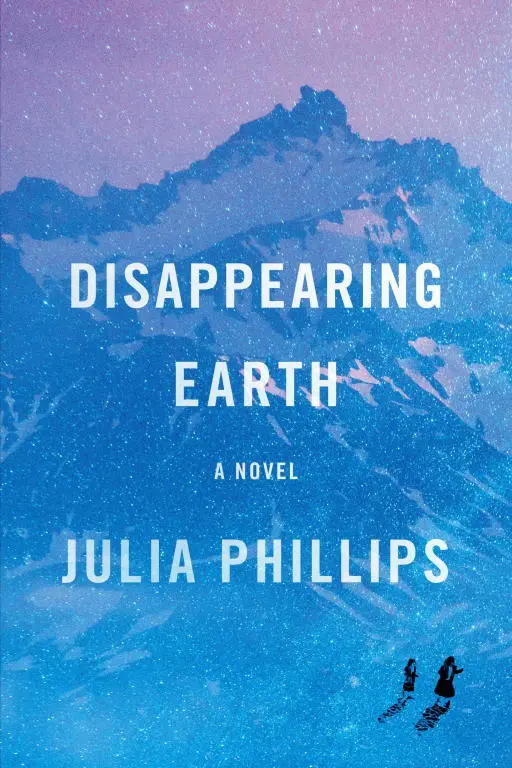
- Название:Disappearing Earth
- Автор:
- Издательство:Alfred A. Knopf
- Жанр:
- Год:2019
- Город:New York
- ISBN:978-0-52552-041-2
- Рейтинг книги:4 / 5. Голосов: 2
-
Избранное:Добавить в избранное
- Отзывы:
-
Ваша оценка:
Disappearing Earth: краткое содержание, описание и аннотация
Предлагаем к чтению аннотацию, описание, краткое содержание или предисловие (зависит от того, что написал сам автор книги «Disappearing Earth»). Если вы не нашли необходимую информацию о книге — напишите в комментариях, мы постараемся отыскать её.
“A genuine masterpiece” —Gary Shteyngart
Disappearing Earth — читать онлайн бесплатно полную книгу (весь текст) целиком
Ниже представлен текст книги, разбитый по страницам. Система сохранения места последней прочитанной страницы, позволяет с удобством читать онлайн бесплатно книгу «Disappearing Earth», без необходимости каждый раз заново искать на чём Вы остановились. Поставьте закладку, и сможете в любой момент перейти на страницу, на которой закончили чтение.
Интервал:
Закладка:
Arms crossed over her chest, Oksana turned away from the women to shout. “Malysh!” Identical apartment blocks filled her view. Behind her, kids giggled. Oksana chose the wide avenue to her left and started running.
By the time she crossed Akademika Koroleva, where true street dogs tricked her with their movements, she burned. Sweat slid down her spine to collect at her waistband. Her dog was nowhere. She called Katya from her cell. As soon as Katya picked up, Oksana said, “Are you with Max? Does he have Malysh?” Katya’s voice drew away from the phone. Oksana shouted, “He left my doors open!”
Max came over the line. “The dog? But—”
“Both doors! What were you thinking? Idiot! Both doors open,” Oksana said, and she was not weak enough to cry, but her voice was cracking. “Didn’t you know Malysh would run? How could you?”
“Oksana, slow down, I don’t know what to say.” She could hear Katya talking in the background. “I didn’t—I couldn’t figure out your locks, so I just pushed the doors shut behind me. Shouldn’t they have stayed closed? Could they have swung back open? Malysh was in the apartment when I left.”
She stared down the road. “He’s gone now.”
Katya, distant, said, “Ask where she is.”
“Where are you?” Max asked. “What can we do?”
Oksana did not respond. They did not understand. Even Anton hadn’t appreciated her bond with Malysh, not really—Oksana had met the man who would become her ex-husband when the dog was two, and Anton moved out when the dog was seven. A few months ago, during one of those calls she had come to expect from Anton, those after-midnight ones, those his-new-lover-is-sleeping ones, Oksana told her ex, “Malysh almost caught a fox today. He ran off in the forest and came back to me with red fur between his teeth.”
“I’m not interested in what’s been in the dog’s mouth,” Anton said. He lowered his voice so the sound stroked her ear. “I’m more interested in what’s going to be in yours.”
No one in this world cared enough about what Oksana treasured, but only Anton’s disregard ended up feeling like love. Nightly, as Malysh slept beside her, Oksana listened to her ex swear over the phone that he still wanted her most of all. No matter the woman he was staying over with—Anton’s tongue and teeth waited for Oksana. He came back to the apartment every few weeks to fulfill that promise. The dog laid his white head on Anton’s lap in celebration; the dog huffed with pleasure outside their bedroom door.
Oksana looked out across the roaming strays. Through the phone, she heard jostling, before her friend came back to the line. “We’ll pick you up,” Katya said. “We can search for Malysh together.”
“Don’t bother,” Oksana said. Katya sighed. To ward off any accusations of coldness, Oksana said, “We’ll cover more ground in separate cars.”
“No, we’ll come get you. You should focus on looking for him without also being at the wheel.”
“All right,” Oksana said finally. A truck rolled past and she shut her eyes against its bulk. “Anyway, I might find him here, by foot, in the next minute or two.”
“Okay,” Katya said. “I’m sure.”
Max’s meaningless words were rising in the background. Katya hung up.
Eight years ago, one of their coworkers had come into the office with a picture of four pups lined up, as soft and squinty-eyed as polar bear cubs. Oksana kept returning to his desk that day to look. “I need one,” she said at last, as the coworker packed his bag to leave. She brought Malysh home that night.
Oksana threw out her best shoes after the puppy got to them and stopped wearing dark colors because they showed his fur too well. Though she called him naughty, squeezing his face between her palms, she adored those little inconveniences. She lived for them. With Malysh, she—who grew up an only child, lying on the pullout couch and hearing her mother through the wall, who maintained friends she could intimidate and lovers who broke her faith, who had never been chosen for marriage and was told she was too old for babies, who was always apart from herself—was not alone anymore.
They went to the playground, the city center, the woods that lined their neighborhood, and the mountains beyond. Their legs grew the same muscles. After Anton came and left, Oksana returned to the habit she’d formed when the dog was small. She slept on one side of the bed and Malysh slept on the other, and when she woke up in the silver middle of the night, she turned toward him for comfort. They lay facing each other like two parentheses. His paws pushed across the blanket. Oksana reached out to touch the fine hairs that snuck between the pads of his feet, and in his sleep Malysh drew away, lifted his head, sniffed around, then relaxed back toward her.
Loving the dog best had become simple. Who else was there?
She described him to vendors at the fruit stands while the sun cooled above. She looked behind parked cars, in truck beds, into echoing lobbies. Other building doors, like theirs, were left propped open—Malysh might have gotten confused and ducked inside. If he were hurt…She peeked, mouth dry, into a dumpster, where someone might have heaved him…Reaching the edge of her neighborhood, she crossed into a patch of forest. Trees crowded her along the path. “Malysh,” she called. Her footsteps were the only ones around.
At every crisis over the past year, the dog was her companion. When Anton betrayed her, when he moved out, when he started calling again, Malysh listened. When the ruble collapsed, and the institute’s funding was frozen, so she no longer could do any field research and had to halt a two-year-long project on calc-alkaline rocks, she left work with the excuse of walking her dog and used the drive to pound her palms against her car’s steering wheel.
When she had the bad luck to walk by the Golosovskaya sisters at the moment of their abduction. When she saw their school pictures appear on the television that night. When she sat up on the sofa and said, “I saw them,” a declaration, and her husband said, “What?” and she said it again, “ I saw them ,” now a shout. The feeling inside her was dense and swift and devastating. She was the one who could have stopped it—she was the one who now could help. She called the police, and as she waited for an officer to pick her up, Anton followed her around the apartment promising she was doing the right thing. He told her they had every reason to be hopeful. The dog trotted alongside, grinning.
Even after the police questioned her, and when the description she gave them of the kidnapper, which was nothing, really, a glance at a stranger, was spread in whispers around the city as if her word were fact, and when she watched local officials swear the sisters would be recovered, and when her colleagues and friends drew away as if she were solely responsible for the girls’ absence, and when she wondered if she was, and when she swore to herself she wasn’t, Malysh lay at her feet as if the world was all right.
She touched her cell phone. For an instant, she was tempted to call Lieutenant Ryakhovsky. But if he could not find two humans over ten months, he certainly would not be able to track down a dog tonight.
The woods grew dark. She emerged to a city that had lost light. The phone was buzzing—Katya.
When her friend’s car pulled up, Oksana climbed into the back. Max was in the passenger seat. His eyes were wide with apology. “I’m so sorry, Oksana, really. I don’t know what could have happened.”
“You don’t know?” Oksana said. “I know. You let him out.”
“I mean I didn’t realize.” They were rolling down a pitted road together. Katya’s hand was on the gearshift and Max’s hand was on Katya’s thigh. Oksana hated this: the cozy pair, the pain inflicted. Why did she ever have Max and Katya over? Oksana grew up training herself to be independent, strong, less trusting than her mother, and still somehow she ended up inviting in those who hurt her.
Читать дальшеИнтервал:
Закладка:
Похожие книги на «Disappearing Earth»
Представляем Вашему вниманию похожие книги на «Disappearing Earth» списком для выбора. Мы отобрали схожую по названию и смыслу литературу в надежде предоставить читателям больше вариантов отыскать новые, интересные, ещё непрочитанные произведения.












Обсуждение, отзывы о книге «Disappearing Earth» и просто собственные мнения читателей. Оставьте ваши комментарии, напишите, что Вы думаете о произведении, его смысле или главных героях. Укажите что конкретно понравилось, а что нет, и почему Вы так считаете.