Julia Phillips - Disappearing Earth
Здесь есть возможность читать онлайн «Julia Phillips - Disappearing Earth» весь текст электронной книги совершенно бесплатно (целиком полную версию без сокращений). В некоторых случаях можно слушать аудио, скачать через торрент в формате fb2 и присутствует краткое содержание. Город: New York, Год выпуска: 2019, ISBN: 2019, Издательство: Alfred A. Knopf, Жанр: Триллер, Детектив, на английском языке. Описание произведения, (предисловие) а так же отзывы посетителей доступны на портале библиотеки ЛибКат.
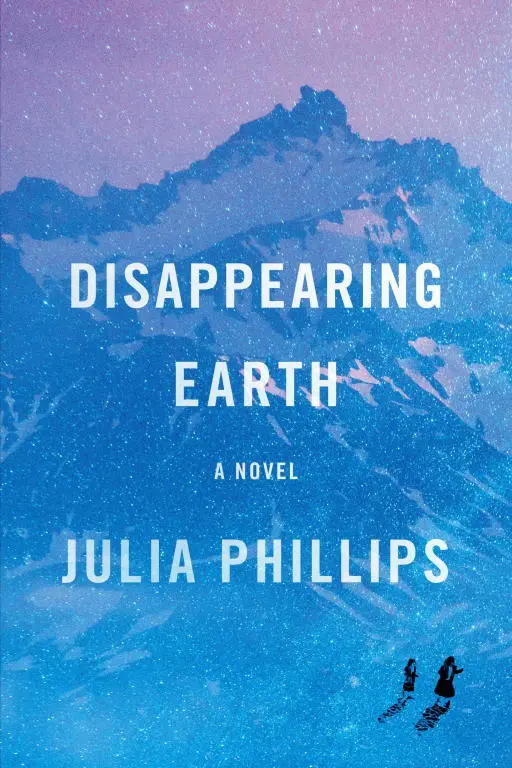
- Название:Disappearing Earth
- Автор:
- Издательство:Alfred A. Knopf
- Жанр:
- Год:2019
- Город:New York
- ISBN:978-0-52552-041-2
- Рейтинг книги:4 / 5. Голосов: 2
-
Избранное:Добавить в избранное
- Отзывы:
-
Ваша оценка:
Disappearing Earth: краткое содержание, описание и аннотация
Предлагаем к чтению аннотацию, описание, краткое содержание или предисловие (зависит от того, что написал сам автор книги «Disappearing Earth»). Если вы не нашли необходимую информацию о книге — напишите в комментариях, мы постараемся отыскать её.
“A genuine masterpiece” —Gary Shteyngart
Disappearing Earth — читать онлайн бесплатно полную книгу (весь текст) целиком
Ниже представлен текст книги, разбитый по страницам. Система сохранения места последней прочитанной страницы, позволяет с удобством читать онлайн бесплатно книгу «Disappearing Earth», без необходимости каждый раз заново искать на чём Вы остановились. Поставьте закладку, и сможете в любой момент перейти на страницу, на которой закончили чтение.
Интервал:
Закладка:
“Lilia’s eighteen, she graduated. She’s restless like a lot of girls can be,” Esso’s police captain told Natasha’s mother at the time. “She decided to go off to see the world.”
Now, of course, Natasha knew the captain was right, but back then his words enraged her. To see the world, Lilia would have needed to leave the peninsula through Petropavlovsk. Would she really have come to the city without saying goodbye? Something must have happened at home to make Lilia turn her back on Natasha. Someone—and was it Denis?—had driven Lilia away.
Three years had gone by since then. In three more, or five, or ten, or seventy, Natasha would still remember every second of those first disappearance days. On the drive from Petropavlovsk toward Esso with husband and children in tow, the morning after her mother called with the news, Natasha had pulled over to dry-heave in the dirt. Lilia gone. Natasha was sickened by fury. When she arrived, she found that their mother had sobbed so much that her face had swelled, lizard-like. Denis told them Lilia did not leave but was taken. When he pointed up, toward the roof, toward the stars, Natasha slapped him.
It had been a waking nightmare. Lilia’s things, her books, her rumpled clothes, were still scattered at that moment around the house. Natasha’s children, then only five and seven, were asleep in the living room. In the kitchen, Natasha was watching her mother struggle to blink: behind her glasses, her lashes stuck out from sore eyelids. Yuri’s hand weighed on the base of Natasha’s back—he had not stopped touching her since they got the call that Lilia was gone. When Denis said that, Natasha crouched up out of her seat and hit her brother as hard as she could. The sound of the slap was a shock. His cheek was harder than she had expected. She made contact with his jawbone and two rows of clenched teeth.
To this day, Natasha felt awful about it. Denis could not have acted differently. He honestly believed their sister had been pulled away into the stars. Yes, there were times Natasha wished he had been more attentive, in the crucial months after Lilia graduated, to what Lilia was doing and who she spent time with. But Natasha had the same old regrets for herself. If she had returned to see their family more often—or insisted on Lilia’s visiting her in the city—but it was impossible now to do those things, to go back or to say what would have saved them.
Anyway, Natasha was not angry anymore.
She skated up to her mother and brother to prove that to herself. “I was just telling Denis to wrap himself up,” her mother said. “That wind off the water. Lev and Yulka must get sick all through the winter.”
“No, they’re used to it,” Natasha said. She faced half away from the conversation so she could watch her children pass. The bay beyond the rink was a silver dish. “Today’s pretty calm, anyway.”
Her mother lifted one hand to the scarf around her coat collar. “I feel the cold here, like a knife to the throat. It’s barely below freezing but the wind makes you believe you’ll die of exposure.” For years after Natasha and Yuri moved, Natasha’s mother had complained about city crime rates, but after their family’s brush with the village police, she shifted to other subjects. The weather.
What Natasha’s mother did not talk about was worse than what Natasha’s brother did. Her mother harbored her own bitter theories. After the Golosovskaya girls were taken, Natasha brought them up on a phone call to Esso, and her mother said, “So now you’re interested?”
“What does that mean?” Natasha asked. Though she knew. On the other end of the line, her mother stayed silent. After a long minute, Natasha said, “You’ve heard the news, then. It’s frightening. Isn’t it?”
“Now you’re frightened,” her mother said. “Yes. It’s terrible. Their pictures are in our post office. But you are aware by now that these things happen.”
“What things, Mama?” Her mother would rather despise the police, suspect their neighbors, picture her youngest child grabbed and murdered than admit Lilia had run away from them. “These are children. The older girl is only a year above Lev in school. They were abducted,” Natasha said. “They aren’t Lilia.”
Her mother sighed. The sound crackled through the phone. “Tell me what Yulka and Lev need to prepare before school starts,” she said. Then: “They were killed, I’m sure. Their posters here don’t mention any abduction. But, Tasha, it’s better not to speak of such things. What can we do about it all? Nothing.”
After that, Natasha left the headlines out of their conversations. She did not ask how the village captain spoke to her mother, even now, years later, or what the neighbors whispered about their family while standing in line at the grocery store. Lev and Yulka swooped past her and bent on their blades for another turn. Her mother started to say, “Those gloves—”
Natasha raised her hand in greeting to someone coming over. “Sorry, Mama,” she said in quick Even, and then in Russian introduction: “Happy New Year! It’s so good to see you. My mother, Alla Innokentevna, and brother, Denis. They’re visiting—”
“From the north, from Esso,” Natasha’s mother said.
“And this is Anfisa. Her son and Lev are in the same class.” Natasha only knew the neighbor, a feline blonde, from chatting at the bus stop or the odd school concert. Denis, thank God, did not embarrass them. He made eye contact, said hello, stopped there.
“I’m thrilled you’re here,” said Anfisa. Under her winter cap, her eyebrows were arched and penciled to perfection. “We’ve spent the last few days stuck in the apartment. Look, they found each other.” She lifted her chin toward the ice.
Natasha turned to see their boys skating in a cluster of year-six classmates. Yulka, cheeks red with effort, trailed behind. Natasha called her daughter’s name, but Yulka didn’t hear, or pretended not to.
“Is Yuri home?” Anfisa asked.
“Not until March.”
“Excellent to have your family visit, then.” Anfisa smiled at Natasha’s mother. “Although Natasha’s very strong—she handles everything—I’m sure she appreciates the company. Do you come down often?”
“Only for the winter holidays. They visit us in the summer,” Natasha’s mother said. “But once a year here is enough. Work keeps me busy—I run our cultural center at home. And Petropavlovsk overwhelms.”
“I understand, I do,” Anfisa said. “I was raised in the north myself.”
Natasha looked in surprise at her neighbor. Anfisa’s white skin and toneless accent. “I didn’t know that.”
“I was. In Palana. I only moved here after I had Misha.”
“It’s actually better to be away from the city,” Denis said. “It’s safest in a small town. At the London Olympics, the ships surveilled everyone. There’s photographic evidence. Three lights in a row in the sky.”
Natasha shut her eyes. She concentrated on the laced tightness around her ankles, the thermal leggings constricting her thighs. Low-level frustration sat trapped in her chest. But not anger.
When she opened her eyes again, she saw Anfisa. The neighbor reached out and gripped Natasha’s elbow. “Come over this week,” Anfisa said. “The boys can distract each other while we take an hour or two to ourselves.” In her cat’s smile, there was something small, recognizable, and secret, speaking to Natasha, saying: You are not alone.
Anfisa’s apartment was in the same row of buildings as theirs, only a few entrances away. Two days after the skating trip, Lev tramped across their parking lot toward that door. “Slow down,” Natasha called after him. She had Yulka by the hand to guide the girl over hills of unplowed snow. Under her arm, Natasha carried a box of chocolates, swirled dark and milk and white, each in the shape of a different seashell.
Читать дальшеИнтервал:
Закладка:
Похожие книги на «Disappearing Earth»
Представляем Вашему вниманию похожие книги на «Disappearing Earth» списком для выбора. Мы отобрали схожую по названию и смыслу литературу в надежде предоставить читателям больше вариантов отыскать новые, интересные, ещё непрочитанные произведения.












Обсуждение, отзывы о книге «Disappearing Earth» и просто собственные мнения читателей. Оставьте ваши комментарии, напишите, что Вы думаете о произведении, его смысле или главных героях. Укажите что конкретно понравилось, а что нет, и почему Вы так считаете.